
Commercial Tile Compliance Guide: ISO 9001 and CE for EU Porcelain Tile Projects
In EU commercial porcelain tile projects, the submittal is approved on documents before it is approved on appearance. A specification team needs three things to line up: a declared performance value, a test record that supports that value, and a certificate whose scope names the product that will actually be shipped. When any one of the three is missing, the package comes back for clarification — usually after the tile has already been selected.
This guide is written for the stage where that loop has to be closed: EU-facing commercial floors, walls and circulation areas specified in porcelain, sourced from a Chinese manufacturer, and handed to a contractor for approval. It sets out what ALL KING CERAMICS holds — ISO 9001:2015 certificate 0350521Q30166R1M issued by XQCC, and CE certificate AC 50163816 0001 issued by TUV under EEC standards — and how those two documents map onto the technical values a European specifier is usually asked to confirm before a purchase order is released.
ALL KING CERAMICS (registered as ZIBO ALL-KING CERAMICS CO., LTD) is a porcelain tile manufacturer and direct exporter based in Zibo, Shandong, China, founded in 2011 and operating a 60,000 m² production facility.

The problem: certification is quoted far more often than it is documented
Almost every commercial tile offer in the EU market will state that the supplier is "ISO certified" and "CE marked". Far fewer will hand over a certificate number that a buyer can check against the issuing body's register, and fewer still will show that the certificate scope covers the exact series being quoted. That gap is where procurement risk concentrates, because the documentation risk is carried by the buyer and the project, not by the supplier who made the claim.
Three failure modes account for most of the friction in commercial submittals:
- Scope mismatch. A valid certificate exists, but its scope covers a different product family from the one being quoted, so it says nothing about the tiles on the pallet.
- Unresolvable reference. A certificate number is printed in a brochure with no issuer, no issue date and no way to confirm it.
- Value drift. The performance figures in the offer do not match the figures in the underlying test record, or the tested thickness is not the supplied thickness.
A compliance-first buying process removes all three by fixing four items before production starts: the certificate number, the certificate scope, the declared performance value for each parameter, and the acceptance criteria that will be applied at inspection. Everything in this guide is structured around those four items.
What ISO 9001:2015 and CE each certify — and what they do not
The two documents answer different questions, which is why European specifiers ask for them as a pair rather than as alternatives. One is about the factory, the other is about the declared performance of the product entering the EU market.
ISO 9001:2015 — certificate 0350521Q30166R1M issued by XQCC
ISO 9001:2015 is a quality management system standard. Certification confirms that a manufacturer's processes — production control, inspection, measurement, corrective action and document control — are systematically managed and periodically audited. It is a factory-level credential, not a product-level one: it tells a buyer that the system producing the tile is controlled, not that a particular tile reaches a particular number.
ALL KING CERAMICS holds ISO 9001:2015 certificate number 0350521Q30166R1M, issued by XQCC. The certificate covers the Marble Series (ID 4765) and Travertine (ID 5624) porcelain ranges supplied for commercial projects.
For a project buyer, the practical value is batch-to-batch consistency. Commercial projects are rarely delivered in a single shipment; hotel phases, mall fit-out packages and transit works are commonly released in tranches months apart. A managed quality system is what makes the third tranche visually and dimensionally compatible with the first, and it is the reason batch tracking and reordering support can be offered at all.
CE — certificate AC 50163816 0001 issued by TUV under EEC standards
CE marking is the route by which a construction product is placed on the EU market with declared performance characteristics. Because the obligation attaches to the declared values and to the production control behind them, the document a buyer should ask for is the certificate that identifies the issuer, the certificate number and the product scope — not a logo on a catalogue page.
ALL KING CERAMICS holds CE certificate AC 50163816 0001, issued by TUV under EEC standards, covering the same Marble Series (ID 4765) and Travertine (ID 5624) ranges.
For a specifier, the practical value is comparability. Declared performance can be placed directly against the project specification and against competing offers, using the same parameters, instead of relying on descriptive marketing language.
The four values EU specifiers ask to have confirmed
A compliance conversation in a European commercial project usually narrows to four numbers. They decide whether a porcelain range is accepted for a high-traffic floor, and they are the values that a certificate-and-report set has to support in writing.
| Parameter | Declared value — Marble Series (4765) and Travertine (5624) | How it is evidenced | What the buyer should verify |
|---|---|---|---|
| Water absorption | Below 0.5% | Laboratory water absorption record | Report states ≤0.5%, consistent with the porcelain threshold defined in ISO 13006 and ANSI A137.1 |
| Surface abrasion resistance | PEI 4 / PEI 5 | PEI classification test per series | PEI class stated for the specific series and matched to the traffic category of the space |
| Surface hardness | Mohs 6–7 | Hardness test record | Value confirmed in the test record, not only in the brochure |
| Breaking strength | At least 1300 N | Flexural / bending strength test | Report value is ≥1300 N and the tested thickness matches the supplied thickness |
| Dimensional consistency | Laser flatness sorting in production | In-line inspection record | Flatness tolerance accepted at third-party inspection |
| Batch identity | Batch tracking and reordering support | Batch code on packaging and pallets | Batch code present and recorded on delivery documents |
Water absorption below 0.5% is the threshold that separates porcelain from other ceramic tile classes; it is the definition used in ISO 13006 and ANSI A137.1. In service, low absorption is what keeps a floor dimensionally stable in wet cleaning regimes and reduces the risk of staining and frost damage in exposed or intermittently wet locations.
PEI 4/5 abrasion resistance is the classification band applied to floors expected to carry sustained foot traffic and light abrasive load. PEI 4 suits hotel guest areas and office floors; PEI 5 is the band normally specified for mall concourses, transit platforms and other high-traffic circulation zones.
Mohs hardness 6–7 is a surface hardness indicator and should be read as a comparative measure rather than a guarantee: grit tracked onto a polished surface can still mark it, and the quality of the cleaning regime affects appearance retention more than hardness alone.
Breaking strength of at least 1300 N is the value that matters where point loads, trolleys or fitted furniture occur. It is a property of the tile, not of the finished floor — substrate preparation and adhesive specification remain the contractor's responsibility, and a strong tile over a defective screed will still fail.
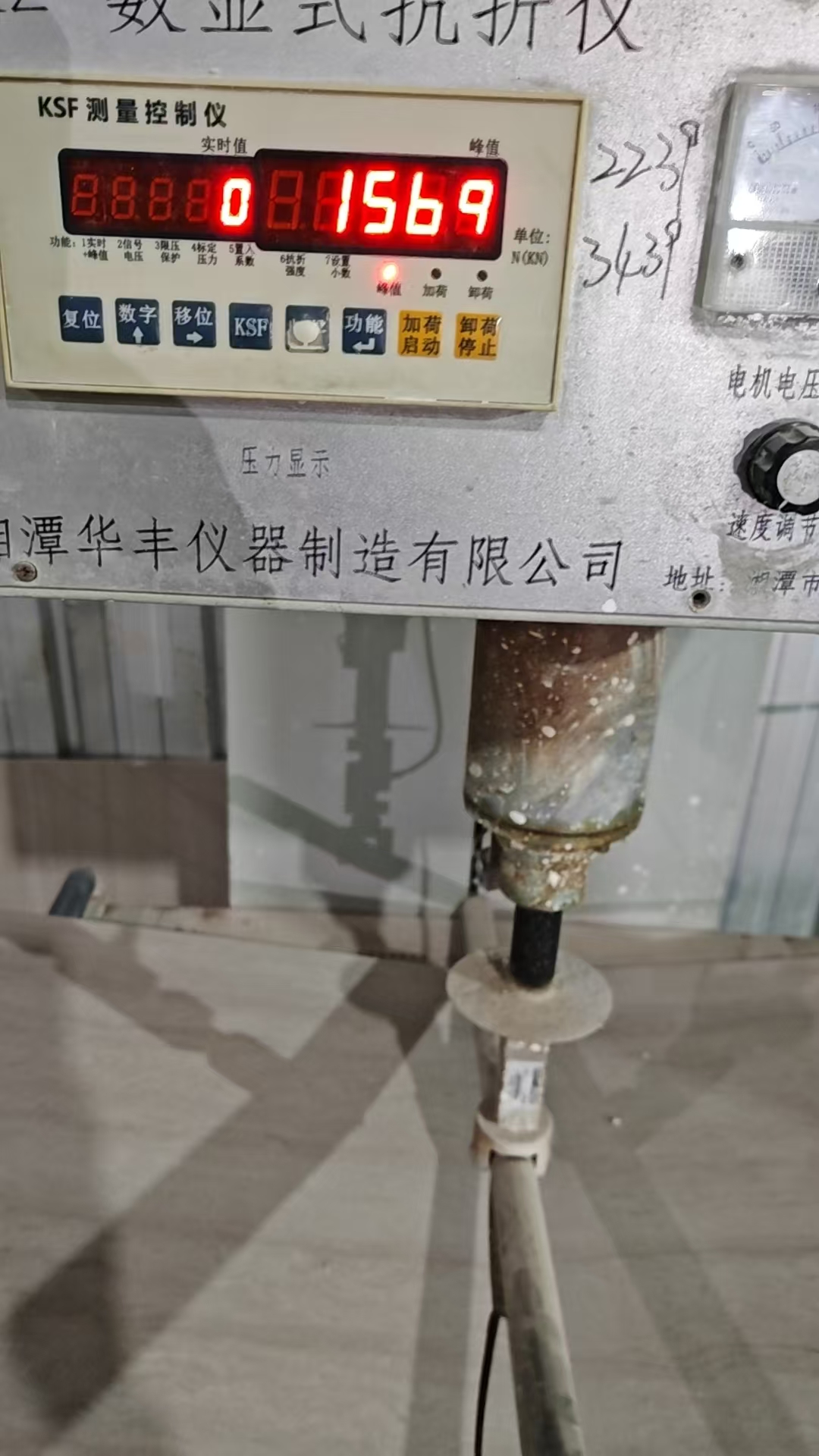
Step-by-step: verifying compliance before the order is placed
The sequence below is the order in which a European commercial buyer can close the documentation loop with a Chinese porcelain tile supplier without adding weeks to the programme. Each step produces a document that goes into the submittal pack.
- Request the certificate set, not a claim. Ask for the certificate number, the issuing body, the issue and expiry dates, and the scope page. A one-line assurance is not a submittable document.
- Confirm the scope names your series. For ALL KING CERAMICS commercial work, the scope should identify the Marble Series (ID 4765) and Travertine (ID 5624) ranges. If the quoted series is not named, the certificate does not cover it.
- Verify each number with the issuer. ISO 9001:2015 certificate 0350521Q30166R1M is issued by XQCC; CE certificate AC 50163816 0001 is issued by TUV under EEC standards. Verification is a short administrative step and it is the one buyers most often skip.
- Match declared values to your specification. Place water absorption, PEI class, Mohs hardness and breaking strength side by side with the project specification, using the table above as the checklist.
- Ask for the test record behind each value. Confirm the tested product identifies the same series, the same format and the same thickness that will be shipped.
- Write acceptance criteria into the purchase order. Third-party inspection is accepted on ALL KING CERAMICS orders; state which inspection body, which sampling basis and which parameters are decisive, and agree in advance who carries the cost of a failed lot.
- Lock commercial terms and batch continuity together. Minimum order quantity is 400 sqm per design, and trial orders are accepted. Delivery terms are EXW, FOB, CNF or CIF; payment terms are 30% TT with 70% against BL copy, L/C, or cash. Add batch tracking and reordering support to the agreement at the same time, so a later phase of the same project can be matched to the earlier batch.
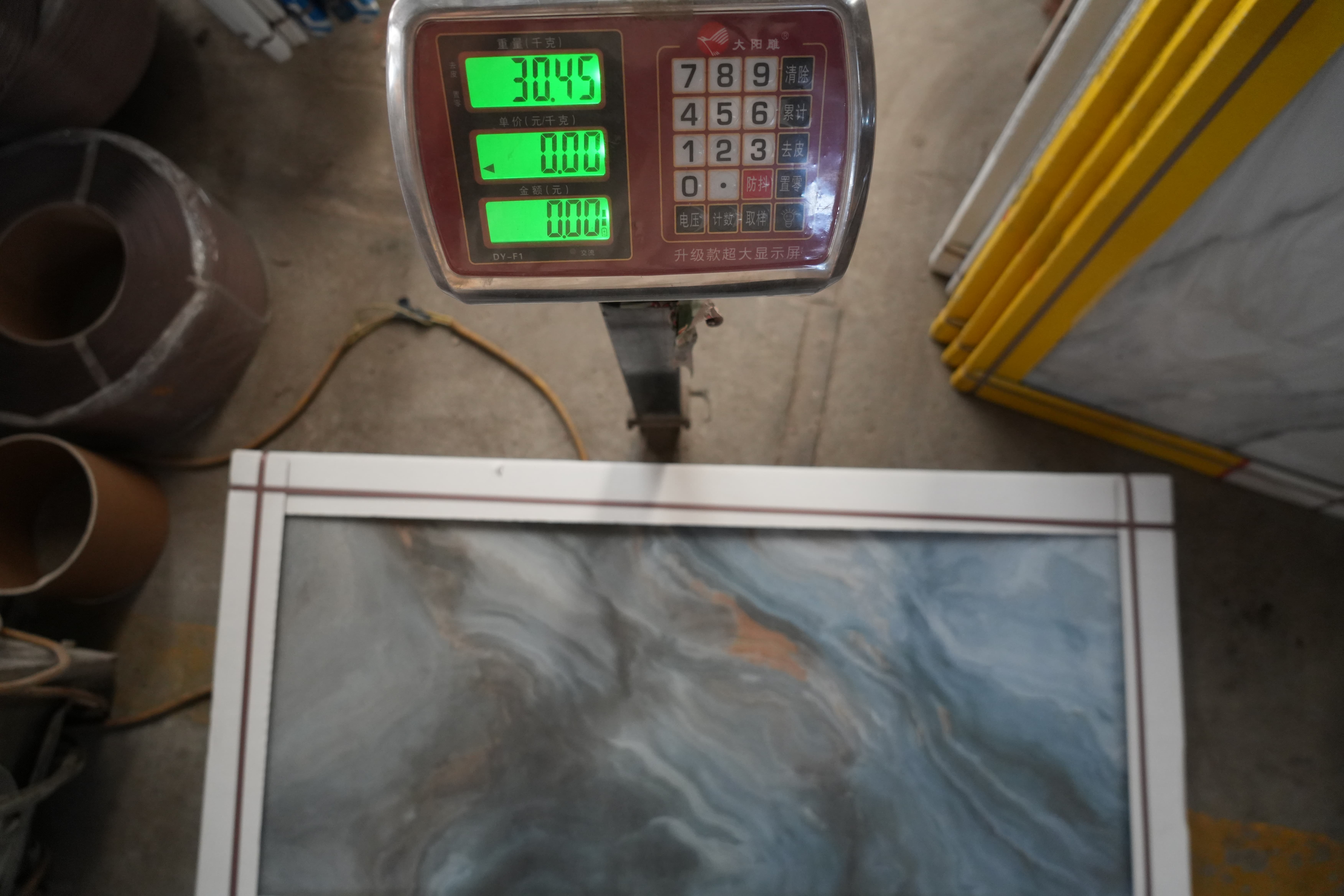
Where the certificate set carries the most weight
Compliance documentation is not an abstract requirement; it maps onto specific building types, and the four parameters above are weighed differently in each. The applications below reflect how the Marble Series (ID 4765) and Travertine (ID 5624) ranges are typically positioned for commercial work.
Hotel refurbishment and lobby floors in Eastern Europe
Hotel projects combine high traffic with appearance sensitivity and phased release. Marble Series is the natural specification where a stone-effect surface is required; PEI 4 covers guest-floor and lobby traffic, and batch tracking and reordering support is what keeps a phase-two delivery consistent with phase one after the property reopens.
Shopping mall and transit terminal floors
Mall concourses, railway station halls and airport terminal areas are the highest-traffic environments in the portfolio, and PEI 5 is the appropriate band. Large formats of 60x120 cm and 75x150 cm reduce joint count across long runs, which is why flatness sorting and dimensional consistency carry as much approval weight as the abrasion class.
Cold-climate and intermittently wet exterior zones
For frost-prone and wet environments, the published product profile for these commercial ranges states ISO 13006 compliance together with frost resistance and anti-slip classifications of R10/R11. Absorption below 0.5% is the underlying reason such areas can be considered at all, but external paving still requires the correct installation system and drainage design.
Healthcare, education and other institutional interiors
Hospitals, clinics and educational facilities prioritise cleanability, chemical resistance and long service life over decorative variation. The published profile for these ranges also states low VOC and acid and alkali resistance, which is the set of properties a facilities specification normally asks to see documented rather than described.
Documented supply versus incomplete documentation
The comparison below is a purchasing checklist rather than a supplier ranking. It shows what a complete evidence set looks like next to the gaps that most often appear when documentation is assembled late in the process.
| Evidence item | Documented supply — ALL KING CERAMICS commercial ranges | Common documentation gap to check for |
|---|---|---|
| Quality management | ISO 9001:2015 certificate 0350521Q30166R1M, issued by XQCC | "ISO certified" stated with no certificate number or issuing body |
| EU product compliance | CE certificate AC 50163816 0001, issued by TUV under EEC standards | "CE available" quoted without a certificate number |
| Scope coverage | Marble Series (ID 4765) and Travertine (ID 5624) | Certificate scope not matched to the quoted series |
| Declared performance | Water absorption below 0.5%, PEI 4/5, Mohs 6–7, breaking strength ≥1300 N | Values given as ranges in conversation but absent from documents |
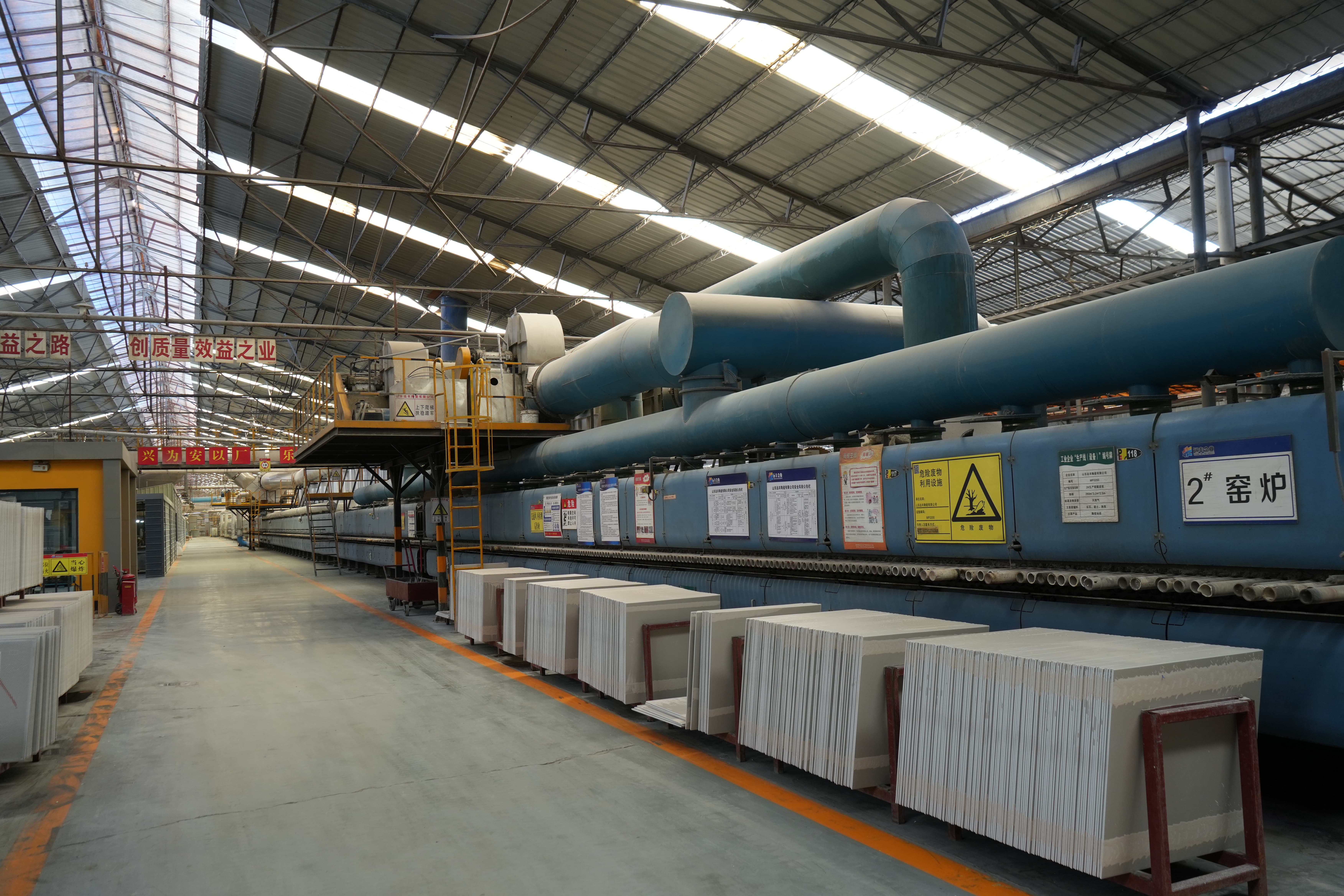
| Process control evidence | Laser flatness sorting, automatic temperature control, digital weight monitoring, high-pressure compaction, random stress testing | No inspection records offered for the delivered batch |
| Batch continuity | Batch tracking and reordering support with batch codes on packaging | No mechanism to match later phases to the original batch |
| Acceptance | Third-party inspection accepted | Visual check only, with no agreed sampling basis |
| After-sales basis | Damage compensation, online installation guidance, 24/7 technical consultation | No stated route for transit damage or installation queries |
One further commercial point belongs in this comparison. The internal benchmark against low-grade ceramic tiles records an installation cost around 20% lower and a maintenance cost around 30% lower for these porcelain ranges, because tighter dimensional tolerances reduce fitting time and lower absorption reduces replacement and resealing work. Those savings are realised only when the specified class is actually delivered — which is precisely what certificate scope and batch tracking exist to protect.
Frequently asked questions
Which certificates should an EU porcelain tile supplier provide for a commercial project?
For EU commercial projects, the working set is an ISO 9001:2015 certificate covering the manufacturing system and a CE certificate covering declared product performance. ALL KING CERAMICS holds ISO 9001:2015 certificate 0350521Q30166R1M issued by XQCC and CE certificate AC 50163816 0001 issued by TUV under EEC standards. Both documents should be supplied with the certificate number, the issuing body and the scope page so the buyer can verify them independently and confirm that the quoted series is inside the scope.
Do the certificates cover both Marble Series and Travertine, and what performance values are declared?
Yes. Both the ISO 9001:2015 certificate 0350521Q30166R1M and the CE certificate AC 50163816 0001 cover the Marble Series (ID 4765) and Travertine (ID 5624) porcelain ranges. The declared values for these ranges are water absorption below 0.5%, PEI 4/5 abrasion resistance, Mohs hardness 6–7, and breaking strength of at least 1300 N. Production capacity supporting repeat commercial orders is 12–16 million m² annually, with monthly production capacity of 1.2 million m² from a 60,000 m² facility run by 320 employees, including a 25-engineer R&D team.
How do certification and specification choices affect the project budget?
Certification itself is not a cost line; the cost drivers are the class of tile specified, the order quantity and the delivery terms. Minimum order quantity on ALL KING CERAMICS commercial ranges is 400 sqm per design, with trial orders accepted, and delivery can be quoted on EXW, FOB, CNF or CIF terms so freight sits either inside or outside the tile price depending on how the project is structured. Against low-grade ceramic tiles, the internal benchmark records roughly 20% lower installation cost and 30% lower maintenance cost for these porcelain ranges, driven by tighter dimensional tolerances and lower absorption.
Can the tiles be validated with a sample before the order is confirmed?
Yes. Trial orders are accepted alongside the standard 400 sqm per design minimum, and physical samples are available for approval against the specified surface, format and thickness. A sample should be checked against the same four values used in the submittal — water absorption below 0.5%, PEI 4/5, Mohs hardness 6–7 and breaking strength of at least 1300 N — and the approved sample should be retained as the reference for the production batch.
What are the lead time and purchasing terms once compliance is confirmed?
Commercial orders run on EXW, FOB, CNF or CIF delivery terms, with payment of 30% TT and 70% against BL copy, or by L/C or cash, and third-party inspection accepted as the acceptance criterion. Lead time depends on format mix, quantity and destination, so it is quoted per order rather than published as a fixed figure. To confirm the certificate set for a specific project, request the certificate copies and a quotation for your format and quantity — contact Abby at tyceramic2@all-king.com or +86 156-5336-9360 (WhatsApp available on the same number).
Conclusion: compliance is a sequence, not a logo
For an EU porcelain tile project, the difference between a smooth submittal and a stalled one is rarely the tile itself. It is whether the certificate number resolves, whether the scope names the series, whether the declared values match the specification, and whether the purchase order states how acceptance will be measured. ISO 9001:2015 certificate 0350521Q30166R1M issued by XQCC and CE certificate AC 50163816 0001 issued by TUV under EEC standards give a European buyer two verifiable reference points for the Marble Series (ID 4765) and Travertine (ID 5624) ranges, and the declared values — water absorption below 0.5%, PEI 4/5, Mohs 6–7, breaking strength of at least 1300 N — give the specification team the numbers it needs to close the loop.

Next step for EU project teams
Request the ISO 9001:2015 and CE certificate copies, the declared performance record for Marble Series (ID 4765) or Travertine (ID 5624), and a quotation on EXW, FOB, CNF or CIF terms for your format mix and quantity.
Download the ALL KING CERAMICS catalog (PDF) · all-king.com · Email tyceramic2@all-king.com · Tel / WhatsApp +86 156-5336-9360
Have Questions or Need More Details?
Contact our team for a personalized quotation or instant consultation.
Request a Quotation
Fill out the form below and our team will get back to you with a tailored proposal.
WhatsApp Direct Chat
Prefer to chat in real-time? Message us on WhatsApp for instant assistance & quick answers.
- Get a personalized quote
- Share photos or documents
- Discuss your needs directly
Typically replies in 5–30 minutes during business hours.