
Porcelain Tile Certifications: ISO 9001 and CE Mapping for Global & EU Projects
Porcelain Tile Certifications: ISO 9001 and CE Mapping for Global & EU Projects
Porcelain tile project solutions are approved on paperwork as often as on samples. A 60x120cm tile can look correct on a showroom table and still stall at submittal review, at the customs desk, or with an EU importer's compliance officer — because one of four document families was missing, out of scope, or issued for a different product. This guide maps ISO 9001, CE, ISO 13006 and ISO 10545-3 to the markets each one actually serves, and shows how a specifier can verify a supplier's certificate pack before the purchase order is signed.
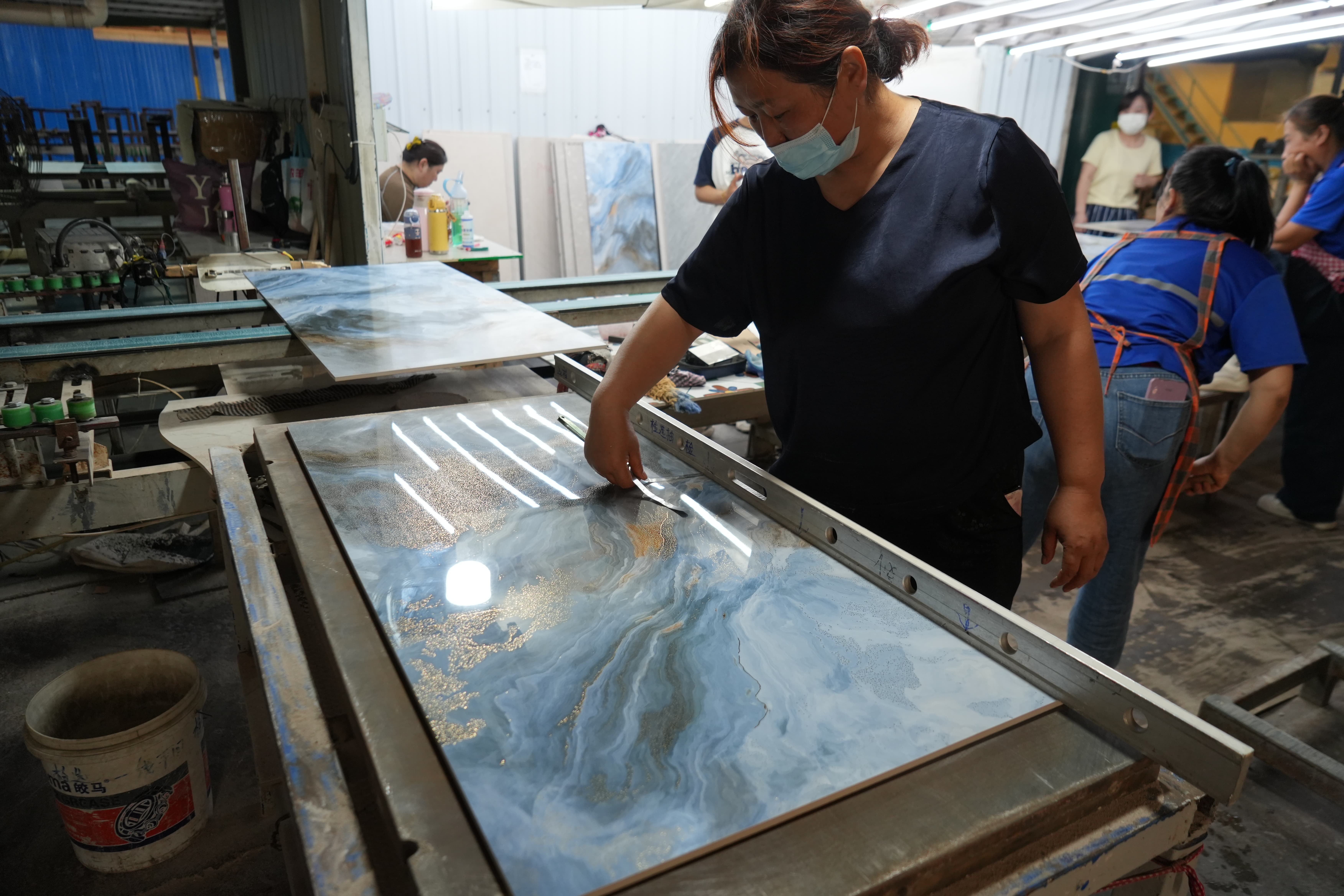
Dimensional and flatness checks inside the ALL KING CERAMICS production line — the process evidence an ISO 9001:2015 audit examines.
The Real Problem: Four Documents, One Word — “Certified”
The word “certified” is used for at least four different things in porcelain tile procurement, and they are not interchangeable. A quality-management certificate, a CE mark, a product standard reference and a laboratory test method each answer a different question. When they are collapsed into a single line in a quotation, the buyer inherits the ambiguity.
Four failure patterns appear repeatedly in project documentation:
- The management-system certificate is read as a product certificate. An ISO 9001:2015 certificate describes how a factory is run. It does not state a water absorption value, a slip rating or a breaking strength.
- CE is treated as a global passport. CE marking is tied to the EU market and to a declared performance under a harmonised product standard. It does not replace ISO 9001 for non-EU buyers, and it does not extend to markets that never asked for it.
- “ISO 13006 compliant” is quoted without a test reference. A product standard statement without a supporting test method is a claim, not evidence.
- A product-level certificate is assumed to cover the whole catalogue. Certificates issued for one product reference do not automatically transfer to another reference, format or surface finish.
Each of these is inexpensive to resolve at quotation stage and expensive to resolve after a container has sailed. The purpose of this guide is to make the mapping explicit, so that a specifier, importer or general contractor can see which document serves which market — and where a document legitimately stops.
Industry Background: Two Compliance Regimes Behind One Order
Porcelain tile crosses borders under two different regimes, and a single supplier may serve both. The distinction is structural, not cosmetic.
The EU route: CE marking and the harmonised standard
In the European Union, CE marking on ceramic tiles sits inside the Construction Products Regulation. A manufacturer places a tile on the EU market with a declaration of performance against the harmonised European product standard for ceramic tiles, EN 14411, which covers dry-pressed ceramic tiles — including porcelain — for internal flooring. The declaration states declared performance; it does not grade quality, and it does not audit the factory.
This is the single most misunderstood point in EU-facing procurement: CE certification for dry-pressed ceramic tiles for internal flooring is a product claim scoped to a market and an intended use. It answers “may this product be placed on the EU market, and with what declared performance?” It does not answer “is this factory well managed?” — that is the ISO 9001 question, and the two documents are designed to sit side by side.
The global route: ISO 9001 plus a product standard
Outside the EU, the reference set shifts. Buyers in Australia, New Zealand, Canada, Russia, Korea, Southeast Asia, the Middle East and Latin America typically request an ISO 9001:2015 certificate for the manufacturer, a product standard statement such as ISO 13006, and test data reported under the ISO 10545 series. Some also request a CE certificate as a secondary reference, even when the project is not in the EU — not because CE applies, but because it signals that the supplier has already been through a third-party conformity process.
ALL KING CERAMICS — Zibo All-King Ceramics Co., Ltd, a porcelain tile manufacturer and direct exporter based in Zibo, China — operates across both regimes. Its export footprint spans markets including Australia, New Zealand, Russia, Belarus, Korea, Vietnam, Malaysia, the Philippines, Peru, Panama, Colombia, Chile, Bolivia, Guatemala, Palestine, Iraq, Ukraine and the UAE, with exports representing roughly 70% of output. A documentation set that only satisfies one regime would leave a large part of that footprint unsupported, which is why the certificate pack is organised by market rather than by product alone.
The Certificate Set, Explained Document by Document
ISO 9001:2015 — certificate 0350521Q30166R1M, issued by XQCC
What it is: certification of the manufacturer's quality management system against ISO 9001:2015, registered under certificate number 0350521Q30166R1M and issued by XQCC. It is an organisation-level document.
What it covers: the existence of documented, auditable control over production planning, incoming materials, in-process inspection, calibration, handling of non-conforming product, corrective action and traceability. In practice this is the paper trail behind the plant's quality control regime — 100% flatness and sizing auto-check, piece-by-piece visual inspection, and random laboratory testing per batch across a 60,000 m² facility with a 25-engineer technical team.
What it does not cover: any specific tile performance value. A buyer who forwards only the ISO 9001 certificate to a consultant has demonstrated that the supplier is well organised. That is a genuine risk reduction, but it is not a specification match.
Market role: global. This is the document most non-EU importers open first, and for OEM/ODM programmes it is usually the entry requirement before any discussion of custom size, thickness, surface finish, pattern variation or private-label packaging begins.
CE certification AC 50163816 0001, issued by TUV
What it is: CE certification registered as AC 50163816 0001 and issued by TUV. It is the document that supports placing the product on the EU market under the Construction Products Regulation.
Market role: the EU specifically. It runs alongside the ISO 9001 certificate rather than replacing it, and it should be checked on three points before it enters a submittal: the certificate reference itself, the issuing body, and the product description and intended use declared against the harmonised standard for dry-pressed ceramic tiles for internal flooring.
Verification habit worth building: read certificate references character by character — 0350521Q30166R1M and AC 50163816 0001. Re-used, mistyped or truncated reference strings are the most common visible defect in forwarded certificate packs, and they are the easiest thing for an importer's compliance reviewer to flag.
CE/EEC certification for product 4765
Separate from the general CE certification, CE/EEC certification is held at product level for product 4765 — the Marble Series 60x120cm porcelain tile. Product-level certification is narrower by design: it describes a specific reference, not a catalogue.
The distinction matters at the moment of substitution. If a project approves 4765 and later switches to 5624 Travertine, or moves from 60x120cm to another format in the matrix, the product-level documentation should be re-checked against the new reference rather than assumed to travel with it. This is not a limitation unique to one supplier — it is how product-level conformity documents work everywhere.
Both 60x120cm families share the same declared technical envelope: thickness 9.0–10.5 mm, water absorption below 0.5% (vitrified), abrasion resistance PEI 4 / PEI 5, Mohs hardness 6–7, breaking strength ≥ 1300 N, modulus of rupture ≥ 35 MPa, and packing of 2 pcs per box (1.44 m² per box). What differs is the surface identity — Marble Series versus Travertine — and the documentation attached to each reference.
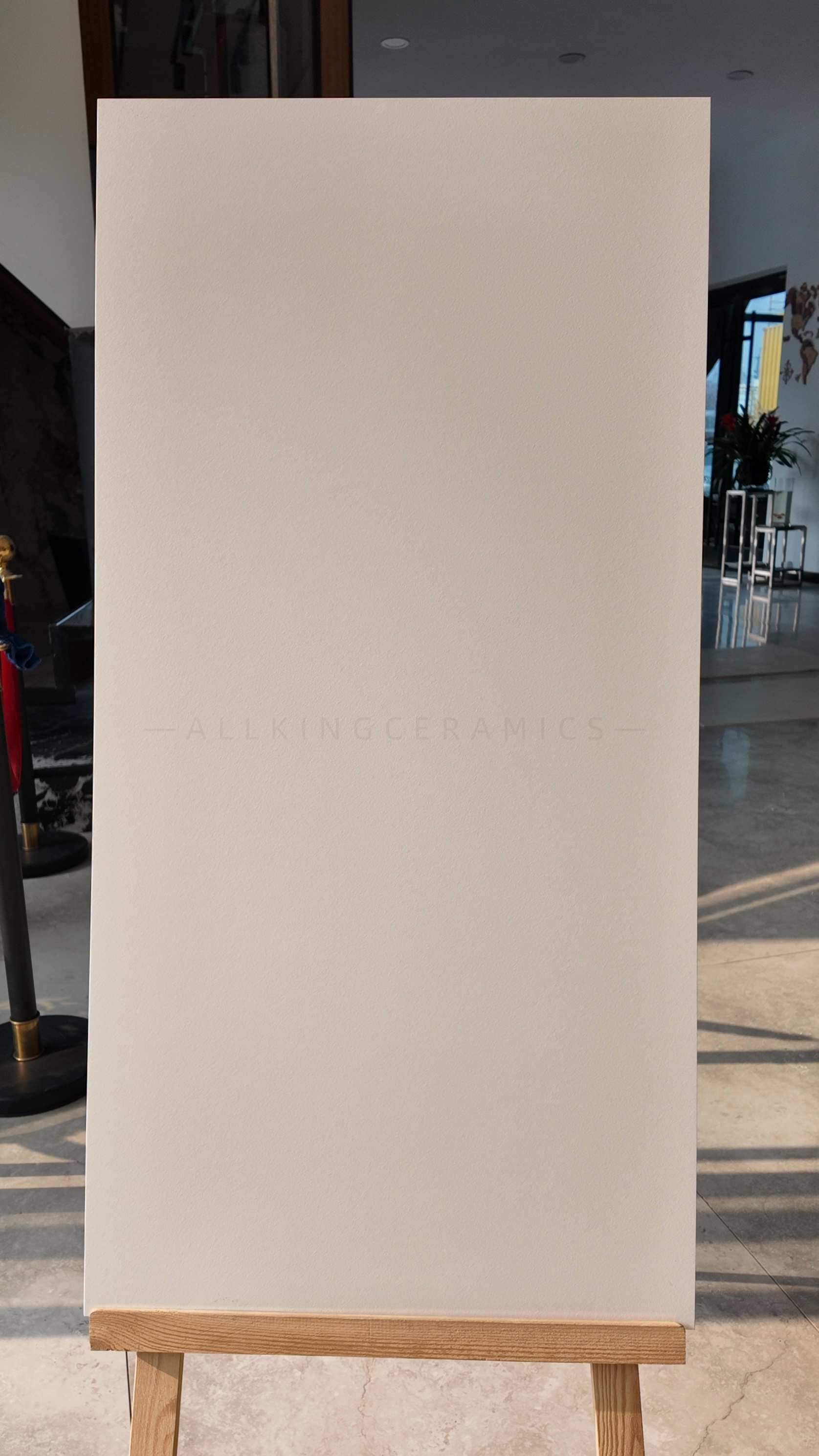
Product 4765, Marble Series 60x120cm porcelain tile — the reference covered by CE/EEC product-level certification.
ISO 13006 in practice: the Canada hotel renovation reference
ISO 13006 is the product standard for ceramic tiles, and in real projects it appears in a specification clause rather than in a frame on a wall. In a Canada hotel renovation context, the requirement reads as ISO 13006 compliance combined with fitness for wet and slippery environments under high-frequency commercial traffic. Product 5624 is the reference applied in that scenario, and installation there depends on a leveling system and tile spacers working together with tile adhesive and grout.
This is where specifications most often lose their evidence trail. “ISO 13006 compliant” is a statement about product requirements; it should be supported by test data and by the certificate pack, not accepted as a stand-alone phrase in a quotation email. A Canadian renovation and a Gulf retail fit-out may quote the same standard and still need different supporting documents, because the reviewer, the code framework and the submission format differ.
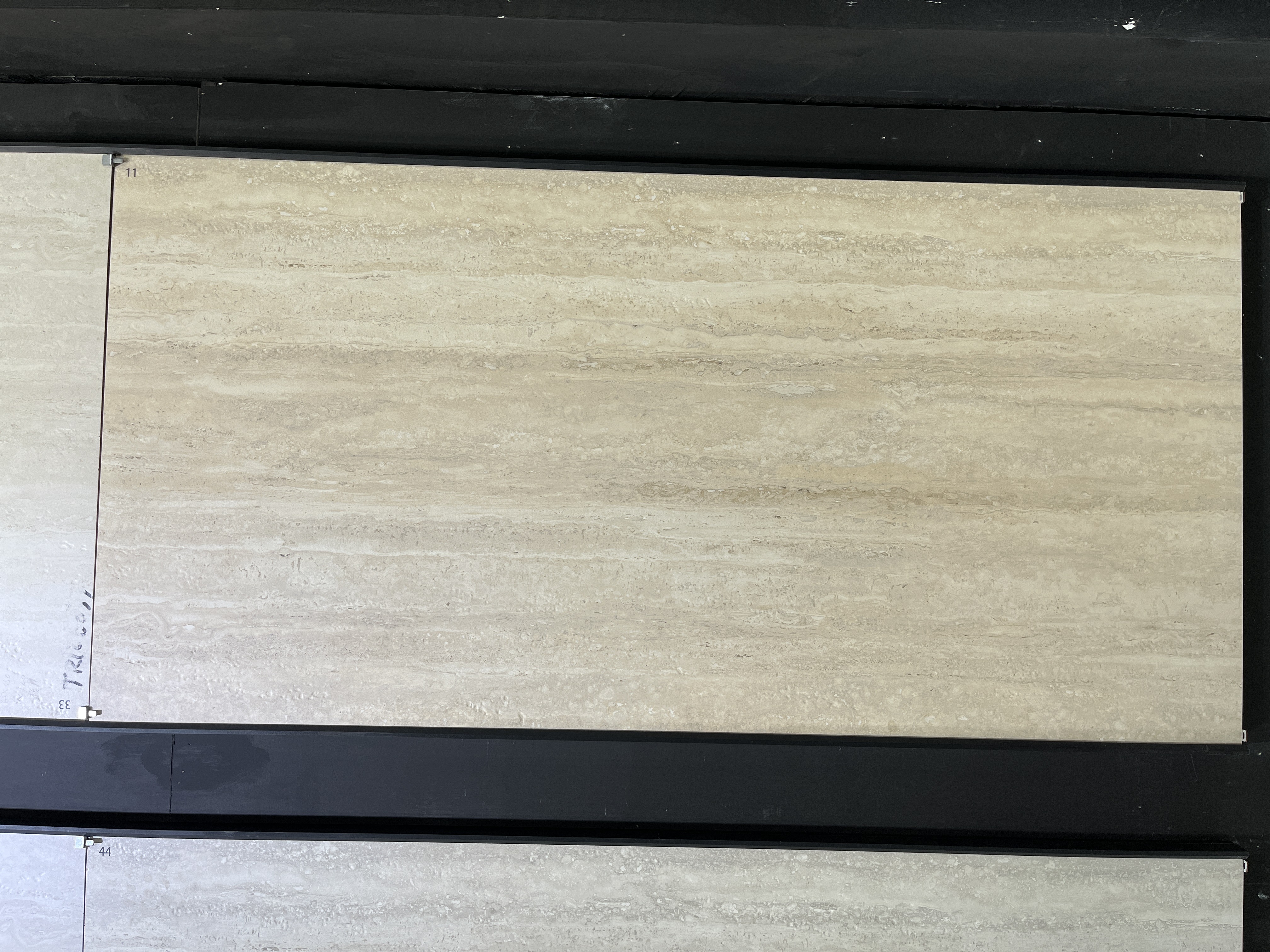
Product 5624 Travertine 60x120cm porcelain tile — the reference cited for ISO 13006 compliance in wet, high-traffic hotel renovation work.
ISO 10545-3 and the figure below 0.5%
Water absorption on both 60x120cm porcelain tile families is declared below 0.5%, which places them in the vitrified range. The method behind that figure is ISO 10545-3, and naming the method is what makes the number usable: a laboratory, a façade consultant or a customs inspector can reproduce or challenge the value on equal terms.
The figure also anchors several downstream claims. Water absorption below 0.5% is the property most closely tied to frost resistance, stain behaviour and dimensional stability under moisture, which is why it is the first number to check when a porcelain tile is proposed for outdoor paving, wet areas or unheated spaces.
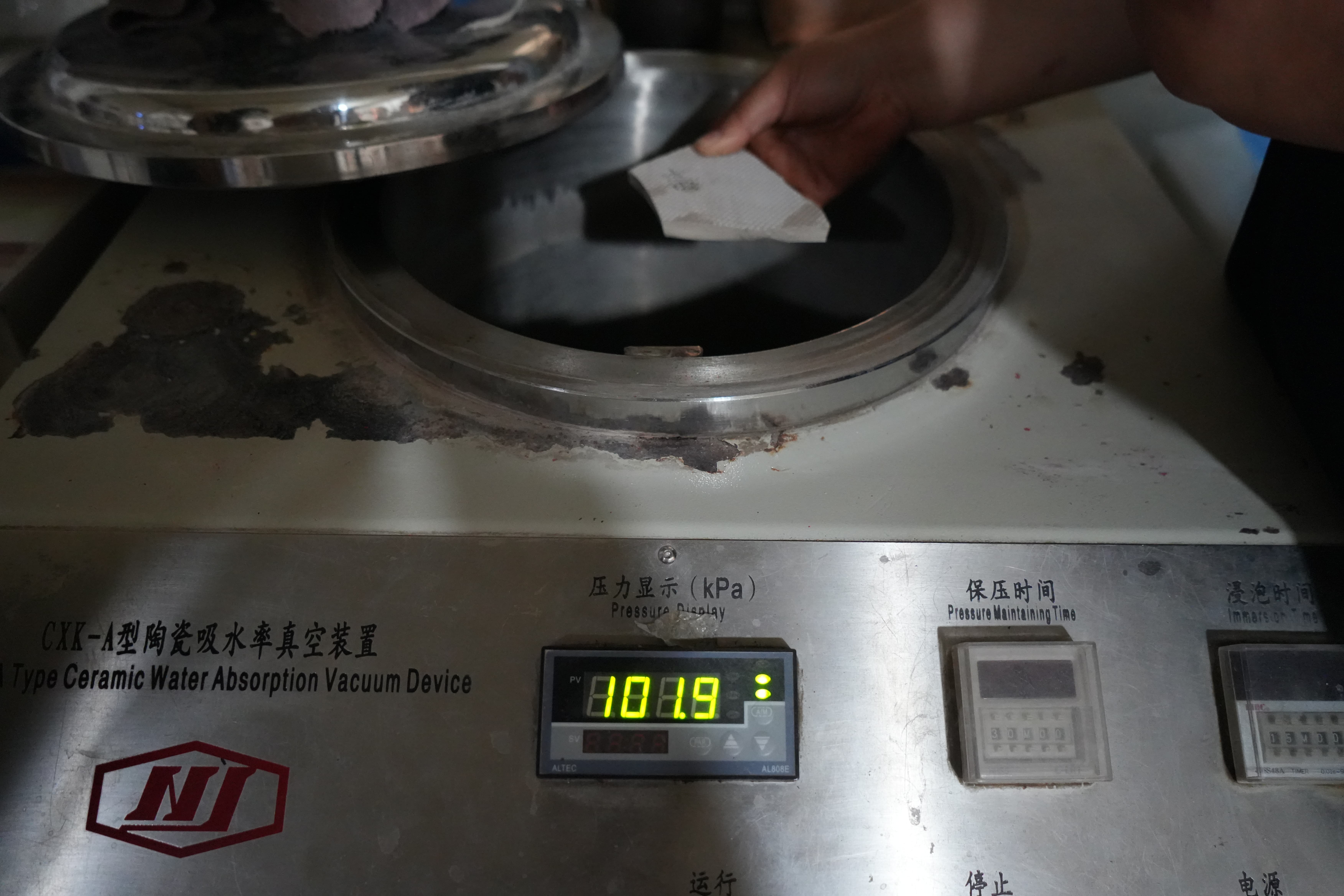
Water absorption testing — the measurement behind the “below 0.5% vitrified” declaration, reported under ISO 10545-3.
Dry-pressed tiles for internal flooring versus quality-management certification
One sentence causes most of the confusion in EU procurement: “the factory is CE and ISO certified.” Split it into two clauses. CE certification (AC 50163816 0001, issued by TUV) describes the conformity of dry-pressed ceramic tiles for internal flooring for the EU market. ISO 9001:2015 certification (0350521Q30166R1M, issued by XQCC) describes how the factory is managed. One is a product claim tied to a market and an intended use; the other is a process claim that any buyer, in any country, can accept as a reference.
The practical consequence: an EU importer needs the CE document to place the tile on the market, and needs the ISO 9001 document to qualify the supplier. A Canadian, Australian or Middle Eastern buyer needs the ISO 9001 document and the product standard statement, and may never need CE at all. Sending the same two-page PDF to every market works until someone reads the scope line.
| Document | What it certifies | Issuer / reference | Market served | Use it to prove | Do not use it to prove |
|---|---|---|---|---|---|
| ISO 9001:2015 | Quality management system of the manufacturer | XQCC — certificate 0350521Q30166R1M | Global | Documented production, inspection and corrective-action control | Any specific tile performance value |
| CE certification | Product conformity for the EU market | TUV — certificate AC 50163816 0001 | EU | Conformity of dry-pressed ceramic tiles for internal flooring | Factory management quality, or non-EU market access |
| CE/EEC certification | Product-level conformity for a specific reference | Held for product 4765 (Marble Series, 60x120cm) | EU | Conformity of product 4765 | Automatic coverage of other references or formats |
| ISO 13006 | Product standard requirements for ceramic tiles | Standard reference cited in project specification | Global / project-defined | That declared product requirements are addressed, with supporting test data | A management-system certification |
| ISO 10545-3 | Test method for water absorption | Standard reference behind the < 0.5% figure | Global | How the absorption value was determined | A pass/fail certificate in its own right |
Step-by-Step: How a Specifier Verifies a Certificate Pack
Verification is a sequence, not a checklist read in any order. Done in the wrong order, the exercise produces a folder of valid documents attached to the wrong product.
- Fix the market first. Decide whether the project places the tile on the EU market. If yes, CE certification (AC 50163816 0001, TUV) is the anchor document. If not, ISO 9001:2015 plus an ISO 13006 product standard statement is the anchor.
- Classify each document. Every file is one of four things: a management-system certificate, a product conformity certificate, a product standard reference, or a test method reference. Write the classification next to the file name before it goes into the submittal.
- Verify issuer and reference string. Check that the issuing body named on the document matches the body you are relying on, and that the certificate number is complete and consistent across every copy — including any copy forwarded by a trading intermediary.
- Match the product scope to the SKU you are buying. Confirm whether the document is company-level or product-level. Product 4765 carries its own CE/EEC certification; product 5624 is the reference cited in Canada hotel renovation specifications under ISO 13006. A format change within the matrix — 60x120cm to 60x60cm, 80x80cm, 100x100cm or 75x150cm — is a scope question, not a formality.
- Match declared performance to the specification, line by line. Thickness 9.0–10.5 mm; water absorption below 0.5% (vitrified) reported to ISO 10545-3; abrasion PEI 4 / PEI 5; Mohs hardness 6–7; breaking strength ≥ 1300 N; modulus of rupture ≥ 35 MPa; slip rating R10/R11, with R12 achievable through customization. Any line the supplier cannot support in writing is a line to remove from the specification or replace.
- Match the environment to the intended use. Wet and slippery areas → slip rating and absorption. Frost-exposed exteriors → absorption. Healthcare corridors and education buildings → slip plus abrasion class. Where DIN 51130 is the reference, R11 corresponds to a high grip on the oil-wet ramp between 19° and 27°, which is the technical basis behind the “R11” label on a data sheet.
- File the pack with batch traceability. Certificates qualify a supplier and a product; batch records qualify the delivery. Keep the certificate set next to the batch identification, and confirm what happens if a batch deviates — damage compensation, online installation guidance, 24/7 technical consultation and batch tracking with reordering support are the mechanisms that decide how a claim is handled later.
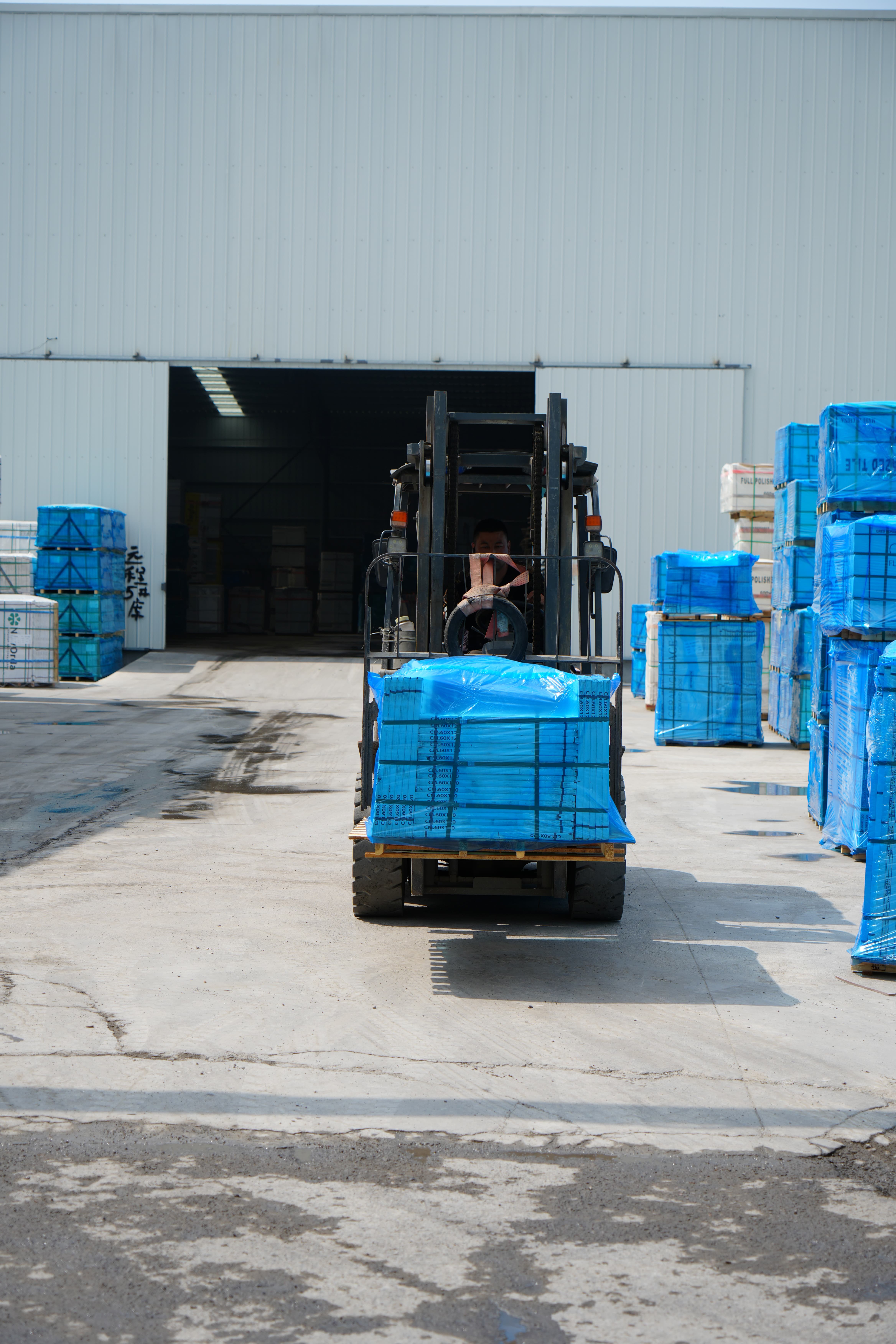
Export loading — the point where a certificate pack and a batch record have to match the market they were prepared for.
Where These Certificates Matter in Real Projects
Canada hotel renovation — product 5624
A hotel renovation in Canada is a typical multi-constraint case: wet and slippery bathroom and corridor zones, high-frequency commercial traffic, and an ISO 13006 compliance clause written into the specification. Product 5624 is the reference applied here, with installation built around a leveling system and tile spacers, tile adhesive and grout, and anti-slip ratings in the R10/R11 range. The certificate question is narrow and answerable: ISO 13006 compliance plus the absorption figure below 0.5%, supported by test data.
EU commercial interior — dry-pressed tiles for internal flooring
For an EU interior fit-out — retail concourse, lobby, office floor plate — the anchor document is CE certification AC 50163816 0001 issued by TUV, read together with the declaration of performance against the harmonised standard for dry-pressed ceramic tiles for internal flooring. The supplier's ISO 9001:2015 certificate then sits behind it as supplier qualification. Reviewers who receive both documents in the correct order rarely escalate.
Healthcare, education and high-traffic interiors
Hospitals, clinics, schools and university buildings combine slip exposure with abrasion. The relevant declared values are PEI 4 / PEI 5 abrasion resistance, Mohs hardness 6–7, slip ratings R10/R11 with R12 achievable through customization, and the same sub-0.5% absorption. These are specification decisions first and certificate decisions second — but the certificate has to be able to carry them.
Shopping malls, mixed-use and large-scale builds
Large-format work concentrates risk in flatness, sizing consistency and supply continuity. The 60x120cm format is the flagship product, supported by 60x60cm, 80x80cm, 100x100cm and 75x150cm, with monthly capacity of 1.2 million m². Project experience includes a 15,000 m² reference covering hotel lobby, commercial mall flooring, office building façade and high-end apartment bathrooms — a scale where the quality system, not a single certificate, is what carries the delivery.
LEED and green building submissions
Porcelain tile is fired at high temperature, which removes organic matter; USGBC-aligned guidance on tile treats this type of flooring as exempt from VOC content requirements under LEED v4. That is a useful starting point, not a conclusion — confirm with the project's green building consultant before relying on it in a credit submission, and keep the supplier's own statement separate from the LEED documentation.
Product Comparison: 5624 Travertine and 4765 Marble Series
Both 60x120cm porcelain tile families are declared against the same technical envelope. What separates them is surface identity and the certification reference attached to each.
| Attribute | 5624 — Travertine | 4765 — Marble Series |
|---|---|---|
| Format | 60x120cm porcelain tile | 60x120cm porcelain tile |
| Material | Porcelain clay | Porcelain clay |
| Thickness range | 9.0–10.5 mm | 9.0–10.5 mm |
| Water absorption | < 0.5% (vitrified), tested to ISO 10545-3 | < 0.5% (vitrified), tested to ISO 10545-3 |
| Abrasion resistance | PEI 4 / PEI 5 | PEI 4 / PEI 5 |
| Mohs hardness | 6–7 | 6–7 |
| Breaking strength | ≥ 1300 N | ≥ 1300 N |
| Modulus of rupture | ≥ 35 MPa | ≥ 35 MPa |
| Packing | 2 pcs/box (1.44 m²/box) | 2 pcs/box (1.44 m²/box) |
| Product-level CE/EEC certification | Not stated in the available documentation | Held for product 4765 |
| Company-level documentation | ISO 9001:2015 (0350521Q30166R1M); CE (AC 50163816 0001) | ISO 9001:2015 (0350521Q30166R1M); CE (AC 50163816 0001) |
| Typical specification context | Hotel renovation in Canada under ISO 13006 | EU-facing projects relying on product-level CE/EEC |
The honest reading of Table 2 is that the choice between these two families is a design decision, not a performance decision — and that the documentation question has to be asked per reference, not per supplier.
Frequently Asked Questions
1. Does CE certification replace ISO 9001 for a porcelain tile project?
No. ISO 9001:2015 certificate 0350521Q30166R1M issued by XQCC certifies the manufacturer's quality management system — production planning, inspection, calibration, non-conforming product handling, corrective action and traceability. CE certification AC 50163816 0001 issued by TUV addresses product conformity for the EU market. Neither substitutes for the other, and neither replaces an ISO 13006 product standard reference or a test result reported under ISO 10545-3. A complete submittal normally needs all four elements.
2. What does the CE/EEC certification for product 4765 cover, and does it extend to product 5624?
It is product-level certification held for product 4765, the Marble Series 60x120cm porcelain tile. Product-level documents describe a specific reference, so a substitution — to product 5624 Travertine, or to another format in the matrix such as 60x60cm, 80x80cm, 100x100cm or 75x150cm — should be checked against its own documentation before the change is approved. This is how product-level conformity works across the industry, not a supplier-specific limitation.
3. How does a buyer confirm that declared performance matches the project specification?
Compare the specification line by line against the declared values: thickness 9.0–10.5 mm, water absorption below 0.5% (vitrified) reported to ISO 10545-3, abrasion resistance PEI 4 / PEI 5, Mohs hardness 6–7, breaking strength ≥ 1300 N, modulus of rupture ≥ 35 MPa, and packing of 2 pcs/box (1.44 m²/box). Slip ratings are R10/R11, with R12 achievable through customization. Behind those numbers sits the quality regime the ISO 9001:2015 certificate describes: 100% flatness and sizing auto-check, piece-by-piece visual inspection, and random laboratory testing per batch.
4. What is the minimum order quantity, and can a project start with a trial order?
The minimum order quantity is 400 m² per design, and trial orders are acceptable. Monthly production capacity is 1.2 million m², so a trial quantity does not sit behind a full production queue. For a compliance-led procurement, a trial order is the cheapest way to validate packaging, labelling, batch records and the certificate pack against the actual delivery before the main award — and samples can be arranged in parallel to check surface, format and finish against the design intent.
5. What is the production lead time once a specification is approved?
Standard production lead time is 7–10 days after confirmation, with OEM/ODM options covering custom size and thickness, surface finish, anti-slip rating, marble vein pattern variation, and private-label cartons and packaging. To move from certificate review to a documented quotation, share the project market, the reference (4765, 5624 or another format), the required slip rating and the target quantity — the ALL KING CERAMICS catalogue covers the format matrix in the meantime.
Next Step: Match the Certificate Pack to Your Market
Certificate verification is a short exercise when the documents already exist and a long one when they do not. ALL KING CERAMICS supplies ISO 9001:2015 certificate 0350521Q30166R1M (XQCC), CE certification AC 50163816 0001 (TUV) and CE/EEC certification for product 4765, alongside declared technical data for both 60x120cm porcelain tile families.
Send the project market, the required standard reference and the target quantity, and request the certificate pack, a sample set or a quotation against the specification you are working from.
Website: www.all-king.com | Email: tyceramic2@all-king.com | Tel / WhatsApp: +86 156-5336-9360
Download the full range: ALL KING Ceramics Catalog (PDF)
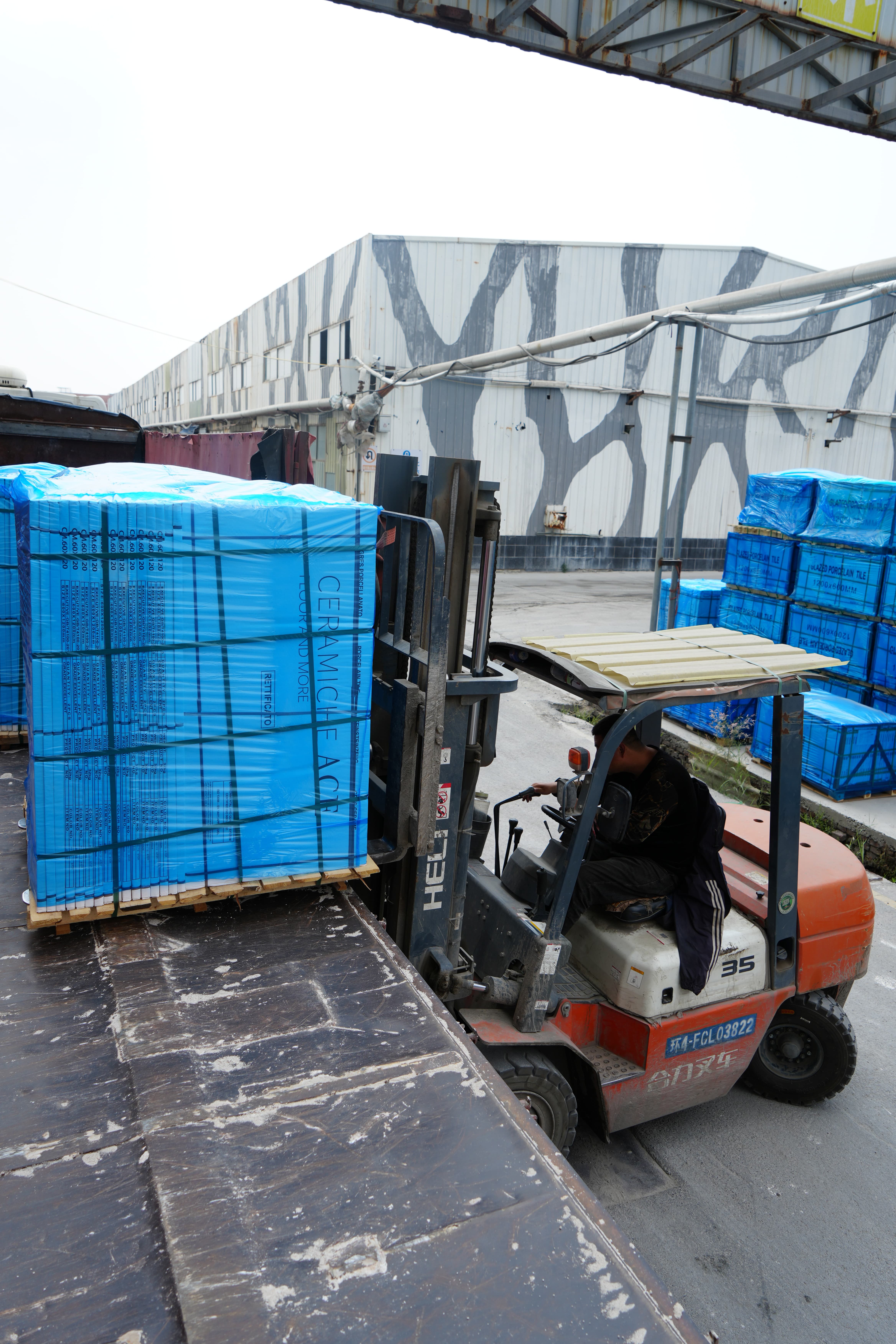
Project quantities ship against confirmed specifications — start with the certificate pack and a sample set.
Conclusion
Porcelain tile project solutions fail on compliance for boring reasons: a management-system certificate presented as a product claim, a CE document asked to do a job it was never scoped for, or a product standard quoted without the test method behind it. The fix is a mapping, not a longer certificate folder.
Read the pack in the right order. ISO 9001:2015 (0350521Q30166R1M, XQCC) qualifies the manufacturer for global markets. CE certification (AC 50163816 0001, TUV) supports dry-pressed ceramic tiles for internal flooring in the EU. CE/EEC certification for product 4765 covers that specific reference. ISO 13006 carries the product standard requirement seen in Canada hotel renovation specifications, and ISO 10545-3 carries the sub-0.5% water absorption figure that underpins frost and wet-area suitability. Four documents, four different jobs — and a project team that keeps them separate will clear submittal review faster than one that does not.
Have Questions or Need More Details?
Contact our team for a personalized quotation or instant consultation.
Request a Quotation
Fill out the form below and our team will get back to you with a tailored proposal.
WhatsApp Direct Chat
Prefer to chat in real-time? Message us on WhatsApp for instant assistance & quick answers.
- Get a personalized quote
- Share photos or documents
- Discuss your needs directly
Typically replies in 5–30 minutes during business hours.