
Porcelain Tile Supplier Evaluation: Capability Verification and Delivery Assurance
Porcelain tile supplier evaluation is the process of proving three things before a purchase order is issued: that the factory can produce the specified format at the required volume, that its quality and compliance documents match the destination market, and that it can ship a project quantity without breaking the construction programme. Renders, samples and price per square metre are secondary until those three points are evidenced.
This guide sets out a verification model that commercial buyers can apply to any porcelain tile supplier, and uses ALL KING CERAMICS — a porcelain tile manufacturer and direct exporter based in Zibo, China, established in 2011 and supplying architectural ceramics to more than 15 export markets — as a worked example of what documented evidence looks like at each stage.
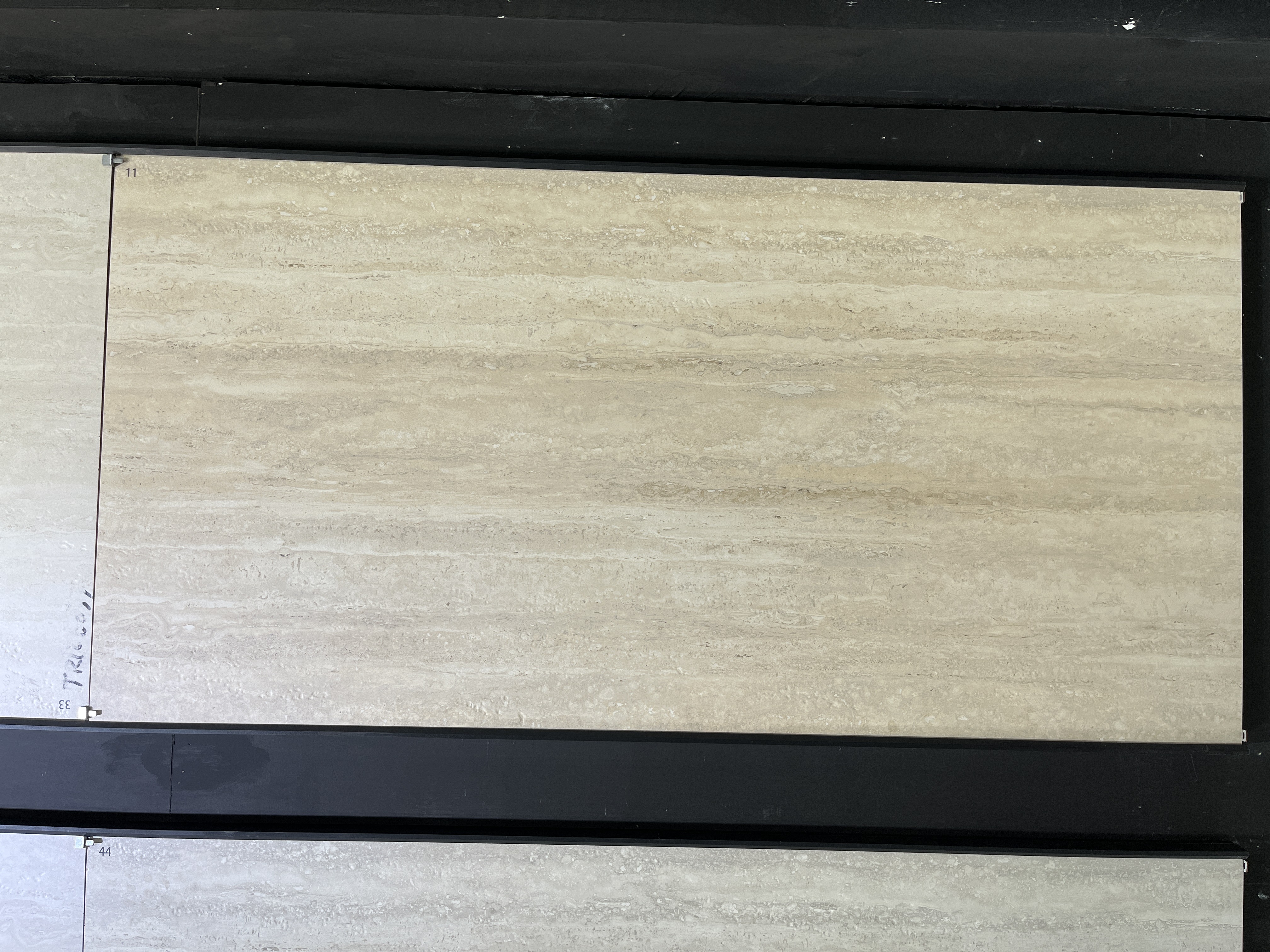 Cover: 60x120 cm Travertine-series porcelain tile, the flagship format in the ALL KING CERAMICS project range.
The Problem: Three Gaps That Only Appear After the Order
Most supplier shortlists are built on two inputs — a sample and a quotation. Both are necessary, and neither proves that a factory can deliver a commercial project. The failures that damage a construction programme fall into three distinct gaps, and each has to be closed separately.
- Capability gap. The supplier can make tile, but not in the specified format, not at the required volume, or not in a repeatable batch that matches the first delivery. A supplier whose portfolio covers 60x60 cm ceramic tiles is not automatically a supplier for 75x150 cm porcelain.
- Compliance gap. A certificate exists, but it does not cover the destination market, or the certificate holder's name does not match the entity issuing the quotation. This is usually discovered at the border or at handover, which is the most expensive moment to discover it.
- Delivery gap. The tile is produced correctly but arrives late, damaged, or in packaging that cannot survive a sea freight cycle plus site storage.
An evaluation that treats these three as one general "trust" question produces a shortlist that looks consistent on paper and diverges sharply in execution. The model below separates them deliberately, because each gap is closable with a specific document, audit point or physical check.
Industry Background: Why Documentary Verification Became a Procurement Requirement
Three structural features of the current tile market make verification a requirement rather than a formality.
Market scale and supply depth. The global tile market was estimated at USD 265.21 billion in 2024 and is projected to reach USD 587.72 billion by 2035, according to Market Research Future. In 2024, China was the leading exporter of ceramic products with an export value of USD 18.3 billion, according to the Observatory of Economic Complexity. Commercial construction is estimated to account for 37% of total global tile demand, per the same Market Research Future analysis. A market of this depth contains manufacturers with genuinely different capability levels that describe themselves in almost identical language.
Safety standards have become specification gates. Under DIN 51130, an R11 anti-slip rating corresponds to grip verified on an oil-wet inclined plane between 19° and 27°. A tender for a wet area, an outdoor terrace or an inclined public walkway therefore cannot be satisfied by a generic "anti-slip" claim — it needs a rated product line and a stated test basis.
Green building rules reward documentation.Porcelain tiles are inherently exempt from LEED VOC 'FloorScore' requirements because high-temperature kiln firing destroys all organic matter, as set out in the USGBC-aligned WhyTile guidance on LEED v4. A supplier that cannot state this clearly, and cannot connect it to its product data, adds a review cycle to every green-certified project.
Taken together, the buying decision shifts. Buyers are no longer choosing only between tiles; they are choosing between levels of evidence.
Detailed Solution: A Three-Pillar Verification Model
A verification-based evaluation of porcelain tile project solutions has three pillars. Each pillar answers a question that a quotation cannot.
Pillar 1 — Manufacturing Capability: Can the Factory Make This, Repeatedly?
Capability is a set of numbers, not a description. For ALL KING CERAMICS the documented position is: established in 2011; a 60,000 m² manufacturing facility; annual production capacity of 12–16 million m²; approximately 320 staff; and 25 engineers in research and development. Those five data points let a buyer check volume feasibility, engineering support for custom work, and whether the supplier is a manufacturer rather than an intermediary.
Format coverage is the second check. The company's matrix is built around 60x120 cm porcelain tiles as the flagship core product, with 75x150 cm, 80x80 cm, 100x100 cm and 60x60 cm also produced — the 60x60 cm line being ceramic tile rather than porcelain. That distinction matters in a mixed development, where an apartment scheme may specify porcelain in bathrooms and lobbies while using ceramic elsewhere: a supplier producing both from one facility removes a coordination layer and a second set of compliance documents.
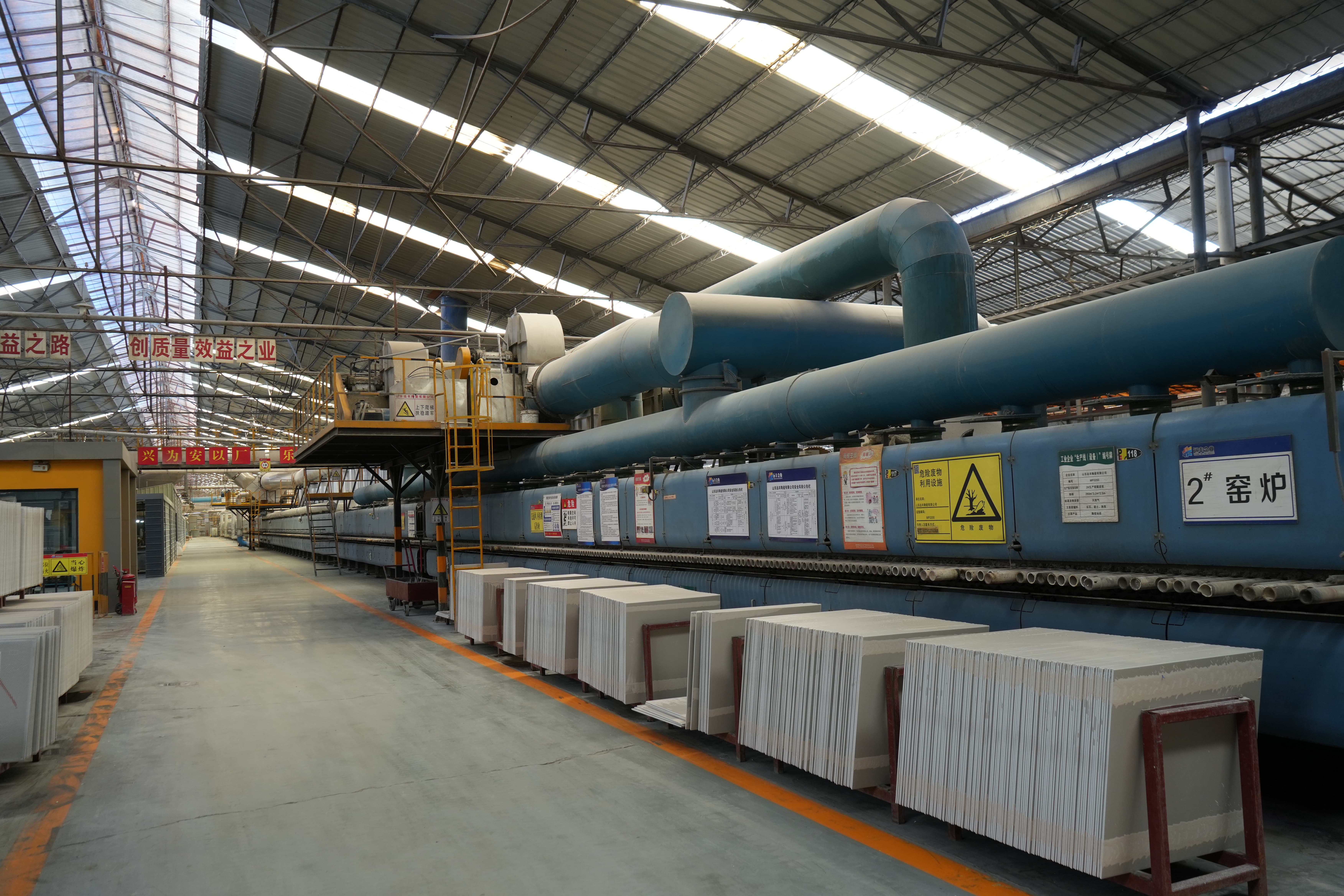 Kiln line inside the 60,000 m² production facility — annual output of 12–16 million m².
Pillar 2 — Quality System and Market-Specific Compliance: Will the Documents Survive the Border?
Compliance is not one document. For a global commercial project it is at least three layers: a certified quality management system, market-specific access certification, and product-standard performance data.
- Quality management. ISO 9001:2015 certification number 0350521Q30166R1M, issued by XQCC — the baseline evidence that a documented quality system exists and is audited.
- EU market access. CE certificate AC 50163816 0001, issued by TUV, covering the European market.
- Product standard. A stated ISO 13006 compliance position for the porcelain range, which is the reference standard buyers use when comparing technical ceramic tile performance.
Beyond certificates, ask what the factory actually measures. Visible test points in this facility include water absorption testing, flatness testing and slip resistance testing — the three parameters that generate most site disputes in commercial flooring. A certificate confirms a system exists; in-house test discipline explains why batch two still matches batch one.
 Flatness testing during in-house quality control — a check that directly affects installation speed on site.
Pillar 3 — Delivery Assurance: Can the Order Survive the Journey?
Export behaviour is a practical proxy for delivery reliability. ALL KING CERAMICS exports 70% of total sales and sells into more than 15 countries, with recorded markets including Australia, New Zealand, South Korea, Vietnam, Malaysia, the Philippines, Russia, Ukraine, the United Arab Emirates, Iraq and several Latin American markets. A supplier operating at that export ratio has already solved documentation, palletisation and loading across multiple customs regimes — problems that a purely domestic producer has never had to face.
Packaging is where delivery risk becomes visible. The 60x120 cm porcelain line is packed at 2 pcs per box, 1.44 m² per box, and export pallets are fumigated wooden pallets — the detail that prevents a container being delayed or rejected at an agricultural inspection point. OEM/ODM capability also belongs in this pillar: private-label and custom specifications move through the same production and packing flow, so the supplier must be able to hold a custom specification across repeat orders, not only the first one.
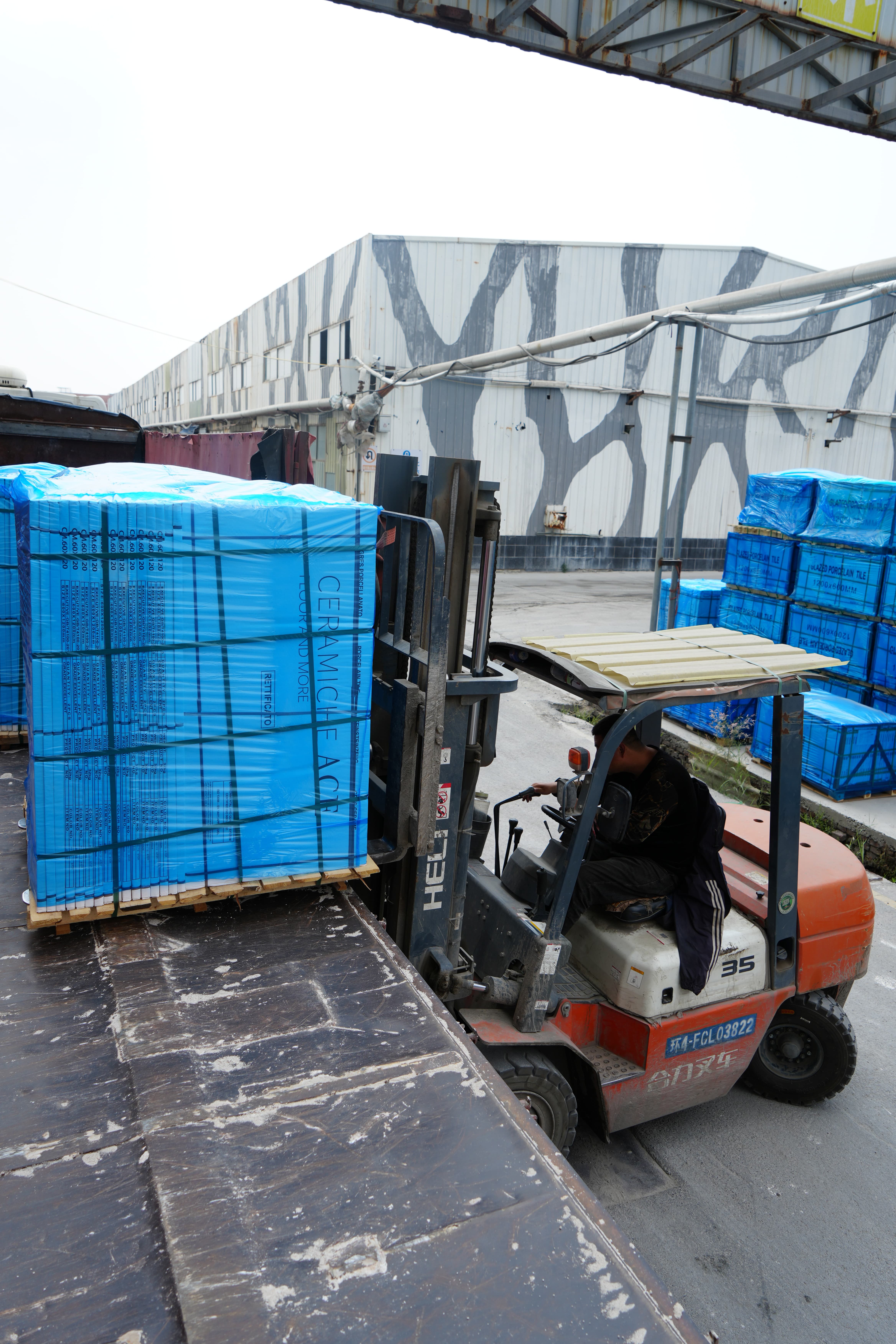 Loading for export — 70% of total sales ship to markets outside China.
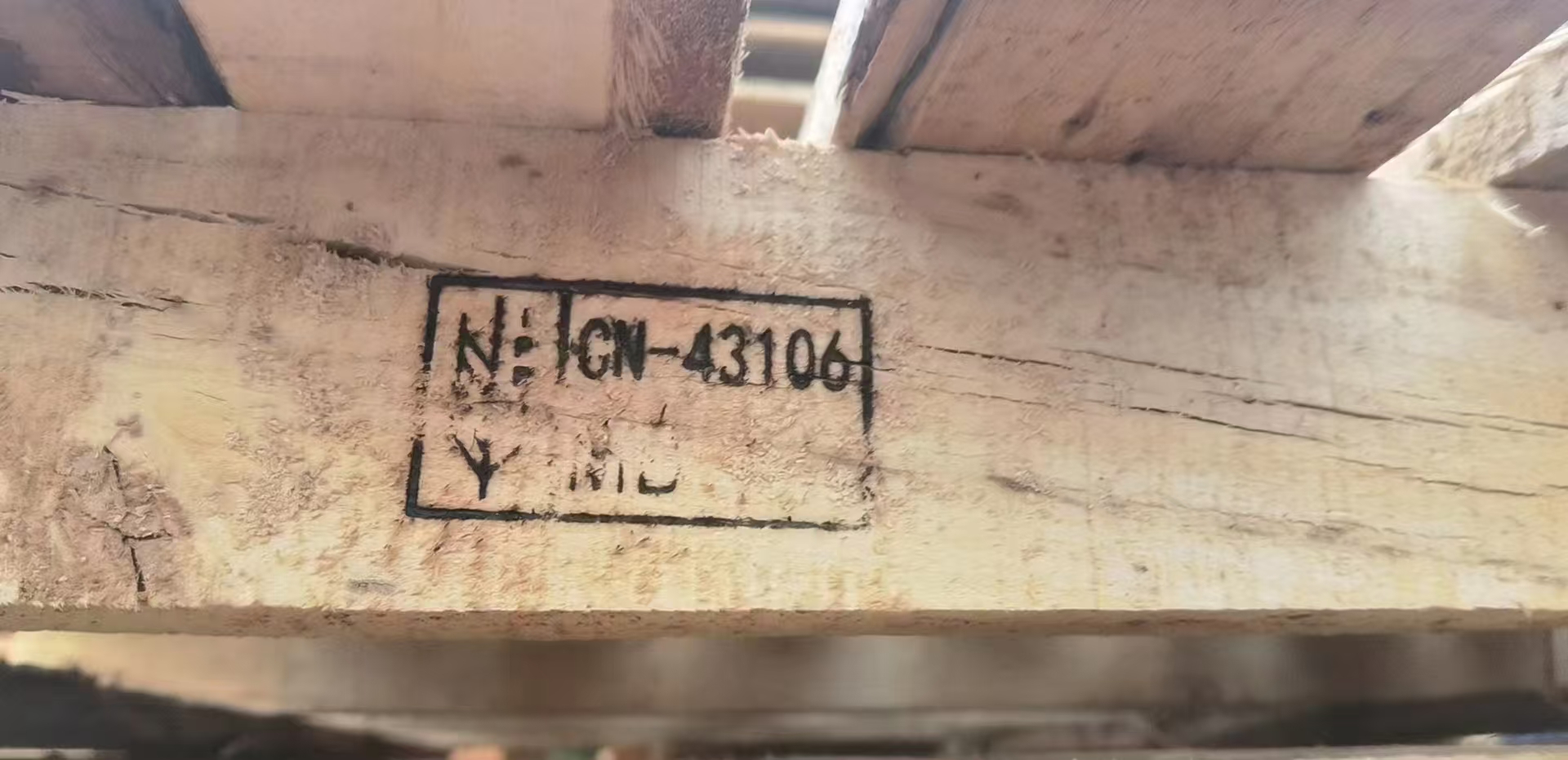 Fumigated wooden pallets used for porcelain tile export packing.
Product-Level Evidence: The Numbers a Specification Should Contain
Supplier capability is only useful when attached to a product. The published specification for the 60x120 cm porcelain tile range is set out below — these are the values a buyer should be able to compare line by line against the tender document.
| Parameter | Published value (60x120 cm porcelain tile) |
|---|---|
| Format | 60x120 cm |
| Thickness range | 9.0–10.5 mm |
| Water absorption | Below 0.5% (vitrified) |
| Abrasion resistance | PEI 4 / PEI 5 |
| Mohs hardness | 6–7 |
| Breaking strength | ≥ 1300 N |
| Modulus of rupture | ≥ 35 MPa |
| Packing | 2 pcs/box (1.44 m²/box) |
| Slip resistance | R10 / R11 in the standard range; R12 achievable through customization |
Format availability across the wider matrix should be confirmed at the same time, because a project rarely stops at one size:
| Format | Product classification | Role in the portfolio |
|---|---|---|
| 60x120 cm | Porcelain tile (vitrified, <0.5% absorption) | Flagship core product |
| 75x150 cm | Porcelain tile | Additional large format |
| 80x80 cm | Porcelain tile | Standard commercial format |
| 100x100 cm | Floor tile | Large-format flooring |
| 60x60 cm | Ceramic tile | Complementary format for non-porcelain areas |
Step-by-Step Breakdown: A Six-Step Evaluation Sequence
The sequence below is designed to be run in order. Each step produces an output that the next step depends on, which prevents the common failure of evaluating price before specification is fixed.
STEP 1 Fix the specification and the destination market
Before contacting suppliers, write down the format, thickness tolerance, water absorption ceiling, abrasion class, slip rating and the country of installation. The destination determines which certificate is mandatory: an EU-bound project needs the CE route, while other markets may accept an ISO 9001 quality system plus a product-standard statement. Without this, every quotation you receive will be answering a different question.
STEP 2 Request documents by number, not by name
Ask for the certificate number, the issuing body and the certificate holder's registered name. A quality system certificate such as ISO 9001:2015 number 0350521Q30166R1M issued by XQCC, and a market-access certificate such as CE certificate AC 50163816 0001 issued by TUV, can both be verified directly. A PDF titled "ISO certificate" with no number is not evidence.
STEP 3 Verify physical capability on paper, then on site
Collect facility area, annual output, headcount and engineering headcount. For reference, the ALL KING CERAMICS figures are 60,000 m², 12–16 million m² per year, approximately 320 staff and 25 R&D engineers. Then check the format matrix against your specification — a factory producing 60x120 cm, 75x150 cm, 80x80 cm, 100x100 cm and 60x60 cm has genuine cross-format capability rather than a single-line catalogue.
STEP 4 Match product performance to the application
Compare tested values with the use case, not with the brochure. A value below 0.5% water absorption supports use in wet and frost-prone environments; PEI 4 or PEI 5 abrasion resistance supports high-traffic floors; a breaking strength of at least 1300 N and modulus of rupture of at least 35 MPa gives the structural margin a commercial installer expects. Where the tender specifies R11 or R12, confirm the rating is available on that specific product line — the standard range here is R10/R11, with R12 achievable through customization.
STEP 5 Audit the delivery mechanics
Confirm packing ratio (2 pcs per box, 1.44 m² per box on the 60x120 cm line), pallet type (fumigated wooden pallets), loading method, and the supplier's export footprint. A 70% export ratio and a track record in more than 15 countries is a faster signal than any statement about being "export-oriented". Ask specifically whether OEM/ODM orders follow the same packing and pallet standard as catalogue orders.
STEP 6 Validate with a production sample, then lock the specification
Sample from the exact production line and format you will order, not from a display board. Test flatness, absorption, slip performance and shade consistency. When the sample is approved, convert it into a written specification appended to the purchase order, including the approved sample reference. This is the step that protects phase two, phase three, and any later reorder.
Use Cases: Where This Model Changes the Outcome
Shopping malls and high-traffic retail. Continuous heavy foot traffic is the defining load case. PEI 4/PEI 5 abrasion resistance combined with breaking strength of at least 1300 N addresses both surface wear and point loading from trolleys and pallet trucks. The evaluation question is not "is it porcelain" but "can the supplier repeat the same batch across a multi-phase fit-out".
Hotel lobbies and renovation projects. Lobby flooring combines appearance requirements with heavy surface load and frequent cleaning. Large-format 60x120 cm and 75x150 cm porcelain reduces joint density, which shortens installation and reduces grout maintenance. For renovation work, the compliance and packing checks matter more than usual because the delivery window is tied to a closure period.
Apartment developments and mixed-use schemes. These projects typically need several formats and often both porcelain and ceramic. A single supplier covering porcelain bathrooms and lobbies alongside ceramic secondary areas simplifies the document set, the delivery schedule and the shade-matching risk between buildings.
Outdoor terraces and frost-exposed paving. Water absorption below 0.5% plus frost resistance supports external use in freeze-thaw conditions, while R11 provides grip on wet inclined surfaces in line with the 19°–27° DIN 51130 band. Outdoor specification should always pair the slip class with the actual drainage and cleaning regime on site.
Healthcare facilities and educational buildings. Both combine wet zones, chemical cleaning and continuous footfall. A rated R11 surface, low water absorption and documented quality-system certification cover the three questions most public-sector tenders ask. Where a tender references R12, confirm customization lead time at the evaluation stage rather than after award.
Commercial kitchens and back-of-house areas. Grease, water and thermal shock are the operating conditions. R11 or R12 slip resistance plus near-zero water absorption is the practical specification, and the supplier's ability to provide the same product line for a future refurbishment is a genuine lifecycle advantage.
Luxury villas and custom residential. Custom porcelain tile solutions, including OEM/ODM development, allow a project to specify a surface that is not in a standard catalogue. The evaluation requirement changes: instead of checking stock availability, you verify engineering capacity (25 engineers), sample turnaround, and the supplier's ability to hold the custom specification for later extensions.
LEED-targeted commercial projects. Because porcelain tiles are inherently exempt from LEED VOC 'FloorScore' requirements due to kiln firing destroying organic matter, the documentation burden is lower than for many alternative finishes. What the buyer still needs is a supplier that can state the exemption clearly and support it with product data at submittal stage.
Comparison Table: Evaluation Dimensions and Documented Evidence
The table below converts the three-pillar model into a checklist. The final column shows the documented position for ALL KING CERAMICS, so the format can be reused with any supplier during a tender.
| Evaluation dimension | What the buyer must verify | Evidence that counts | ALL KING CERAMICS documented position |
|---|---|---|---|
| Operating history and role | Is the supplier a manufacturer or an intermediary? | Registration, site visit, factory tour | Manufacturer and direct exporter, established 2011 |
| Physical production capability | Facility area and annual output versus project volume | Production records, site audit | 60,000 m² facility; 12–16 million m² annual output |
| Technical staffing | Engineering support for customization | Organisation chart, technical interview | Approximately 320 staff, including 25 engineers |
| Quality management system | Certified QMS with valid number and scope | Certificate with issuer and number | ISO 9001:2015 certificate 0350521Q30166R1M issued by XQCC |
| Market access | Certification valid for the destination market | Certificate with issuer and number | CE certificate AC 50163816 0001 issued by TUV (EU market) |
| Product performance | Tested values against the application | Datasheet, test reports | 9.0–10.5 mm thickness; <0.5% absorption; PEI 4/PEI 5; Mohs 6–7; ≥1300 N; ≥35 MPa |
| Slip resistance | R class for wet, outdoor or inclined zones | DIN 51130 test basis | R10/R11 standard range; R12 achievable through customization |
| Delivery and export record | Export share, market coverage, packing standard | Shipping documents, packing specification | 70% export ratio; more than 15 markets; 2 pcs/box (1.44 m²/box); fumigated wooden pallets |
| Customization | OEM/ODM capability for private label and custom sizes | Sample development record | OEM/ODM service for contractors, distributors and builders |
FAQ: Supplier Evaluation Questions Buyers Ask Most
1. Which certificates should be verified before approving a porcelain tile supplier for EU-bound projects?
Two documents are the minimum, plus one product-standard statement. The first is a quality management system certificate — ISO 9001:2015 number 0350521Q30166R1M, issued by XQCC — which confirms an audited quality system rather than a self-declaration. The second is CE certificate AC 50163816 0001, issued by TUV, which addresses European market access. The third is the supplier's ISO 13006 compliance position for the porcelain range, which is the product standard buyers use for performance comparison. Check three things on each document: the certificate number, the issuing body, and whether the certificate holder's registered name matches the entity issuing your quotation. If the project includes wet areas or inclined surfaces, also request the DIN 51130 slip test basis, since R11 corresponds to grip verified between 19° and 27°.
2. How can a buyer confirm that a porcelain tile factory can genuinely handle a large project?
Four data points separate a manufacturer from a reseller: facility area, annual output, total headcount and engineering headcount. For ALL KING CERAMICS these are 60,000 m² of manufacturing space, 12–16 million m² of annual production capacity, approximately 320 staff, and 25 engineers in research and development, with the business established in 2011. Cross-check them against format coverage, because capability is format-specific: the portfolio covers 60x120 cm porcelain as the flagship format plus 75x150 cm, 80x80 cm, 100x100 cm and 60x60 cm ceramic. Finally, confirm whether OEM/ODM work is handled in-house, which indicates that custom specifications can be repeated across later phases of the same project.
3. What drives cost in a porcelain tile project, and how does supplier selection affect it?
Tile pricing is quoted per project, so there is no meaningful benchmark figure without a specification. What a buyer can control is the set of variables that move the final number: format and thickness, order quantity, customization level, packing configuration and destination. The larger cost risk usually sits outside the unit price. It appears as re-specification when the original format is unavailable for phase two, re-shipping when a shortfall is discovered late, or demurrage when a packing or pallet detail fails inspection. Selecting a supplier with broad format coverage, in-house capacity and a documented export packing standard reduces those downstream line items more reliably than negotiating a marginal rate.
4. Can a buyer evaluate samples before committing to a project order?
Yes, and sampling should be treated as a formal evaluation step rather than a courtesy. Request samples from the exact production format and series you intend to order — for example the 60x120 cm Travertine or Marble porcelain range — then test flatness, water absorption, slip performance and shade consistency against the written specification. Confirm that the sample comes from a production line, not a display board, and that the approved sample can be referenced in the purchase order. Buyers who skip this step usually discover a mismatch during installation, when correction is most expensive.
5. What determines lead time, and how is delivery assurance verified before the order?
Lead time is driven by format, order quantity, customization level and seasonal loading pressure, so it should be confirmed per project rather than assumed from a catalogue. Delivery assurance, however, can be verified in advance through structural signals: annual capacity of 12–16 million m², an export ratio of 70% of total sales, an active record in more than 15 countries, and packing that survives sea freight — 2 pcs per box at 1.44 m² per box on fumigated wooden pallets. Ask for the packing specification and loading method in writing, and confirm that custom OEM/ODM orders follow the same standard as catalogue orders.
Conclusion: Convert the Shortlist into Evidence
A porcelain tile supplier evaluation succeeds when it stops being a comparison of catalogues and becomes a comparison of evidence. Manufacturing capability is checkable through facility area, annual output, headcount and engineering capacity. Compliance is checkable through certificate numbers, issuing bodies and market scope. Delivery assurance is checkable through export ratio, market coverage, packing specification and pallet standard. Each of these can be requested in a single email and verified in a single afternoon.
For commercial buyers specifying porcelain tile project solutions across malls, hotels, apartment developments, healthcare buildings, educational facilities, outdoor terraces and mixed-use schemes, that discipline is what separates a shortlist that survives phase one from a supplier relationship that survives the whole programme.
ALL KING CERAMICS supplies 60x120 cm porcelain tiles and a full format matrix from a 60,000 m² facility, with ISO 9001:2015 certification (0350521Q30166R1M, XQCC) and CE certification (AC 50163816 0001, TUV). Project quotations, sample requests and OEM/ODM enquiries can be sent directly to the export team.
Email: tyceramic2@all-king.com | WhatsApp / Tel: +86 156-5336-9360 | Website: www.all-king.com
Download the full product catalogue: ALL KING Ceramics Catalog (PDF)
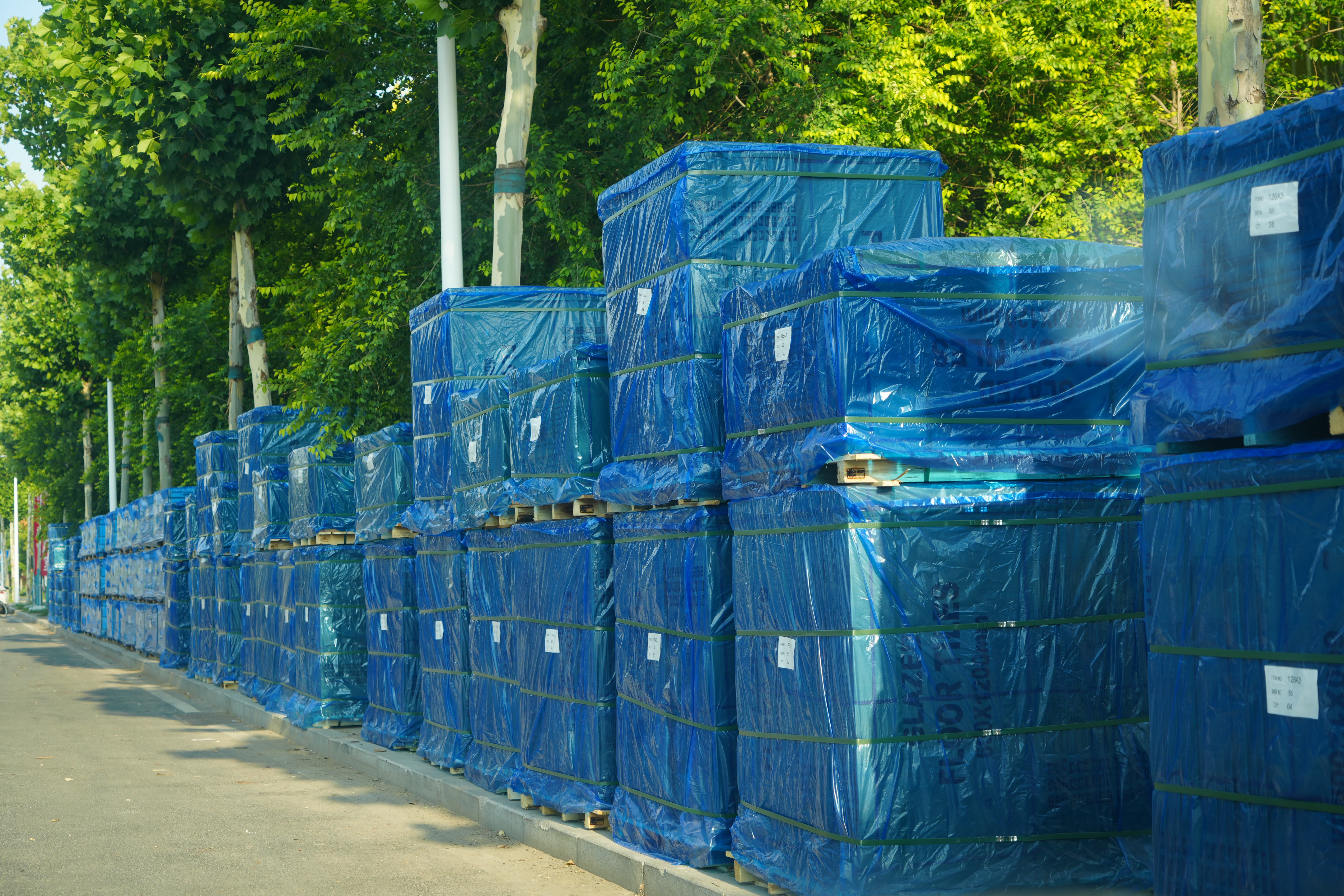 Packed and palletised porcelain tile ready for project shipment.
Have Questions or Need More Details?
Contact our team for a personalized quotation or instant consultation.
Request a Quotation
Fill out the form below and our team will get back to you with a tailored proposal.
WhatsApp Direct Chat
Prefer to chat in real-time? Message us on WhatsApp for instant assistance & quick answers.
- Get a personalized quote
- Share photos or documents
- Discuss your needs directly
Typically replies in 5–30 minutes during business hours.