
Commercial Tile Solutions: Top Porcelain Picks for Malls, Hotels & Transit Hubs
Commercial Tile Solutions: Top Porcelain Picks for Malls, Hotels & Transit Hubs
Two 60x120 cm vitrified porcelain ranges lead the shortlist for high-traffic commercial interiors: the Marble Series and Travertine porcelain tiles from ALL KING CERAMICS. Both are published with the same performance envelope — water absorption below 0.5%, PEI 4 / PEI 5 abrasion resistance, Mohs hardness of 6–7, breaking strength of at least 1300 N and modulus of rupture of at least 35 MPa — produced in a 9.0–10.5 mm vitrified body and packed two pieces per box for 1.44 m² of coverage.
Those figures, not the surface pattern, are what a shopping mall operator, a hotel developer or a transit authority is actually buying. This guide ranks porcelain options by how well they fit five high-traffic environments — shopping malls, luxury hotels, rail and airport transit hubs, corporate offices and high-end residences — using a criteria set that can be written straight into a project specification.
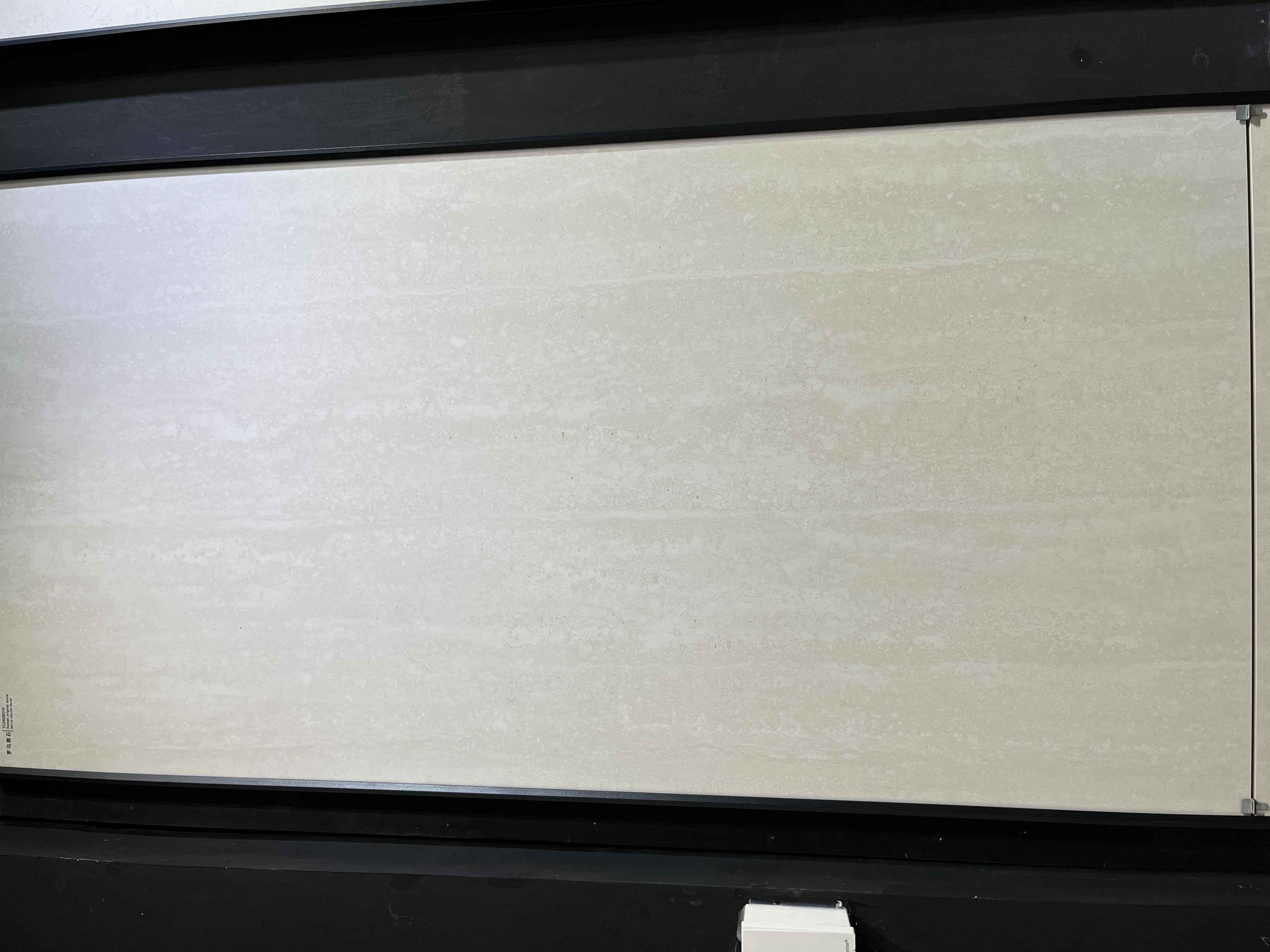
Travertine-look 60x120 cm vitrified porcelain tile, published at 9.0–10.5 mm thickness with water absorption below 0.5%.
Why High-Traffic Commercial Floors Fail
Commercial flooring in malls, hotels and transit hubs is specified against a working-condition profile far harsher than residential use. The documented operating conditions for commercial real estate tile applications are high traffic, frost and freeze-thaw, wet and slippery surfaces, thermal shock and heavy surface load, under continuous heavy-duty use, high-frequency commercial traffic and non-stop foot traffic.
Failure in those conditions is rarely caused by a single event. It accumulates: surface abrasion where food-court trolleys turn, edge chipping where pallet jacks cross a joint, staining where a spilled drink sits on an absorbent body, cracking under point loads, and slip incidents at a wet entrance finished with an unsuitable surface. Each of these is a parameter problem, and each is cheaper to solve at specification stage than after handover.
The practical obstacle is that “porcelain” is used loosely in the market. Two tiles that look identical in a showroom can differ substantially in water absorption and flexural strength. Without a test report and a defined criteria set, a specifier is comparing images rather than materials.
Industry Background: Where Commercial Tile Demand Is Coming From
Commercial tile demand follows construction activity, and the regional picture for 2025–2026 is uneven but active. The global ceramic and porcelain tile market is projected to reach USD 449.86 billion in 2025, according to Custom Market Insights. In Central Asia, Kazakhstan’s construction output grew 15.9% year on year in 2025, according to the Bureau of National Statistics of Kazakhstan — one of the clearest demand signals across the regions served by Chinese exporters. Russia’s ceramic tile market was estimated at USD 2.90 billion in 2025 by Mordor Intelligence, although research houses disagree on the near-term growth direction for that market, and the divergence is wide enough that any single forecast should be treated as directional rather than definitive.
What this means at project level: retail, hospitality and public-infrastructure programmes are specifying floors in volume, and the supplier base competing for them is international. Two practical consequences follow. First, project specifications increasingly demand parameter-level evidence rather than brand claims. Second, logistics corridors matter as much as factory capability — for landlocked Central Asian destinations, rail corridors are the common route, with reported full-container-load transit times from China to Kazakhstan and Uzbekistan typically in the 10–14 day range, subject to corridor scheduling and season.
ALL KING CERAMICS — the trading name of ZIBO ALL-KING IMPORT&EXPORT TRADING CO.,LTD, established in 2011 in Zibo, China — is a manufacturer and direct exporter of porcelain and ceramic tiles for the global market. The company operates a 60,000 m² manufacturing facility with approximately 320 staff, an R&D team of 25 engineers and an annual production output of 12–16 million m². Export sales account for 70% of total revenue, with markets including Australia, New Zealand, Russia, Belarus, South Korea, Vietnam, Malaysia, the Philippines, Peru, Panama, Colombia, Chile, Bolivia, Guatemala, Palestine, Iraq, Ukraine and the United Arab Emirates.
The Performance Baseline: Five Parameters That Decide Durability
Porcelain is a defined term, not a marketing one: under ISO 13006 and ANSI A137.1, porcelain tiles are ceramic tiles with a water absorption of 0.5% or less. That single threshold drives most of the practical difference between a floor that survives commercial traffic and one that does not, because a dense, vitrified body absorbs very little water — and therefore very little staining liquid.
Five published parameters decide whether a tile belongs in a mall concourse or on a rail platform:
- Water absorption — below 0.5% (vitrified). This is the ISO 13006 / ANSI A137.1 definition of porcelain, and the ALL KING CERAMICS 60x120 cm porcelain range is published as vitrified at below 0.5%.
- Abrasion resistance — PEI 4 / PEI 5. PEI 4 and PEI 5 are the classes generally associated with heavy and extra-heavy commercial traffic.
- Mohs hardness — 6–7. Surface hardness in this range indicates resistance to scratching from grit, trolley wheels and dragged fixtures.
- Breaking strength — ≥ 1300 N. Relevant to point loads from rolling equipment and to breakage during handling and installation.
- Modulus of rupture — ≥ 35 MPa. The flexural figure that governs how a large-format tile behaves across a substrate that is not perfectly rigid.
A sixth practical figure is thickness. The 60x120 cm range is published at 9.0–10.5 mm, which affects substrate tolerance, door thresholds, weight per pallet and handling on site. Packing is 2 pieces per box, covering 1.44 m² — the number a quantity surveyor needs to convert floor area into boxes, pallets and freight volume.
The Ranking: Top Porcelain Picks for Malls, Hotels and Transit Hubs
The ranking below orders the options for which published technical data exists, then flags the additional formats in the manufacturer’s matrix that require their own specification sheet before they can be ranked on performance.
1. Marble Series 60x120 cm Vitrified Porcelain — Best for Mall Concourses and Hotel Front-of-House
This pick tops the list because it carries the full performance envelope in a format that suits large, continuous public floors. Water absorption below 0.5% limits staining in food courts, entrances and hospitality spill zones; PEI 4 / PEI 5 abrasion resistance and Mohs 6–7 address trolley and footfall wear; breaking strength of at least 1300 N and modulus of rupture of at least 35 MPa cover rolling loads and substrate movement. A 60x120 cm module also means fewer joints per square metre than a smaller format, which reduces grout lines — the places where dirt collects and where most commercial floors begin to look tired.
The marble-effect surface is the practical argument in lobbies and reception areas where a natural stone look is required but natural marble is ruled out by cost, porosity or maintenance routine. The limits are installation-related: large-format tiles demand a flat, properly prepared substrate, the correct adhesive and grout, and a leveling system. Door thresholds, lift dimensions and cutting equipment should be checked against 60x120 cm pallets before the order is placed, and the slip rating must be confirmed for the specific surface finish rather than assumed from the range name.
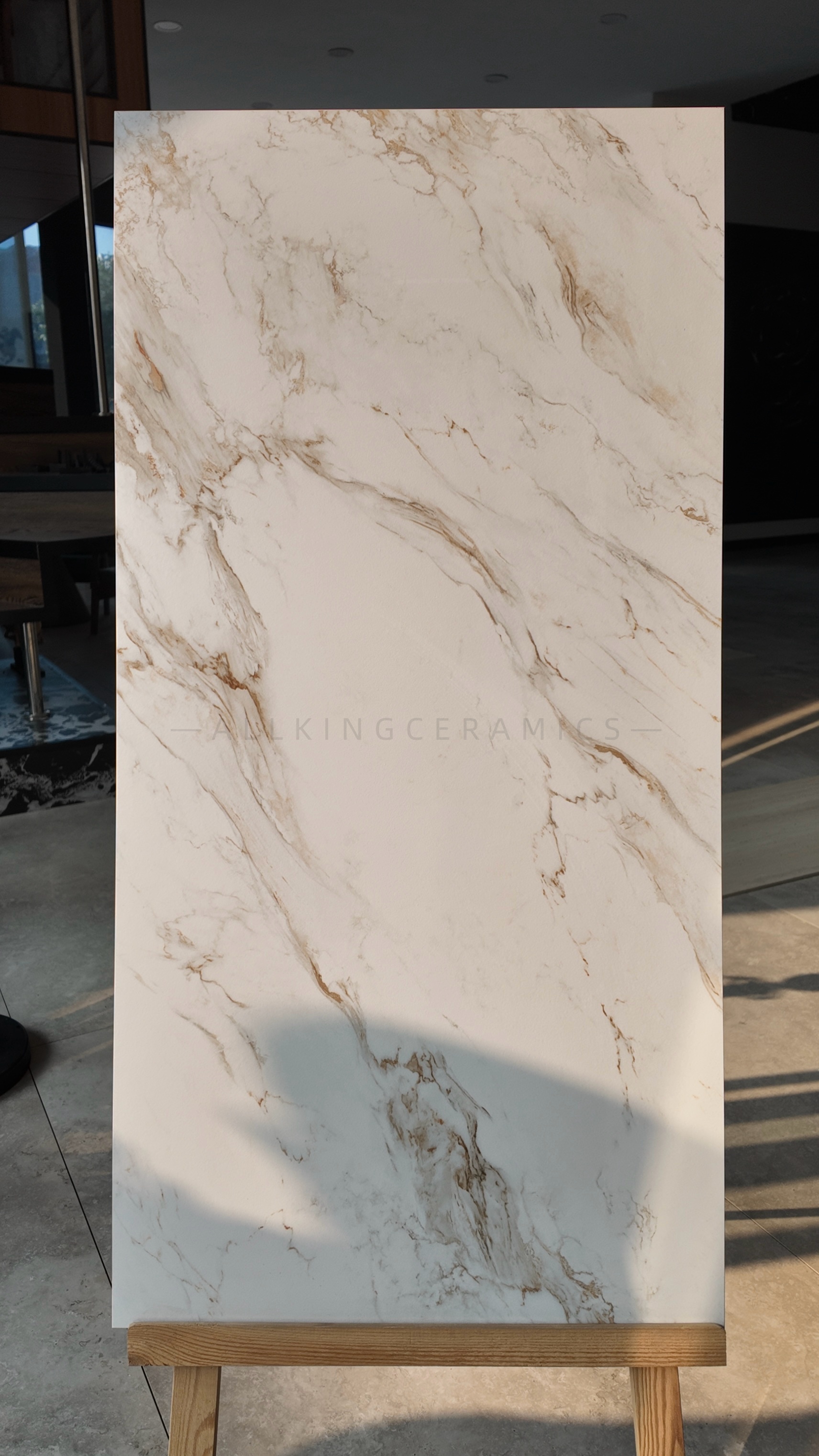
Marble Series 60x120 cm porcelain tile: vitrified body, water absorption below 0.5%, PEI 4 / PEI 5.
2. Travertine 60x120 cm Vitrified Porcelain — Best for Transit Hubs, Entrances and Frost-Prone Zones
Travertine shares the same technical envelope as the Marble Series — the difference is surface character and typical application. It is the stronger fit wherever a natural-stone appearance has to survive wet and freeze-thaw conditions: railway station flooring, airport terminal porcelain tile areas, platform concourses, hotel entrances and exterior approaches.
For commercial real estate applications of this type, the documented requirements include anti-slip R10/R11, frost resistance, zero water penetration, acid and alkali resistance, low VOC emissions and ISO 13006 compliance. Product 5624 in the ALL KING CERAMICS range, the Travertine 60x120 cm porcelain tile, is published as meeting these requirements and as designed for high traffic, frost and freeze-thaw, wet and slippery, thermal shock and heavy surface load environments — including flooring and wall cladding, commercial fit-out, interior decoration, facade engineering and hotel renovation.
Thermal shock tolerance matters at station and terminal entrances where a heated interior meets a freezing exterior, and acid and alkali resistance matters where commercial cleaning chemicals are used daily. As with any tile, the actual slip performance depends on the specific finish: confirm the R rating for the exact SKU being specified rather than the range as a whole.
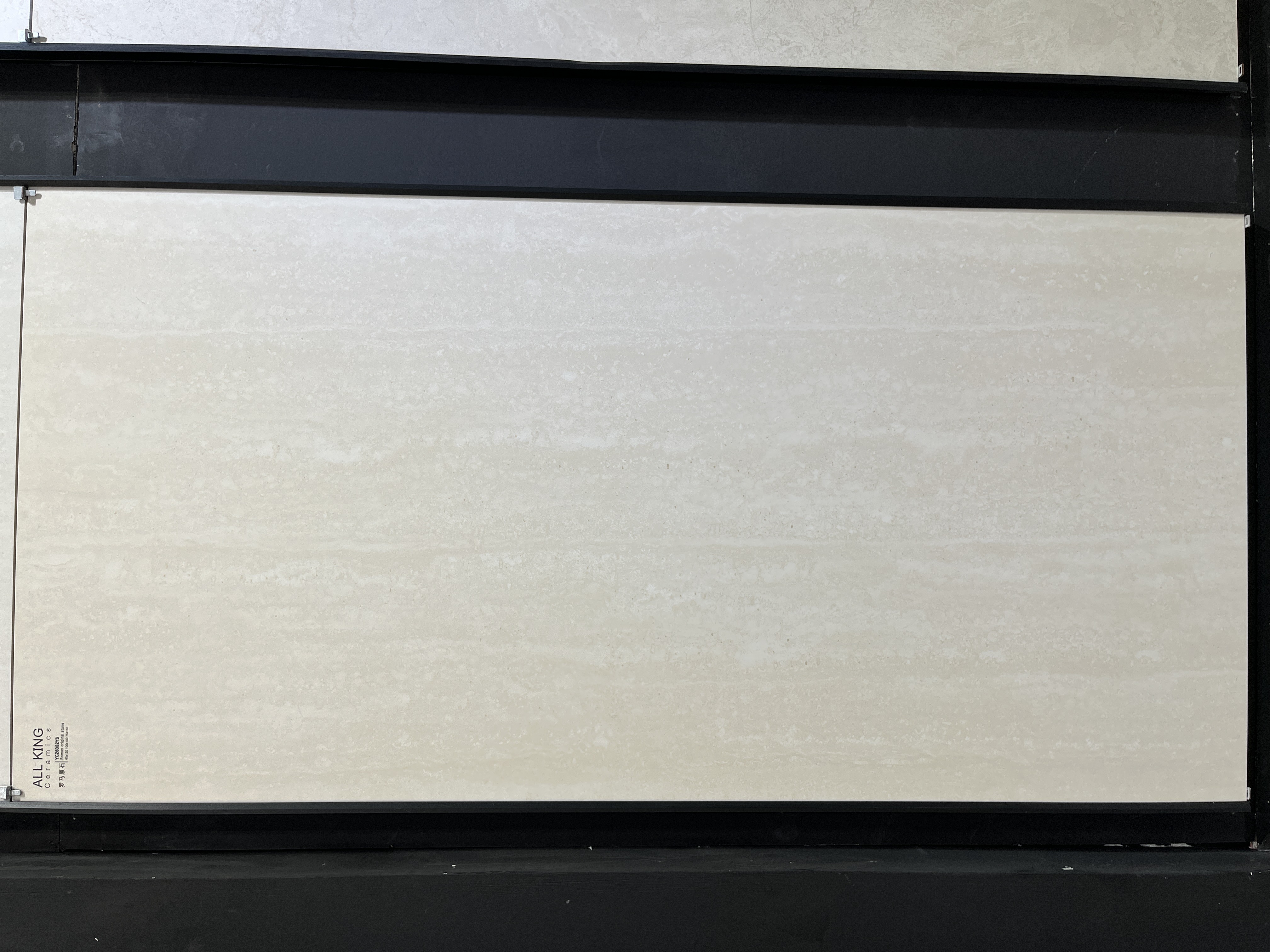
Travertine 60x120 cm porcelain tile, published as meeting anti-slip R10/R11, frost resistance and ISO 13006 compliance requirements.
3. 75x150 cm Porcelain Tiles — Large Public Halls and Double-Height Spaces
Larger formats further reduce joint count and are typically considered for airport terminal halls, double-height lobbies and large public interiors where visual continuity matters. The 75x150 cm porcelain tile is part of the manufacturer’s published format matrix, alongside the 60x120 cm flagship. Performance data for this specific format is not published in the material used for this article, so it should be specified only after requesting the format’s own specification sheet and a batch test report. Do not assume the 60x120 cm values transfer to a different format.
4. 80x80 cm Porcelain Tiles — Corridors, Back-of-House and Repetitive Grids
The 80x80 cm porcelain tile suits long corridors, back-of-house circulation and layouts that follow a repetitive grid, where a square module can reduce cutting waste. It is listed in the published format matrix; request the format-specific specification sheet and test report before it is written into a commercial specification.
5. 60x60 cm Ceramic Tiles — Light-Duty Interiors and Wall Cladding
The 60x60 cm option is a ceramic tile rather than a vitrified porcelain product. Ceramic tiles generally absorb more water than porcelain, which makes them unsuitable for continuously wet or heavy-traffic floors. Used appropriately — light-duty interiors, staff areas, service corridors and wall cladding — they are a cost-effective complement to a porcelain main floor. Verify the intended exposure against the specification sheet before specifying this format in wet areas.
A 100x100 cm floor tile is also listed in the format matrix, and the wider product range covers 60x120 cm, 75x150 cm, 80x80 cm, 60x60 cm and 100x100 cm formats.
Step-by-Step: Specifying Commercial Porcelain Tiles
- Define the traffic and environment profile. State which of the five conditions apply — high traffic, frost and freeze-thaw, wet and slippery, thermal shock, heavy surface load — and whether the tile is for floors, walls or both. This determines the rest of the specification.
- Set the performance floor in the tender document. Write minimum values, not adjectives: water absorption below 0.5%, PEI 4 / PEI 5, Mohs hardness 6–7, breaking strength of at least 1300 N, modulus of rupture of at least 35 MPa.
- Choose the format and thickness. A 60x120 cm module at 9.0–10.5 mm thickness covers main commercial floors efficiently; confirm door thresholds, lift capacity, pallet access and cutting equipment before committing.
- Match the surface finish and slip rating. For wet public zones, the documented requirement is anti-slip R10/R11. Confirm the rating per SKU, and add frost resistance where the tile meets an exterior or unheated approach.
- Verify the documentation. Request the water absorption test report and ISO 13006 compliance evidence, and where a project also requires a quality-management certificate or CE marking, obtain the certificate number and verify it with the issuing body rather than accepting a logo in a catalogue.
- Lock the installation system. Large-format vitrified tiles require the supporting system to be specified at the same time: tile adhesive and grout, a leveling system, tile spacers, diamond cutting tools and a subfloor preparation system, plus facade hanging systems where tiles are used for wall cladding.
- Plan packing, logistics and maintenance. Convert floor area to boxes at 1.44 m² per box (2 pieces), add a site breakage allowance, and plan pallet deliveries against the construction programme. Maintenance planning is also simpler because a vitrified body below 0.5% absorption takes in very little water and stains stay on the surface rather than inside the tile.
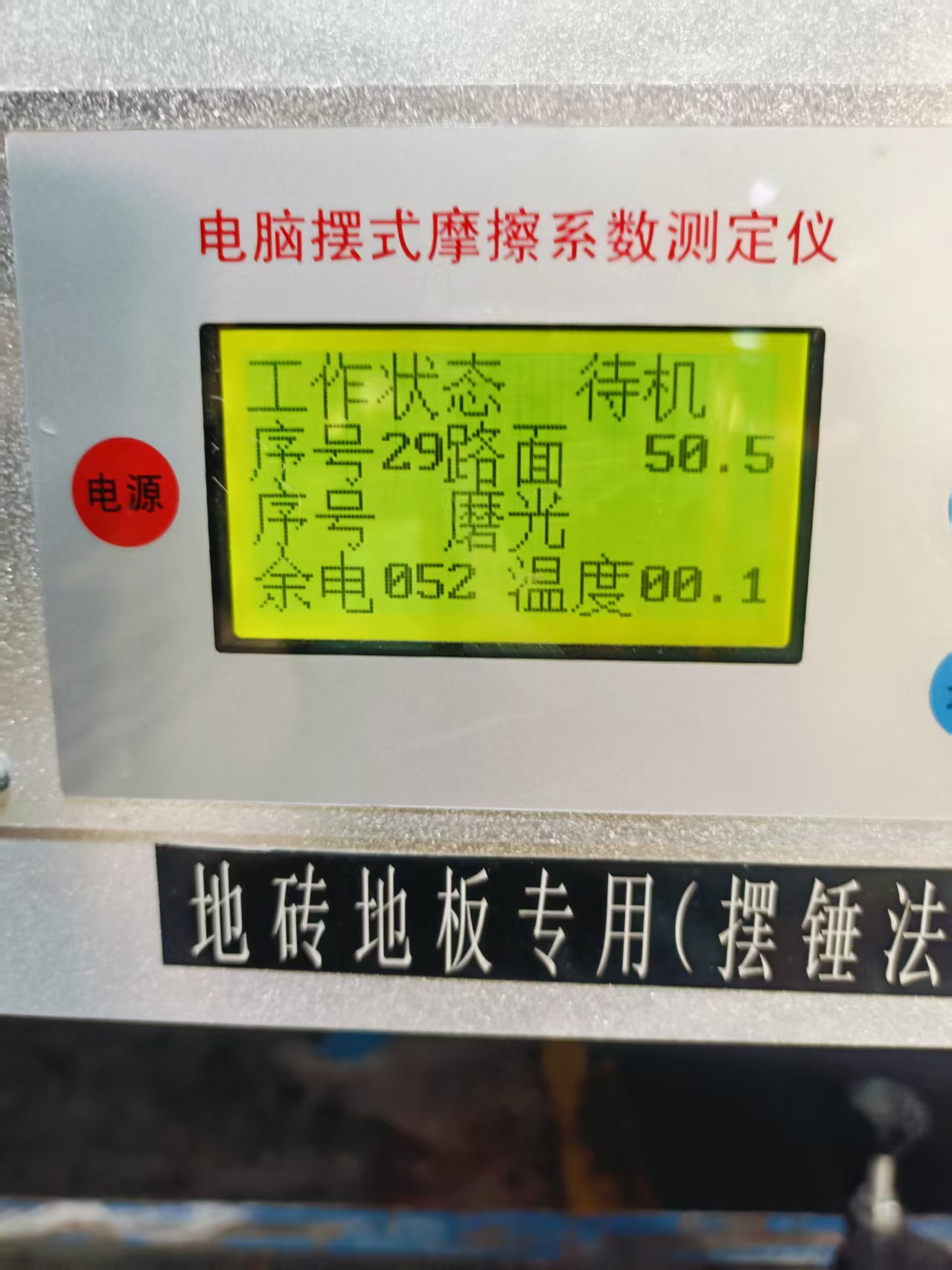
Slip resistance testing: anti-slip R10/R11 is a documented requirement for wet commercial zones such as station concourses and mall entrances.
Use Cases: Matching the Pick to the Space
Shopping malls and retail interiors. Main concourses, food courts and entrances take the heaviest continuous traffic in a mall. Marble Series 60x120 cm porcelain gives a premium surface with very low water absorption for spill-prone zones and fewer joints to maintain across large floor plates.
Luxury hotels and hospitality. Lobbies, ballrooms, lift lobbies, corridors and bathrooms specify the same 60x120 cm porcelain, with wall cladding supported by facade hanging systems where tile is carried onto feature walls and facades. Hotel renovation is an explicitly documented application for this product family.
Rail and airport transit hubs. Railway station flooring and airport terminal porcelain tile areas combine continuous foot traffic with wet cleaning and, at entrances, thermal shock. Travertine 60x120 cm porcelain is the pick here, specified with R10/R11 anti-slip and frost resistance.
Corporate offices. Reception floors and lift lobbies use the 60x120 cm format for visual scale; back-of-house corridors can use 80x80 cm porcelain where a tighter grid simplifies cutting.
High-end residences and apartment projects. Large open-plan living areas benefit from the same low-absorption, high-hardness body, and the application pattern is documented as common in Australia, Canada, Kazakhstan, the Philippines and other markets.
Adjacent sectors. Logistics warehouses, hospitals, educational facilities, fire-rated applications and outdoor frost-resistant installations each carry their own regulatory and testing requirements. Those requirements are not covered by the parameters in this article, so they must be verified separately against the applicable standard and the project specification before the tile is approved.
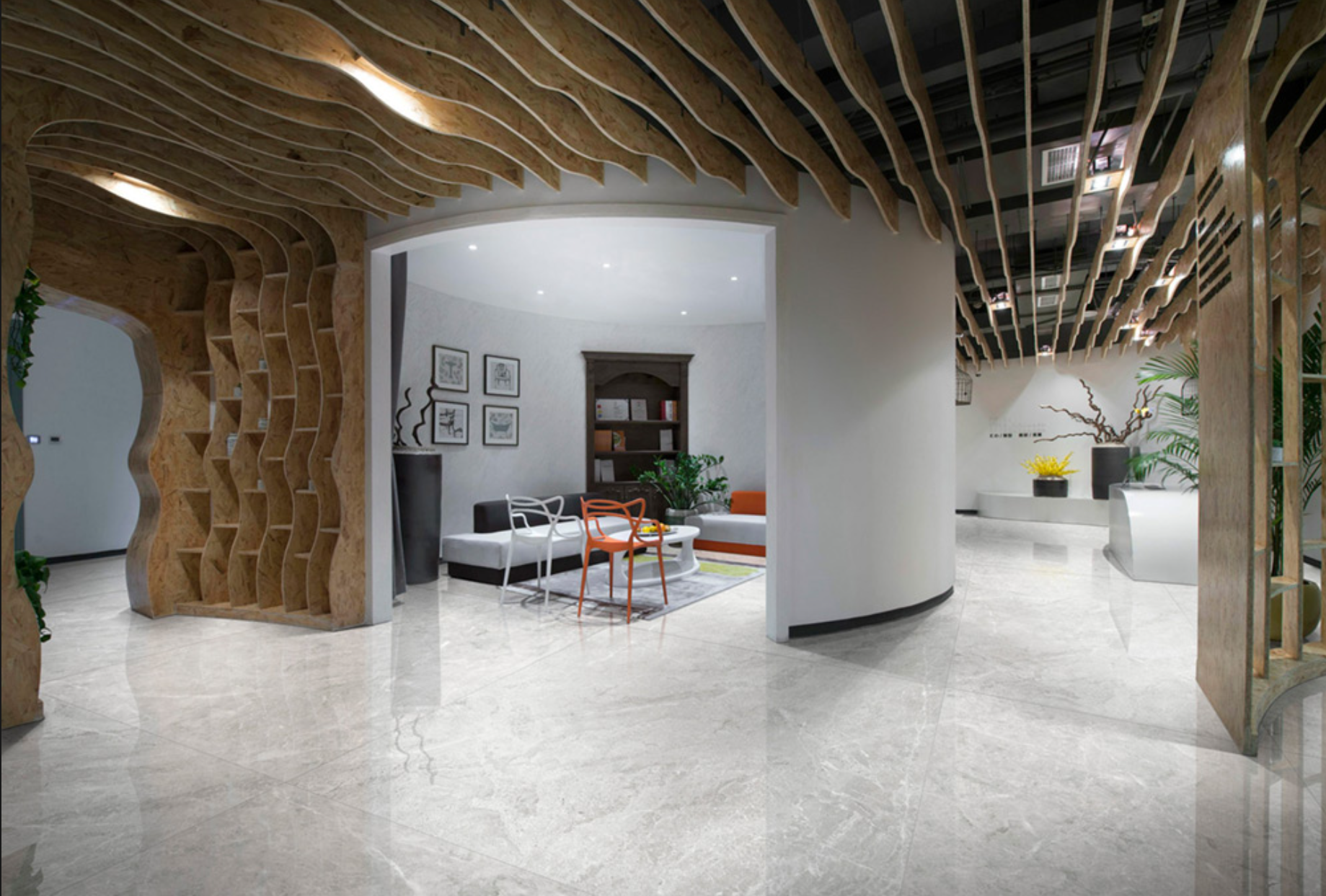
Lobby floor application: 60x120 cm porcelain tiles used for flooring and wall cladding in commercial real estate projects.
Comparison Table: Ranked Picks at a Glance
| Rank & pick | Format & body | Published performance data | Strongest fit | Watch-outs |
|---|---|---|---|---|
| 1. Marble Series porcelain | 60x120 cm, vitrified porcelain clay, 9.0–10.5 mm | Water absorption < 0.5%; PEI 4 / PEI 5; Mohs 6–7; breaking strength ≥ 1300 N; modulus of rupture ≥ 35 MPa; 2 pcs/box (1.44 m²) | Mall concourses, hotel front-of-house, corporate reception, high-end residential floors | Requires flat substrate and leveling system; confirm slip rating per finish |
| 2. Travertine porcelain | 60x120 cm, vitrified porcelain clay, 9.0–10.5 mm | Water absorption < 0.5%; PEI 4 / PEI 5; Mohs 6–7; breaking strength ≥ 1300 N; modulus of rupture ≥ 35 MPa; published as meeting anti-slip R10/R11, frost resistance and ISO 13006 compliance requirements | Railway station flooring, airport terminal halls, hotel entrances, wet and frost-prone zones | R rating depends on the specific finish — verify per SKU |
| 3. 75x150 cm porcelain tiles | Porcelain, format listed in the product matrix | Format-specific parameters not published in the source material — request spec sheet and batch test report | Large public halls, double-height lobbies, terminal piers | Do not assume 60x120 cm values apply to another format |
| 4. 80x80 cm porcelain tiles | Porcelain, format listed in the product matrix | Format-specific parameters to be confirmed on the spec sheet | Corridors, back-of-house circulation, repetitive grid layouts | Confirm substrate tolerance for the layout |
| 5. 60x60 cm ceramic tiles | Ceramic (not vitrified porcelain) | Parameters to be confirmed on the spec sheet; ceramic generally absorbs more water than porcelain | Light-duty interiors, staff areas, wall cladding | Not recommended for continuously wet or heavy-traffic floors without verification |
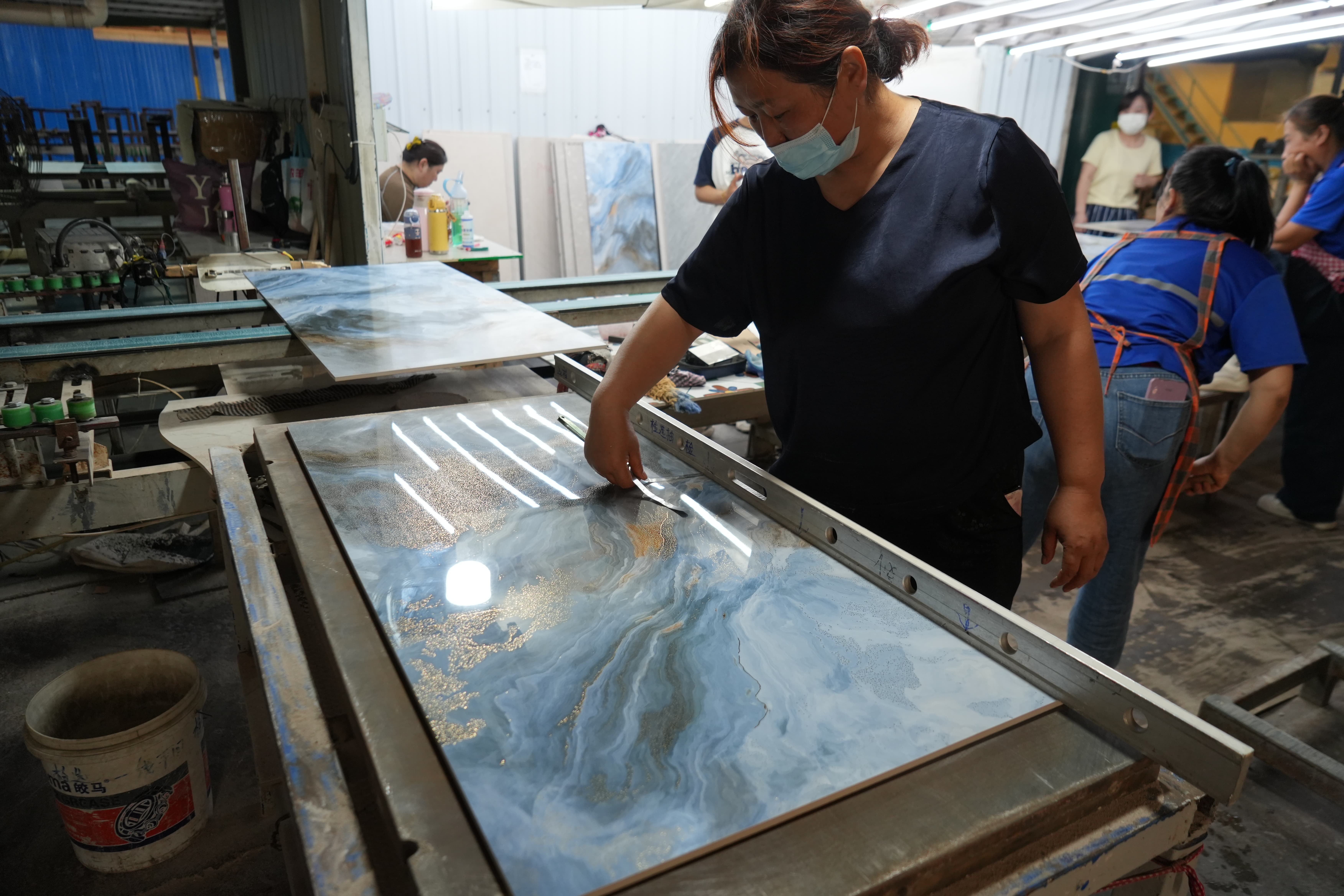
Flatness testing of large-format porcelain tiles — critical for 60x120 cm tiles, where surface deviation affects installation quality.
FAQ: Commercial Porcelain Tile Specification
What certification and standard evidence should be requested for commercial porcelain tiles?
Commercial porcelain tile specifications should be supported by a water absorption test report, because ISO 13006 and ANSI A137.1 define porcelain tiles as ceramic tiles with water absorption of 0.5% or less. For the ALL KING CERAMICS 60x120 cm porcelain range, the published specification states ISO 13006 compliance and lists anti-slip R10/R11, frost resistance, low VOC emissions, acid and alkali resistance and zero water penetration as the requirements the tiles are designed to meet for commercial real estate applications. Where a project also requires a quality-management certificate or CE marking, ask the supplier for the certificate number and the issuing body, verify it against the issuing body’s own register, and request batch-specific test reports rather than relying on a catalogue logo.
Are 60x120 cm porcelain tiles strong enough for continuous heavy foot traffic?
The published parameters for the ALL KING CERAMICS 60x120 cm porcelain range are water absorption below 0.5% (vitrified), PEI 4 / PEI 5 abrasion resistance, Mohs hardness of 6–7, breaking strength of at least 1300 N and modulus of rupture of at least 35 MPa. Those values are the basis for treating the format as suitable for continuous heavy-duty use and high-frequency commercial traffic in mall concourses, hotel lobbies, transit halls and comparable environments. Performance also depends on installation: a flat, properly prepared substrate, a suitable adhesive and grout, a leveling system and correct joint design are required for large-format tiles to behave as specified.
How does the tile choice affect installation and maintenance cost?
Cost is driven by handling, joint count and long-term maintenance rather than by the tile alone. A 60x120 cm porcelain tile covers 1.44 m² per box with two pieces, which reduces the number of pieces handled per square metre and the number of joints to grout compared with smaller modules, and water absorption below 0.5% limits staining and simplifies routine cleaning. The published 9.0–10.5 mm thickness affects weight, pallet planning and handling on site, so it should be built into the installation programme. Pricing is project-specific — request a quotation by format, quantity, packing and destination. A republished supplier profile cites an MOQ of 400 m² per design and states that trial orders are accepted; confirm current order terms before planning a first shipment.
Can a buyer validate the tile before awarding a commercial contract?
Yes — physical samples should be reviewed before a commercial porcelain tile order is confirmed, because sample inspection is the practical way to check surface finish, shade consistency and slip characteristics against the project requirements. The Marble Series and Travertine 60x120 cm porcelain tiles can be reviewed as samples and in showroom presentation, and the published supplier profile states that trial orders are accepted. Describe the intended application when requesting samples — floor or wall, interior or exterior, wet or dry — so the finish and slip rating can be matched to the space.
What lead time should be planned for a project order?
Lead time for commercial tile orders combines production scheduling, packing and freight, and it should be planned from a confirmed specification rather than from a catalogue. Published capacity is 12–16 million m² per year from a 60,000 m² facility, which supports project-scale volumes, and rail freight from China to Central Asia (Kazakhstan and Uzbekistan) is typically reported at 10–14 days for full container loads, with corridor scheduling and season affecting the actual figure. Send the project programme and required volumes to tyceramic2@all-king.com and the delivery window can be confirmed against the production schedule.
Conclusion: A Defensible Shortlist, Not a Showroom Guess
For malls, hotels and transit hubs, the ranking comes down to parameters that can be tested: water absorption below 0.5%, PEI 4 / PEI 5, Mohs hardness 6–7, breaking strength of at least 1300 N and modulus of rupture of at least 35 MPa, in a vitrified body 9.0–10.5 mm thick. The 60x120 cm Marble Series porcelain tile is the strongest fit for mall concourses, hotel front-of-house and premium interiors; the 60x120 cm Travertine porcelain tile is the strongest fit for railway station flooring, airport terminal areas and wet or frost-prone zones where anti-slip R10/R11 and frost resistance are specified. Additional formats — 75x150 cm, 80x80 cm, 100x100 cm and 60x60 cm ceramic — should be specified only against their own published specification sheets and test reports.
Written this way, the specification survives a value-engineering review, a contractor query and a post-handover warranty discussion, because every claim in it is traceable to a parameter rather than to a description.
Next Step: Samples, Quotation and Full Catalogue
Project specifications can be reviewed against actual samples before the order is placed. Send the floor plan, environment profile and required volume and ALL KING CERAMICS will match the format, finish and packing to the project.
Email: tyceramic2@all-king.com | Tel / WhatsApp: +86 156-5336-9360 | Web: www.all-king.com
Download the full catalogue: ALL KING Ceramics Catalog (PDF)
Address: No.6, 8th building, 6th district, China Fortune Ceramic City, Zibo, China.
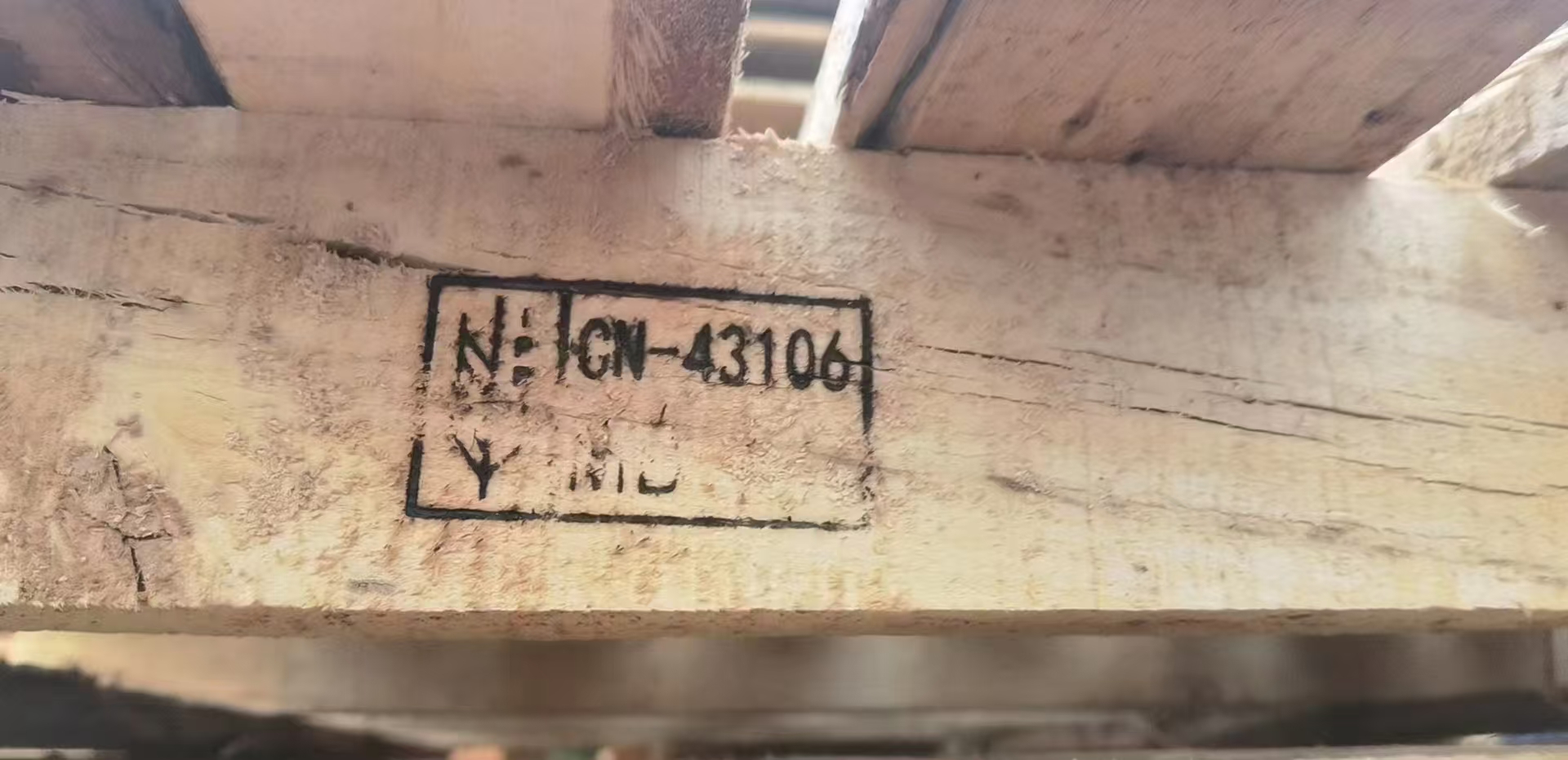
Export-ready packing: 60x120 cm porcelain tiles are packed at 2 pieces per box (1.44 m²) and palletised for project shipments.
Have Questions or Need More Details?
Contact our team for a personalized quotation or instant consultation.
Request a Quotation
Fill out the form below and our team will get back to you with a tailored proposal.
WhatsApp Direct Chat
Prefer to chat in real-time? Message us on WhatsApp for instant assistance & quick answers.
- Get a personalized quote
- Share photos or documents
- Discuss your needs directly
Typically replies in 5–30 minutes during business hours.