
Porcelain Tile Project Solutions: A Technical Guide to Wet-Area Commercial Flooring Specifications

Wet-area commercial flooring is specified in numbers, not adjectives. A 60x120cm vitrified porcelain tile written into a hotel renovation, a shopping mall concourse or a mixed-use podium floor should be defined by six measurable values: water absorption below 0.5%, Mohs hardness of 6-7, PEI 4 / PEI 5 abrasion resistance, modulus of rupture of at least 35 MPa, breaking strength of at least 1300 N, and a thickness range of 9.0-10.5 mm. Those values are then paired with an anti-slip rating matched to each wet zone and with packaging that keeps site logistics predictable at 2 pieces per box and 1.44 m2 per box.
This guide explains how each of those values is selected, verified and delivered for commercial real estate flooring and wall cladding. It is written for the people who sign off on commercial floors - general contractors, commercial real estate developers, hospitality procurement agencies and architectural design firms - and it uses the 60x120cm Marble Series porcelain tile from Zibo All-King Ceramics Co., Ltd. (All-King Ceramics) as the reference product throughout.
Problem Definition: Why Wet-Area Commercial Floors Fail Specification Review
A wet, high-traffic commercial floor rarely fails for aesthetic reasons. It fails through a small number of predictable mechanisms, and each of them is decided long before installation - at the moment the specification is written.
- Moisture ingress. Where a tile body is not vitrified, water penetrates the surface and the body, producing staining, hygiene problems in sanitary and food-contact zones, and reduced frost and freeze-thaw resistance on external or semi-external areas.
- Slip exposure. A tile selected for appearance alone may carry the wrong slip class for a permanently wet zone such as a hotel bathroom, a commercial kitchen or an entrance canopy.
- Surface wear. Under non-stop foot traffic, an under-specified abrasion class shows up as loss of surface pattern long before the floor is due for replacement.
- Structural breakout. Point loads, trolleys and rolling equipment stress the tile body; where modulus of rupture and breaking strength are not specified, edge chipping and cracking appear in service.
- Dimensional and installation failure. Large-format tiles with uncontrolled thickness variation complicate levelling, increase lippage risk and can undermine the performance that the specification promised.
- Documentation failure at handover. A floor can physically perform and still be rejected by the client's consultant if certification cannot be matched to the delivered product family.
The practical consequence is that the specification document, not the showroom sample, is the real risk-control tool. That is why the values below are written as performance thresholds with a verification route attached to each one.
Industry Background: Wet-Area Specifications in a Growing Commercial Market
Commercial construction accounts for roughly 37% of total global tile demand, according to Market Research Future's 2026 tile market research. The same research estimates the global tile market at approximately 265.21 USD billion in 2024, projected to reach 587.72 USD billion by 2035. Supply is heavily concentrated: China was the leading exporter of ceramic products in 2024, with an export value of $18.3 billion, according to the Observatory of Economic Complexity.
Two regulatory currents run alongside that demand growth. The first is slip safety. The DIN 51130 ramp test, run with oil-wet conditions, defines an R11 rating as high grip on inclined planes between 19 and 27 degrees, which is why R11 and R12 requirements now appear as mandatory clauses in hospitality, healthcare and public-space tenders rather than as optional extras. The second is green building documentation. Under LEED v4 guidance published by the U.S. Green Building Council and WhyTile, porcelain tiles are inherently exempt from FloorScore VOC requirements because the high-temperature firing process destroys all organic matter - a point that matters for projects pursuing LEED credits through eco-friendly porcelain tile selections.
Together these forces push commercial buyers away from descriptive specifications and toward performance-based ones. The seven-value framework below is the practical form that shift takes for wet, high-traffic interiors.
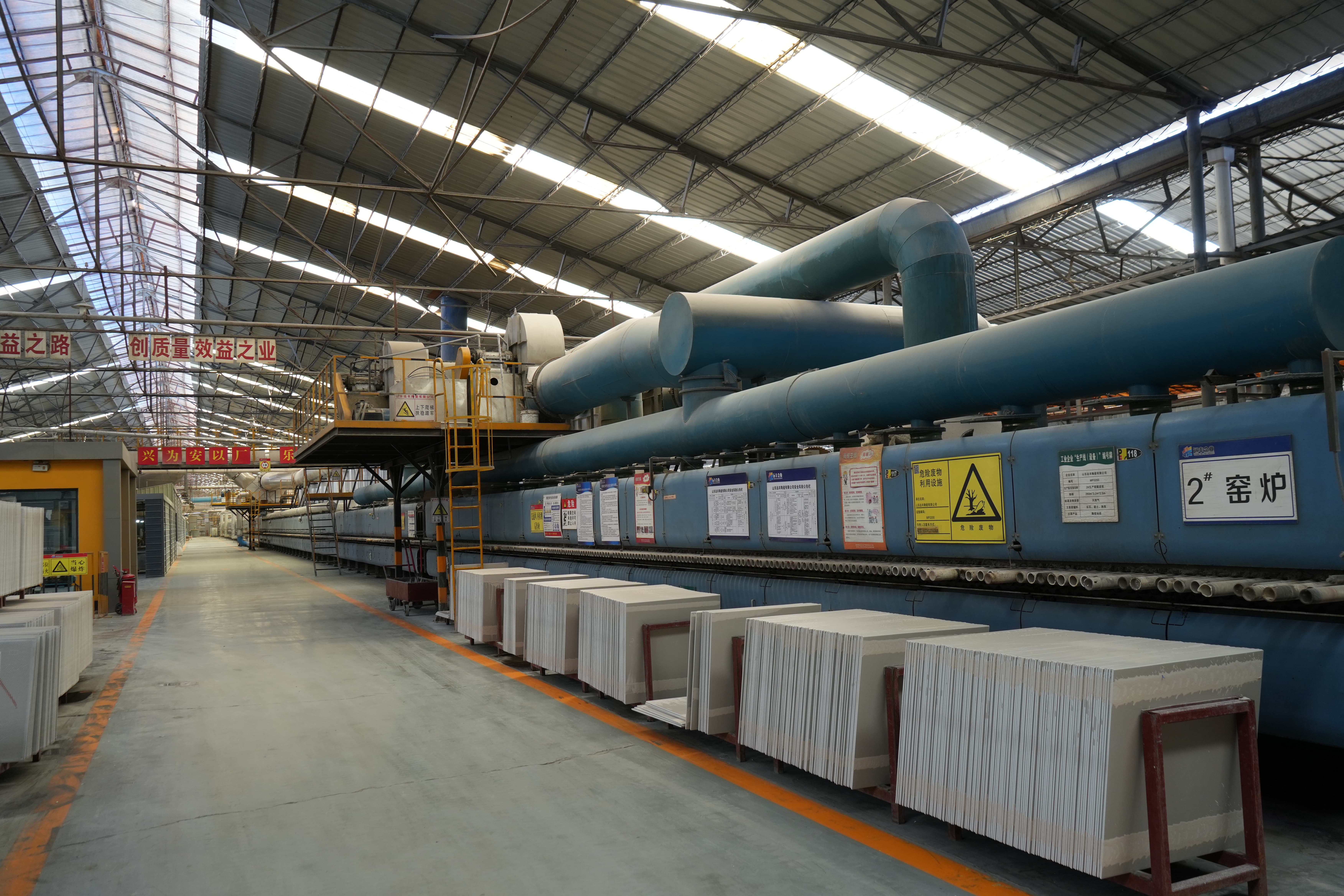
The Specification Framework for Wet, High-Traffic Commercial Porcelain
The 60x120cm Marble Series porcelain tile is classified as a vitrified porcelain tile made from porcelain clay, intended for the building materials industry, and applicable to commercial real estate flooring and wall cladding. Its published performance specification forms the reference set used in the sections below.
1. Water absorption below 0.5% defines a genuinely vitrified tile
Water absorption below 0.5% is the threshold that separates a vitrified porcelain tile from an ordinary ceramic floor tile, and it is the single most important value in a wet-area specification. In the reference product it is declared as below 0.5% (Vitrified). The practical consequences are stain resistance, easier maintenance, resistance to acid and alkali exposure, and dependable performance in frost and freeze-thaw conditions. In commercial real estate projects, this value also supports the requirement for zero water penetration recorded in the application profile for high-traffic flooring.
2. Mohs hardness of 6-7 for surface scratch resistance
Mohs hardness of 6-7 describes a surface that resists scratching from the grit, sand and debris that everyday commercial traffic drags across a floor. It matters most in entrance zones, mall concourses and circulation areas adjacent to external doors, where abrasive material is constantly tracked in. A hardness value below this band invites dulling and visible scratch patterns that no cleaning regime can reverse.
3. PEI 4 / PEI 5 abrasion resistance for continuous traffic
The reference range is declared at PEI 4 / PEI 5 abrasion resistance. PEI 4 and PEI 5 are the abrasion classes typically specified for commercial floors, and offering both classes within one format family gives the specifier room to differentiate between a hotel lobby floor - where appearance retention matters over decades - and a back-of-house corridor where the same visual language is required at a different duty level. Because the two classes sit inside the same 60x120cm range, a project can keep a consistent finish across zones with different wear exposure.
4. Modulus of rupture at least 35 MPa and breaking strength at least 1300 N
Modulus of rupture and breaking strength define how the tile body behaves under bending and point load. The reference values are a modulus of rupture of at least 35 MPa and a breaking strength of at least 1300 N. For a large-format 60x120cm tile these two numbers are what allow the product to be specified over prepared substrates carrying trolleys, hospitality carts, cleaning equipment and concentrated foot traffic without edge failure. They are also the values most often requested by structural and QA consultants during submittal review.
5. Thickness of 9.0-10.5 mm for load and installation tolerance
The reference thickness range is 9.0-10.5 mm. Thickness in this band balances load-bearing behaviour against weight, adhesive consumption and handling practicality - an important consideration when a hotel renovation has to move pallets through existing service routes. Thickness consistency across a production batch also directly affects lippage control in a large-format installation, which is why flatness and sizing are checked rather than assumed.
6. Anti-slip ratings: R10 and R11 as standard, R12 by customization
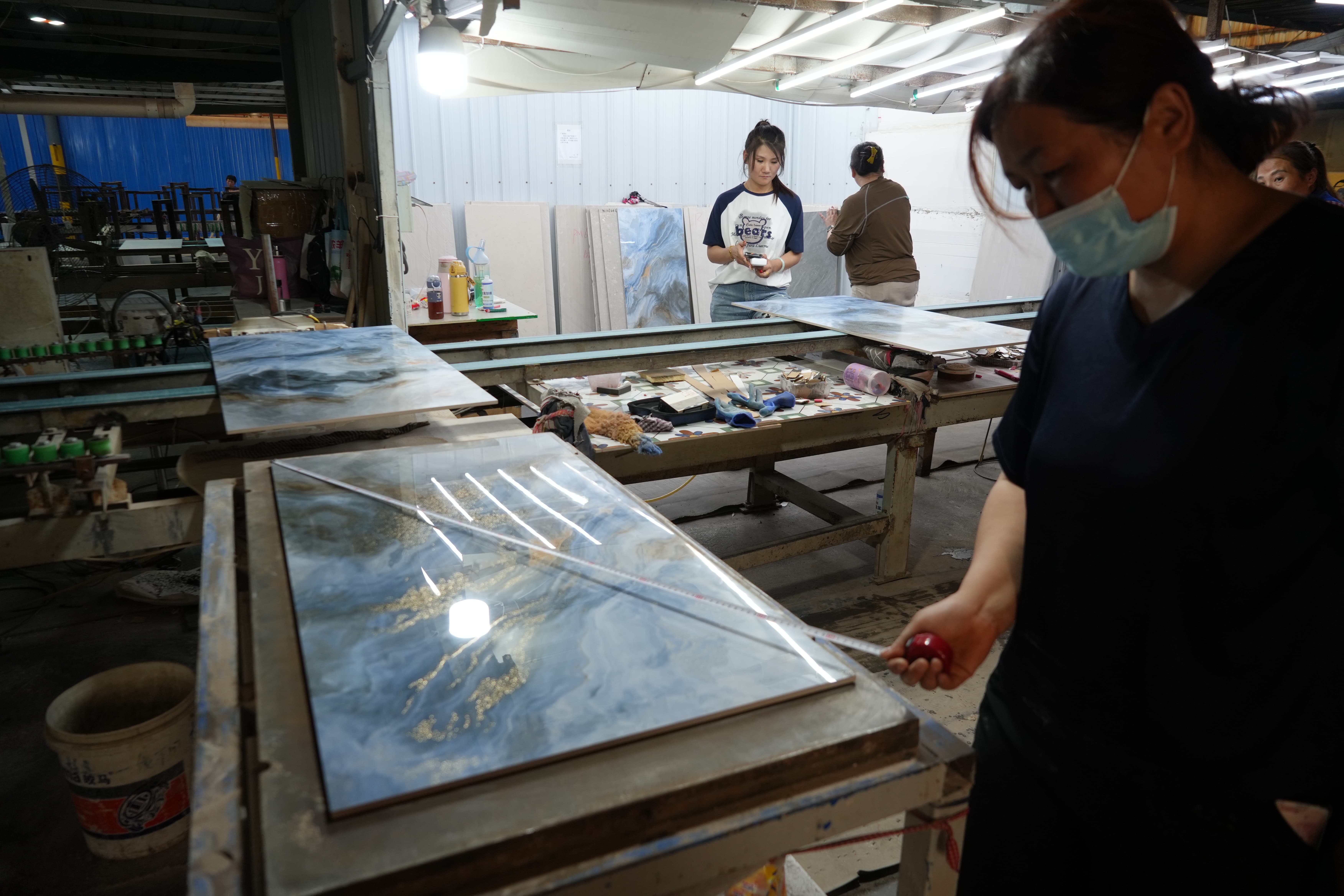
The porcelain range includes anti-slip ratings of R10 and R11, and can achieve R12 through customization, according to All-King Ceramics project guidance referencing the DIN 51130 test method. This is where specification discipline matters most, because slip resistance is zone-specific rather than project-wide: a dry retail floor and a permanently wet shower zone should not be signed off under the same rating. R11 corresponds to high grip on inclined planes between 19 and 27 degrees in the oil-wet ramp test defined by DIN 51130, which is the reference point buyers use when a tender document simply states 'R11 required'. Custom anti-slip rating is offered alongside custom size and thickness, surface finish, OEM brand logo and packaging, and marble vein pattern variation.
7. Format and packing: 60x120cm, 2 pieces per box, 1.44 m2 per box
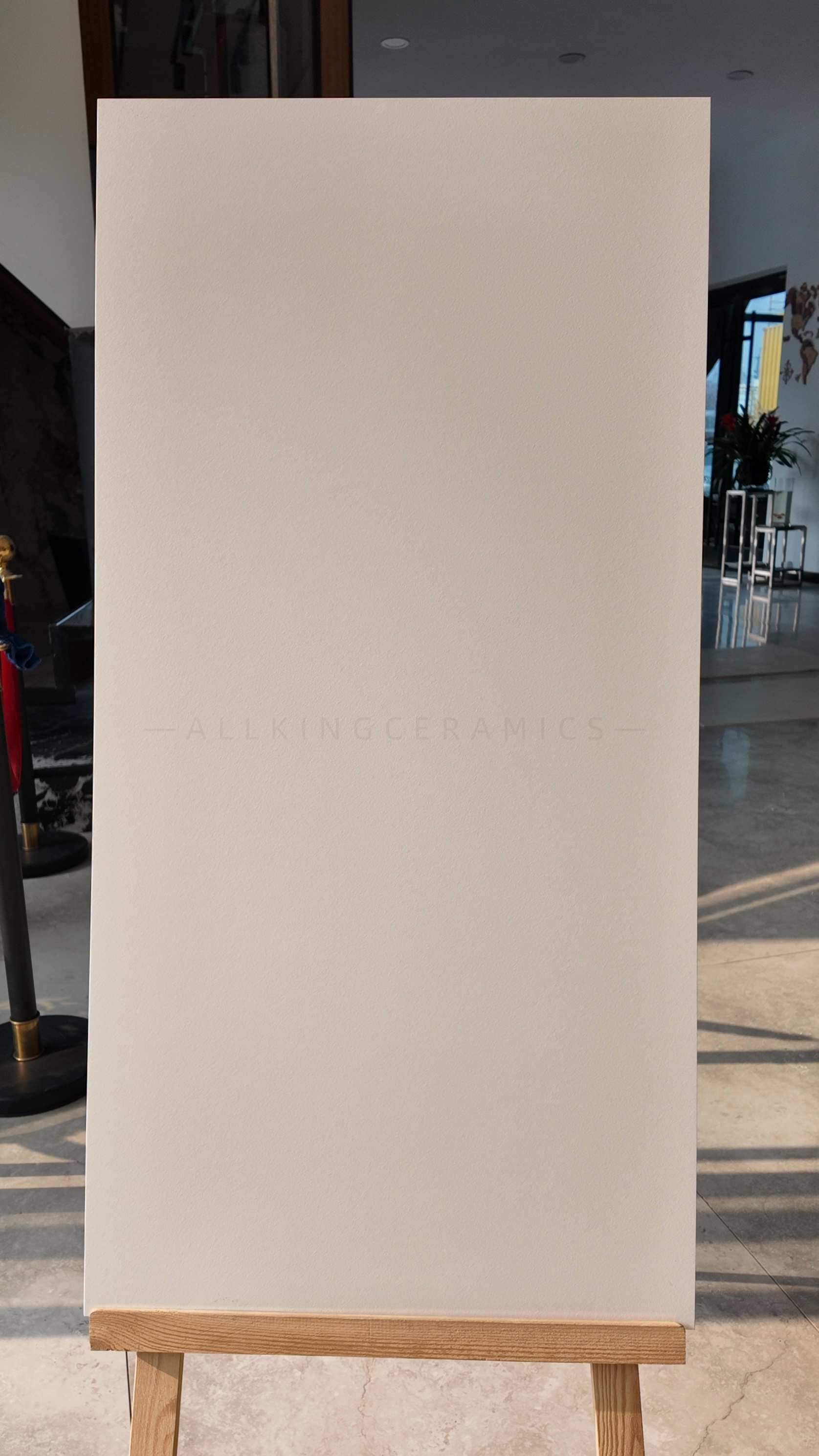
The reference product is a 60x120cm porcelain tile packed at 2 pieces per box, equal to 1.44 m2 per box. Packing data is not a footnote in commercial procurement; it drives site logistics, storage planning and reordering. At 1.44 m2 per box, a 1,000 m2 floor area represents approximately 695 boxes, and a 15,000 m2 project represents approximately 10,417 boxes. Knowing that number at tender stage lets a contractor size the laydown area and phase deliveries against a hotel renovation programme instead of against a guess.

8. Certification evidence: CE, ISO 9001:2015 and ISO 13006
Three references carry the compliance argument. For the EU market, the CE certification for the porcelain tile family carries certificate number AC 50163816 0001, issued by TUV against the EEC standard, with a scope covering dry-pressed ceramic tiles for internal flooring. For global market supply, the ISO 9001:2015 certification carries certificate number 0350521Q30166R1M, issued by XQCC, covering the production and service of ceramic tile. ISO 13006 is the product standard most often referenced in project specifications; All-King Ceramics states that its porcelain tile range is aligned with ISO 13006 requirements, and this is company guidance that should be supported by the relevant test data for the specific batch and project.
One compliance detail deserves attention during tender review. The CE scope covers internal flooring. External paving, facade and other non-internal applications therefore need to be assessed against the project's own performance requirements and against the ISO 13006-based test data, rather than assumed from the CE certificate alone.
Comparison Table: Wet-Area Specification Targets vs Delivered Reference Values
The table below is the working form of this guide: the value to write into the specification, the equivalent declared value for the 60x120cm Marble Series reference product, and the route by which each value is verified before the order is released.
| Specification parameter | Target for wet, high-traffic commercial floors | Marble Series 60x120cm (reference) | Verification route |
|---|---|---|---|
| Water absorption | Below 0.5%, vitrified body | Below 0.5% (Vitrified) | Declared value plus batch test data; confirm against the project's zero-water-penetration requirement |
| Mohs hardness | 6-7 | 6-7 | Product datasheet review against traffic profile |
| Abrasion resistance | PEI 4 / PEI 5 | PEI 4 / PEI 5 | Class declaration per product family and per order |
| Modulus of rupture | At least 35 MPa | At least 35 MPa | Random lab testing per batch |
| Breaking strength | At least 1300 N | At least 1300 N | Random lab testing per batch |
| Thickness | 9.0-10.5 mm | 9.0-10.5 mm | 100% flatness and sizing automatic check |
| Packaging | Consistent count for site phasing | 2 pieces per box, 1.44 m2 per box | Packing list verified against pallet labelling |
| Slip resistance | Zone-matched rating; R11 or above in permanently wet zones | R10 / R11 standard; R12 achievable by customization | DIN 51130 slip resistance test data for the specified rating |
| Certification | CE for EU internal flooring; ISO 9001 for supply system; ISO 13006-referenced specifications | CE AC 50163816 0001 (TUV, EEC); ISO 9001:2015 0350521Q30166R1M (XQCC) | Certificate copies matched to the ordered product family |
Adjacent Materials and Equipment That Decide the Finished Floor
Tile performance is only half of a wet-area specification. The application profile for commercial real estate flooring lists the matched equipment that must be procured alongside the tile, and omitting any of them shifts risk back onto the contractor.
| Item | Function in a wet commercial floor | Why it appears in the specification |
|---|---|---|
| Tile adhesive and grout | Bonds and seals the tile field | Wet zones depend on the joint and bedding system as much as on the tile body |
| Leveling system | Controls lippage across large-format units | 60x120cm formats need levelling discipline to deliver the specified flatness |
| Tile spacers | Sets consistent joint width | Joint consistency protects moisture and stain protection performance |
| Diamond cutting tools | Cuts vitrified porcelain accurately | A vitrified body requires tooling matched to its hardness |
| Subfloor preparation system | Delivers a sound, level substrate | Modulus of rupture and breaking strength values only hold on a prepared substrate |
| Facade hanging systems (wall cladding) | Mechanically supports cladding | Used where porcelain is applied as facade or wall cladding rather than flooring |
Step-by-Step: How to Specify and Release a Wet-Area Porcelain Tile Order
- Map the zones before mapping the products. Divide the project into permanently wet, intermittently wet and dry areas. The commercial real estate application profile for this product family works under high traffic, frost and freeze-thaw, wet and slippery, thermal shock and heavy surface load conditions, with continuous heavy-duty use - not every zone shares all five conditions.
- Write performance values, not adjectives. Convert each zone into the seven thresholds: water absorption below 0.5%, Mohs 6-7, PEI 4 / PEI 5, modulus of rupture at least 35 MPa, breaking strength at least 1300 N, thickness 9.0-10.5 mm, and the required slip rating.
- Fix the slip rating zone by zone. Specify R10 or R11 where the range covers the requirement, and call out R12 where the project demands it, since R12 is achievable through customization. Reference DIN 51130 in the clause so that suppliers can answer against a defined test method.
- Verify certification against the ordered family. Request the CE certificate (number AC 50163816 0001, TUV, EEC scope: dry-pressed ceramic tiles for internal flooring) and the ISO 9001:2015 certificate (number 0350521Q30166R1M, XQCC). For ISO 13006-referenced clauses, request the batch test data rather than relying on a general statement of alignment.
- Confirm customization requirements early. Custom size and thickness, surface finish, OEM brand logo and packaging, marble vein pattern variation and anti-slip rating are all customization options; agreeing them before sampling avoids re-cutting artwork and packaging later.
- Validate with a trial order. The order threshold is 400 sqm per design, with trial orders acceptable. A trial order is the cheapest point in a project to confirm flatness, shade consistency, finish and slip behaviour.
- Lock quality control and after-sales into the contract. Production quality control covers 100% flatness and sizing automatic checking, piece-by-piece visual inspection and random lab testing per batch. Post-delivery support covers damage compensation, online installation guidance, 24/7 technical consultation and batch tracking with reordering support - the last of which matters when a renovation is delivered in phases.
Use Cases: Where This Specification Set Fits
Hotel renovation and hospitality floors
Hotel projects combine lobbies and corridors carrying continuous traffic with bathrooms and service zones that are permanently wet. A single 60x120cm vitrified format specified at below 0.5% water absorption, PEI 4 / PEI 5 and a zone-matched slip rating lets a designer keep visual continuity while varying the duty level. In documented project supply for this product family, hospitality applications include hotel lobby flooring and high-end apartment bathrooms, within a 15,000 sqm project record covering hotel lobby, commercial mall flooring, office building facade, high-end apartment bathrooms and airport departure hall applications.
Shopping malls and high-traffic commercial real estate
Mall concourses, atria and circulation routes are the classic abrasion test. High wear resistance, high flatness and low water absorption are the three attributes that keep a large floor area consistent in appearance under food court spillage, cleaning regimes and non-stop foot traffic.
Commercial kitchens, healthcare and educational buildings
These environments combine hygiene requirements with wet conditions and frequent chemical cleaning. The relevant specification levers are the vitrified body, resistance to acid and alkali exposure, low VOC emissions, and a slip rating selected for a floor that is wet more often than it is dry. R11 and R12 requirements are common in these tender packages.
Facade and wall cladding
The same range is used for wall cladding and facade engineering, where surface decoration, moisture and stain protection are the primary functions and where facade hanging systems replace adhesive bedding. Because the CE scope covers internal flooring, cladding specifications should be supported by project-specific test data and the appropriate mechanical fixing design.
Mixed-use developments and phased delivery
Mixed-use schemes typically run residential, retail and public-realm packages on different programmes. Consistent batch control, batch tracking and reordering support keep later phases visually matched to earlier ones - a practical risk that specification documents often ignore.
Frequently Asked Questions
What certification evidence should be verified before a wet-area porcelain tile order is released?
Three documents should be checked. For EU-market flooring, the CE certificate for the porcelain tile family carries certificate number AC 50163816 0001, issued by TUV against the EEC standard, with a scope covering dry-pressed ceramic tiles for internal flooring. For global market supply, the ISO 9001:2015 certificate carries number 0350521Q30166R1M, issued by XQCC, covering the production and service of ceramic tile. Where a specification references ISO 13006, All-King Ceramics states that its porcelain range is aligned with that standard - a company statement that should be supported by the batch test data supplied with the order. Buyers should also note that the CE scope covers internal flooring, so external and facade applications require separate assessment.
Can slip resistance be customized for permanently wet zones?
Yes. The porcelain tile range includes anti-slip ratings of R10 and R11 as standard and can achieve R12 through customization. R11 corresponds to high grip on inclined planes between 19 and 27 degrees under the DIN 51130 oil-wet ramp test, which is the benchmark most often cited in commercial tenders. Customization also extends to size and thickness, surface finish, OEM brand logo and packaging, and marble vein pattern variation. Because slip requirements differ between a dry retail floor and a shower zone, ratings should be specified zone by zone rather than as a single project-wide value.
What order volume is required, and what production capacity stands behind it?
The minimum order quantity is 400 sqm per design, and trial orders are acceptable. Monthly production capacity for the porcelain tile range is 1.2 million m2, which is relevant for projects whose flooring package is released in phases. Capacity figures describe production capability rather than commercial terms; order-specific pricing and delivery terms are quoted per project.
Can samples or a trial batch be validated before the full order?
Trial orders are accepted, which allows a buyer to validate flatness, shade and pattern consistency, surface finish and slip behaviour before committing to the full quantity. Validation should focus on the values that are hardest to change later: water absorption below 0.5%, thickness within 9.0-10.5 mm, and the specified anti-slip rating. Quality control during production includes 100% flatness and sizing automatic checking, piece-by-piece visual inspection, and random lab testing per batch.
What lead time and after-sales support should be planned into the programme?
Production lead time is 7-10 days, supported by a monthly capacity of 1.2 million m2 and an order threshold of 400 sqm per design. After-sales support covers damage compensation, online installation guidance, 24/7 technical consultation, and batch tracking with reordering support for phased projects. To start a project review, share the zone schedule and required slip ratings with the All-King Ceramics team at tyceramic2@all-king.com or via WhatsApp, and confirm current production scheduling before the tender is issued.
Conclusion
A wet-area commercial floor is decided by the specification document, and the specification document is decided by values that can be measured, verified and repeated. Water absorption below 0.5%, Mohs hardness of 6-7, PEI 4 / PEI 5 abrasion resistance, modulus of rupture of at least 35 MPa, breaking strength of at least 1300 N and a thickness range of 9.0-10.5 mm form a complete performance profile for a 60x120cm vitrified porcelain tile in hotel, mall, healthcare, education and mixed-use environments. Add a zone-matched slip rating referenced to DIN 51130, the packing reality of 2 pieces per box at 1.44 m2 per box, and certification that can be traced to the delivered batch, and the floor stops depending on the showroom sample.
Zibo All-King Ceramics Co., Ltd. was founded in 2011 and operates a 60,000 m2 factory with 320 employees, an annual output of 12-16 million m2 and a 25-engineer R&D team. The company describes itself as a manufacturer and direct exporter of architectural ceramics for the global market, with 60x120cm porcelain tiles as its flagship core product and a format matrix that also includes 60x60cm, 80x80cm, 100x100cm and 75x150cm. Around 70% of output is exported, with markets including Australia, New Zealand, Russia, Belarus, South Korea, Vietnam, Malaysia, the Philippines, Peru, Panama, Colombia, Chile, Bolivia, Guatemala, Palestine, Iraq, Ukraine and the United Arab Emirates. This is the supply base against which the specification values in this guide can be quoted and verified.
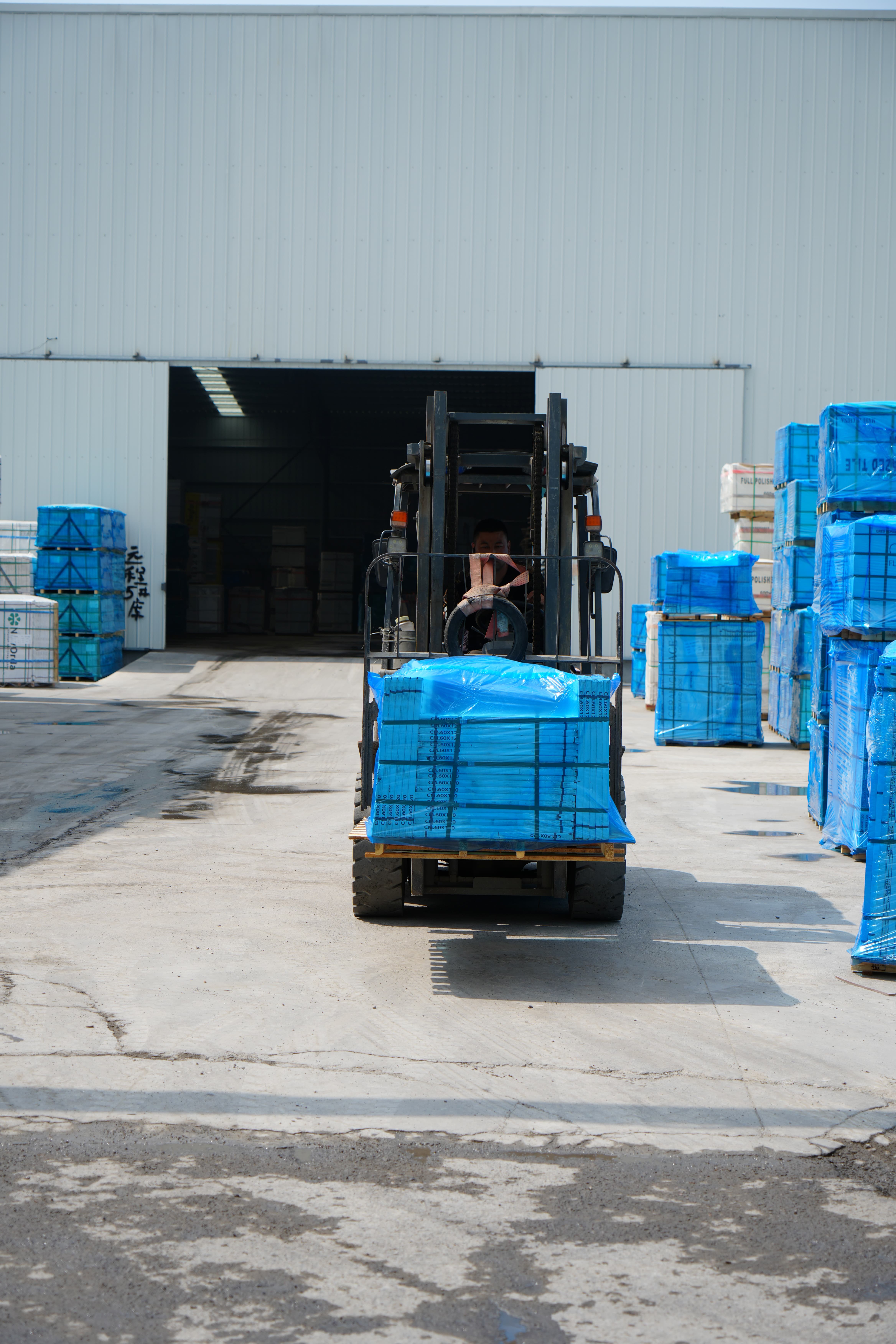
Next step for specifiers and contractors: send your zone schedule, required slip ratings and target quantity to the All-King Ceramics project team. Trial orders start from 400 sqm per design, and production lead time is 7-10 days.
Email: tyceramic2@all-king.com | WhatsApp: +86 156-5336-9360 | Website: www.all-king.com | Download the full technical catalog: ALL KING Ceramics Catalog (PDF)
Have Questions or Need More Details?
Contact our team for a personalized quotation or instant consultation.
Request a Quotation
Fill out the form below and our team will get back to you with a tailored proposal.
WhatsApp Direct Chat
Prefer to chat in real-time? Message us on WhatsApp for instant assistance & quick answers.
- Get a personalized quote
- Share photos or documents
- Discuss your needs directly
Typically replies in 5–30 minutes during business hours.