
Commercial Tile Solutions for Transit Hubs: 60x120cm Guide
Application Guide · Transit & Infrastructure Flooring
Commercial Tile Solutions for Transit Hubs: A 60x120cm Porcelain Application Guide
A 60x120cm porcelain tile belongs on a station concourse or airport terminal floor only when four parameters are matched to passenger load — abrasion resistance at PEI 4 or PEI 5, surface hardness in the Mohs 6–7 band, water absorption below 0.5%, and breaking strength above 1300 N — and when the packaging, flatness control and certificate pack behind the tile are specified with the same precision as the finish.
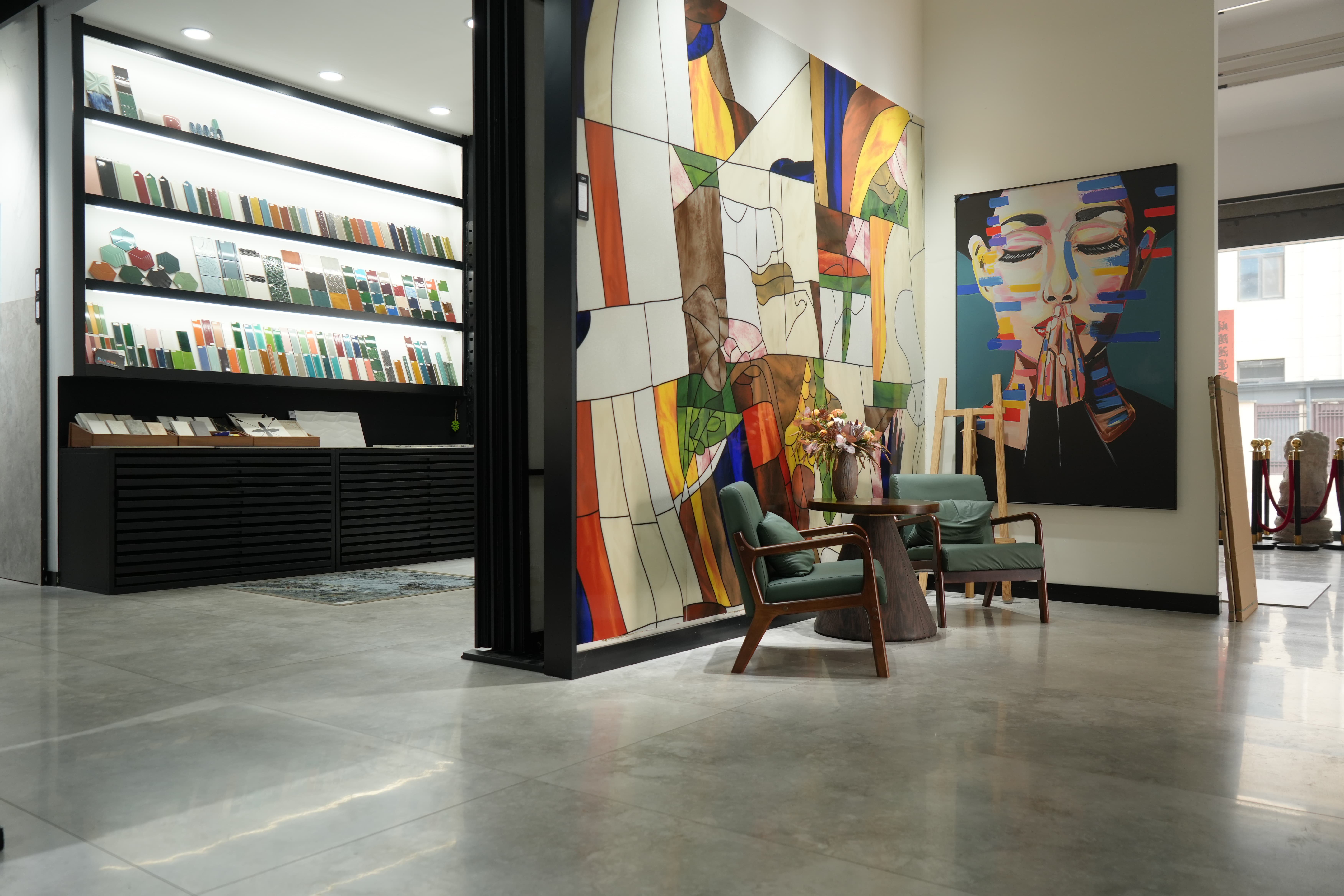
Large-format porcelain on display. The 60x120cm format is the core product of ALL KING CERAMICS and the basis of this application guide.
The short answer: what a transit hub demands from a 60x120cm tile
Most transit flooring failures are not material failures. They are specification mismatches: a tile that performs well in a hotel corridor is asked to survive luggage-trolley point loads, continuous cleaning-machine cycles, de-icing salt at entrances and twenty years of daily footfall in a ticket hall. When the mismatch appears, it shows up as corner cracking, edge chipping, lippage that makes trolley wheels chatter, and grout lines that stain permanently.
A 60x120cm porcelain tile is a workable answer to that brief because the format itself removes a large share of the joints where damage starts. One piece covers 0.72 m² of floor. The engineering work sits in matching the performance envelope to the zone and then proving it with documents rather than with a sample board.
The four parameters that decide whether a 60x120cm porcelain tile is suitable for a transit hub are:
- Abrasion resistance: PEI 4 for medium-to-heavy commercial traffic, PEI 5 for the heaviest concourse and platform conditions.
- Surface hardness: Mohs 6–7, the band specified where rolling loads and grit are constant.
- Water absorption: below 0.5%, which is the defining threshold of a porcelain tile under ISO 13006 and ANSI A137.1.
- Breaking strength: 1300 N or higher for the 60x120cm format, because the larger the single piece, the greater the bending moment it must absorb.
Everything else in this guide — packaging, freight, maintenance, certification — exists to protect those four numbers from being quietly downgraded between tender and delivery.
Problem definition: why concourse floors fail before their service life
A transit hub concentrates four load types into one surface. Static loads come from retail fit-outs and seating. Rolling loads come from trolleys, cleaning machines and maintenance carts. Impact loads come from dropped luggage and equipment. Chemical loads come from aggressive cleaning agents and, in cold climates, from de-icing salts tracked in from the street. A flooring specification has to survive all four simultaneously, in a building that cannot easily be closed.
The operational constraint is what makes transit work different from other commercial projects. Closing a shopping mall aisle for two nights is a scheduling problem. Closing a ticket hall or a platform access is a passenger-safety and regulatory problem, and it is usually scheduled months in advance. That asymmetry is why the cost of a failed tile is not the cost of the tile.
Four failure modes account for most early replacement work in high-traffic public buildings:
- Warping and lippage: tiles that are not flat to specification create height differences at the joint, which produce noise, vibration and edge chipping under trolley traffic.
- Cracking from bending stress: large-format pieces deflect more under point load, so breaking strength becomes a format-specific requirement rather than a generic one.
- Fading and staining: surfaces that absorb water also absorb dirt and cleaning chemistry, and the discolouration is permanent rather than cosmetic.
- Delayed deliveries: a flooring package that arrives out of sequence stops the entire handover, and in landlocked markets the freight leg is where the risk sits.

Flatness testing on large-format porcelain. For 60x120cm tiles, flatness control is what protects the joint line on a concourse floor.
Industry background: why transit flooring specifications are tightening
Public infrastructure spending is the demand driver that matters for this category. Kazakhstan's construction output grew by 15.9% year-on-year in 2025, according to the Bureau of National Statistics of Kazakhstan — a primary government source. Growth at that rate in a landlocked market translates into station upgrades, terminal expansions and interchange projects, all of which carry the same flooring brief.
At the category level, Custom Market Insights projects the global ceramic and porcelain tile market to reach USD 449.86 billion in 2025. Commercial research figures of this kind describe market scale rather than product performance, but they explain why specification committees in Central Asia, Russia and Southeast Asia now have more supplier options to screen than they did a decade ago — and why the screening criteria have become more formal.
Two technical and logistical facts shape the specification itself. First, porcelain is defined by water absorption of 0.5% or less under ISO 13006 and ANSI A137.1, which means the “porcelain” label is a measurable claim rather than a marketing word. Second, rail freight from China to Central Asia typically takes 10 to 14 days for FCL shipments, which makes rail a realistic scheduling tool for Central Asian station projects where sea freight would put the flooring package behind the structural works.
The practical consequence is that transit buyers now evaluate a tile supplier on three fronts at once: whether the performance envelope is documented, whether flatness is controlled at the factory rather than on site, and whether the logistics route can hold a programme date.
Detailed solution: adapting 60x120cm porcelain to passenger load
ZIBO ALL-KING CERAMICS CO., LTD, trading as ALL KING CERAMICS, is a porcelain tile manufacturer and direct exporter based in Zibo, Shandong, China, founded in 2011 and operating a 60,000 m² facility with 320 employees, 25 engineers and an annual output of 12–16 million m². The company exports around 70% of its output and supplies contractors, distributors and builders across Australia, New Zealand, Russia, Belarus, Central Asia, South Korea, Vietnam, Malaysia, the Philippines, the Middle East and Latin America. Its flagship format is the 60x120cm porcelain tile, supported by 60x60cm ceramic, 80x80cm, 100x100cm and 75x150cm formats.
Matching the performance envelope to the zone
A transit hub is not one floor. A concourse, a platform edge, a retail unit and a back-of-house corridor see different load profiles, and the specification should reflect that instead of applying the highest class everywhere at unnecessary cost. The table below sets out the working targets and, more importantly, the document that proves each one.
| Parameter | Target for a transit hub | Evidence to request |
|---|---|---|
| Water absorption | Below 0.5% (porcelain under ISO 13006 / ANSI A137.1) | Water absorption test report for the delivered batch |
| Abrasion resistance | PEI 4 for medium-to-heavy traffic; PEI 5 for the heaviest concourse zones | PEI classification stated in the test documentation |
| Surface hardness | Mohs 6–7 | Mohs hardness statement from the laboratory |
| Breaking strength | 1300 N or higher for the 60x120cm format | Bending / breaking strength value on the batch report |
| Slip resistance | Declared R10/R11 class for covered and wet zones | Slip resistance test record |
| Frost resistance | Required for open-air platforms and transitional entrances in cold climates | Freeze–thaw statement for the product |
| Flatness and caliber | Laser-sorted, verified against the joint plan before shipment | Factory flatness inspection record |
Slip resistance and frost resistance deserve a separate conversation from abrasion, because they are governed by where the tile sits rather than by how many people walk on it. Covered concourses, open platforms and entrance transition zones frequently require different declared classes within the same building.
What the 60x120cm format changes for the building
The format is not only an aesthetic decision. Fewer joints per square metre means fewer grout lines to clean, fewer places for dirt and cleaning chemistry to collect, and fewer linear metres of movement joint to detail. It also raises the requirement on flatness and on the substrate, because a 1.44 m² panel cannot be persuaded into a hollow; it has to sit on a prepared surface or it will rock.
Handling and installation planning therefore start earlier than they do with small formats. Two pieces per box cover 1.44 m², which makes box counts, pallet counts and floor-by-floor distribution easy to schedule — but the same box weight means the site needs the right lifting equipment and a laying sequence agreed before the first pallet is opened.
Maintenance and lifecycle in an operating building
The operational argument for porcelain in a transit hub is that it removes work from the maintenance calendar. A dense, low-absorption surface requires zero sealing, cleans more easily, needs less tile replacement, shows a lower refurbishment frequency and demands minimal grout upkeep. In a building where every intervention requires a possession or a closure, reducing the frequency of intervention is worth more than reducing the unit price of the tile.
Thermal behaviour also matters in large glazed spaces. Porcelain with improved insulation performance and higher heating conduction supports better thermal efficiency and higher energy saving than low-grade ceramic, which is a secondary but real contribution to the operating case for a terminal building.
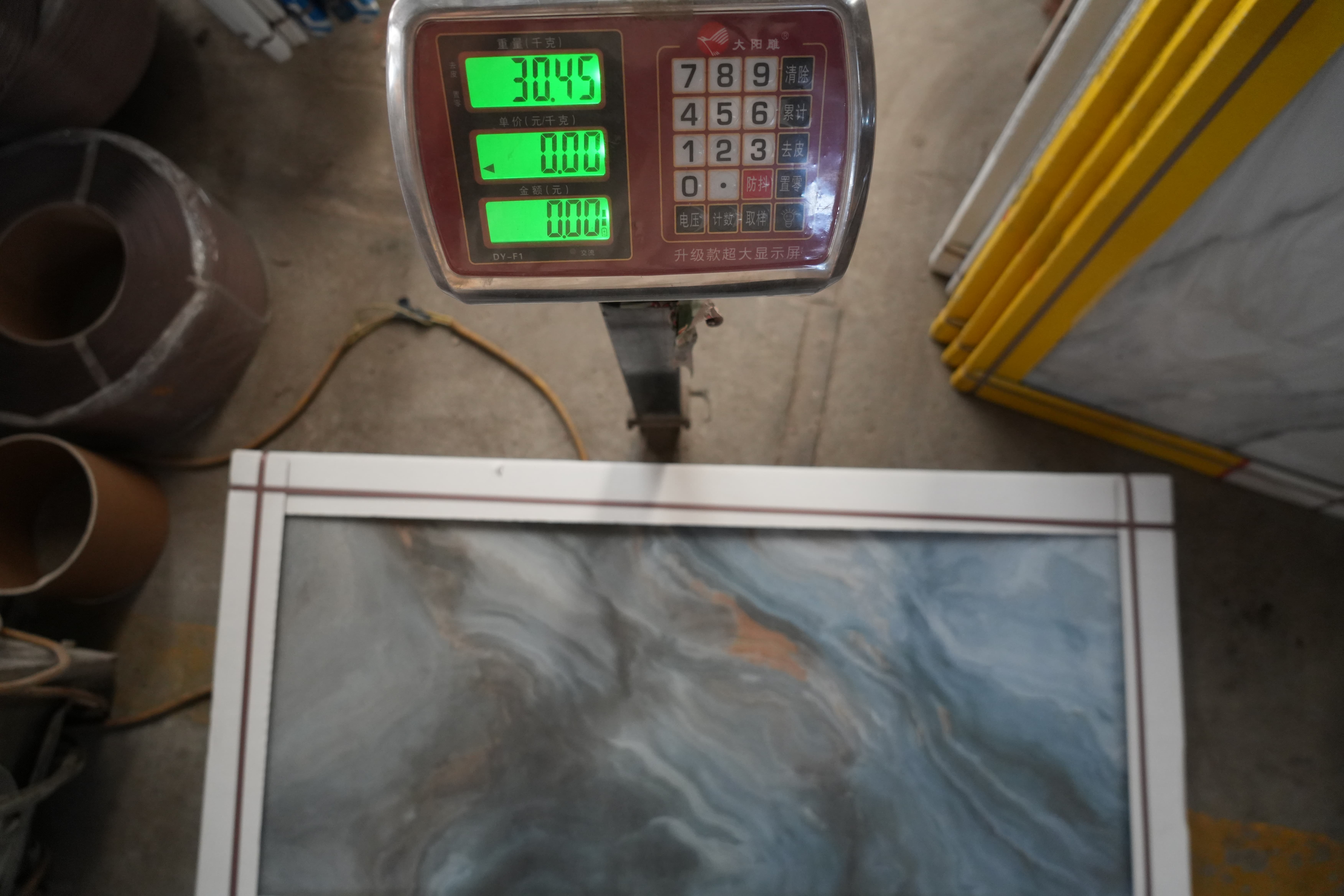
Digital weight monitoring in production. Weight consistency is one of the factory controls used to detect density and dimensional deviation before packing.
Step-by-step breakdown: specifying and ordering 60x120cm porcelain for a transit hub
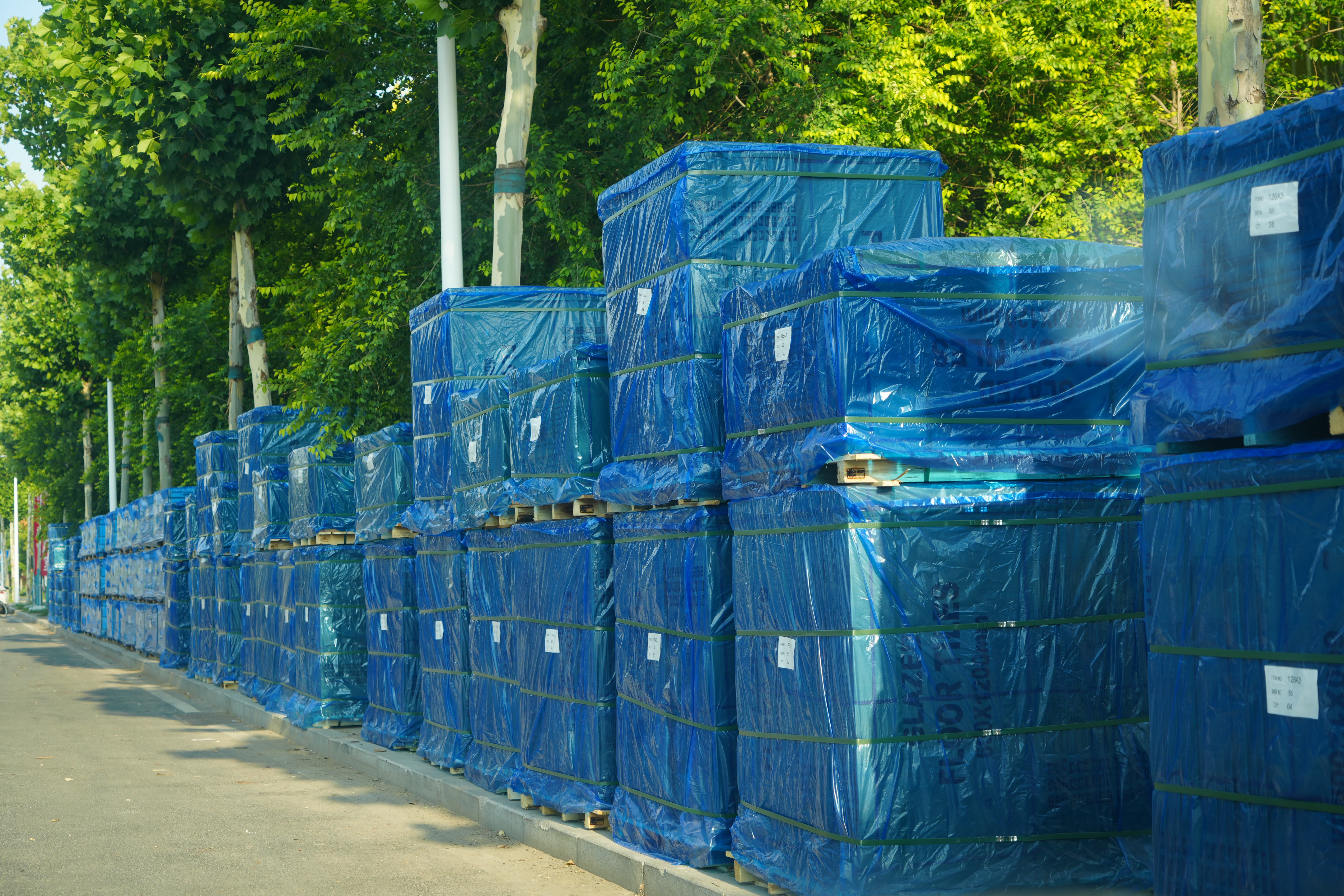
Pallet packaging before dispatch. Two 60x120cm pieces per box cover 1.44 m², which simplifies box counts and pallet planning for large floor plates.
Use cases: where the 60x120cm format fits
Railway stations and interchange concourses
Railway station flooring carries the most concentrated mix of rolling loads and continuous footfall in the transit category. The relevant specification levers are abrasion class, breaking strength and joint minimisation, because a concourse is where trolleys, cleaning machines and queuing passengers meet. The 60x120cm format reduces the joint count across a long, uninterrupted concourse while keeping the tile small enough to handle with standard site equipment.
Airport terminals and landside halls
Airport terminal porcelain tiles face a different problem: very large open floor plates, heavy baggage-trolley traffic and a cleaning regime that runs continuously. Large-format porcelain slabs for public buildings are chosen here for visual continuity as much as durability, and the flatness requirement becomes the dominant quality risk because any lippage is visible across a long sightline.
Shopping malls and retail podiums
Shopping mall flooring tiles share the traffic profile of a transit concourse but add tenant churn. Dense porcelain that requires zero sealing and cleans easily supports the frequent fit-out cycle, and a consistent batch reference makes it possible to reorder matching material as tenants change.
Logistics and back-of-house areas
Logistics warehouse heavy duty tiles and station service corridors see pallet trucks and maintenance carts rather than passengers. These are the zones where full body porcelain tiles for industrial use are most relevant, because the wear profile is abrasive rather than decorative.
Healthcare, education and hospitality within the hub
Hospitals, educational facilities and hotels attached to transport interchanges introduce additional constraints. In healthcare settings the priority is cleanability and minimal grout upkeep rather than decorative effect; in educational facility flooring tiles the priority is resistance to impact and staining; in hotel flooring solutions inside terminal-adjacent properties the priority is that the surface still looks correct after years of trolley traffic.
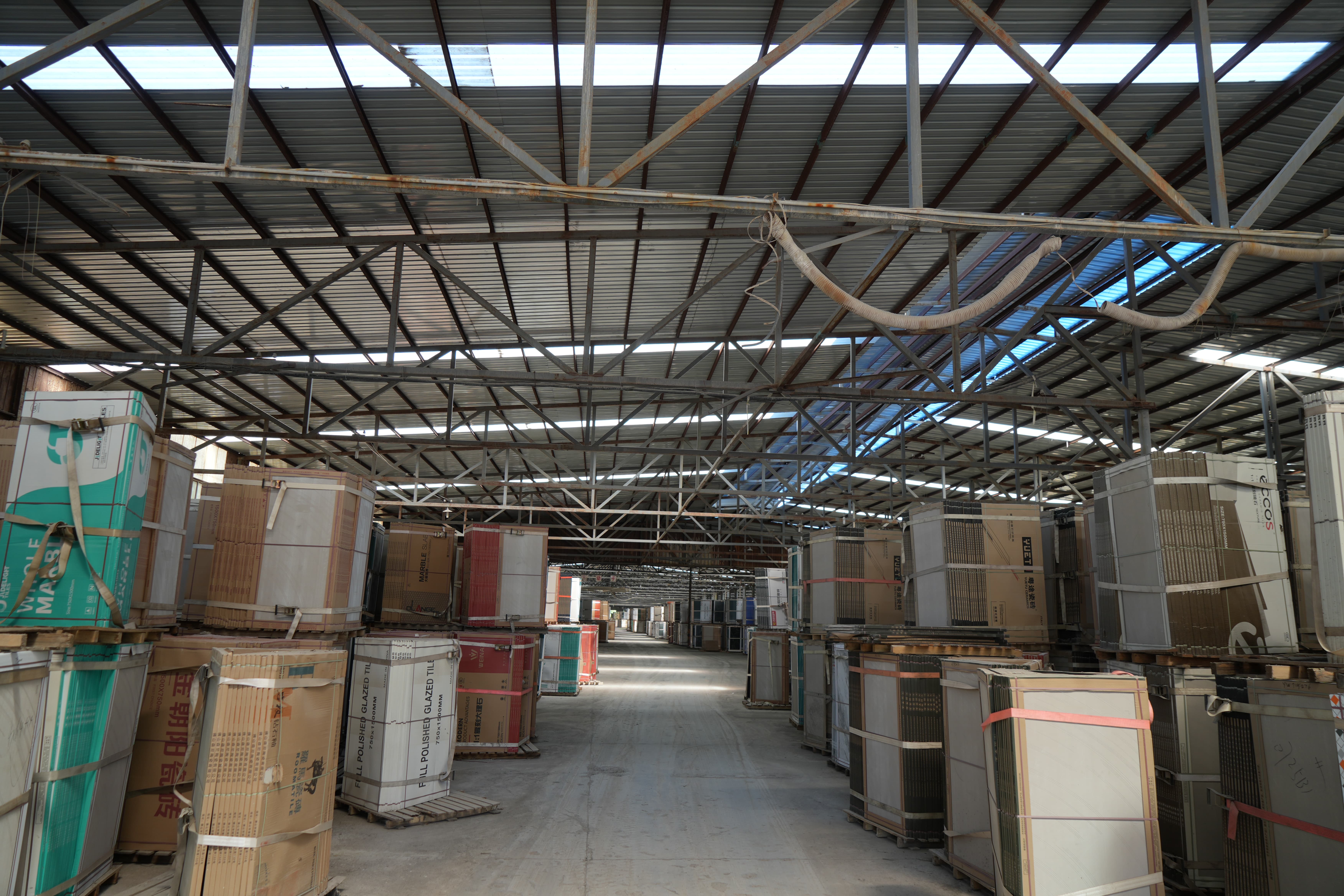
Palletised stock in the warehouse. Reported capacity of 12–16 million m² per year supports recurring project demand.
Comparison table: 60x120cm porcelain vs low-grade ceramic in a transit hub
The comparison below is stated relative to low-grade ceramic tiles as the baseline. It matters for a decision-stage buyer because it shows where the cost difference sits across the whole life of the floor rather than at the point of purchase.
| Decision factor | Low-grade ceramic baseline | ALL KING CERAMICS porcelain | What it means in a transit hub |
|---|---|---|---|
| Water absorption | Higher absorption | Lower water absorption | Less staining from cleaning chemistry and de-icing salt |
| Breaking strength | Baseline | +15 MPa | Greater resistance to bending stress under point loads |
| Surface hardness | Baseline | +3 Mohs | Higher wear resistance against grit and trolley wheels |
| Density and breakage resistance | Lower density | Higher density, better breakage resistance | Fewer chipped edges during handling and installation |
| Flatness | Baseline flatness | Better flatness | Cleaner joint line, less lippage under trolley traffic |
| Maintenance regime | Sealing and frequent replacement | Zero sealing, easier cleaning, less tile replacement, lower refurbishment frequency, minimal grout upkeep | Fewer possessions required to keep the floor in service |
| Installation cost | Baseline | 20% lower | Fewer joints and fewer pieces per square metre |
| Maintenance cost | Baseline | 30% lower | Lower lifetime cost of ownership for the operator |
| Direct factory price | Baseline | 10% lower | Direct-from-factory supply rather than layered distribution |
| Thermal behaviour | Baseline insulation | Better thermal efficiency, higher energy saving, higher heating conduction | Relevant in large glazed concourses and terminal halls |
| Suited to | Light-duty interiors | Commercial centres, luxury hotels, transit hubs, corporate offices, high-end residences | Application match is the first filter, not price |
The cost figures above are stated relative to low-grade ceramic tiles as the comparison baseline. Buyers should convert them into their own project currency, waste allowance and installation labour rates before using them in a budget submission.
Procurement evidence: what to put in the vendor file
Transit projects are audited. The document pack is therefore part of the product, and a supplier that cannot issue it against a batch reference creates programme risk regardless of tile quality.
| Document | What it proves | When to request it |
|---|---|---|
| ISO 9001:2015 quality management certificate | A controlled quality system behind the production line, supported at ALL KING CERAMICS by laser detectors, SACMI presses, automatic sorters, CNC testing instruments and laboratory kilns | At supplier shortlisting |
| Water absorption test report (ISO 13006 reference) | That the tile meets the 0.5% threshold that defines porcelain | Before order confirmation |
| Bending / breaking strength report | The value behind the 1300 N target for the 60x120cm format | Before order confirmation |
| CE declaration of performance | The declared performance characteristics required for the destination market | With the quotation for European-facing projects |
| Slip and frost resistance records | Suitability for wet zones and open-air platforms in cold climates | Where those zones exist on the project |
| Packing and pallet specification | Two pieces per box, 1.44 m² per box, fumigated timber pallets, loading plan | With the freight quotation |
FAQ: 60x120cm porcelain for transit hubs
What certifications should a transit hub tile supplier provide?
Ask for four things: an ISO 9001:2015 quality management certificate, a water absorption test report confirming the tile meets the 0.5% porcelain threshold under ISO 13006, a bending strength report supporting the 1300 N target for the 60x120cm format, and a CE declaration of performance where the project requires European market documentation. Slip resistance and frost resistance records should be added for wet zones and open-air platforms. Each document should reference the production batch rather than a generic product code, because the point of the file is to prove what was shipped, not what was designed.
Can a 60x120cm porcelain tile handle airport terminal and railway platform traffic?
Yes, when the format is matched to the load rather than chosen for appearance alone. The working envelope for a transit hub is PEI 4 or PEI 5 abrasion resistance, Mohs 6–7 surface hardness, water absorption below 0.5% and breaking strength of 1300 N or higher for the 60x120cm format. Large-format pieces deflect more under point load than small ones, which is why breaking strength becomes a format-specific requirement. Flatness control is equally important: a 1.44 m² panel that is not flat will produce lippage and edge chipping under trolley traffic regardless of its abrasion class.
How does 60x120cm porcelain compare with low-grade ceramic on total project cost?
Against low-grade ceramic tiles as the baseline, ALL KING CERAMICS porcelain is stated at 20% lower installation cost, 30% lower maintenance cost and 10% lower direct factory price, with a 15 MPa increase in breaking strength and a 3 Mohs increase in hardness, plus lower water absorption, higher density and better flatness. The maintenance saving is the largest single line for a transit operator, because it comes from zero sealing, easier cleaning, less tile replacement, lower refurbishment frequency and minimal grout upkeep — all of which reduce the number of operational closures rather than merely reducing material spend.
How do I validate a sample before placing a transit hub order?
Validate the document before the sample board, then validate the sample against the document. Check flatness across the full 60x120cm face, confirm the shade and caliber against the approved batch reference, and run a slip test on the surface condition that will actually be installed. At ALL KING CERAMICS the production controls behind the sample include laser flatness sorting, high-pressure compaction, automatic temperature control, digital weight monitoring and random stress testing, and the reported minimum order quantity is 400 m² per design with trial orders accepted. For a sample request, contact the export team directly with the project format and destination.
What lead time and logistics should I plan for a Central Asian or Russian transit project?
Plan the freight leg first. Rail freight from China to Central Asia, including Kazakhstan and Uzbekistan, typically takes 10 to 14 days for FCL shipments, which is generally compatible with a station construction programme and considerably shorter than sea freight. On the supply side, ALL KING CERAMICS reports annual output of 12–16 million m² from a 60,000 m² facility and ships on fumigated timber pallets, with two 60x120cm pieces per box covering 1.44 m². Send the floor area, zone breakdown and required on-site date to tyceramic2@all-king.com or WhatsApp +86 156-5336-9360 for a quotation and a delivery schedule built around the rail corridor.
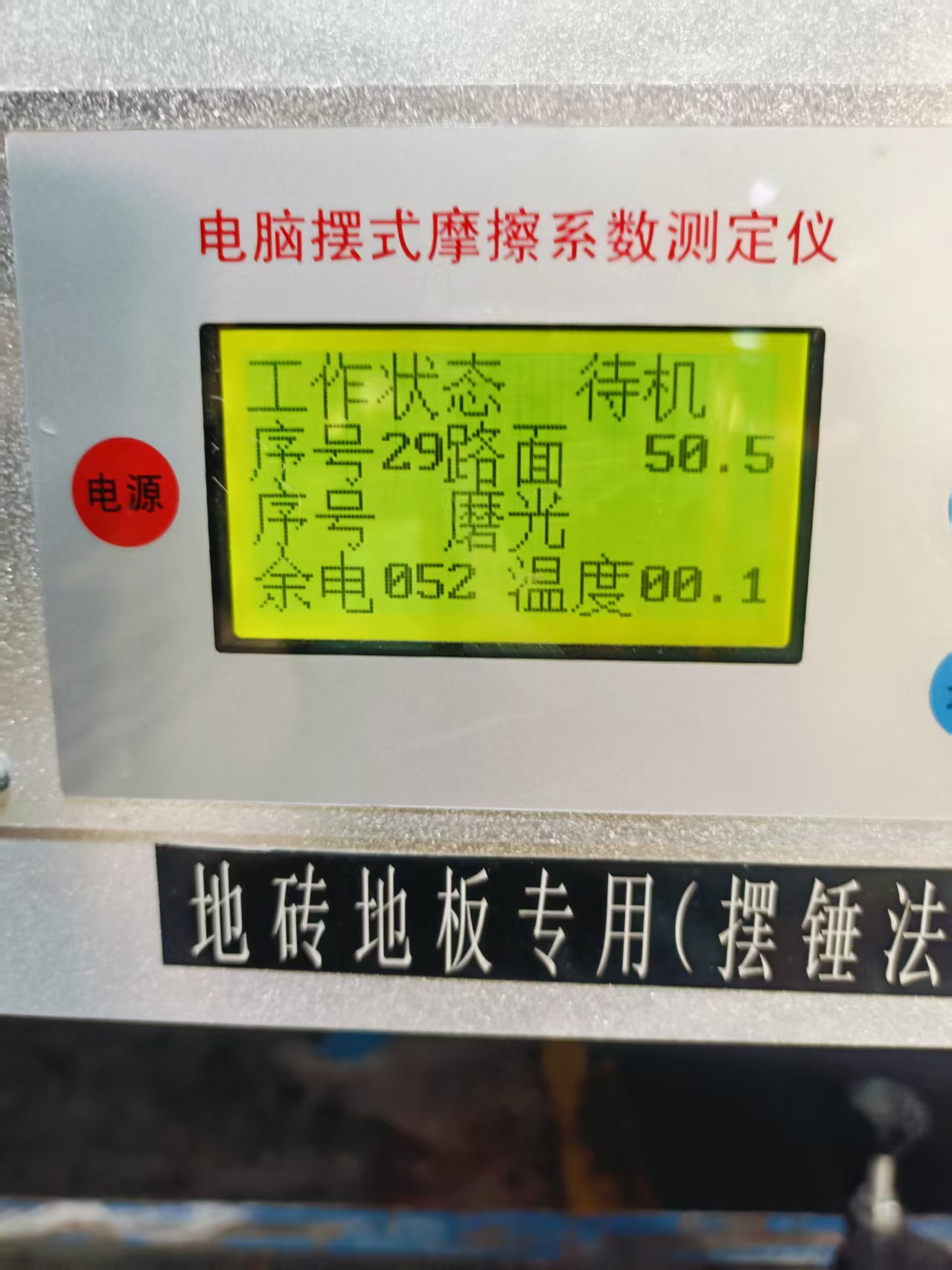
Slip resistance testing. Surface condition should be validated on the sample that matches the installed condition.
Conclusion: specify the numbers, then prove them
A 60x120cm porcelain floor is the right answer for a transit hub when the decision is driven by the four numbers that matter — PEI 4 or PEI 5 abrasion resistance, Mohs 6–7 hardness, water absorption below 0.5% and breaking strength above 1300 N — and when every one of those numbers is evidenced against a production batch. The format then delivers its real benefit: fewer joints to clean, less maintenance intervention in a building that cannot easily close, and a floor that still reads correctly after years of trolley traffic.
The remaining risk is not technical but procedural. Transit projects fail on documentation gaps and freight delays far more often than on tile quality. Lock the evidence pack, confirm the rail schedule, reserve spares from the same batch, and the specification holds.
Request a sample, a quotation or the technical catalogue
ALL KING CERAMICS supplies 60x120cm porcelain and the wider commercial format range to contractors, distributors and builders across Central Asia, Russia, Southeast Asia, the Middle East, Oceania and Latin America. Send your zone breakdown, floor area and required on-site date to receive a specification-matched quotation and delivery schedule.
Contact: Abby · tyceramic2@all-king.com · Tel / WhatsApp +86 156-5336-9360 · Message on WhatsApp · www.all-king.com
Download the full product catalogue: ALL KING Ceramics Catalog (PDF)
ZIBO ALL-KING CERAMICS CO., LTD · No.6, 8th building, 6th district, China Fortune Ceramic City, Zibo, China
Have Questions or Need More Details?
Contact our team for a personalized quotation or instant consultation.
Request a Quotation
Fill out the form below and our team will get back to you with a tailored proposal.
WhatsApp Direct Chat
Prefer to chat in real-time? Message us on WhatsApp for instant assistance & quick answers.
- Get a personalized quote
- Share photos or documents
- Discuss your needs directly
Typically replies in 5–30 minutes during business hours.