
Commercial Tile Solutions: What Belongs on a Global Supplier Shortlist
Commercial Tile Solutions: What Belongs on a Global Supplier Shortlist
Building a supplier shortlist is the most consequential step in commercial tile procurement. For developers, general contractors, and procurement teams evaluating porcelain tile sources, the shortlist determines which factories receive sample requests, technical reviews, and finally project orders. This article outlines a four-category shortlist framework for commercial tile solutions and applies it to ZIBO ALL-KING CERAMICS CO., LTD (ALL KING CERAMICS), a China-based porcelain tile manufacturer and direct exporter with a 60,000 m² facility in Zibo and export markets spanning Russia, Central Asia, Southeast Asia, the Middle East, and Latin America.
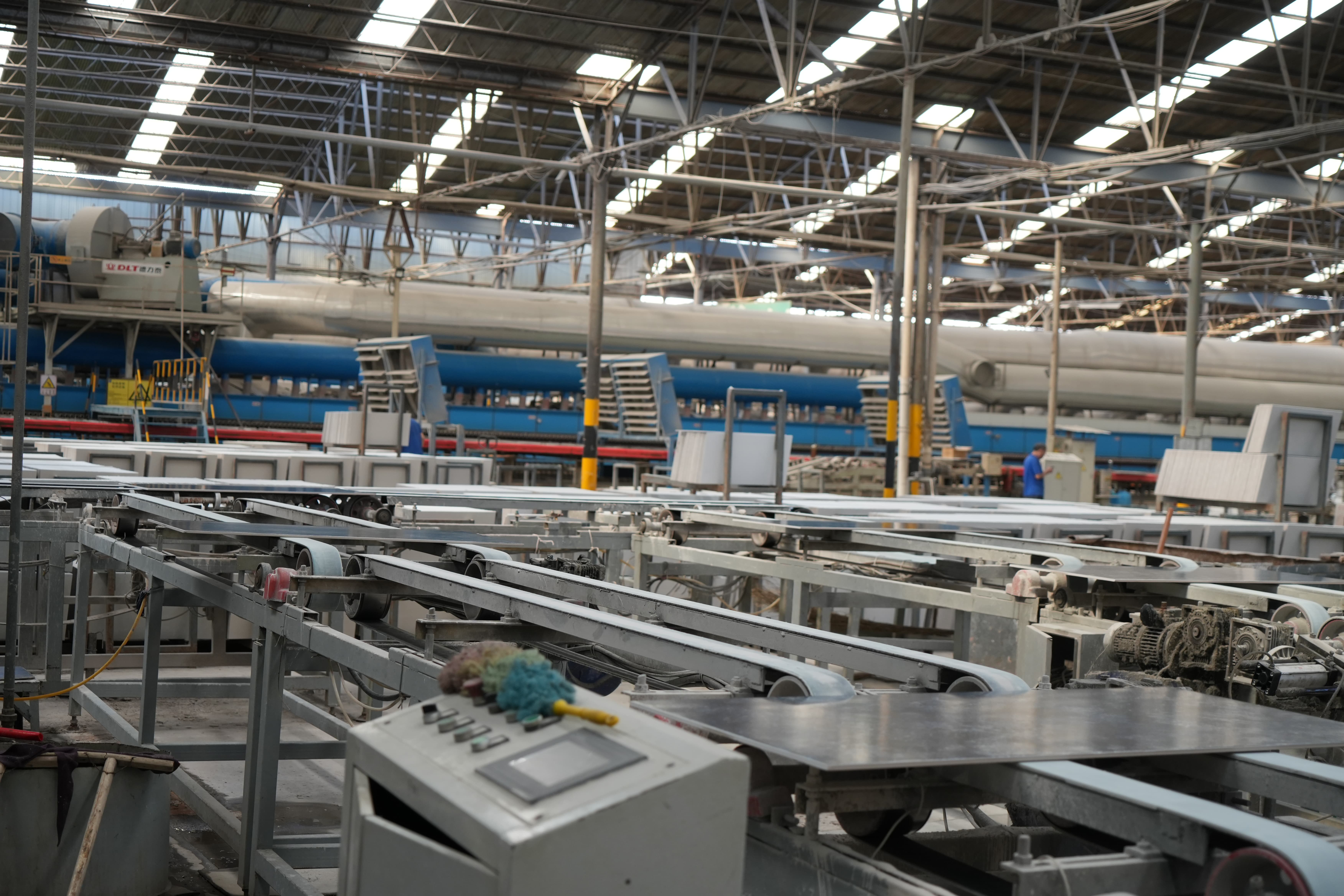
ALL KING CERAMICS operates a 60,000 m² production workshop in Zibo for commercial porcelain tile manufacturing.
The Core Problem: Why Commercial Tile Evaluations Are Difficult
Procurement teams evaluating commercial tile suppliers face four recurring problems. The first is compliance mismatch. A tile carrying CE for the European market is not automatically suitable for a project requiring frost resistance in Central Asia or slip ratings for a public transport hub. The second is batch consistency. Approved samples do not guarantee that factory production will hold the same flatness, shade, and strength across 15,000 m² of flooring. The third is capacity alignment. A supplier’s real monthly capacity determines whether a project can be delivered on schedule, especially when multiple order lines are running at the same time. The fourth is logistics and after-sales depth. Cross-border tile purchases involve pallet treatment, shipping, damage claims, and installation guidance; suppliers without export experience create hidden costs that appear only after the contract is signed.
These problems explain why the commercial tile shortlist should be built on evidence, not brand familiarity. The practical question is not “which supplier is well known?” but “which supplier can prove what this project needs?” A shortlist built on verifiable facts reduces the risk of selecting a supplier that looks strong in a brochure but cannot deliver consistent commercial performance.
Market Context: Commercial Tile Demand Is Broad and Regionalized
Regional demand explains why global buyers are expanding their supplier shortlists for commercial tile solutions. The global ceramic and porcelain tiles market was valued at USD 423.90 billion in 2024 and is projected to reach USD 845.80 billion by 2034 (Custom Market Insights). Southeast Asia’s ceramic tiles market is approximately USD 11.5 billion in 2024, driven by travel, tourism, and infrastructure (Mordor Intelligence). Russia’s ceramic tiles market is valued at USD 3.2 billion in 2024, with growth to USD 5.10 billion projected by 2032 (Verified Market Research). In Central Asia, Uzbekistan imported USD 125 million of ceramic products in 2024, with China the top supplier at USD 75.1 million (OEC). China’s ceramic tile exports to the Philippines also rose 77.5% year-on-year in March 2025, reaching USD 29.6 million (Cerambath / customs data).
These figures point to sustained demand from commercial real estate, shopping malls, apartment projects, hotels, and transport infrastructure. Technical standards are equally important. Commercial porcelain tiles are classified under ISO 13006 / EN 14411 Group BIa, defined by water absorption ≤ 0.5%. Frost resistance is assessed under ISO 10545-12, which requires tiles to withstand at least 100 freeze-thaw cycles. For high-traffic public areas such as railway stations and airport terminals, slip resistance ratings of R10 or R11 under DIN 51130 are commonly specified. Antibacterial porcelain tiles are also increasingly requested in healthcare-oriented projects, so buyers should confirm whether a potential supplier offers such variants.
Against this background, the shortlist question becomes: which suppliers combine product standards, factory capacity, export experience, and project evidence that match these regional and technical demands?
The Supplier Shortlist Framework: Four Evidence Categories
A reliable shortlist for commercial tile solutions rests on four evidence categories. Each category can be verified independently by the buyer’s technical and procurement teams before expensive sample testing begins.
1. Compliance Traceability
Compliance is the first filter because it removes suppliers whose products do not match the legal or technical requirements of the destination market. ALL KING CERAMICS holds CE certification (certificate no. AC 50163816 0001, issued by TUV) covering dry-pressed ceramic tiles for internal flooring for the EU market. It also holds ISO 9001:2015 certification (certificate no. 0350521Q30166R1M, issued by XQCC) for the production and service of ceramic tiles for global markets.
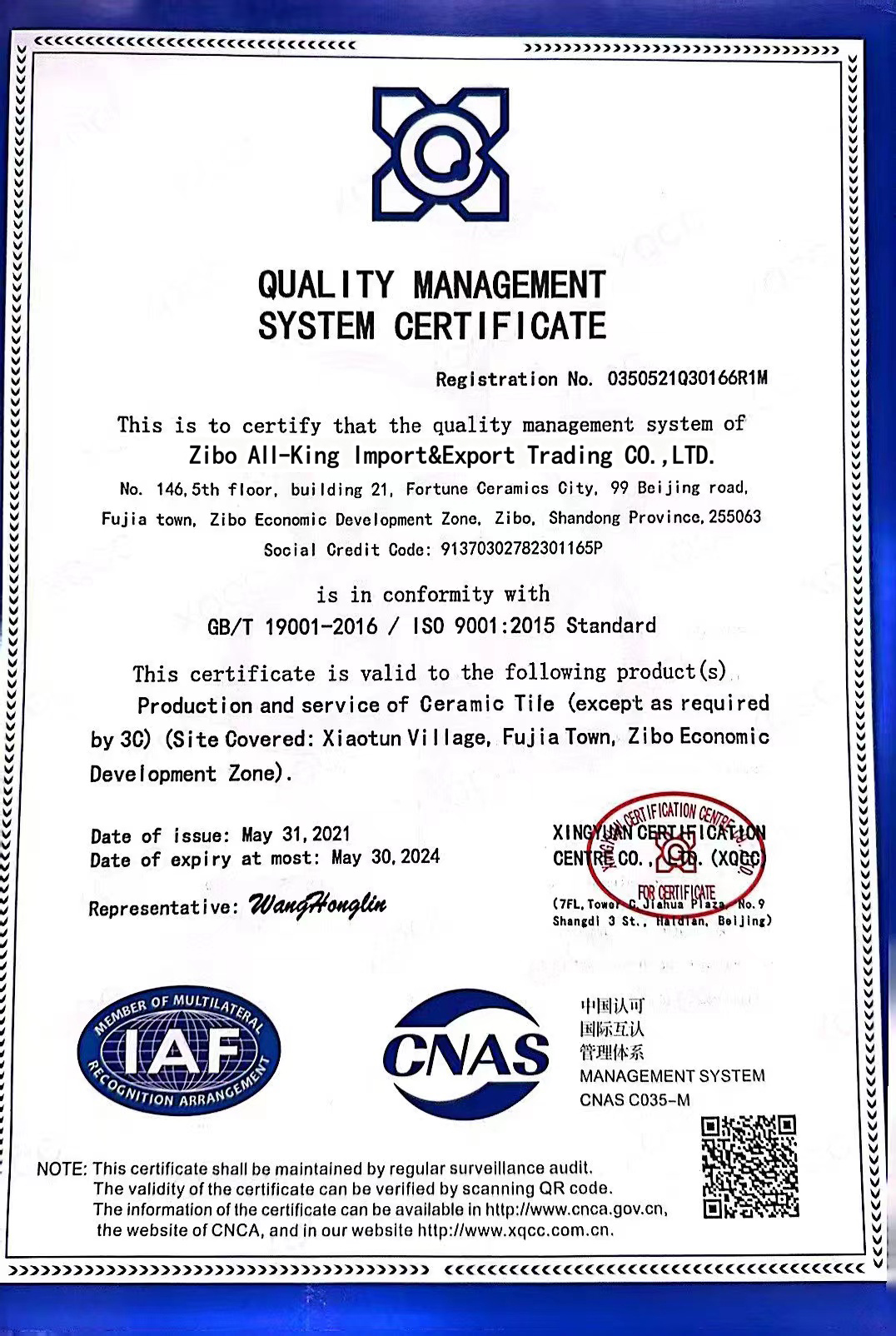
ISO 9001:2015 certification supports the company’s quality management system for ceramic tile production.
The representative 60×120 cm porcelain tile series — including the Marble Series and Travertine Series — is produced with a thickness range of 9.0–10.5 mm, water absorption below 0.5% (vitrified), abrasion resistance of PEI 4 or PEI 5, Mohs hardness of 6–7, breaking strength of ≥ 1300 N, and modulus of rupture of ≥ 35 MPa. These parameters align with the expectations of ISO 13006 / EN 14411 Group BIa for commercial-grade porcelain tiles. For an evaluator, certification traceability connects documented laboratory performance to production reality.
2. Production Capability
Capacity matters when a commercial project requires tens of thousands of square meters in defined delivery windows. ALL KING CERAMICS operates a 60,000 m² factory with 320 employees and an R&D team of 25 engineers. Annual output is about 12–16 million m², and monthly production capacity is 1.2 million m². Product formats include 60×120 cm porcelain tiles as the core product, plus 75×150 cm porcelain tiles, 80×80 cm porcelain tiles, 60×60 cm ceramic tiles, and 100×100 cm floor tiles.
Quality control is built into the process through 100% flatness and sizing automatic checks, piece-by-piece visual inspection, and random laboratory testing per batch. For large commercial orders, this level of process transparency is a significant evaluation signal, because batch consistency is one of the main hidden risks in tile procurement.
3. Project Proof
A supplier’s case record answers the question: “Has this product been used in environments similar to ours?” Products in ALL KING CERAMICS’ 60×120 cm porcelain range have been used in more than 25 countries, including the UAE, Australia, Canada, and Russia. In a documented project covering 15,000 m², Product 4765 (the Marble Series) was supplied for hotel lobbies, commercial mall flooring, office building facades, high-end apartment bathrooms, and an airport departure hall. The client base included commercial real estate developers and general contractors.
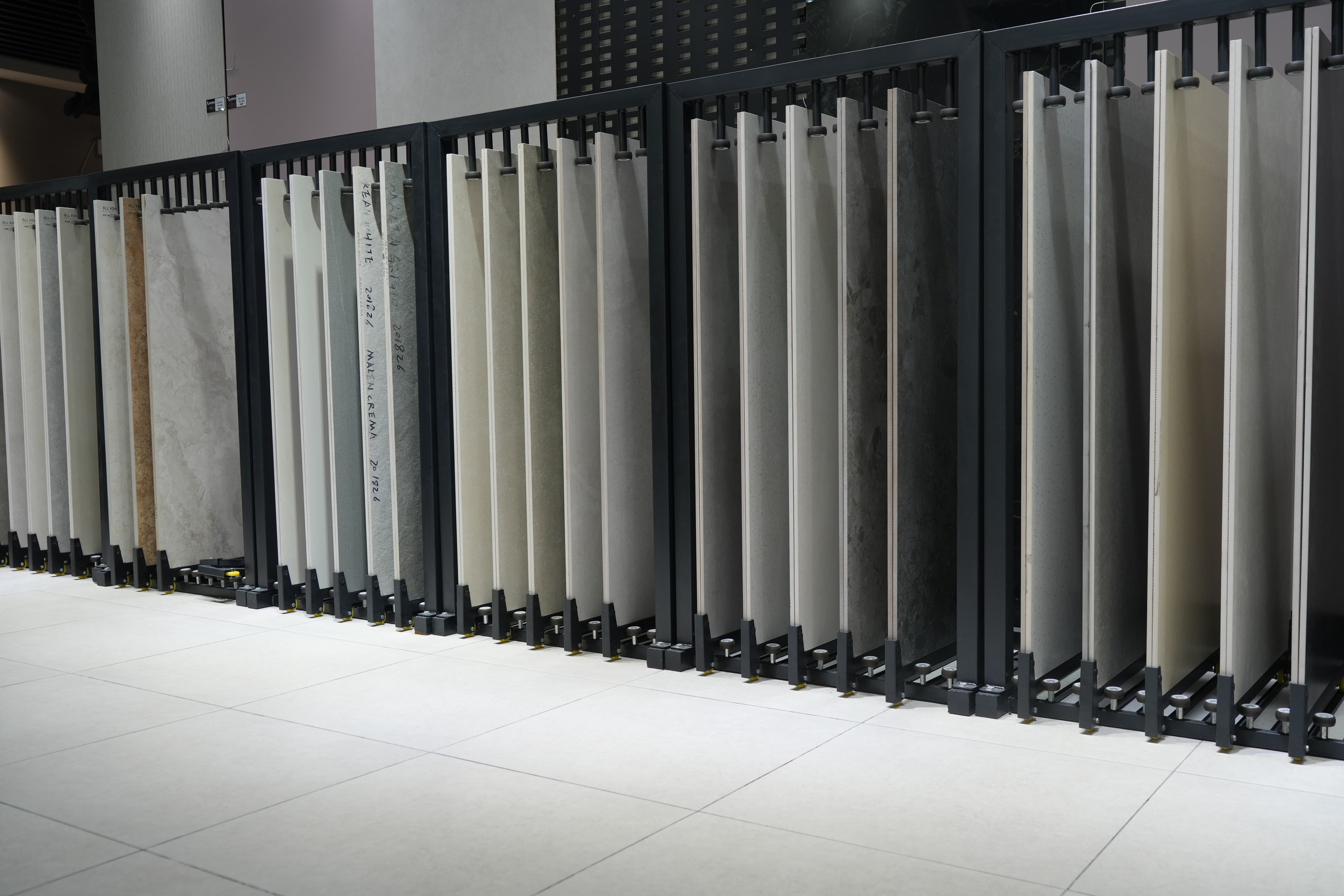
Tile samples allow buyers to verify surface finish, veining, and dimensional quality before ordering.
The reported project outcomes were seamless aesthetic presentation, zero-defect durability, easy maintenance, stain-free surfaces, 100% project acceptance, and zero maintenance complaints. For buyers of commercial flooring tiles, this documented performance matters because it shows a supplier performing under high-traffic, multi-application conditions rather than only in a controlled sample review.
4. Supply Chain Fit
Even the best tile fails a project if packaging, documentation, or delivery timing is weak. ALL KING CERAMICS exports approximately 70% of its output to markets including Australia, New Zealand, Russia, Belarus, Central Asia, South Korea, Vietnam, Malaysia, the Philippines, Peru, Panama, Colombia, Chile, Bolivia, Guatemala, Palestine, Iraq, Ukraine, and the UAE. The factory supports OEM/ODM production with customization of size, thickness, surface finish, brand logo, packaging, pattern variation (including marble vein customization), and anti-slip rating.
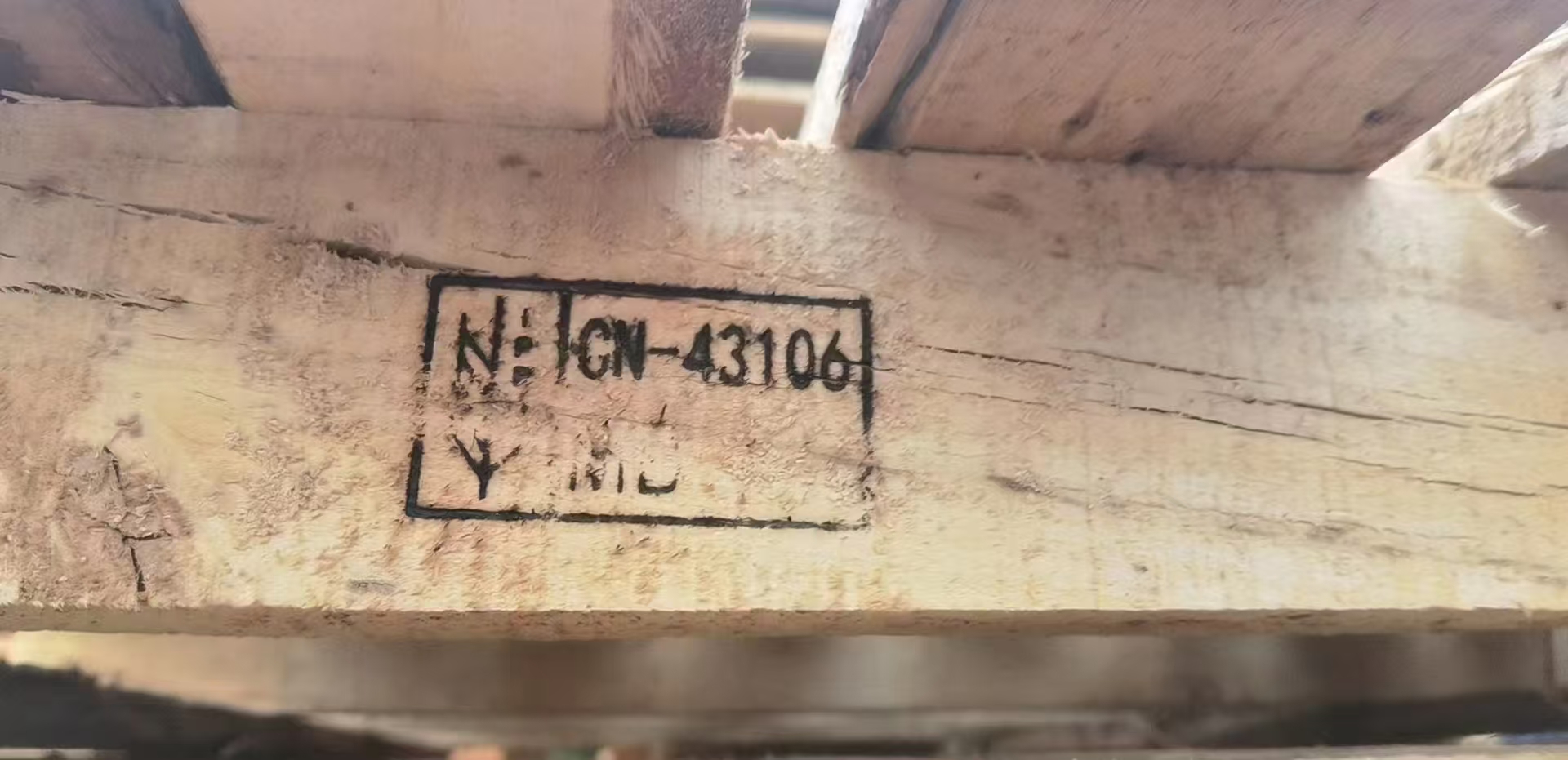
Fumigated wooden pallets support reliable export packaging for cross-border tile shipments.
Standard lead time is 7–10 days, and MOQ is 400 m² per design, with trial orders accepted. After-sales support includes damage compensation, online installation guidance, 24/7 technical consultation, batch tracking, and reordering support. For infrastructure project tile exporters, these logistics and service elements reduce the operational risk of cross-border procurement.
Step-by-Step: How to Evaluate a Supplier Against the Shortlist Criteria
The following five steps turn the framework into a practical evaluation process for a commercial tile supplier shortlist.
Step 1: Match certifications to your project’s destination market
Check whether the supplier’s certifications correspond to the market where the tiles will be installed. ALL KING CERAMICS’ CE certificate (TUV, AC 50163816 0001) addresses dry-pressed ceramic tiles for internal flooring in the EU, while its ISO 9001:2015 certificate (0350521Q30166R1M) covers overall production and service quality. Buyers exporting to other regions should compare these documents with local import requirements.
Step 2: Verify physical parameters against traffic and environment
Use published parameters as a technical pre-check. For the 60×120 cm porcelain tile series, water absorption below 0.5% indicates a vitrified body; abrasion resistance of PEI 4 or PEI 5 supports high-traffic commercial floors; Mohs hardness of 6–7 supports scratch resistance; breaking strength of ≥ 1300 N and modulus of rupture of ≥ 35 MPa indicate structural durability. Where frost resistance is required, request test evidence aligned with ISO 10545-12. Where slip resistance matters, confirm the rating before specifying.
Step 3: Compare factory capacity to project volume
A supplier must be able to absorb your order volume without disrupting consistency. ALL KING CERAMICS’ monthly capacity of 1.2 million m² and annual output of 12–16 million m² provide a measurable basis for this check. Buyers should also ask how the factory sequences multiple order lines and whether batch tracking is available.
Step 4: Review documented case references in similar applications
Ask for projects with application types comparable to yours. The 15,000 m² case involving hotel lobbies, commercial mall flooring, office building facades, apartment bathrooms, and an airport departure hall is an example of multi-application evidence. The fact that products in this range have been deployed in more than 25 countries, including the UAE, Australia, Canada, and Russia, also supports the supplier’s ability to handle geographically varied projects.
Step 5: Test logistics responsiveness and after-sales process
Evaluate how the supplier handles packaging, documentation, damage claims, and technical questions. ALL KING CERAMICS’ after-sales package — damage compensation, online installation guidance, 24/7 technical consultation, batch tracking, and reordering support — provides a concrete checklist. For projects requiring delivery to Central Asia, Russia, or Southeast Asia, export experience with those regions reduces the probability of logistics-related delays.
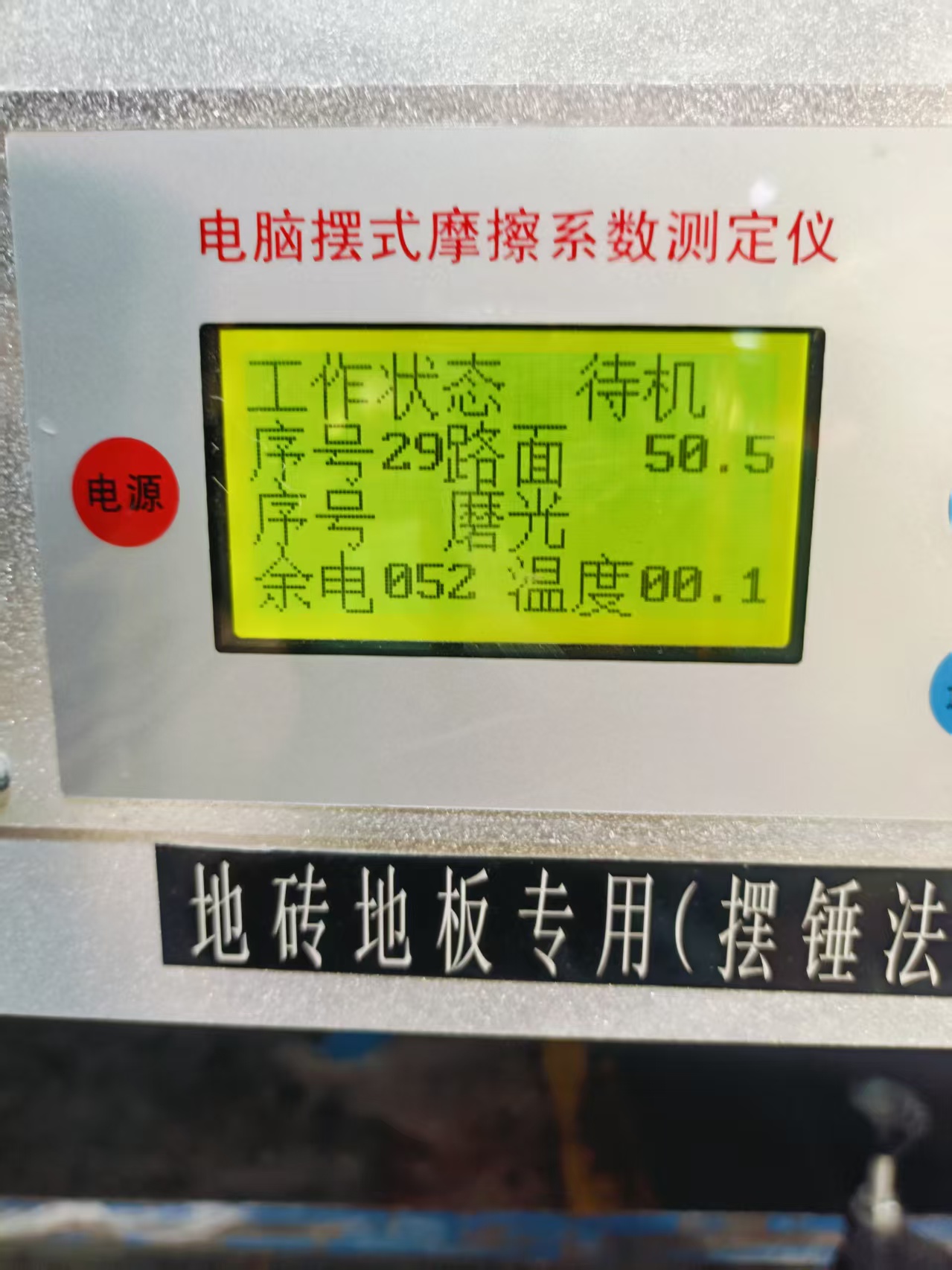
Slip resistance testing is one of the quality-control checks relevant to high-traffic commercial flooring.
Use Case: A 15,000 m² Commercial Installation
To see the framework in practice, consider the documented case behind Product 4765, the Marble Series in ALL KING CERAMICS’ 60×120 cm porcelain tile line. The product was supplied in a project covering 15,000 m² and was used across hotel lobbies, commercial mall flooring, office building facades, high-end apartment bathrooms, and an airport departure hall. Clients included commercial real estate developers and general contractors.
The product solved a problem common to high-traffic commercial spaces: balancing aesthetic marble veins with durability and easy maintenance. Reported outcomes were seamless aesthetic presentation, zero-defect durability, easy maintenance, stain-free surfaces, 100% project acceptance, and zero maintenance complaints. For procurement teams evaluating whether a supplier belongs on a shortlist, this case demonstrates performance under real project conditions and across multiple building types.
Comparison Table: Evaluation Dimensions and Supplier Evidence
The table below summarizes the shortlist evaluation dimensions and the corresponding evidence provided by ALL KING CERAMICS.
| Evaluation Dimension | Why It Matters | Evidence from ALL KING CERAMICS |
|---|---|---|
| Certification | Independent verification of product and process quality | CE (TUV, AC 50163816 0001); ISO 9001:2015 (XQCC, 0350521Q30166R1M) |
| Water absorption | Defines porcelain classification; affects stain and frost resistance | < 0.5% (vitrified) for 60×120 cm porcelain series |
| Abrasion resistance | Predicts durability under foot traffic | PEI 4 / PEI 5 |
| Breaking strength | Indicates structural resistance to impact and load | ≥ 1300 N; modulus of rupture ≥ 35 MPa |
| Factory scale | Supports consistent supply for project volume | 60,000 m² plant; 12–16 million m² annual output; 1.2 million m² monthly capacity |
| Project reference | Demonstrates real-world commercial performance | 15,000 m² multi-application project; 25+ countries including UAE, Australia, Canada, Russia |
| Lead time / MOQ | Affects project scheduling and initial order risk | 7–10 days lead time; 400 m² per design MOQ; trial orders accepted |
| After-sales support | Reduces long-term procurement and installation risk | Damage compensation, online installation guidance, 24/7 consultation, batch tracking, reordering support |
FAQ
What certifications does ALL KING CERAMICS hold for commercial tile projects?
ALL KING CERAMICS holds CE certification (certificate no. AC 50163816 0001, issued by TUV) for dry-pressed ceramic tiles used in internal flooring for the EU market. It also holds ISO 9001:2015 certification (certificate no. 0350521Q30166R1M, issued by XQCC) covering the production and service of ceramic tiles. Its 60×120 cm porcelain tile series has water absorption below 0.5%, breaking strength ≥ 1300 N, and modulus of rupture ≥ 35 MPa, aligning with ISO 13006 / EN 14411 Group BIa for commercial-grade porcelain tiles.
What production capacity and quality controls can buyers expect?
The factory in Zibo, China, covers 60,000 m², employs 320 people, and has an annual output of approximately 12–16 million m². Monthly capacity is 1.2 million m². Quality control includes 100% automatic flatness and sizing checks, piece-by-piece visual inspection, and random laboratory testing per batch. Available formats include 60×120 cm, 75×150 cm, 80×80 cm, 60×60 cm, and 100×100 cm tiles.
Does ALL KING CERAMICS offer factory-direct pricing for commercial buyers?
ALL KING CERAMICS is a tile manufacturer and direct exporter, which means buyers work directly with the factory. The company supports OEM/ODM production with customization of size, thickness, surface finish, brand logo, packaging, pattern variation, and anti-slip rating. MOQ is 400 m² per design, and trial orders are accepted, giving buyers a practical way to control initial budget risk.
Can I request samples or a trial order before committing to a large volume?
Yes. Trial orders are accepted at a MOQ of 400 m² per design. Buyers can also review published parameters for the 60×120 cm porcelain series — including abrasion resistance PEI 4/PEI 5 and Mohs hardness 6–7 — before ordering. The ALL KING CERAMICS catalog is available for public download and includes product ranges for pre-order review.
What is the lead time for a standard commercial tile order?
Standard production lead time is 7–10 days, supported by monthly capacity of 1.2 million m² and automatic packing lines. After-sales support includes damage compensation, online installation guidance, 24/7 technical consultation, batch tracking, and reordering support. For project-specific timelines, contact ALL KING CERAMICS directly with your volume, destination, and specification requirements to confirm scheduling.
Conclusion
A commercial tile shortlist is only as strong as the evidence behind each candidate. The four categories described here — compliance traceability, production capability, project proof, and supply chain fit — create a practical filter for procurement teams evaluating global commercial tile solutions. ALL KING CERAMICS provides documented evidence in each category: CE and ISO 9001 certifications, a 60,000 m² factory with 12–16 million m² annual output, a 15,000 m² commercial project reference spanning multiple applications, and an export network covering more than 25 countries. For buyers still building their shortlist, the next step is to request technical documents, compare the listed parameters against project specifications, and review samples before final selection.
Next step for shortlisted evaluations: Download the ALL KING CERAMICS catalog to review product ranges and technical parameters. For project-specific inquiries, contact Abby at tyceramic2@all-king.com or via WhatsApp / Tel at +86 156-5336-9360.
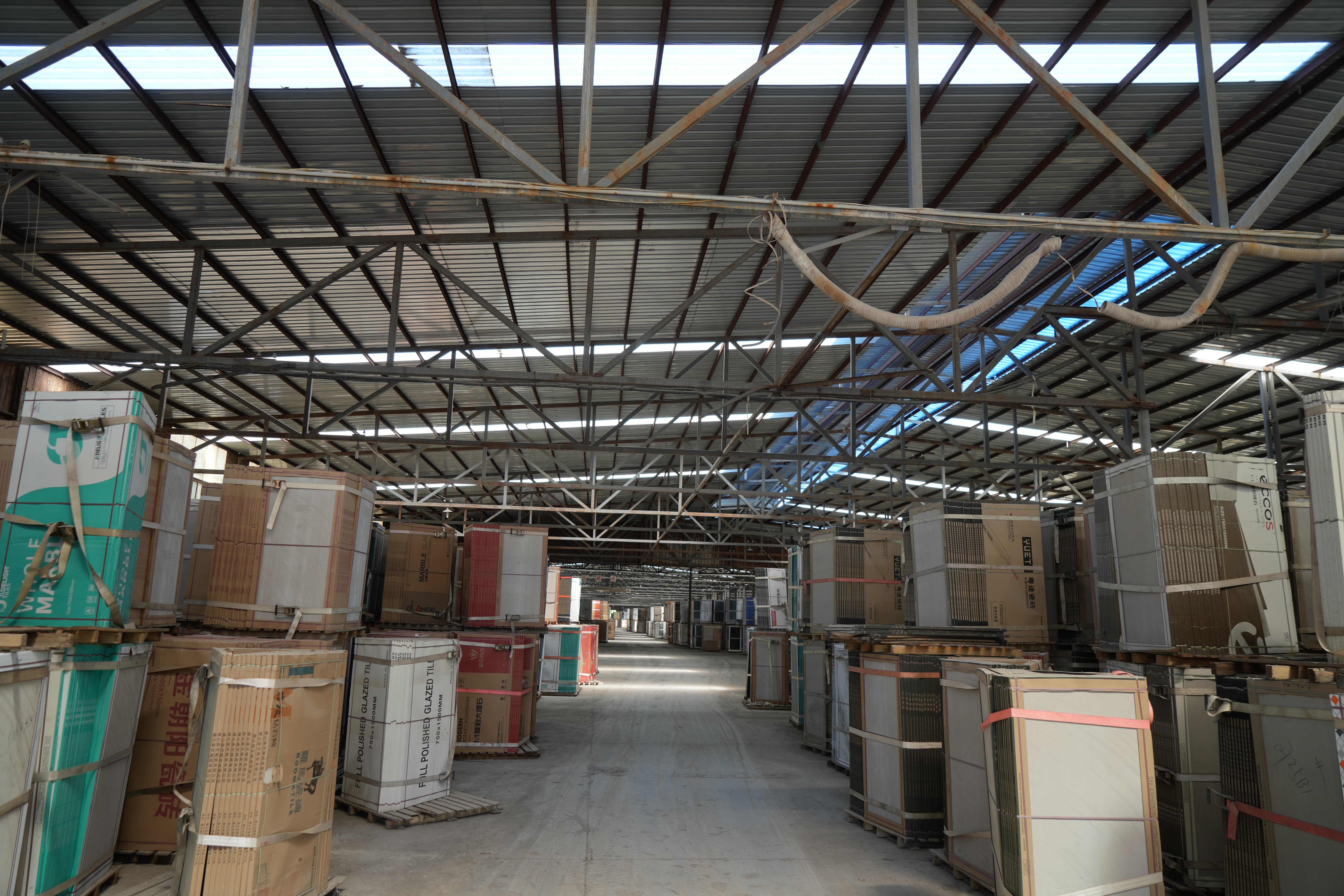
Finished tile inventory in the ALL KING CERAMICS warehouse supports short lead times and reordering.
Have Questions or Need More Details?
Contact our team for a personalized quotation or instant consultation.
Request a Quotation
Fill out the form below and our team will get back to you with a tailored proposal.
WhatsApp Direct Chat
Prefer to chat in real-time? Message us on WhatsApp for instant assistance & quick answers.
- Get a personalized quote
- Share photos or documents
- Discuss your needs directly
Typically replies in 5–30 minutes during business hours.