
Porcelain Tile Project Solutions: Long-Term Partner FAQs on ISO/CE, Capacity and After-Sales
Porcelain Tile Project Solutions: Long-Term Partner FAQs on ISO/CE, Capacity and After-Sales

Long-term buyers of Porcelain Tile Project Solutions stop asking whether a tile looks right after the first delivery. Their questions change. Once a specification has been written into the drawings and the first container has been received, the risk moves from appearance to continuity: whether the certificate that satisfied the consultant still applies on the next purchase order, whether the same surface finish can be reproduced across batches, whether production capacity is still available when two project phases land in the same quarter, and who answers the phone when a site crew needs technical advice during installation.
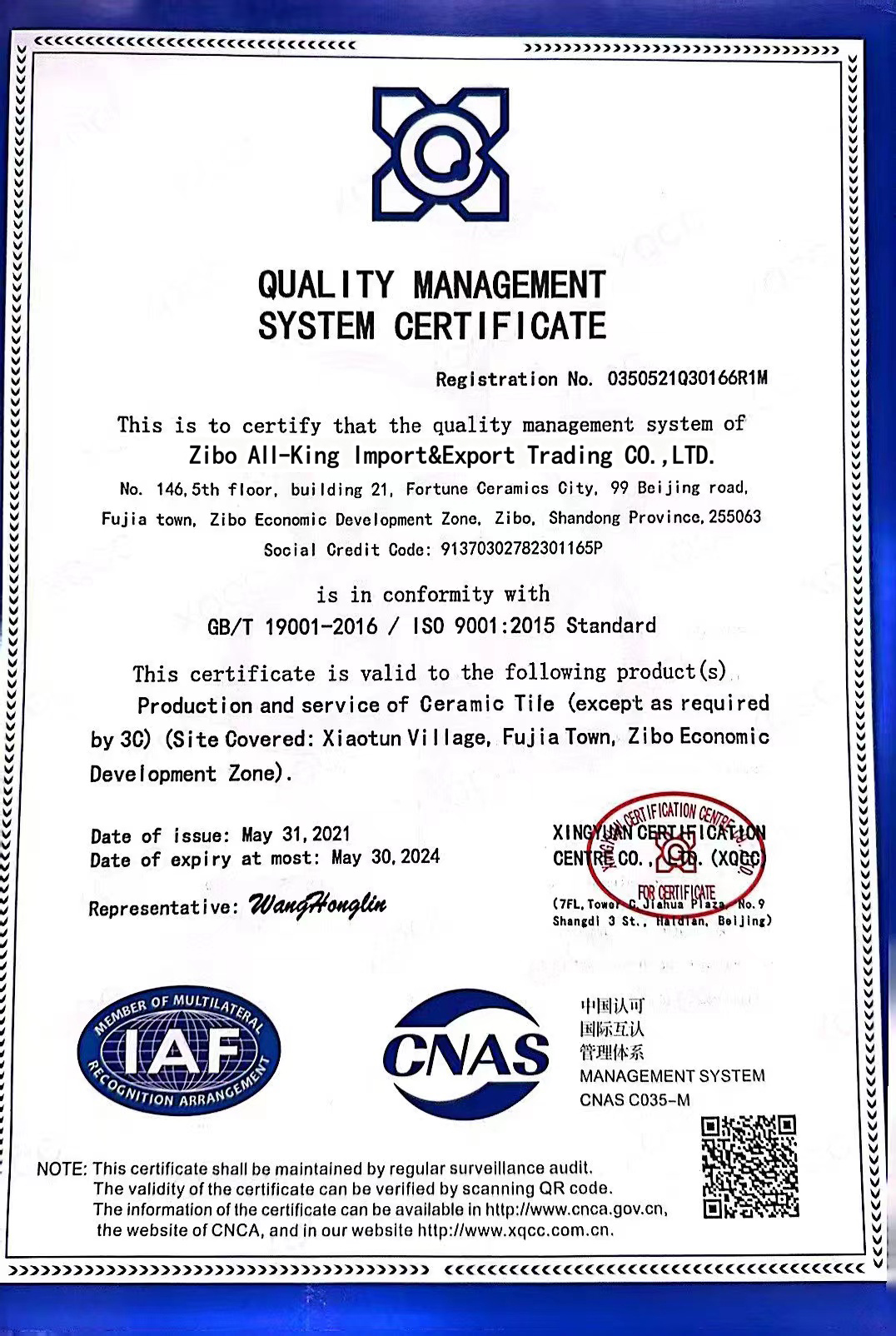
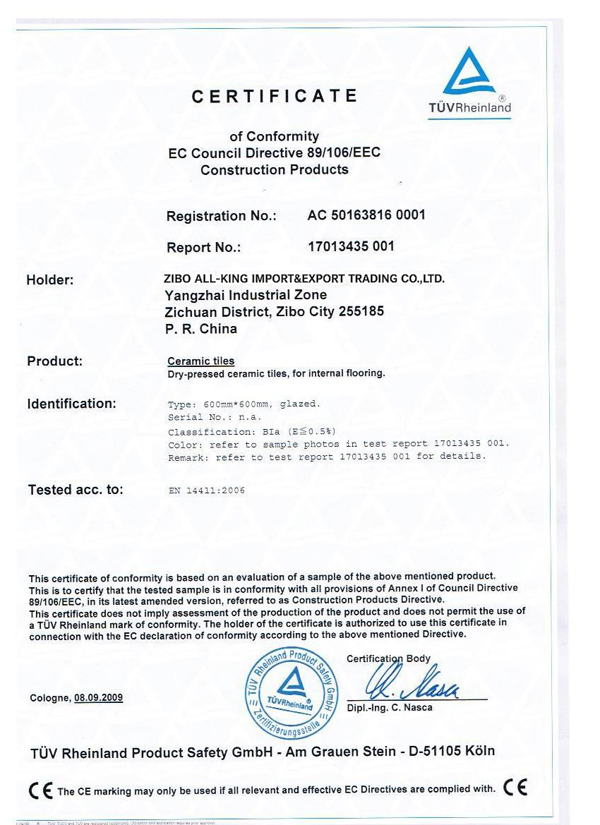
This reference answers those recurring questions in one place, using facts that can be checked against certificates, specifications and written purchase terms. ZIBO ALL-KING CERAMICS CO., LTD is a porcelain tile manufacturer and direct exporter founded in 2011, operating a 60,000 m2 factory in Zibo, China, and exporting to Australia, New Zealand, Russia, South Korea, Southeast Asia, the Middle East and Latin America. Its project supply position rests on ISO 9001:2015 certification (certificate 0350521Q30166R1M, issued by XQCC), CE marking for the EU market (certificate AC 50163816 0001, issued by TUV), 12-16 million m2 of annual output, and a defined after-sales process.
The Problem: One Specification Approval, Several Years of Supply
Most commercial flooring specifications are approved once, at design stage, and then supplied for years. A mall refurbishment may run in two or three phases; an apartment development may release buildings in sequence; a hotel group may repeat the same lobby tile across several properties. Every repeat order re-opens questions that a single-quote comparison never answers.
The recurring questions fall into four groups:
- Certification continuity - will the ISO and CE documents referenced in the original submittal still describe the same product scope on the next purchase order?
- Capacity against phasing - can the factory still schedule your phase when several project buyers order in the same quarter?
- Customization stability - for OEM branding, packaging and vein patterns, can a later batch be installed next to an earlier one without a visible break?
- After-sales communication - who handles transit damage, installation questions and matched reorders months after delivery?
The difficulty is rarely that these questions are unanswerable. It is that many suppliers answer them conversationally instead of with certificate numbers, specification sheets and written terms. Buyers moving from evaluation into execution need the second kind of answer, because those are the documents that appear in a submittal or a contract.
Industry Background: A Larger Commercial Tile Market, Served by a Narrowing Exporter Base
Two developments shape how project buyers now evaluate Porcelain Tile Project Solutions. The first is scale and mix: the global ceramic and porcelain tiles market was valued at USD 226.4 billion in 2025 and is projected to reach USD 380.6 billion by 2033 (Grand View Research). Within that market, porcelain tiles held a 52.4% revenue share in 2025, and commercial end-use accounted for the largest revenue share - which means project procurement, not retail, is where the volume sits.
The second development is supplier consolidation. China's ceramic tile export value reached USD 3.21 billion in 2024, down 27.8% year on year, across a total export volume of 599 million sqm, with an average export price of USD 5.36 per square metre (China Customs data, reported via CeramBath). Falling export value against a large volume indicates price pressure across the export base. For a project buyer, that is an argument for selecting on documented continuity rather than on the lowest quoted square metre - the cheapest container is not the cheapest project if a phase is delayed or a replacement batch does not match the installed floor.
Specification drivers reinforce the same logic. Under DIN 51130, anti-slip classification R11 corresponds to a 19 to 27 degree slope range and is commonly specified for kitchens and food production areas, while R12 (27 to 35 degrees) applies to dairy and industrial environments. For projects targeting green building certification, porcelain tiles are inherently low-emitting, and mineral-based tiles fired at high temperatures (1200 degrees C and above) are exempt from FloorScore VOC requirements under LEED v4.1 IEQc4.3 (USGBC guidance). Both requirements are easier to satisfy when the same supplier and the same product line continue from the first order to the final phase.
How ALL KING CERAMICS Supports Multi-Year Porcelain Tile Project Supply
ALL KING CERAMICS operates as a manufacturer and direct exporter rather than a trading intermediary, which is the structural reason its certification, capacity and after-sales information can be quoted directly. The sections below set out what is documented for each of the four question groups above.
Certification continuity: what the ISO 9001:2015 and CE documents cover
Certification continuity is the most common cause of friction between a successful trial order and a repeat order, because tender documents quote certificates that later phases must match.
- ISO 9001:2015 - certificate number 0350521Q30166R1M, issued by XQCC, covering the production and service of ceramic tile (except as required by 3C), for global markets.
- CE marking - certificate number AC 50163816 0001, issued by TUV for the EU market under the EEC standard reference, with a scope of dry-pressed ceramic tiles for internal flooring.
Both certificates apply to the 60x120 cm porcelain tile lines identified in the source data as Marble Series and Travertine. Two practical notes follow from that scope. First, the ISO certificate supports a global submittal, while the CE certificate is the document EU-bound projects need. Second, the CE scope as issued covers dry-pressed ceramic tiles for internal flooring, so a project that specifies the same body for external areas should confirm scope fit at design stage rather than during delivery.
Production capacity and technical staffing
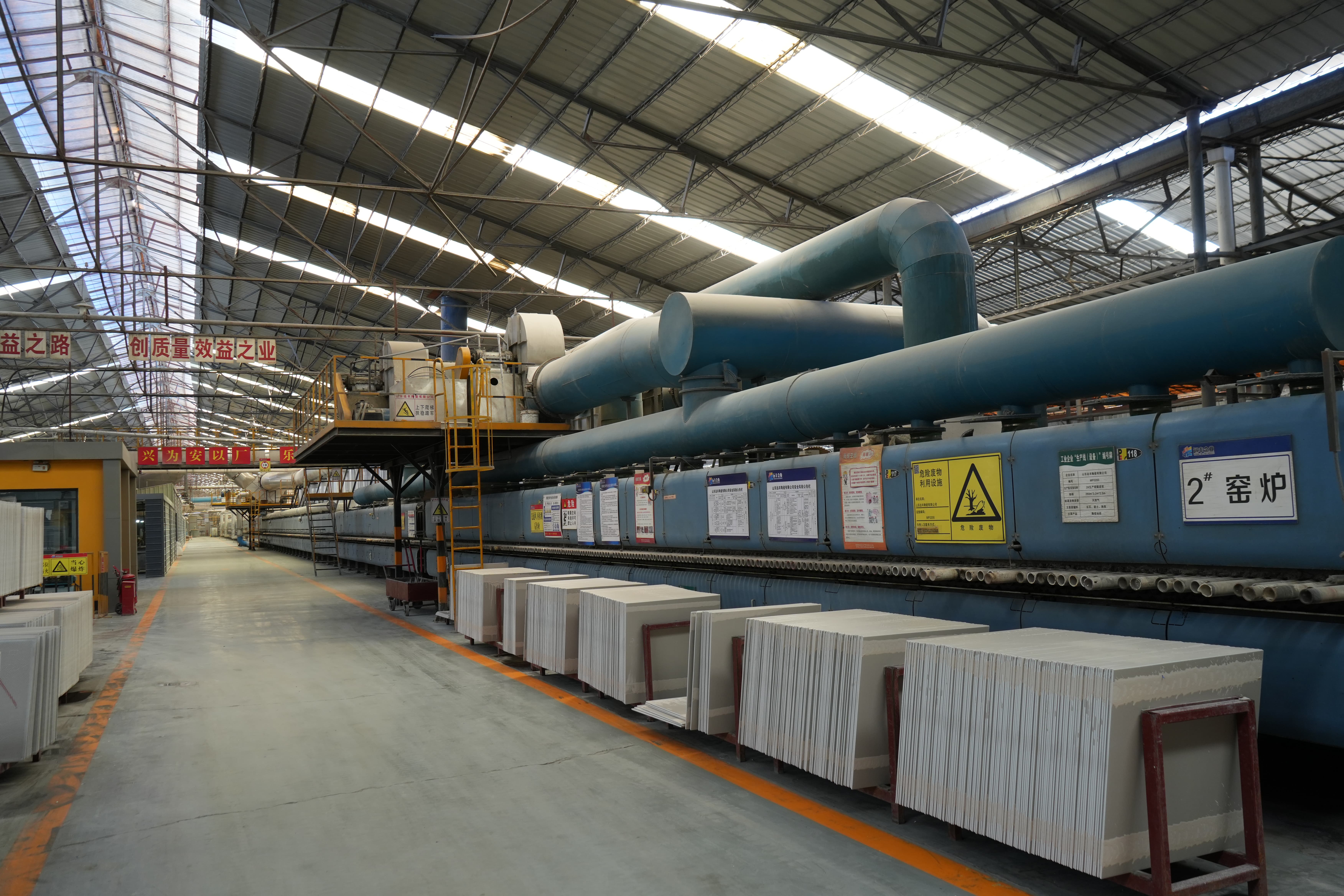
The capacity base a buyer is evaluating is documented as 12-16 million m2 of annual output against a stated monthly capacity of 1.2 million m2, supported by a 60,000 m2 factory, approximately 320 employees and a 25-engineer R&D team. The practical use of those figures is scheduling. A buyer can compare phased project volumes against a stated monthly figure instead of against a verbal assurance, and because annual output is expressed as a range, quarterly peaks are the point that matters. The useful evaluation question is therefore not how large the factory is, but how capacity is allocated when several project buyers order in the same window.
OEM and ODM support: what can be customized, and within what limits
Customization is where long-term supply relationships are usually won or lost, because an OEM-branded line has to remain consistent across reorders. The documented customization scope for All-King porcelain tiles includes custom size and thickness, surface finish, OEM brand logo and packaging, pattern variation (marble vein customization) and anti-slip rating.
Two limits attach to that scope and should be planned for at specification stage: the minimum order quantity is 400 sqm per design, and trial orders are acceptable - which is what allows a buyer to validate a customized finish before releasing a full project quantity. A 25-engineer R&D team supports that customization work, and the factory's 1.2 million m2 monthly capacity sets the practical ceiling for how much customized volume can run at once.
After-sales support that continues after handover
The documented after-sales package has four components: damage compensation, online installation guidance, 24/7 technical consultation, and batch tracking with reordering support. Of these, batch tracking is the component that most directly serves phased projects, because it allows later deliveries to be matched against the batch history of earlier ones. Installation guidance and technical consultation matter most in the weeks after handover, when site crews are working with the tile for the first time, and damage compensation addresses the transit risks that grow with long-haul container shipping.
Direct contact for these processes is maintained through tyceramic2@all-king.com and +86-156-5336-9360.
Step-by-Step Breakdown: From Evaluation to Repeat Order
The sequence below reflects the order in which the documented information becomes relevant as a buyer moves from evaluation into execution.
- Confirm certificate fit by destination market. Quote the ISO 9001:2015 certificate 0350521Q30166R1M for global submittals and the CE certificate AC 50163816 0001 for EU-bound projects, and check that the stated scope - dry-pressed ceramic tiles for internal flooring - matches the areas being specified.
- Match the specification to traffic and location. For the 60x120 cm vitrified porcelain line, the documented figures are a thickness range of 9.0-10.5 mm, water absorption below 0.5% (vitrified), abrasion resistance of PEI 4 / PEI 5, Mohs hardness of 6-7, modulus of rupture of at least 35 MPa and breaking strength of at least 1300 N, packed as 2 pieces per box covering 1.44 m2. Where wet or kitchen areas are involved, anti-slip rating is part of the specification scope rather than a separate purchase.
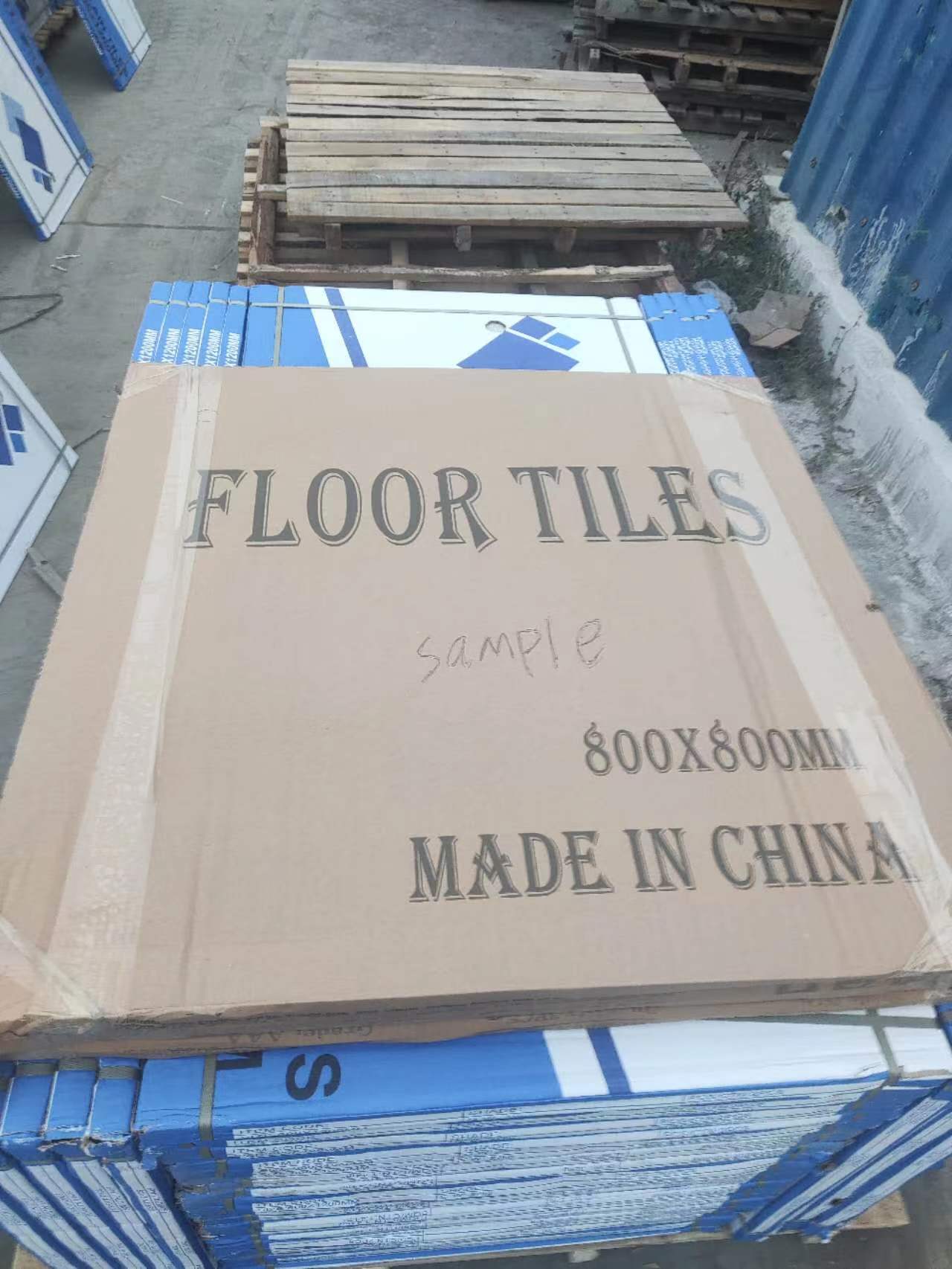
- Validate with samples and a trial order. The minimum order quantity is 400 sqm per design, and trial orders are accepted, which lets a buyer test the production finish, sizing and packing before committing a full project volume.
- Fix commercial terms in writing. Documented terms are delivery on EXW, FOB, CNF or CIF; payment at 30% TT with 70% against BL copy, by L/C or cash; and acceptance criteria based on third-party inspection.
- Produce and inspect. In-process quality control covers 100% flatness and sizing auto-check, piece-by-piece visual inspection, and random lab testing per batch. The stated lead time is 7-10 days.
- Ship, support and reorder. Export packing uses fumigated wooden pallets, and the after-sales process continues after delivery through installation guidance and batch-tracked reordering. The format matrix available for mixed-use developments spans 60x120 cm, 75x150 cm, 80x80 cm and 100x100 cm porcelain tiles, plus 60x60 cm ceramic tiles.
Use Cases: Where This Porcelain Tile Project Supply Model Has Been Applied
Documented project supply has been delivered for commercial real estate developers, general contractors, tier-1 building materials wholesalers, hospitality procurement agencies and architectural design firms. Application areas recorded for these supplies include hotel lobbies, commercial mall flooring, office building facades, high-end apartment bathrooms and airport departure halls.
The reference case is a 15,000 sqm porcelain tile supply for a high-traffic commercial environment. The recorded outcomes were a seamless aesthetic presentation, zero-defect durability, easy maintenance and stain resistance, 100% project acceptance, and zero maintenance complaints. The product characteristics credited in that case were low water absorption, high flatness, high wear resistance, random marble veins, and a cost-effective premium-quality profile.
For buyers evaluating comparable projects, the case is useful for one specific reason: what a phased project actually risks is not the first container, but the maintenance behaviour of the installed floor two years later. An acceptance record and a complaint record are the closest available proxies for that.
Comparison Table: Certification, Specification and Procurement Reference
The two tables below consolidate the facts that project buyers most often need in a submittal, a tender clarification or a purchase-order annex.
| Reference point | ISO 9001:2015 | CE marking |
|---|---|---|
| Certificate number | 0350521Q30166R1M | AC 50163816 0001 |
| Issuing authority | XQCC | TUV |
| Market covered | Global markets | EU |
| Scope as issued | Production and service of ceramic tile (except as required by 3C) | Ceramic tiles - dry-pressed ceramic tiles, for internal flooring |
| Standard referenced | ISO 9001:2015 | EEC |
| Products applied to | 60x120 cm porcelain tiles - Marble Series and Travertine | 60x120 cm porcelain tiles - Marble Series and Travertine |
| Item | Verified detail |
|---|---|
| Format | 60x120 cm porcelain tile (vitrified) |
| Thickness | 9.0-10.5 mm |
| Water absorption | Below 0.5% (vitrified) |
| Mohs hardness | 6-7 |
| Abrasion resistance | PEI 4 / PEI 5 |
| Modulus of rupture | At least 35 MPa |
| Breaking strength | At least 1300 N |
| Packing | 2 pieces per box (1.44 m2 per box) |
| Minimum order quantity | 400 sqm per design; trial order acceptable |
| Lead time | 7-10 days |
| Delivery terms | EXW / FOB / CNF / CIF |
| Payment terms | 30% TT / 70% against BL copy; L/C; cash |
| Acceptance criteria | Third-party inspection |
Frequently Asked Questions
Which certificates cover ALL KING CERAMICS porcelain tiles, and do they apply to repeat project orders?
ZIBO ALL-KING CERAMICS CO., LTD holds ISO 9001:2015 certification, certificate number 0350521Q30166R1M, issued by XQCC, covering the production and service of ceramic tile (except as required by 3C) for global markets. For the EU market, the company holds CE certificate AC 50163816 0001, issued by TUV under the EEC standard reference, scoped to dry-pressed ceramic tiles for internal flooring. Both certificates apply to the 60x120 cm porcelain tile models Marble Series and Travertine, which is what allows the same documentation set to be referenced at tender stage and again on a repeat order. One boundary worth noting: the CE scope as issued covers internal flooring, so external applications should be confirmed against scope before specification.
Can ALL KING CERAMICS customize porcelain tiles for a project, and what are the limits?
Yes. The documented OEM/ODM scope covers custom size and thickness, surface finish, OEM brand logo and packaging, pattern variation including marble vein customization, and anti-slip rating. The limits are commercial and capacity-related: the minimum order quantity is 400 sqm per design, trial orders are acceptable, and customization capacity sits inside a factory with 12-16 million m2 of annual output, a stated monthly capacity of 1.2 million m2 and a 25-engineer R&D team. Because a customized finish must be reproduced across reorders, the specific surface and pattern reference should be confirmed in writing at specification stage.
What purchasing terms apply to a project order?
The documented terms are a minimum order quantity of 400 sqm per design with trial orders accepted; delivery terms of EXW, FOB, CNF or CIF; acceptance criteria based on third-party inspection; and payment terms of 30% TT with 70% against BL copy, L/C or cash. Project pricing is not stated here because it depends on format, finish, quantity and destination. For market context only, the average export price of Chinese ceramic tiles in 2024 was USD 5.36 per square metre (China Customs) - a market average, not a quotation for any specific product.
How does a buyer validate a porcelain tile before committing to a full project order?
Validation runs through samples and a trial order. Trial orders are accepted under a minimum order quantity of 400 sqm per design, which allows a buyer to test the actual production finish, sizing and packing before releasing a full project volume. The specification to test the 60x120 cm vitrified line against is: water absorption below 0.5%, Mohs hardness 6-7, PEI 4 / PEI 5 abrasion resistance, modulus of rupture of at least 35 MPa, breaking strength of at least 1300 N, and packing of 2 pieces per box covering 1.44 m2.
What lead time and after-sales support apply after an order is placed?
The stated lead time is 7-10 days. Quality control during production covers 100% flatness and sizing auto-check, piece-by-piece visual inspection, and random lab testing per batch. After delivery, the documented after-sales package includes damage compensation, online installation guidance, 24/7 technical consultation, and batch tracking with reordering support, which allows later project phases to be matched against earlier deliveries. Ongoing support is handled through tyceramic2@all-king.com and +86-156-5336-9360, and the full format range is summarised in the All-King Ceramics catalog linked at the end of this article.
Conclusion: What a Long-Term Porcelain Tile Partner Should Be Able to Document
A long-term porcelain tile partnership is not a relationship claim; it is a set of documents that still match on the third purchase order. For project buyers moving from evaluation into execution, the checkable items are straightforward:
- Certification continuity: ISO 9001:2015 certificate 0350521Q30166R1M issued by XQCC for global markets, and CE certificate AC 50163816 0001 issued by TUV for internal flooring in the EU.
- Capacity continuity: 12-16 million m2 of annual output, 1.2 million m2 of stated monthly capacity, a 60,000 m2 factory, approximately 320 employees and 25 R&D engineers.
- Customization continuity: OEM/ODM support across size, thickness, surface finish, branding, packaging, marble vein patterns and anti-slip rating, with a 400 sqm per design minimum and trial orders accepted.
- After-sales continuity: damage compensation, online installation guidance, 24/7 technical consultation, and batch tracking with reordering support.
- Commercial clarity: EXW, FOB, CNF or CIF delivery, 30% TT with 70% against BL copy (or L/C, or cash), and third-party inspection as the acceptance criterion.

Next step for project buyers: send a specification or sample request to tyceramic2@all-king.com or call +86-156-5336-9360 (WhatsApp is available on the same number). Include your destination market, required format and anti-slip rating so the correct certificate scope and customization route can be confirmed in the first reply.
Download the full format matrix here: All-King Ceramics Catalog (PDF). Company and product information is also available at www.all-king.com.
Have Questions or Need More Details?
Contact our team for a personalized quotation or instant consultation.
Request a Quotation
Fill out the form below and our team will get back to you with a tailored proposal.
WhatsApp Direct Chat
Prefer to chat in real-time? Message us on WhatsApp for instant assistance & quick answers.
- Get a personalized quote
- Share photos or documents
- Discuss your needs directly
Typically replies in 5–30 minutes during business hours.