
Porcelain Tile Project Supply: Building a Long-Term Global Partnership That Outlasts the Build
A porcelain tile project is not a one-time purchase. It is a supply chain decision that affects installation schedules, maintenance cycles, brand reputation, and future expansions. For developers, contractors, distributors, and facility owners, the real question is not just where to buy large format porcelain slabs or R11 anti-slip tiles, but who can deliver them consistently across multiple projects.
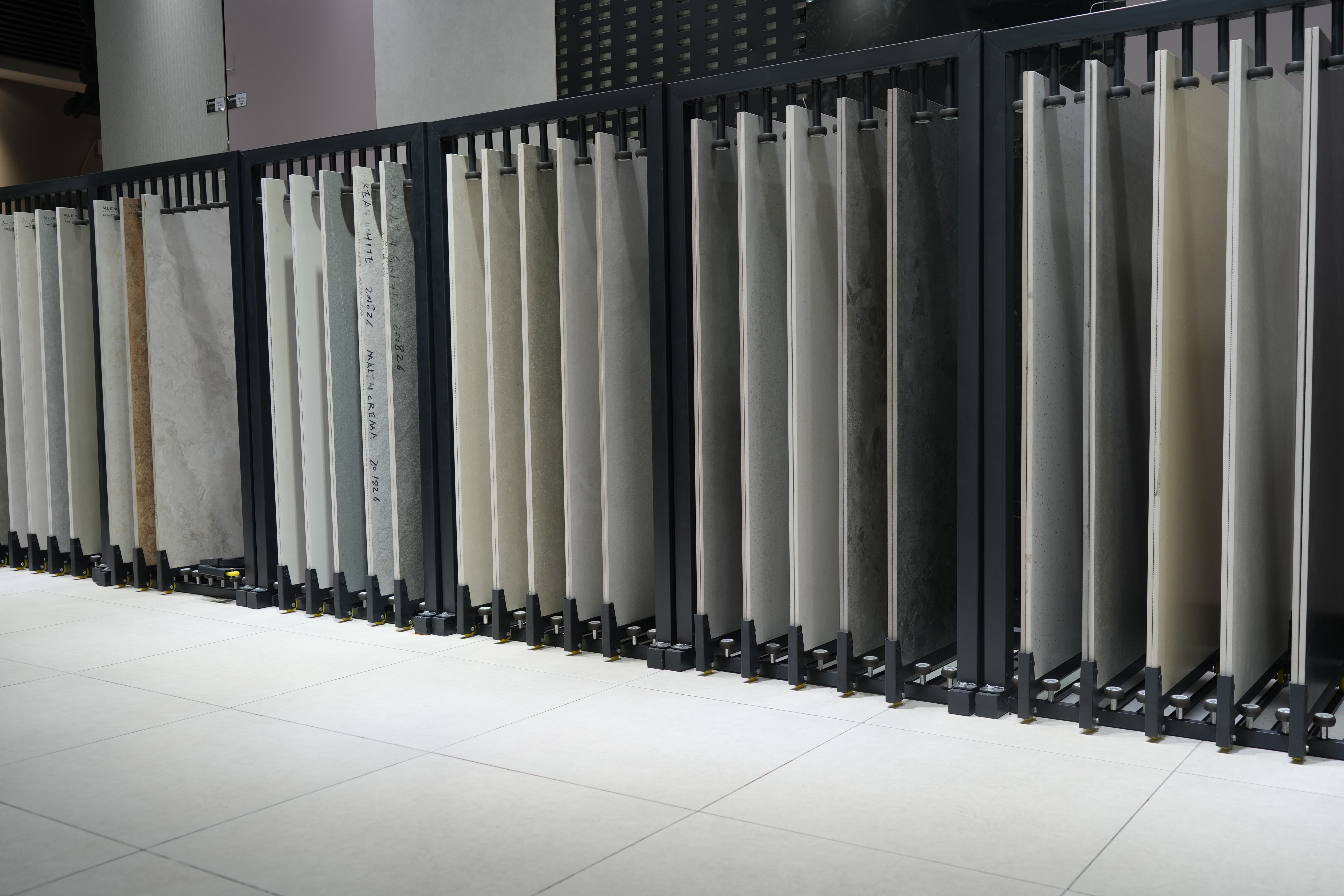
Porcelain tile samples for commercial project evaluation. Source: All-King Ceramics.
Why a Porcelain Tile Project Needs a Supplier, Not Just a Price List
Procurement teams often evaluate porcelain tiles on three variables: unit price, lead time, and surface design. In practice, those variables only cover the procurement stage. A large-scale construction project also depends on consistent quality across batches, documentation that clears customs without delays, exact-size delivery that keeps installation on schedule, and the ability to adjust specifications when a project changes.
These requirements explain why procurement leaders increasingly evaluate manufacturers on ecosystem factors. A supplier that can act as an OEM/ODM partner, manage export logistics, maintain stable production capacity, and back product performance with laboratory testing provides value that does not appear on an invoice.
From First Order to Long-Term Partnership: What the Ecosystem Actually Includes
An ecosystem-oriented tile supplier typically provides more than a production line. The commercially relevant components include:
- Direct factory manufacturing: The supplier controls body preparation, pressing, glazing, kiln firing, sorting, and packing, which affects consistency and traceability.
- Export and documentation service: customs paperwork, fumigated wooden pallets, pallet packing, and container loading are part of the delivery promise.
- Customization capability: custom size, thickness, surface finish, OEM logo, packaging, pattern variation, and anti-slip rating give buyers a way to differentiate their project.
- Quality certification and testing: piece-by-piece inspection and random laboratory testing reduce the risk of off-spec material arriving on site.
- After-order support: for distributors and contractors, reordering should be as predictable as the first order.
When a buyer evaluates a manufacturer, these ecosystem elements are as important as the tile specification itself.
Project-Specific Needs Across Commercial Building Types
Different project types place different demands on porcelain tile. A procurement strategy that works for a shopping mall will not automatically work for a healthcare facility or a luxury villa.
Shopping Malls and Mixed-Use Developments
High foot traffic, repeated cleaning cycles, and large open areas favor high durability commercial floor tiles with consistent sizing. Vitrified floor tiles for high traffic areas reduce the likelihood of visible wear patterns, and large format porcelain slabs reduce the number of grout lines in public circulation zones.
Hotels and Corporate Buildings
Hotel lobby porcelain flooring must deliver a pronounced visual effect while meeting abrasion requirements. The same logic applies to corporate offices, where polished or structured surfaces are selected alongside wear performance. In these settings, the ability to customize or match a design across multiple areas is valuable.
Healthcare and Educational Facilities
Hygiene, slip safety, and cleaning efficiency tend to dominate specifications. Low water absorption vitrified tiles resist moisture and staining, while R11 anti-slip porcelain tiles or R12 safety flooring tiles provide additional protection in wet or food-related areas.
Outdoor Public and Residential Spaces
Outdoor 20mm porcelain pavers and anti-slip outdoor porcelain pavers must withstand weather exposure and maintain slip resistance over time. A manufacturer with experience in slip resistance testing and high-pressure compaction is better positioned to support these projects.
Eco-Friendly and LEED-Oriented Projects
Porcelain tiles are inherently low-emitting. Mineral-based tiles fired at high temperatures are exempt from FloorScore VOC requirements under LEED v4.1 / IEQc4.3, which makes porcelain a practical choice for eco-friendly porcelain tiles for LEED projects. This is a stable industry fact rather than a product-specific claim.
The Role of Quality Control in a Long-Term Partnership
In a long-term supply partnership, quality control is not a single inspection event. It is a repeatable process that protects every shipment. All-King Ceramics implements quality control procedures that include 100% flatness and sizing auto-check, piece-by-piece visual inspection, and random laboratory testing per batch. These steps matter because they address the most common commercial tile failures: warping, cracking, delayed delivery due to rejects, fading, and staining.
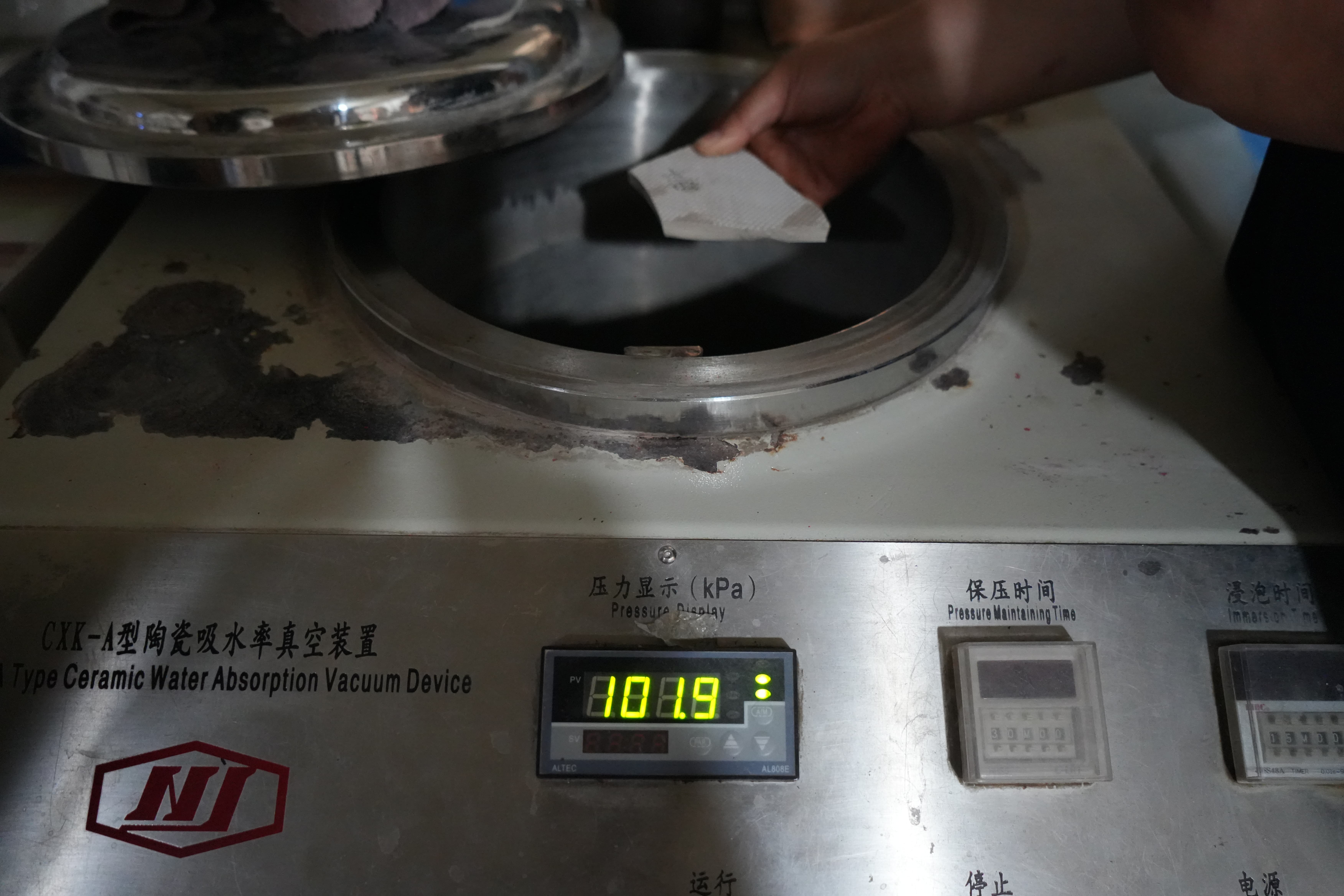
Water absorption testing verifies vitrified tile density. Source: All-King Ceramics.
The same quality program is supported by production measures such as laser flatness sorting, automatic temperature control, digital weight monitoring, high-pressure compaction, and random stress testing. For a buyer, the practical meaning is simple: fewer installation problems, fewer site delays, and fewer maintenance calls after handover.
How to Evaluate a Long-Term Porcelain Tile Supplier
When the project timeline extends beyond a single build, use a broader scorecard. The following evaluation framework helps procurement teams compare suppliers across ecosystem dimensions rather than price alone.
| Evaluation Dimension | What to Check | Why It Matters Long Term |
|---|---|---|
| Manufacturing capacity | Factory size, annual output, number of production lines | Determines the ability to keep up with phased project supply. |
| Quality control system | Batch testing, flatness auto-check, visual inspection | Reduces site rejections and warranty issues. |
| Customization depth | Custom size, thickness, surface finish, OEM branding, anti-slip rating | Supports brand differentiation and project-specific design. |
| Export and logistics | Incoterms, customs documentation, pallet packaging, container loading | Prevents clearing delays and handling damage. |
| Commercial flexibility | MOQ, trial orders, payment terms, third-party inspection | Keeps the first order practical and the reorder process smooth. |
| Track record | Markets served, OEM/ODM experience, project references | Provides evidence of cross-border reliability. |
Case-Style Application: Custom Specification for a Global Development
Consider a mixed-use development with a shopping mall podium, office tower, and outdoor plaza. The procurement team might need commercial porcelain tiles for shopping malls in polished marble-look, anti-slip outdoor porcelain pavers for the plaza, and porcelain tiles for healthcare facilities for the clinic areas.
A single supplier that can handle the full format matrix reduces coordination overhead. All-King Ceramics produces 60x120cm porcelain tiles as a flagship format, alongside 75x150cm, 80x80cm, 100x100cm floor tiles, and 60x60cm ceramic tiles. In this scenario, the buyer can consolidate orders, align production schedules, and receive one quality standard across all zones.
Porcelain Tile vs. Low-Grade Ceramic: A Supply Decision with Long-Term Consequences
For many commercial developers, the practical choice is between porcelain tile and low-grade ceramic tile. The differences affect both the installation and the full service life of the floor.
| Comparison Factor | Porcelain Tile | Low-Grade Ceramic Tile |
|---|---|---|
| Water absorption | Lower water absorption (vitrified, typically < 0.5%) | Higher water absorption |
| Wear & breakage resistance | Higher wear resistance, higher density, better breakage resistance | Lower resistance, more prone to wear and breakage |
| Flatness | Better flatness, supported by laser flatness sorting | More variation across batches |
| Breaking strength | +15 MPa in comparative performance data | Lower baseline |
| Mohs hardness | +3 Mohs hardness in comparative performance data | Lower hardness |
| Installation & maintenance | 20% lower installation cost and 30% lower maintenance cost in comparison data | Higher long-term maintenance and replacement frequency |
| Cleaning & grout | Easier cleaning, less tile replacement, zero sealing required, minimal grout upkeep | More sealing, more staining, higher refurbishment frequency |
| Typical best-use settings | Commercial centers, luxury hotels, transit hubs, corporate offices, high-end residences | Low-traffic or temporary applications |
Comparative figures are based on internal comparison data; actual performance should be verified against project-specific specifications.
For a long-term partner, these differences translate into fewer callbacks and lower lifecycle cost, particularly in transit hubs, luxury hotels, and commercial centers where replacement work is disruptive and expensive.
Risks That a Reliable Supplier Helps You Avoid
Long-term procurement is as much about avoiding risk as it is about securing supply. The most common risk categories in commercial tile projects include warping, cracking, delays, fading, and staining. Each can be traced back to a weak link in the supplier ecosystem:
- Warping and cracking: Often caused by poor pressing and firing control. High-pressure compaction, automatic temperature control, and laser flatness sorting address this at the production level.
- Delayed delivery: A supplier without stable production capacity or export experience can miss shipping windows. On-site container loading and documented export procedures reduce this risk.
- Fading and staining: Low-quality glazes and high porosity cause these failures. Laboratory testing and digital weight monitoring during production help confirm consistency.
Who Is All-King Ceramics as a Long-Term Partner?
ZIBO ALL-KING CERAMICS CO., LTD is a porcelain tile manufacturer and direct exporter based in Zibo, China, specializing in premium architectural ceramics for global commercial and wholesale buyers. Founded in 2011, the company operates a 60,000 m² factory with a team of 320 employees and an engineering team of 25 R&D personnel.
All-King Ceramics is positioned as an OEM/ODM partner for contractors, distributors, and builders. Its export ratio is approximately 70%, with main markets spanning Australia, New Zealand, South Korea, Southeast Asia, Central Asia, Russia, the Middle East, and Latin America. The company integrates factory manufacturing with international trading operations to support cross-border projects.
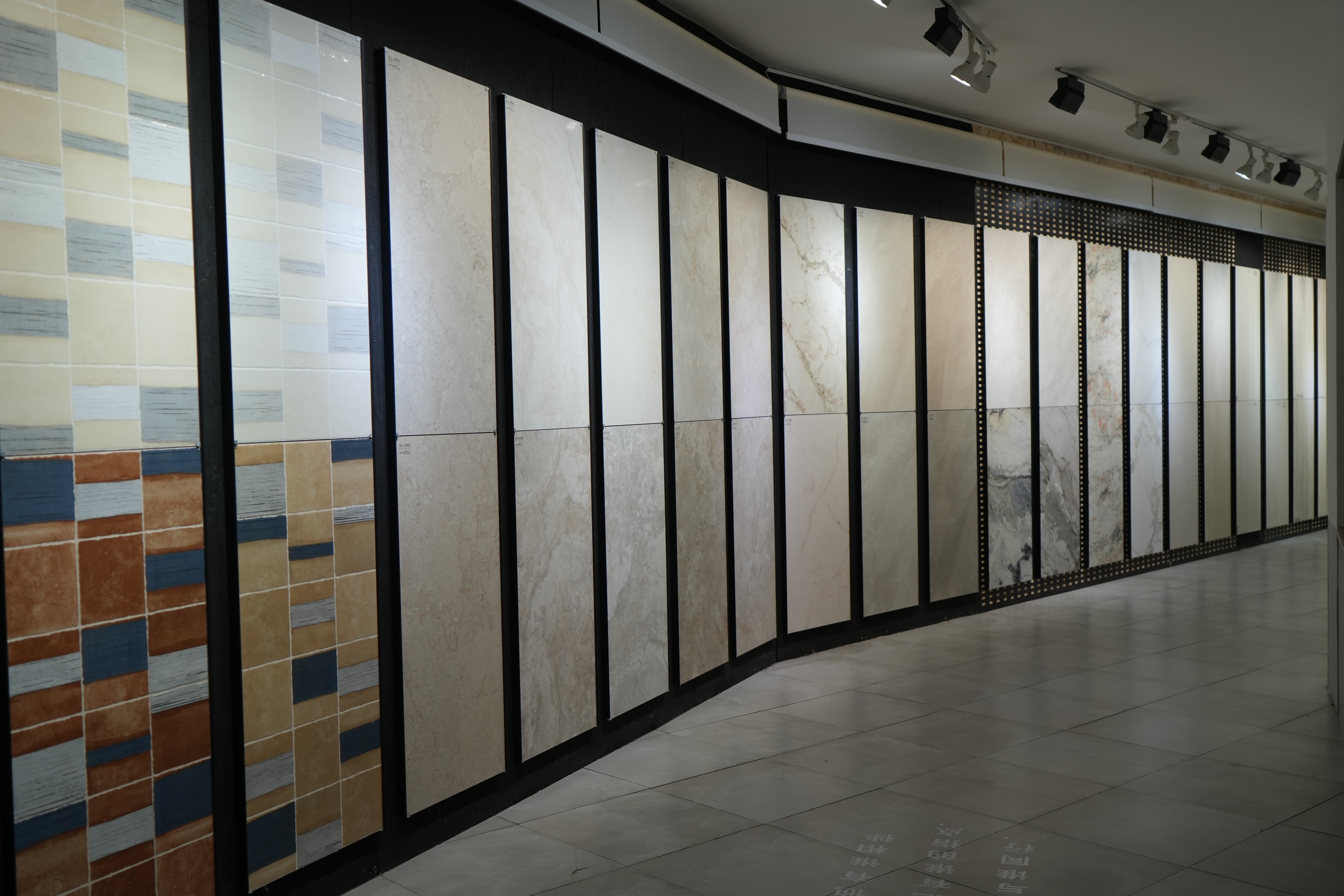
All-King Ceramics showroom displaying porcelain tile formats. Source: All-King Ceramics.
Commercial Flexibility That Supports First Orders and Reorders
For many buyers, the barrier to testing a new supplier is the minimum order quantity. All-King Ceramics offers a standard MOQ of 400 square meters per design, with trial orders acceptable. This is a practical structure for procurement teams who want to validate quality before committing to a large volume.
Delivery options include EXW, FOB, CNF, and CIF, giving buyers flexibility in how they manage logistics and insurance. Payment terms include 30% TT with 70% against BL copy, as well as L/C and cash options. Third-party inspection is accepted, so buyers can arrange independent verification before shipment.
- MOQ: 400 sqm per design; trial order acceptable
- Delivery: EXW / FOB / CNF / CIF
- Acceptance: Third-party inspection
- Payment: 30% TT / 70% against BL copy, L/C, or cash
Quality Control Detail: What a Partner Should Be Able to Show You
Buyers evaluating porcelain tile production should ask suppliers exactly how they control quality. All-King Ceramics implements quality control procedures that include 100% flatness and sizing auto-check, piece-by-piece visual inspection, and random laboratory testing per batch. In addition, production is supported by laser detectors, SACMI presses, automatic sorters, CNC testing instruments, ISO 9001 certificates, and laboratory kilns.
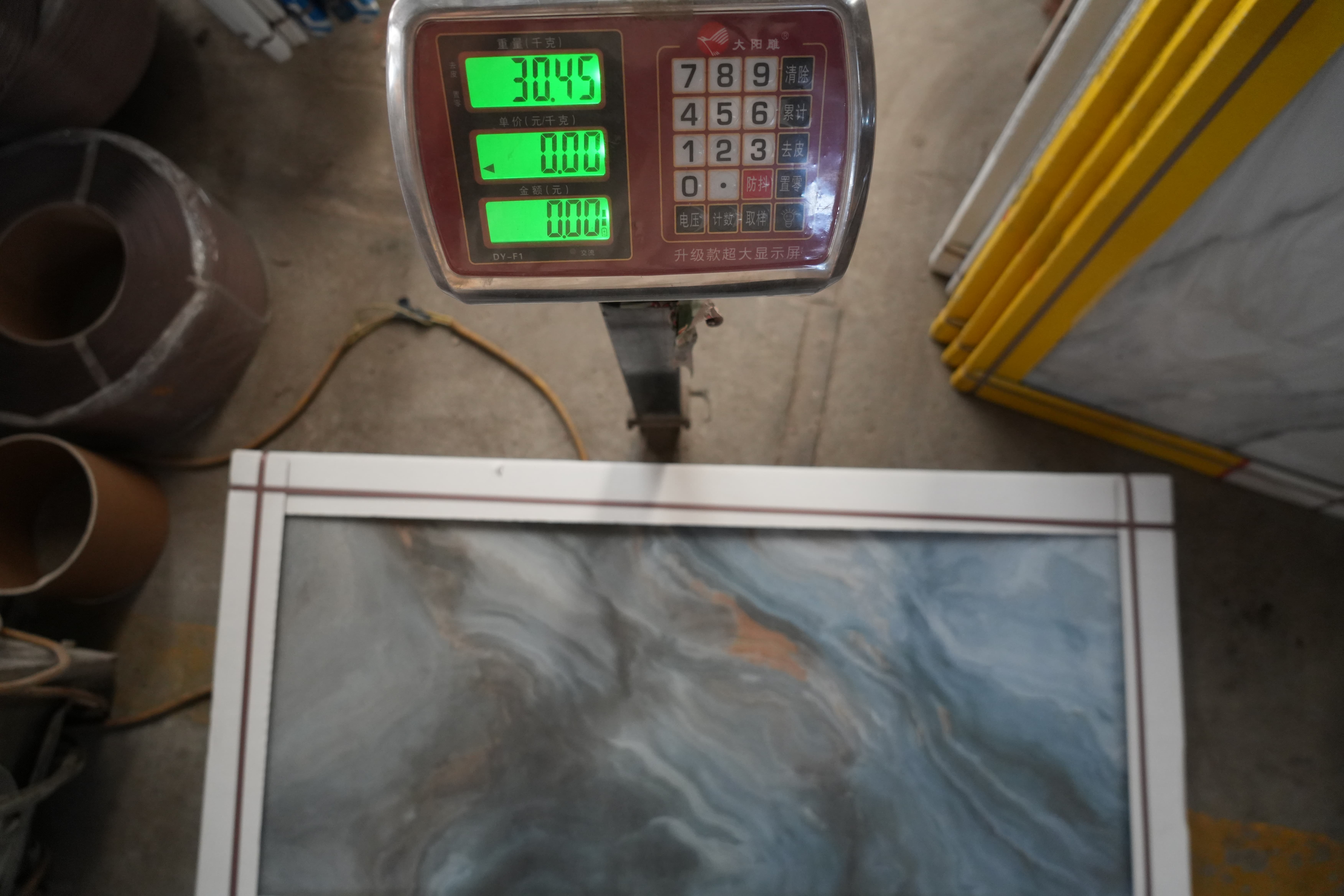
Digital weight monitoring during tile production. Source: All-King Ceramics.
When a manufacturer can describe these controls in specific terms, it becomes easier to evaluate whether they can deliver consistent quality across multiple projects.
Why Large-Scale Buyers Prefer a Full-Format Manufacturer
Project supply rarely uses a single tile size. A shopping mall might require 60x120cm porcelain tiles for retail floors, large format porcelain slabs for feature walls, anti-slip outdoor porcelain pavers for entrances, and vitrified floor tiles for high traffic corridors. Managing multiple suppliers for each format increases administrative cost and quality risk.
All-King Ceramics maintains a format matrix that includes 60x120cm, 75x150cm, 80x80cm, 100x100cm, and 60x60cm tiles. This supports commercial developers and contractors who prefer to consolidate orders under a single quality system.
Customization is also part of the supply ecosystem. For buyers with brand requirements, All-King Ceramics offers custom size and thickness, custom surface finish, OEM brand logo and packaging, pattern variation, and anti-slip ratings. That means a distributor can sell a differentiated product rather than a commodity box, and a developer can align tile design with the architectural concept.
Use Cases by Buyer Type
Distributors and Importers
For distributors, the priority is margin, inventory turnover, and supplier reliability. A factory-direct partner such as All-King Ceramics provides direct-from-factory pricing and the ability to run custom packaging with the distributor's own brand.
Contractors and Installers
For contractors, the priority is predictable quality and delivery. Flatness and sizing consistency reduce installation time, while stable packing reduces breakage on site.
Developers and Architects
For developers and architects, the priority is design control, specification compliance, and lifecycle performance. Customization options and documented quality testing allow them to meet both aesthetic and technical targets.
How to Start the Partnership Process
Moving from evaluation to execution does not require a massive first order. A typical path includes the following steps:
- Share the project scope, tile formats, quantities, and target standards.
- Request samples to evaluate surface, format, and physical properties.
- Clarify customization requirements such as size, packaging, and anti-slip rating.
- Arrange a trial order or a container-load order to validate production quality and export service.
- Use third-party inspection to confirm the shipment before dispatch.
All-King Ceramics can also provide access to its catalog, which covers available formats, finishing options, and commercial specifications.
Next step: Request samples, a factory price quote, or the full catalog to evaluate whether All-King Ceramics fits your project ecosystem. Download the catalog here: ALL-KING Ceramics Catalog (PDF).
FAQ
1. What does a compliant porcelain tile project partnership look like?
A compliant partnership is one where the manufacturer can document quality control, inspection, and export procedures. For example, All-King Ceramics applies 100% flatness and sizing auto-check, piece-by-piece visual inspection, and random laboratory testing per batch. Buyers should also confirm that the supplier can accept third-party inspection and provide the required customs documentation for the destination country.
2. What customization capabilities should a long-term tile supplier provide?
Customization capabilities typically cover custom size and thickness, surface finish, OEM brand logo and packaging, pattern variation, and anti-slip rating. These options matter for distributors who need branded products and for developers who need design-specific solutions.
3. Can a buyer start with a trial order before committing to a large project?
Yes. All-King Ceramics sets a standard MOQ of 400 square meters per design, and trial orders are acceptable. This allows buyers to evaluate product quality and export service before scaling volume.
4. What sample and reference information is available for evaluation?
Buyers can request physical samples to check surface finish, format, and color consistency. The All-King Ceramics showroom and catalog provide reference material for available formats and designs. For specific project documentation such as test reports and certifications, the sales team can provide further details.
5. How long does a porcelain tile project order take from confirmation to shipment?
Lead times depend on order volume, customization requirements, and production schedule. Buyers should confirm the timeline with the supplier before placing an order. For a quicker evaluation, contact All-King Ceramics directly with the project quantity and specification to receive a realistic schedule.
Start the conversation: Contact All-King Ceramics to request samples, a quote, or the full product catalog. Email: tyceramic2@all-king.com | WhatsApp: +86 156-5336-9360 | Website: www.all-king.com
Have Questions or Need More Details?
Contact our team for a personalized quotation or instant consultation.
Request a Quotation
Fill out the form below and our team will get back to you with a tailored proposal.
WhatsApp Direct Chat
Prefer to chat in real-time? Message us on WhatsApp for instant assistance & quick answers.
- Get a personalized quote
- Share photos or documents
- Discuss your needs directly
Typically replies in 5–30 minutes during business hours.