
Porcelain Tile Solutions for Hospitality, Healthcare & Public Spaces: A Project-Level Specification Guide
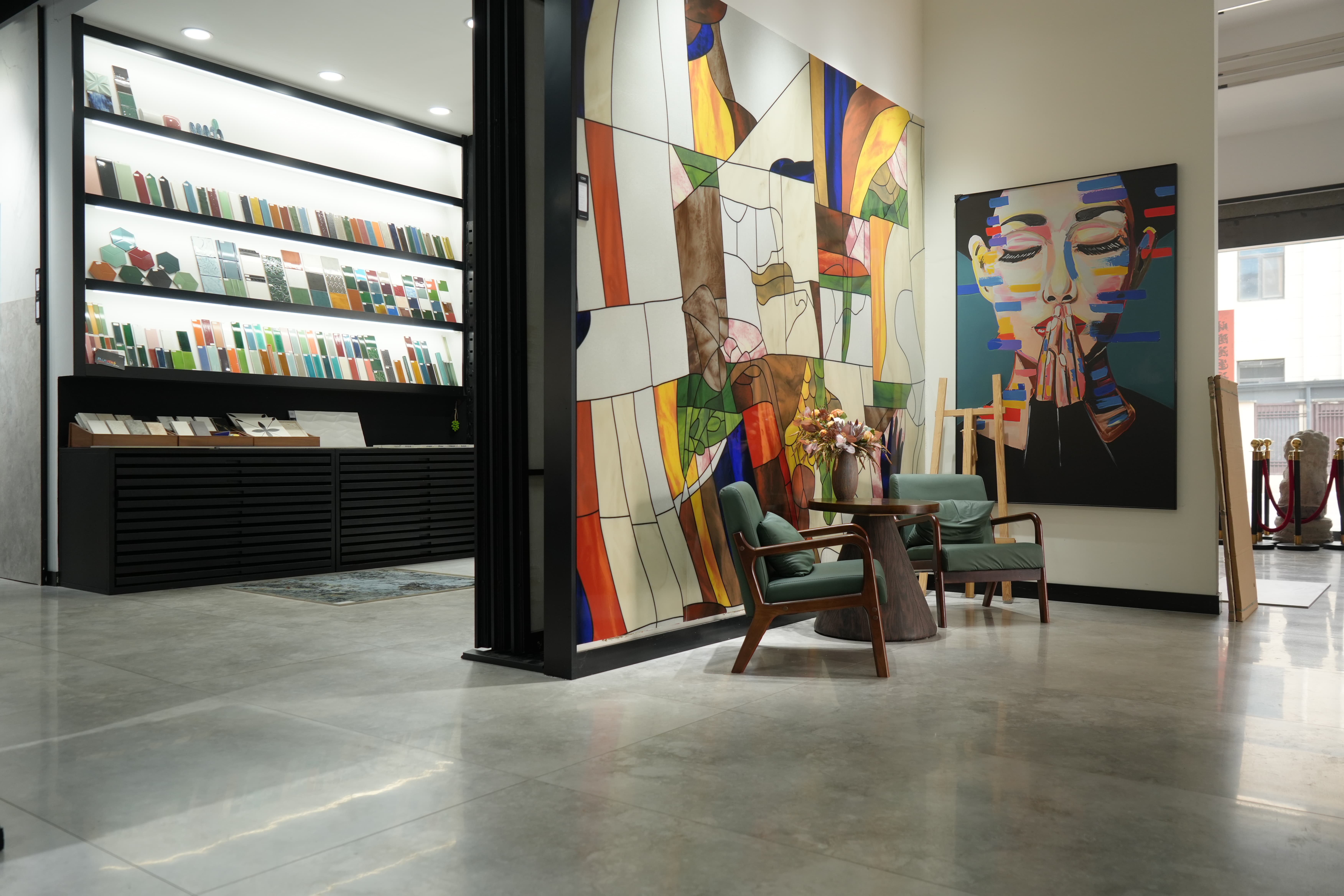
Porcelain Tile Solutions for Hospitality, Healthcare & Public Spaces: A Project-Level Specification Guide
Hospitality, healthcare, and public-building projects need floor and wall finishes that resist heavy traffic, moisture, and staining while keeping installation and maintenance predictable. Vitrified porcelain tiles are the material most often specified for these conditions. This guide explains how to choose, specify, and source porcelain tile solutions for hotels, shopping malls, apartment developments, hospitals, schools, and mixed-use projects.
The Real Challenge: Picking Tiles for Each Building Type Without Guesswork
Every building type creates a different set of demands. A hotel lobby has high-frequency foot traffic combined with a need for visual continuity. A commercial kitchen needs a floor that stays safe when wet or greasy. A hospital corridor must be easy to clean, slip-resistant, and quiet under trolleys. A school or shopping mall must absorb years of student or shopper traffic without visible wear.
A single specification rarely works across all zones. In practice, the easiest way to avoid field failures is to define each zone by its traffic class, moisture exposure, cleaning routine, and safety requirement, and then verify that the selected tile meets the minimum physical parameters for those conditions.
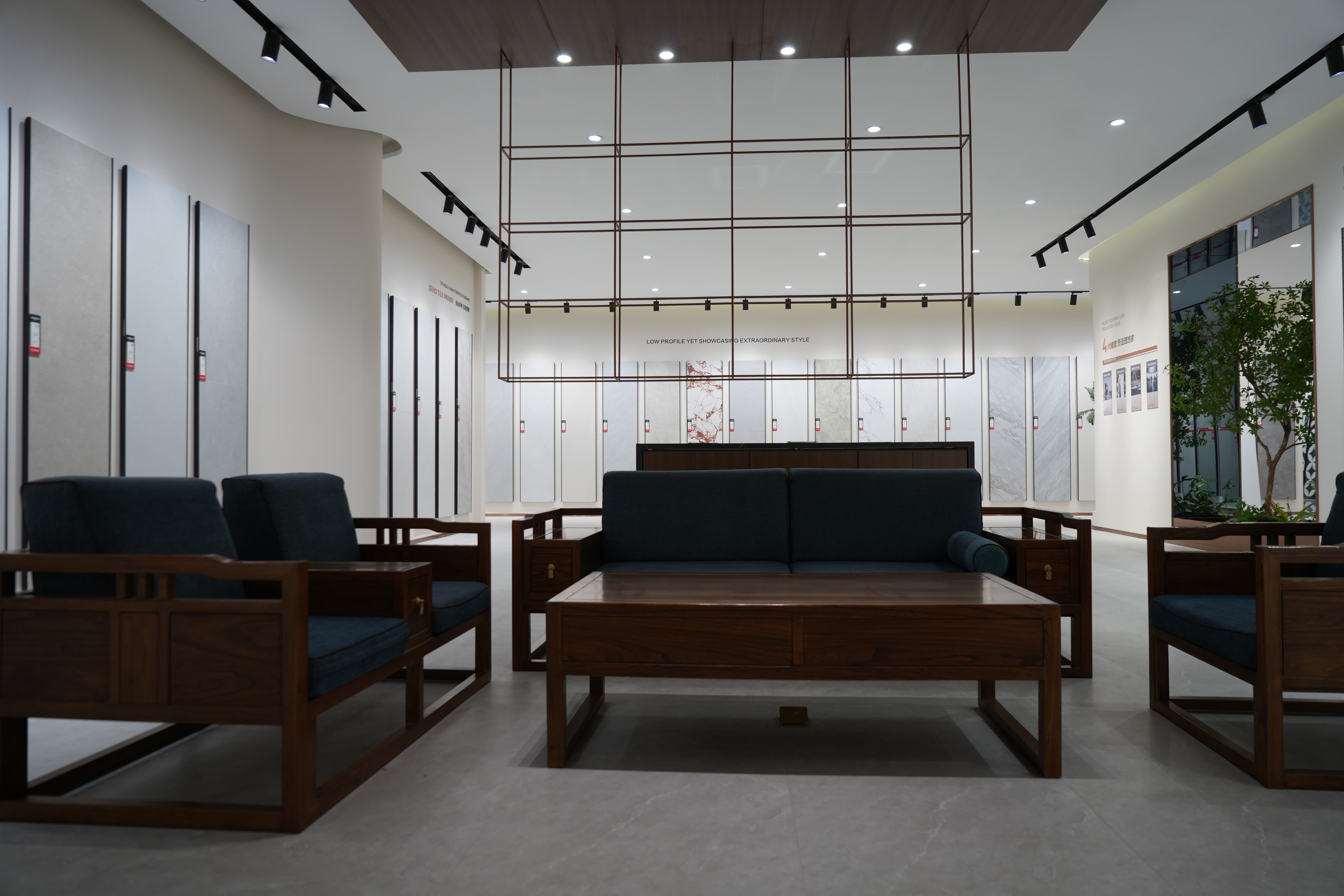
Why Porcelain Tile Solutions Are the Default for High-Traffic Commercial Buildings
Porcelain is not a thicker version of ceramic. It is a denser, more vitrified product made from finer clay fired at higher temperature. As a result, it has very low water absorption, higher breaking strength, and better resistance to wear, frost, and chemicals.
Across the global ceramic tile market, porcelain tiles accounted for the dominant product segment in 2025. Commercial projects are the largest end-use segment. That means the material choices described in this guide are already the mainstream choice for developers, contractors, and specification teams.
What separates porcelain from non-vitrified ceramic?
- Water absorption below 0.5% (vitrified) prevents moisture-related warping and staining.
- Higher breaking strength and modulus of rupture resist point loads, trolley wheels, and dropped tools.
- Surface hardness allows daily cleaning and foot traffic without losing the finish.
- Frost resistance makes it suitable for outdoor plazas, terraces, and entrance areas in cold climates.
In a specification document, the most useful parameters are thickness, water absorption, abrasion class (PEI), breaking strength, modulus of rupture, and slip resistance. For large-format porcelain, thickness in the 9.0–10.5 mm range is common for wall and floor use; 20 mm pavers are typically used outdoors on pedestals or gravel beds.
Step-by-Step: Matching Tile Type to Project Scenario
The following workflow is used by commercial specifiers to translate an architectural drawing into a tile schedule that contractors can price and install.
1. Define the operating conditions per zone
For every room or circulation area, list the following: expected foot traffic, trolley or cart traffic, water or chemical exposure, cleaning method, and whether the floor will be wet. A hotel lobby operates under high-frequency commercial traffic. A commercial kitchen often has wet and slippery conditions and requires R11 or higher slip resistance. A hospital corridor may require moderate slip resistance plus easy sanitization.
2. Select physical parameters from the project brief
Once the zone is known, choose the required tile parameters. For high-traffic and heavy-wear commercial zones, a vitrified porcelain tile with water absorption below 0.5%, breaking strength of at least 1300 N, modulus of rupture of at least 35 MPa, and abrasion resistance of PEI 4 or PEI 5 covers most floor applications. These figures are commonly printed in technical datasheets and allow direct comparison between suppliers.
3. Add the correct anti-slip classification
Anti-slip requirements should come from the building's safety standard, not from a vague request to make the tile “rough.” For commercial spaces, DIN 51130 classifies tiles by slope angle: R11 is suitable for kitchens and food production areas, and R12 for dairy and industrial environments with heavy contamination. For hotel back-of-house, hospital utility rooms, and commercial kitchens, verifying the tile's anti-slip rating is part of the specification.
4. Match format to layout and design intent
Large-format tiles such as 60x120 cm and 75x150 cm reduce the number of grout joints, create a more seamless appearance, and speed up installation in open spaces like lobbies, corridors, and retail areas. For smaller bathrooms or complex layouts, 60x60 cm or 80x80 cm modules are more practical and generate less cutting waste.
5. Confirm compliance and certification before ordering
A project specification is not complete without compliance evidence. ISO 13006 is the internationally recognized standard for ceramic tiles. When a supplier confirms ISO 13006 compliance, it means dimensional quality, water absorption, breaking strength, and other requirements have been tested against a consistent method. For wall and floor applications in commercial buildings, this should be treated as a baseline requirement.
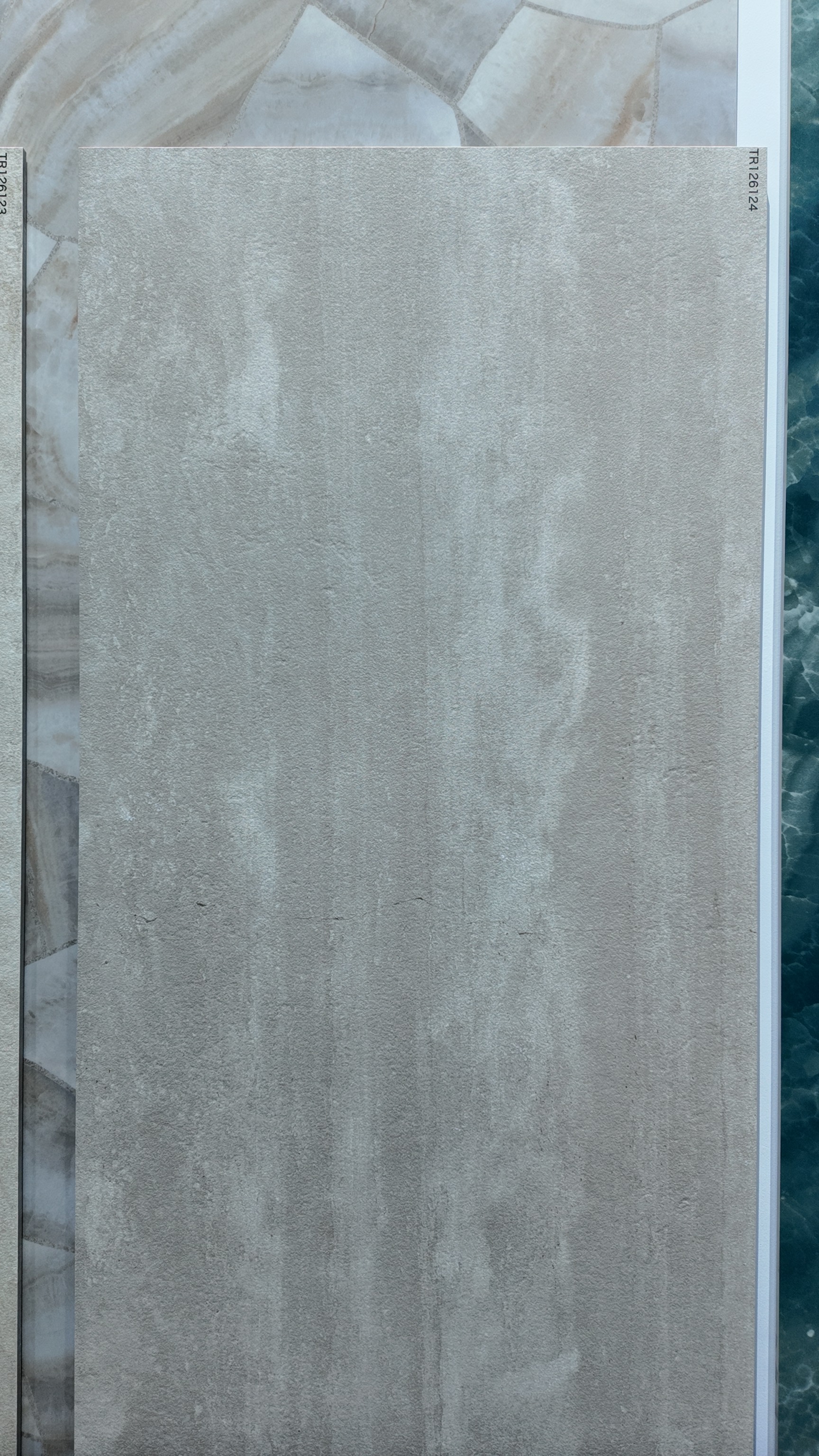
Commercial Scenarios and Suggested Tile Solutions
Shopping malls and retail common areas
Mall floors are subjected to continuous foot traffic, cart wheels, food spills, and occasional cleaning with harsh chemicals. For these areas, a PEI 4 or PEI 5 vitrified floor tile with low water absorption is appropriate. Large-format slabs help create a clean, uninterrupted look across the common area. One practical approach is to use a polished or semi-polished marble-look series for public spaces and a more textured finish near entrances where water is tracked in.
Hotel lobby, corridors, and guest bathrooms
Hotel projects demand visual quality and durability at the same time. A 60x120 cm porcelain tile with a marble vein pattern is often selected for the lobby and corridors because it combines a premium appearance with moderate maintenance. In guest bathrooms and wet areas, a non-slip or R10-R11 rated tile should be used on the floor, while the same marble-look series can be applied to walls for design continuity. Hotel renovation projects in particular benefit from replacing worn carpet with porcelain tile because it is easier to sanitize and lasts much longer than textile flooring.
Apartment developments and mixed-use residential towers
Apartment developers need a product that performs equally well in private units, corridors, and ground-floor commercial zones. A balanced specification is a 60x60 cm or 80x80 cm porcelain floor tile for units, a heavier PEI 4/5 porcelain for lift lobbies and corridors, and an anti-slip porcelain for balconies and outdoor terraces. Because developers buy in large volumes, format standardization reduces wastage and makes reordering simpler.
Healthcare facilities and aged-care centers
Hospitals and care facilities require floors that can be cleaned repeatedly without being damaged by disinfectants. Porcelain tile is inherently stain resistant and does not hold bacteria or allergens when grout lines are sealed correctly. For patient rooms and corridors, a low-sheen or matt finish is usually preferred to reduce glare. For wet areas such as hydrotherapy rooms, an R11-rated floor is widely used. Walls in operating or examination areas can be covered with large cleanable porcelain slabs to eliminate painted surfaces that need frequent maintenance.
Educational buildings
Schools and universities are high-traffic environments where abuse resistance and low maintenance matter more than fashion. A sturdy porcelain tile with PEI 5 rating is commonly used in entrance halls, stairways, and corridors. In science laboratories or art rooms, acid and alkali resistance becomes an additional selection criterion. A matt or structured finish hides scuff marks better than a polished surface.
Commercial kitchens and food preparation areas
Kitchen floors are exposed to water, oil, and cleaning agents every day. Standards for these areas tend to be explicit about slip resistance. A tile rated R11 or R12 under DIN 51130 is typical for commercial kitchens and food production. Because kitchens are cleaned with hot water and strong detergents, the tile must also have very low water absorption so moisture cannot penetrate from joints or small chips.
Entertainment venues, offices, and facade cladding
For offices and entertainment venues, visual continuity is often as important as durability. Porcelain slabs in the 75x150 cm format offer fewer joints and a more contemporary look. For facades and external wall cladding, porcelain's frost resistance and dimensional stability make it a suitable ceramic cladding material. Facade installation, however, requires a dry-hung or mechanically fixed system with proven engineering and is not a job for general tile adhesive.
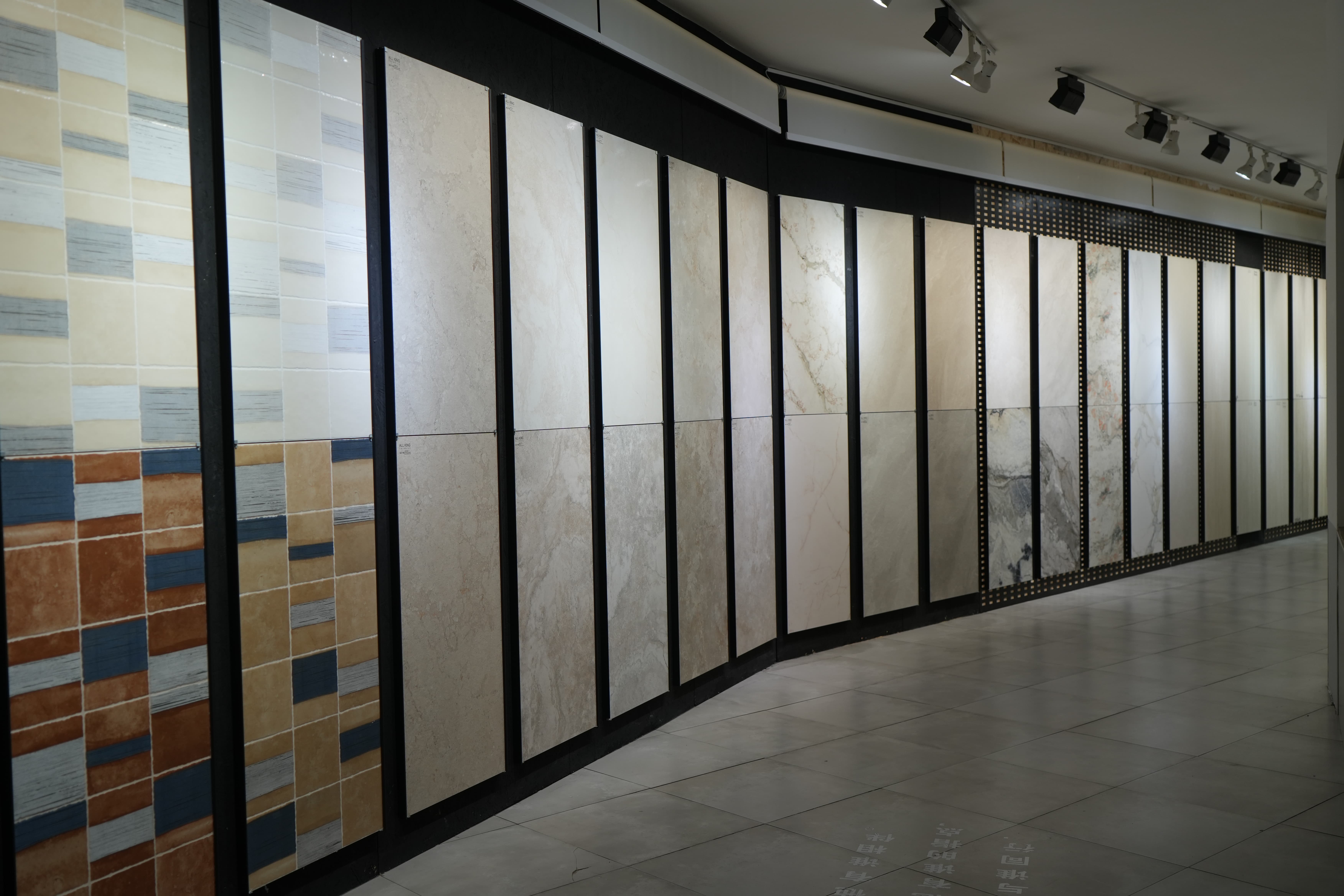
Outdoor, Large-Format, and Safety-Specific Ranges
One of the most useful distinctions for a buyer is between indoor floor tiles, outdoor pavers, and safety-rated floor tiles. Many project failures happen because a tile designed for a covered interior is used outdoors or in a wet production area.
Outdoor porcelain pavers and plaza floors
Outdoor spaces require frost resistance, low water absorption, and a surface that keeps safe in the rain. The term “20mm porcelain pavers” is often used for these products because the extra thickness helps the tile span pedestals without cracking under load. Even when the tile is installed on a mortar bed, a 20 mm paver is more resistant to impact and uneven subfloor conditions.
Large-format porcelain slabs
Large slabs produce fewer joints and create a more monolithic surface. They are used for wall cladding in lobbies, floor-to-ceiling bathroom walls, and even worktops or reception counters. Large-format installation requires a leveling system and good substrate flatness. Because the size increases installation speed but also increases the risk of lippage, experienced installers are a prerequisite.
High-traffic vitrified floor tiles
When a project involves a transit hall, a supermarket, or an exhibition center, the floor tile must withstand continuous use for years. Choosing a vitrified porcelain tile with PEI 5 abrasion class and high breaking strength is a conservative way to reduce long-term replacement risk. In addition, a through-body or full-body porcelain tile is preferable when the cut edges will remain visible, for example around stair nosings.
Supplier Evaluation for Large-Scale Projects and Export
For a global construction project, the tile supplier is part of the supply chain. A supplier evaluation should cover four practical areas: production capacity, quality control, export experience, and after-sales support.
Production capacity and factory strength
A manufacturer with a large factory area, an experienced engineering team, and stable monthly output can meet the progressive delivery schedules of a construction project. The buyer should also check whether the supplier is a real manufacturer with direct-from-factory pricing or simply a trading company with no production control. Project buyers usually prefer working with a manufacturer that has a dedicated export department because specifications and revisions can be communicated directly to production.
Quality control in practice
The best products still fail when inspection is weak. A serious supplier should be able to describe its quality control steps: automatic flatness and sizing checks, piece-by-piece visual inspection, and laboratory testing of water absorption, breaking strength, and slip resistance. For large projects, the buyer may also request a third-party inspection before loading.
OEM/ODM and custom program capability
Many global commercial developers prefer to work with their own brand or a project-specific packaging design. A supplier with OEM/ODM experience can customize size, thickness, surface finish, pattern variation, and packaging. Customization should be confirmed before production, because changing a mold or a packaging line affects lead time.
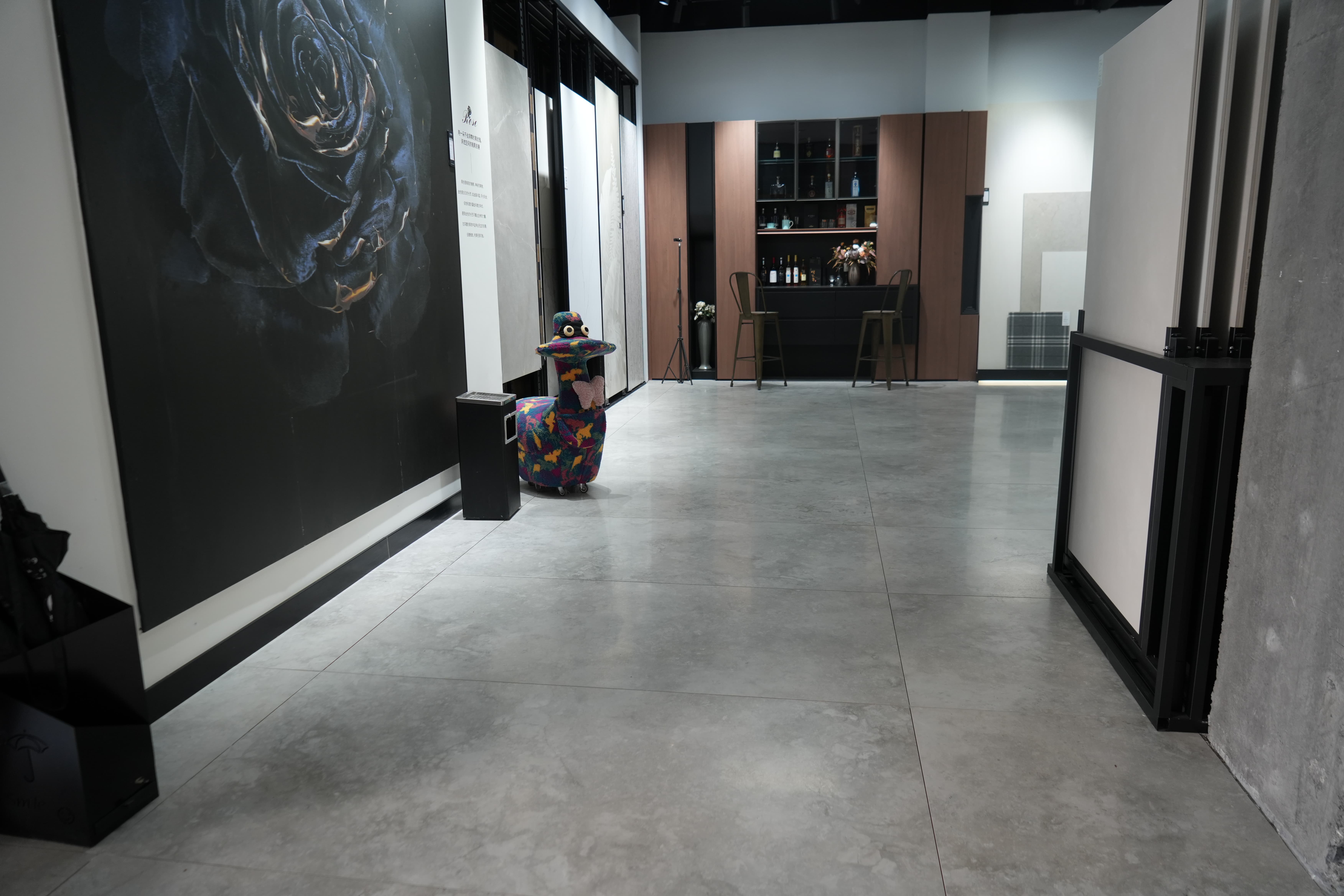
Comparison Table: Typical Commercial Scenarios and Recommended Tile Parameters
| Project scenario | Key risk / requirement | Recommended tile characteristics | Typical formats |
|---|---|---|---|
| Hotel lobby & corridor | Aesthetics + high-frequency foot traffic | Water absorption <0.5%; PEI 4/5; high flatness | 60x120 cm; 75x150 cm |
| Commercial kitchen / food prep | Wet & slippery conditions | Anti-slip R11-R12; low water absorption | 60x60 cm |
| Hospital corridor / patient room | Cleaning chemicals; trolley traffic | PEI 5; stain resistant; low-sheen surface | 60x120 cm |
| Shopping mall common area | Continuous heavy use | PEI 4/5; high breaking strength | 80x80 cm; 60x120 cm |
| School / university | Vandalism, scuffs, heavy flow | PEI 5; matt or textured finish | 60x60 cm; 80x80 cm |
| Outdoor plaza / terrace | Frost; rain; UV | Frost resistant; low water absorption; anti-slip | 20 mm pavers; 60x120 cm |
| Apartment / mixed-use | Balance cost, design, lifespan | PEI 4/5; uniform calibration | 80x80 cm; 60x120 cm |
What a Realistic Project Delivery Looks Like: From Inquiry to Site Delivery
For buyers who are sourcing from a manufacturer overseas, the purchasing process should follow a clear sequence:
- Project Brief: Share the application type, zone drawings or area sizes, target format, and required certifications with the supplier.
- Spec Confirmation: Confirm water absorption, PEI rating, anti-slip class, breaking strength, and dimensional tolerances in writing.
- Sample Approval: Order physical samples for each design and finish. A small trial order is also acceptable for checking production quality and packaging.
- Pre-Production: Confirm artwork for custom packaging, carton marking, and any OEM branding before mass production.
- Batch Tracking: Ask the supplier for production photos, packing lists, and batch numbers so you can track each shipment against the contract.
- Delivery & After-Sales: Check the damage-compensation policy, retain unopened boxes for claims, and keep a sample of each batch for future reordering.
A capable exporter should also provide online installation guidance and technical consultation, since installation mistakes are responsible for a large number of tile failures.
Case Reference: How Commercial Developers Use Porcelain Tile Solutions
Commercial real estate developers, general contractors, and hospitality procurement teams usually buy in large volumes. A typical medium-scale commercial project may require more than 15,000 sqm of porcelain tile across lobbies, corridors, bathrooms, and public spaces. For a project of this scale, the supplier must be able to maintain the same shade and calibration across many batches, which is only possible when the factory controls the production parameters from pressing to final sorting.
One of the strongest arguments for selecting a direct factory supplier is not the unit price alone, but the ability to control consistency and solve problems before they reach the site. When a project has zero tolerance for installation delays, the supplier's packing standard, fumigated pallet treatment, and export documentation are as important as the tile's physical properties.
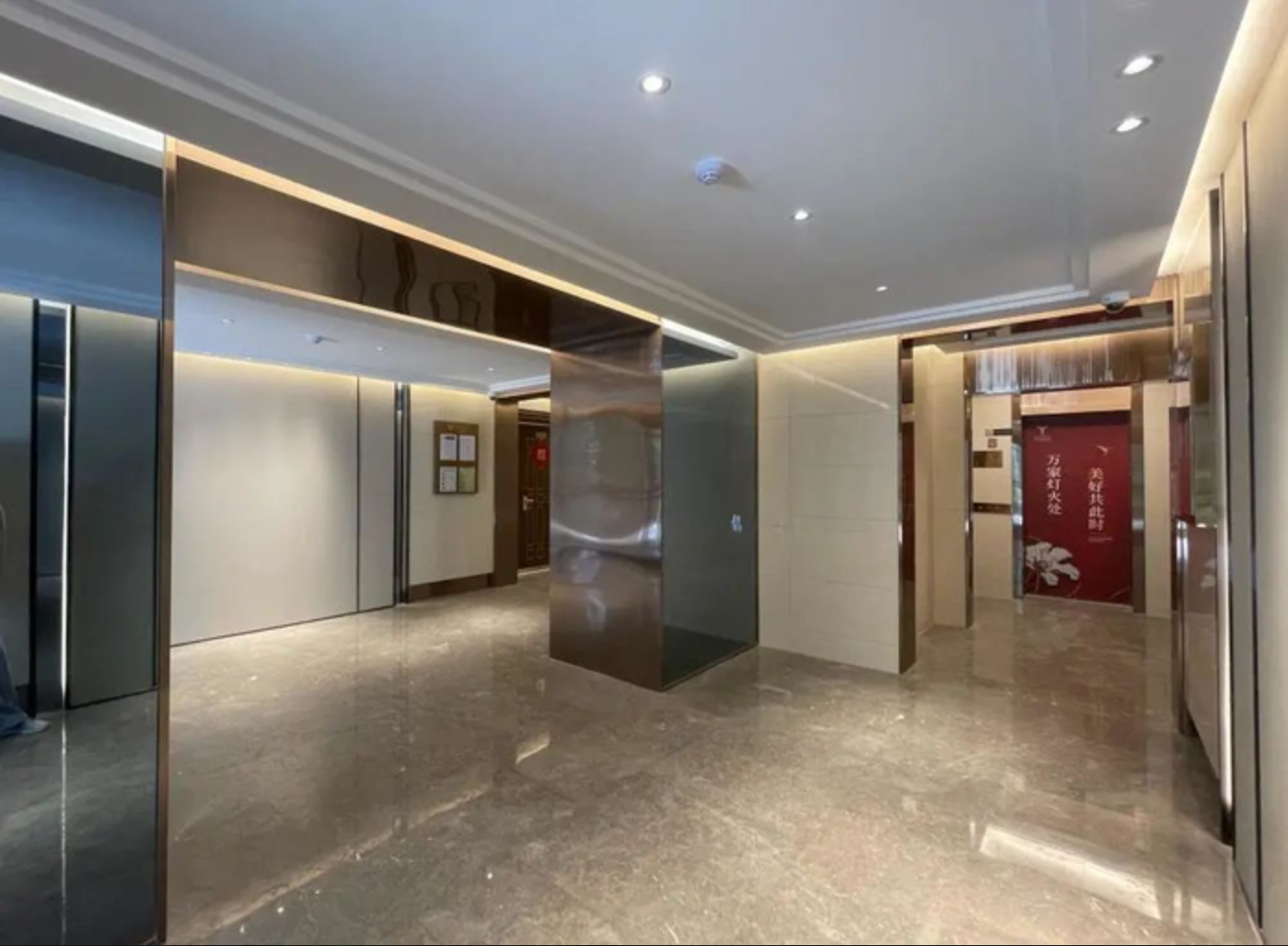
Why All-King Ceramics Is Relevant for Project Buyers
ZIBO ALL-KING CERAMICS CO., LTD is a porcelain tile manufacturer and direct exporter based in Zibo, China. The company operates a 60,000 m² factory with around 320 employees and an annual output of 12 to 16 million square meters. Its engineering and R&D team includes 25 engineers, which supports OEM/ODM work and custom project development.
All-King Ceramics specializes in large-format porcelain tiles, with 60x120 cm as the flagship format. The factory also produces 75x150 cm, 80x80 cm, 100x100 cm, and 60x60 cm tiles in marble and travertine visual styles. For commercial projects, the company supplies vitrified porcelain tiles with water absorption below 0.5%, PEI 4/5 abrasion resistance, breaking strength of 1300 N or higher, and modulus of rupture of at least 35 MPa.
The company exports to more than 20 markets, including Australia, New Zealand, South Korea, Vietnam, Malaysia, the Philippines, Russia, Belarus, Peru, Panama, Colombia, Chile, Bolivia, Guatemala, Iraq, Ukraine, and the UAE. With 70% export share, its daily work is managing distance, packaging quality, documentation, and delivery reliability.
FAQ
Do porcelain tiles for commercial projects comply with international standards like ISO 13006?
Compliance should be treated as a separate check for every product batch. ISO 13006 is the international standard that covers dimensional tolerances, water absorption, breaking strength, and other physical properties of ceramic tiles. A manufacturer that claims ISO 13006 compliance should be able to show test reports or batch QA records. For wet-and-slippery environments, the specification should also state the anti-slip class, usually referenced to DIN 51130 (for example R10, R11, or R12).
Can porcelain tiles be used for anti-slip floors in hotel kitchens and commercial food areas?
Yes. Porcelain tiles are suitable for commercial kitchens and food production areas when the surface is classified as R11 or R12. Because these spaces are frequently wet and cleaned with strong detergents, the tile should also have very low water absorption, ideally below 0.5%, so moisture cannot penetrate the body. For a specific product, the manufacturer should confirm the measured anti-slip class and provide installation guidance that includes correct adhesive and grout.
Can I order custom sizes, custom packaging, or OEM branding for a project?
Many manufacturers support OEM/ODM for commercial projects. Customization usually covers size, thickness, surface finish, pattern or marble-vein variation, carton printing, and brand logo. Production capacity matters here: a factory with a large monthly output can schedule custom production without disrupting standard deliveries. Ask for a sample and a pre-production confirmation sheet before the full production run. Most suppliers accept a trial order before a large project order.
What is the realistic sample or trial-order process for a large commercial project?
The standard process is to request samples first, review the physical tile, then place a small trial order if needed. A common minimum for a custom design is around 400 sqm per design. For a large project, a full container trial order allows the buyer to verify not only the tile quality but also the packing, marking, fumigation, and loading quality. After approval, the project order can move forward with clear reference samples.
How long does delivery take for a project order from a manufacturer-exporter?
Delivery depends on customization and production queue. In the ceramic export industry, a standard production lead time is roughly 7–10 days for existing formats and finishes after confirmation. Custom designs, special sizes, or new surface finishes require additional time because samples and production settings must be prepared first. The safest practice is to ask the supplier for a written lead time at the inquiry stage and to schedule shipments with buffer time for inspection and port logistics.
For a specific project inquiry, you can ask All-King Ceramics to confirm available molds, finish options, shipping dates, and sample logistics. Contact All-King Ceramics directly via WhatsApp, or send an email to tyceramic2@all-king.com for a project-specific response.
Conclusion
Selecting porcelain tile for hotels, shopping malls, apartments, healthcare facilities, schools, and mixed-use developments is not about memorizing a single product name. It is about matching each zone's traffic, moisture, safety, and maintenance requirements to confirmed physical properties, and then working with a manufacturer that can deliver those properties consistently across a large order.
For projects that need large-format porcelain, OEM support, and predictable export, All-King Ceramics offers a factory-direct supply model with in-house quality control. The next practical step is to send the application zone and target quantity to the manufacturer, request samples or a catalog, and verify the technical parameters against your written specification.

Download the full product catalog: All-King Ceramics Catalog (PDF)
Have Questions or Need More Details?
Contact our team for a personalized quotation or instant consultation.
Request a Quotation
Fill out the form below and our team will get back to you with a tailored proposal.
WhatsApp Direct Chat
Prefer to chat in real-time? Message us on WhatsApp for instant assistance & quick answers.
- Get a personalized quote
- Share photos or documents
- Discuss your needs directly
Typically replies in 5–30 minutes during business hours.