
Solving High-Traffic Flooring Failures: Porcelain Tile for Commercial Renovation
Solving High-Traffic Flooring Failures: Porcelain Tile for Commercial Renovation
Commercial flooring rarely fails in a single moment. It fails in stages: the surface dulls along the busiest walking lines, joints open in wet zones, edges chip where trolleys turn, and the first slip incident turns a maintenance line item into a safety file. By the time a renovation is approved, the original floor has already been tested by years of continuous heavy-duty use.
Vitrified porcelain tile is the remedy most renovation teams end up specifying, and the reason is measurable rather than aesthetic. A 60x120 cm vitrified porcelain tile with water absorption below 0.5%, PEI 4 / PEI 5 abrasion resistance and Mohs hardness of 6–7 closes the three mechanisms behind most high-traffic failures: moisture penetration, abrasive wear and point-load cracking. In wet or frost-exposed areas, an R10/R11 anti-slip classification adds the safety layer that a lighter-duty tile cannot reliably provide.
This guide is written for project specifiers, importers, distributors and facility managers who have to replace a failing floor in a working building — and who need the replacement to still be performing at the next renovation cycle.
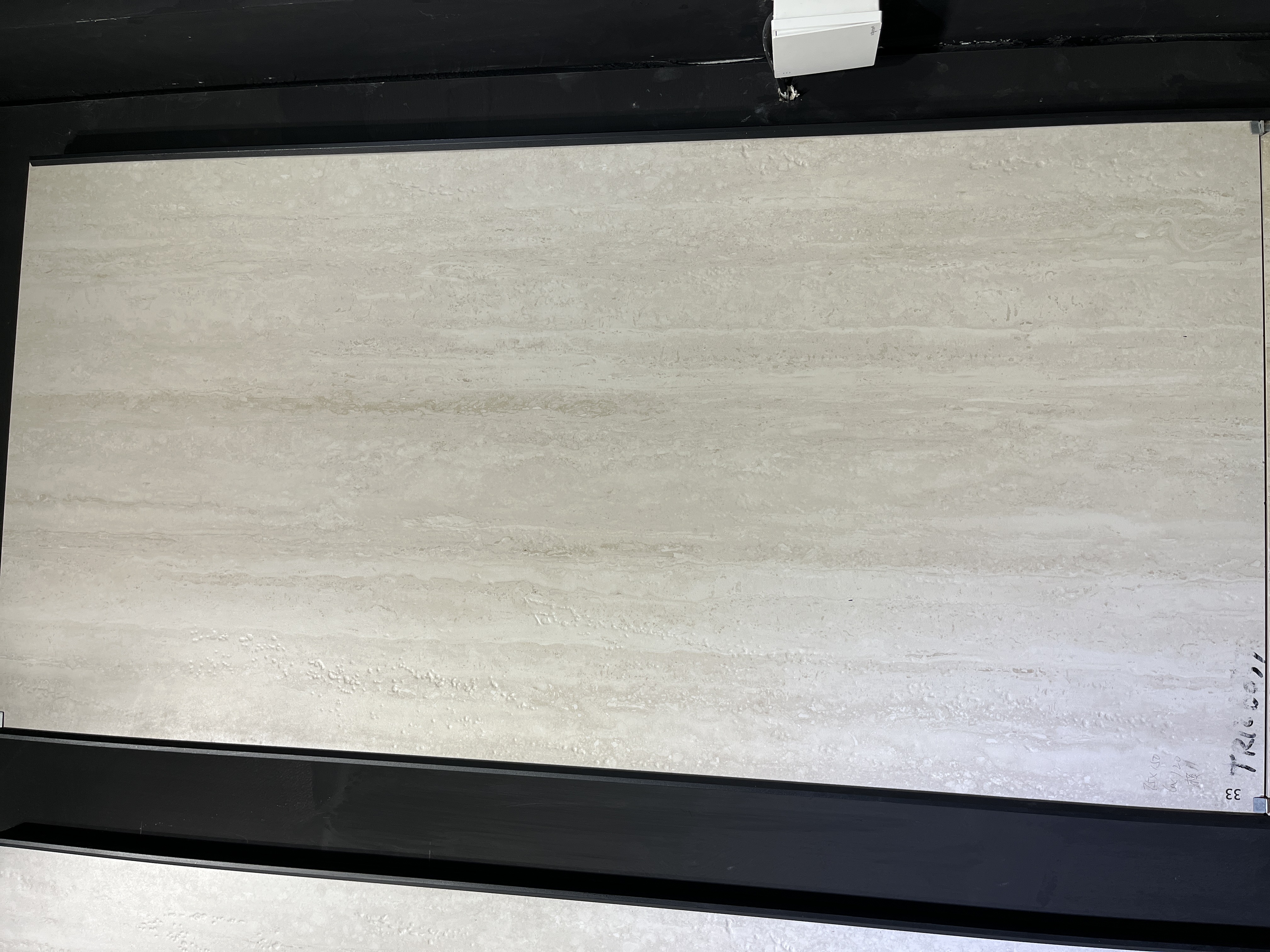
Problem Definition: What "Flooring Failure" Actually Looks Like
In commercial real estate, flooring and wall cladding are not exposed to "normal use". The relevant working conditions are high traffic, continuous heavy-duty operation, wet and slippery surfaces, frost and freeze-thaw cycling, thermal shock and heavy surface load. Under those conditions, failure repeats in a small number of recognisable patterns:
- Surface abrasion. Pattern definition disappears first along circulation routes, entrances and checkout zones where grit is dragged across the tile.
- Edge chipping and cracking. Point loads from trolleys, pallets and dragged equipment chip tile edges, and the damage spreads through the joint.
- Moisture damage in wet zones. Staining, discolouration and joint breakdown appear where water sits on the surface or reaches the tile body.
- Lippage and unevenness. Tiles set out of plane create trip hazards, trap cleaning water, and accelerate edge wear.
- Slip incidents. Entrances, commercial kitchens and ramps become safety issues when the slip classification of the installed tile does not match the actual wet condition.
- External paving breakdown. Frost and freeze-thaw cycles open joints and debond paving that was never specified for that exposure.
Why the cause matters more than the symptom
A renovation that treats the symptom — replacing a worn tile with another worn-out tile of the same class — simply restarts the clock. The useful diagnostic question is which property failed. If the failure is surface wear, abrasion resistance was too low. If the failure is cracking, breaking strength or subfloor preparation was inadequate. If the failure is staining and joint breakdown in a wet area, water absorption was too high. Each of those is a specification decision, not a maintenance decision.
Why wet areas escalate the risk
Water changes the severity of every other failure mode. It carries dirt into the tile body, weakens the bond at the joint, and lowers the effective friction of the surface. In a building where cleaning is done with water and the floor is never dry, a tile with high absorption and a low slip class will fail earlier than the same tile installed in a dry corridor. That is why commercial specifications commonly pair a low-absorption body with an anti-slip rating of R10/R11, and why frost resistance and acid and alkali resistance are written into wet and exterior scopes.
Industry Background: A Market Where Specifications Decide Outcomes
The scale of the replacement market explains why flooring failures keep resurfacing in renovation budgets. According to Grand View Research, the global ceramic and porcelain tiles market was valued at USD 226.4 billion in 2025 and is projected to reach USD 380.6 billion by 2033. Within that market, porcelain tiles dominated in 2025 with a 52.4% revenue share, and commercial end-use accounted for the largest revenue share of the global ceramic tile market in the same year.
Published market estimates vary considerably depending on how ceramic and porcelain are classified and which regions are included, so buyers should treat any single global figure as directional. The more useful signal for procurement is trade-level data. China's ceramic tile export value reached USD 3.21 billion in 2024, with a total volume of 599 million square meters, down 27.8% year on year, and the average export price for Chinese ceramic tiles in 2024 was USD 5.36 per square meter, according to China Customs data.
What this means for a renovation buyer: a market with falling export volumes and a low average price per square meter is a market under margin pressure. Price-led substitution toward lighter-duty bodies is exactly the mechanism that produces premature wear in high-traffic buildings. Specifying performance data — absorption, abrasion, hardness, strength and slip class — is the protection against that risk.
At the manufacturing end, capacity is concentrated: Mohawk Industries, Grupo Lamosa and RAK Ceramics ranked among the top global manufacturers by production volume in 2024, according to Ceramic World Review. Project buyers therefore usually choose between very large multinational producers and specialised manufacturers that work directly with importers, contractors and distributors on defined project scopes.
ALL KING CERAMICS (Zibo All-King Ceramics Co., Ltd.) is a porcelain tile manufacturer and direct exporter established in 2011, specialising in architectural ceramics for the global market. The company operates modern production lines within a 60,000 m² facility, employs approximately 320 staff including a 25-engineer R&D team, and reports an annual production capacity of 12 to 16 million m². Exports account for about 70% of output, across Australia, New Zealand, South Korea, Southeast Asia, Russia, the Middle East and Latin America.
The Technical Remedy: Vitrified Porcelain Tile Specifications
What "vitrified" means in practice
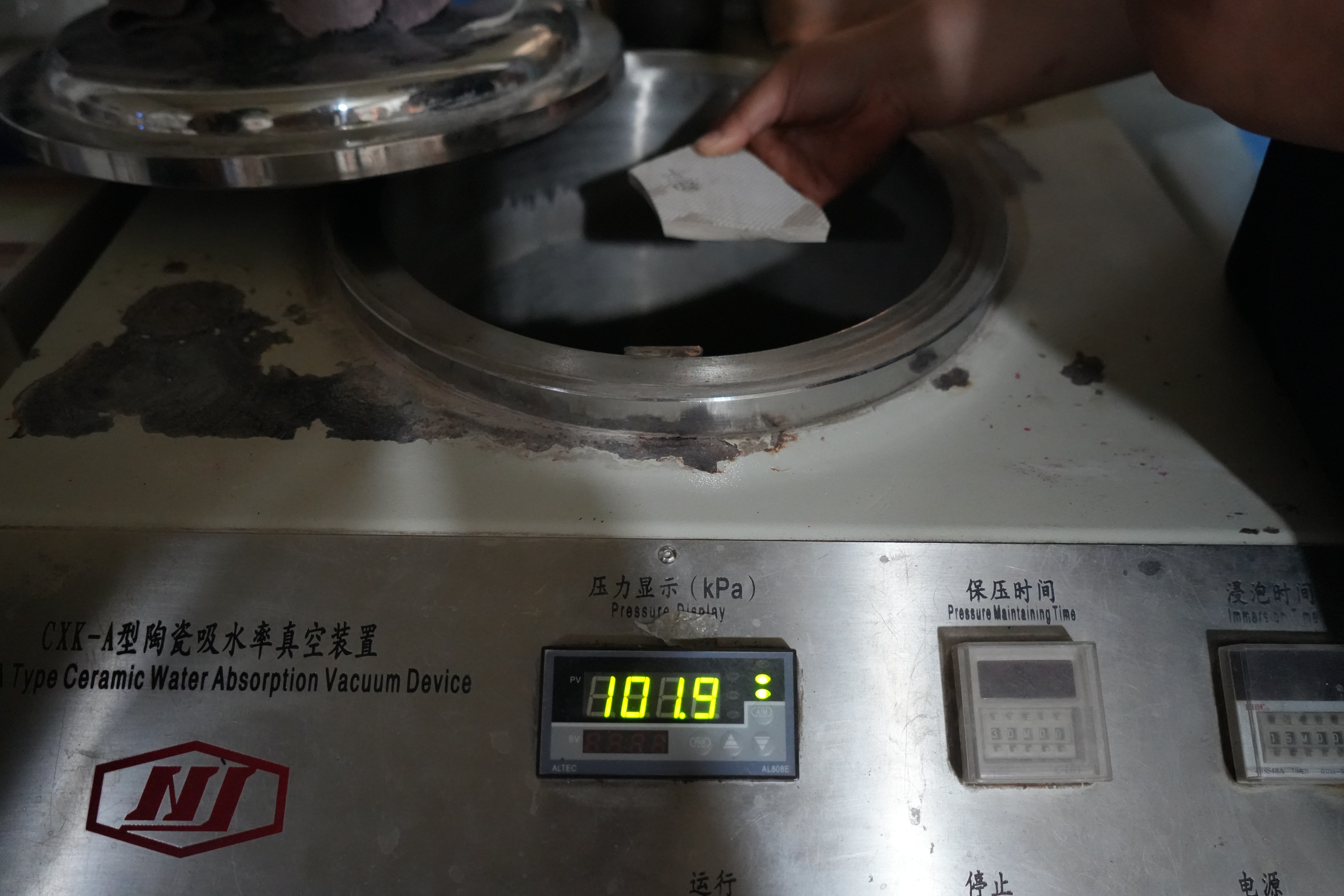
A vitrified porcelain tile is a tile made from porcelain clay and fired until the body becomes dense and closed, so that water absorption stays below 0.5% when tested to ISO 10545-3. That single property separates it from higher-absorption tile bodies, and it is the reason vitrified porcelain is chosen for wet commercial scopes, exterior paving subject to frost and freeze-thaw, and heavy-use interiors where cleaning water is applied daily.
ALL KING CERAMICS produces this category in 60x120 cm as its flagship format, supported by a wider format matrix of 60x60 cm, 80x80 cm, 100x100 cm and 75x150 cm tiles. Project ranges include the Travertine series and the Marble Series, both supplied as 60x120 cm vitrified porcelain tiles with the same core performance set.
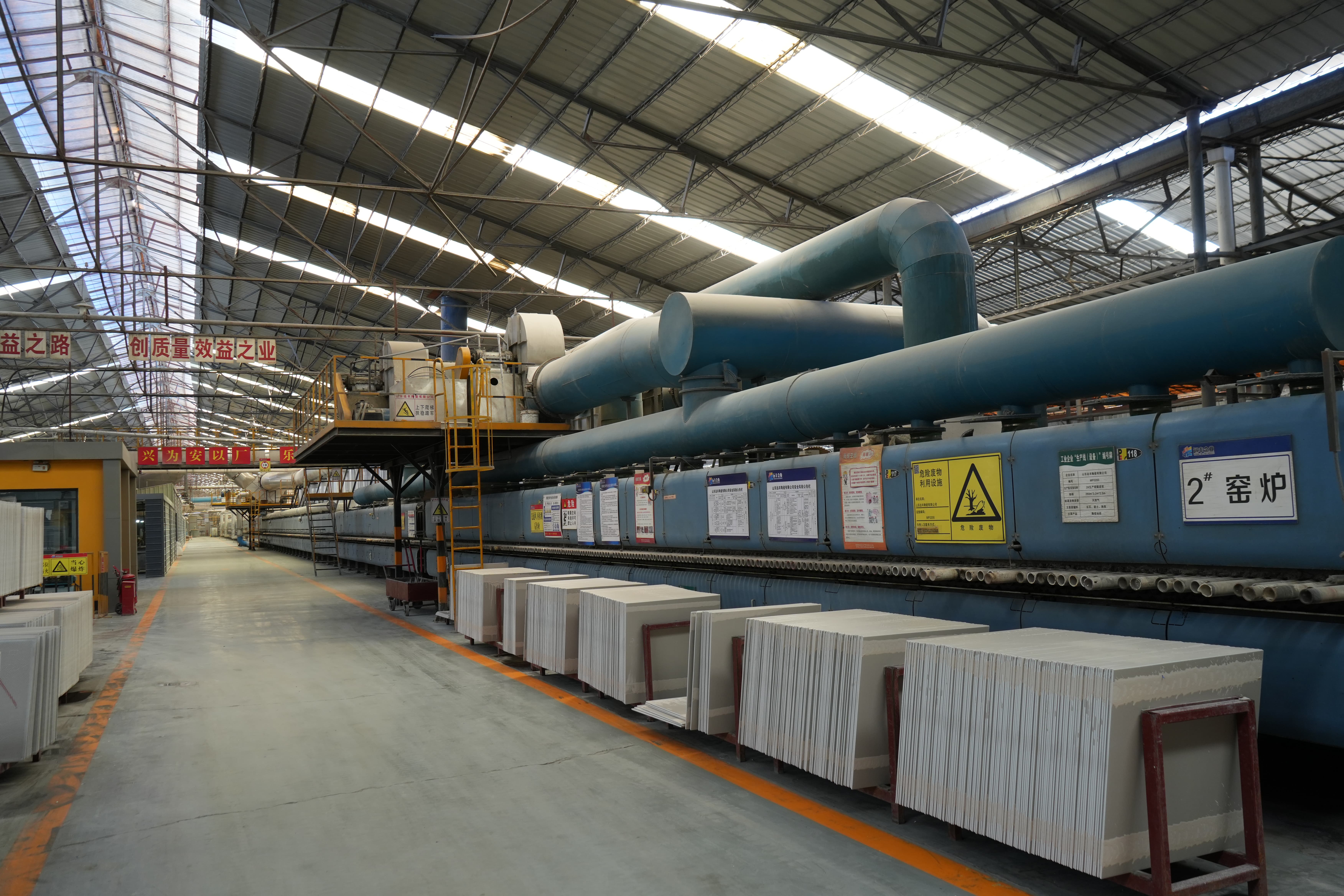
The core specification set for high-traffic renovation
| Parameter | Specification | Failure mode it controls |
|---|---|---|
| Water absorption | Below 0.5% (vitrified; tested to ISO 10545-3) | Moisture penetration, staining, freeze-thaw damage in wet and exterior scopes |
| Abrasion resistance | PEI 4 / PEI 5 | Surface wear and loss of pattern definition in circulation routes |
| Mohs hardness | 6–7 | Scratching from dragged grit, trolley wheels and equipment |
| Breaking strength | ≥ 1300 N | Point loads from pallets, trolleys and dense foot traffic |
| Modulus of rupture | ≥ 35 MPa | Flexural cracking and edge failure over service life |
| Thickness range | 9.0–10.5 mm | Installation tolerance and load distribution across the bed |
| Format and packing | 60x120 cm; 2 pcs/box (1.44 m²/box) | Handling, logistics planning and cutting waste on site |
Slip resistance: R10, R11 and R12 explained
Slip classification is where many commercial renovations are lost, because the rating is frequently copied from the old specification rather than re-derived from the actual wet condition. Under DIN 51130, R11 covers surfaces tested on a 19°–27° slope and is the common requirement for kitchens and food production areas, while R12 covers 27°–35° and is used for dairy and heavier industrial environments.
In practice, commercial flooring scopes in high-traffic buildings typically call for anti-slip properties of R10/R11 for interior wet zones, with R12 applied where process water, grease or steeper gradients are present. The rating is a design input, not a preference: it determines how the floor behaves on the day of the first spill.
Flatness and dimensional control
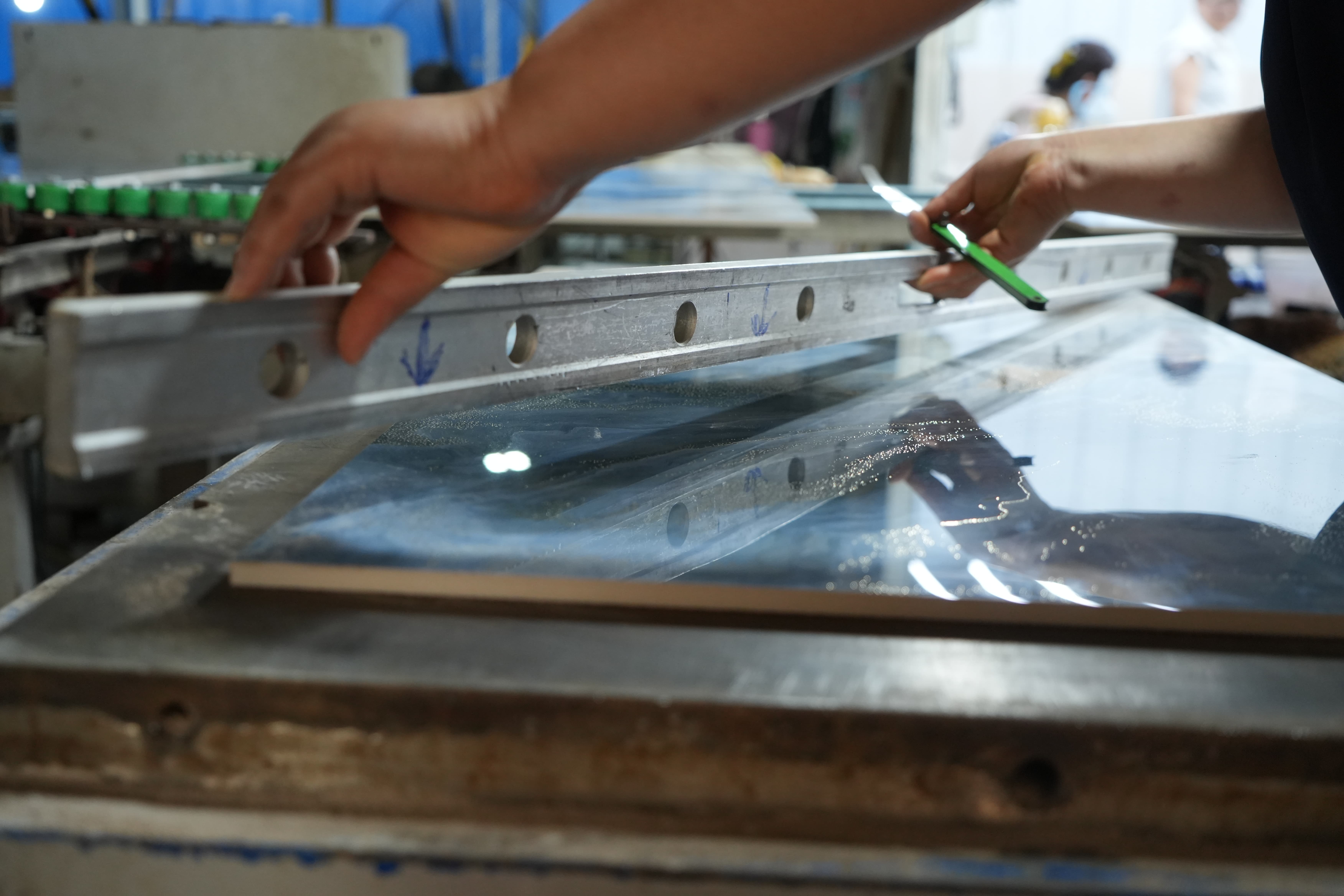
Lippage is often explained as an installation problem, but it begins with the tile. Large formats amplify any variation in flatness, and an out-of-plane surface accelerates edge chipping because every passing load strikes the raised edge first. Flatness is therefore checked during production, and on site it is controlled with a leveling system, tile spacers and a properly prepared subfloor.
Sustainability and indoor air quality
For projects pursuing green building certification, porcelain has an advantage that is written into the rating systems rather than claimed by manufacturers. Mineral-based tiles fired at temperatures above 1200°C are exempt from FloorScore VOC requirements under LEED v4.1, and porcelain tiles are inherently low-emitting, which supports credit IEQc4.3 in LEED-registered projects. Project scopes that include low VOC emissions, acid and alkali resistance and frost resistance can therefore be met with the same vitrified body used for the flooring.
The installation system is part of the specification
A tile that meets every performance number can still fail if the system around it is incomplete. Commercial installation scopes typically require tile adhesive and grout matched to the substrate, a leveling system, tile spacers, diamond cutting tools and a prepared subfloor, plus facade hanging systems where tiles are used for wall cladding. Specifying the tile without specifying the system leaves the most common cause of early failure unaddressed.
Step-by-Step Breakdown: Replacing a Failing Commercial Floor
- Diagnose the failure mode. Record whether the floor shows abrasion, cracking, staining, lippage or slip incidents — and where. The location pattern usually identifies the dominant mechanism within a single walk-through.
- Confirm the operating condition of each zone. Separate areas under high traffic and continuous heavy-duty use from areas exposed to wet conditions, frost and freeze-thaw, thermal shock or heavy surface load. A hotel lobby, a commercial kitchen and an entrance paving area are three different specifications, even inside one building.
- Translate conditions into performance data. Set the required water absorption, abrasion class, hardness, breaking strength and slip rating for each zone before any supplier conversation begins.
- Verify the documentation, not the sales claim. Ask for product performance test data, categorisation against ISO 13006 for the tile type, water absorption tested to ISO 10545-3, a slip test certificate for the DIN 51130 rating, and the factory-level certificates relevant to the project — a quality management system certificate and a CE declaration where EU harmonised rules apply. Batch-referenced reports matter more than a general brochure statement.
- Validate with samples. Check colour and surface against the design intent, confirm the thickness range on the physical sample, and confirm that the slip rating of the sampled surface matches the zone requirement.
- Fix the installation system. Define adhesive and grout, leveling system, spacing, cutting method and subfloor preparation at the same time as the tile. Residual subfloor movement is a primary cause of cracking in renovation projects, because old substrates are rarely flat.
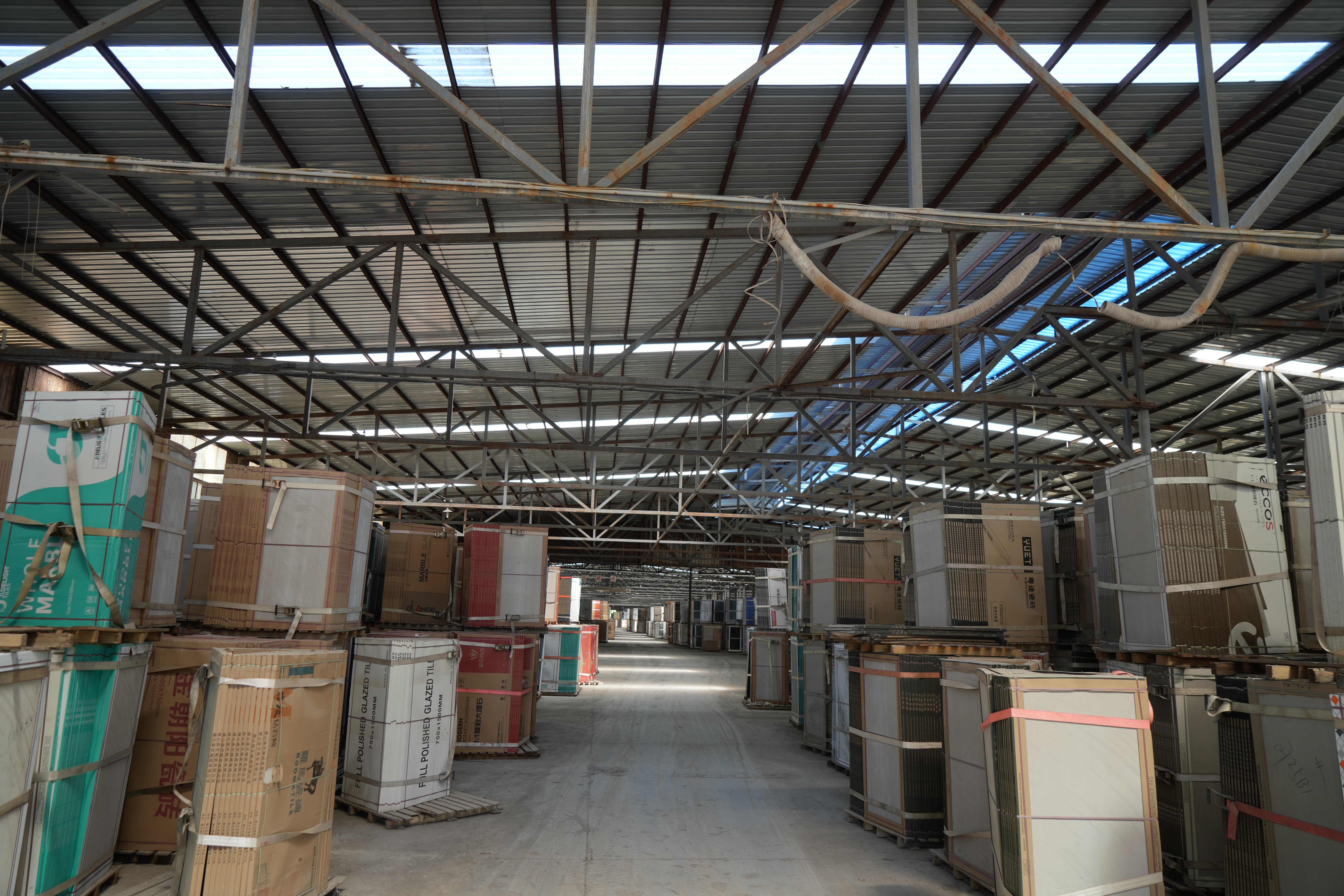
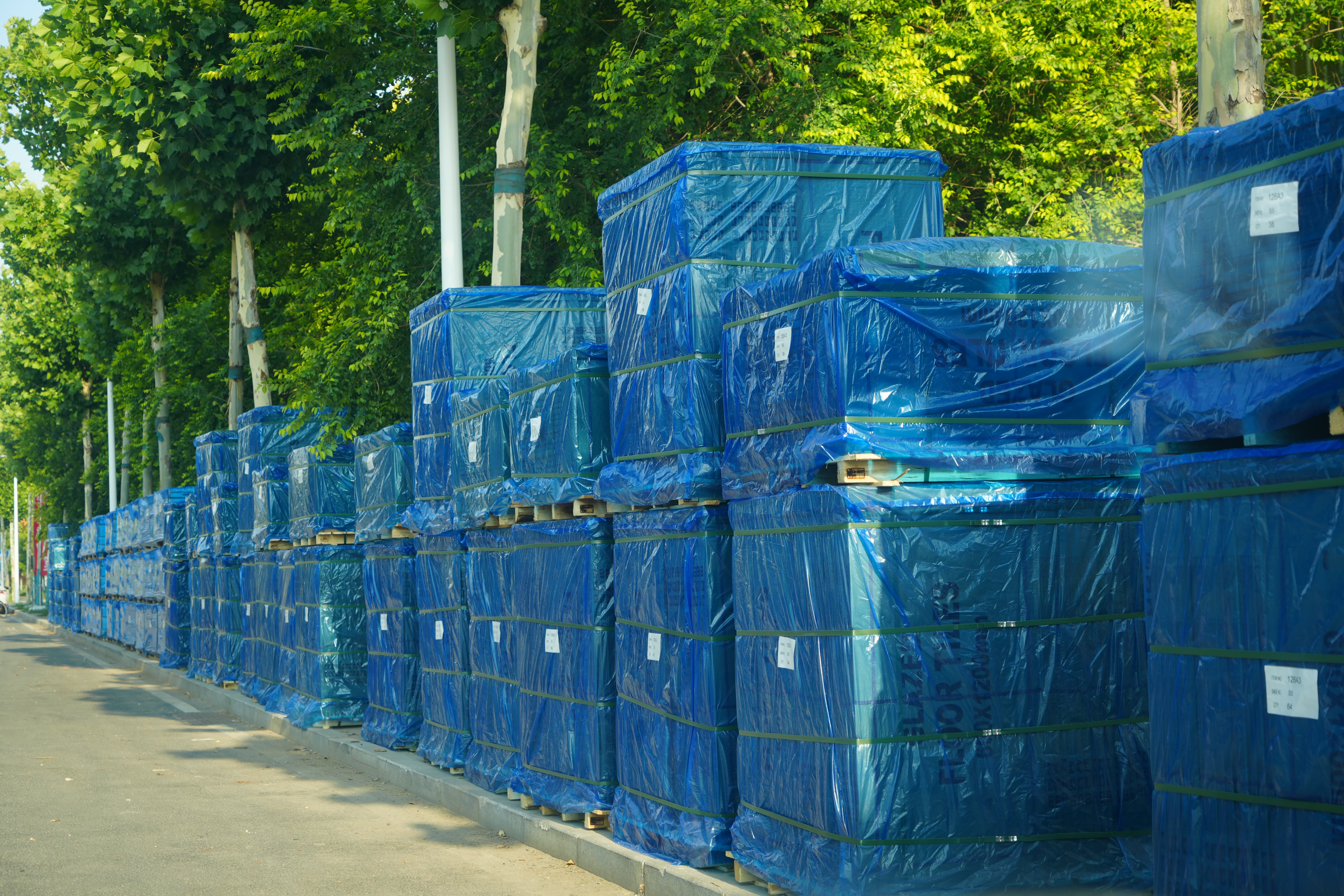
- Plan logistics for an occupied building. Confirm packing format (2 pcs/box, 1.44 m²/box for the 60x120 cm format), pallet configuration including fumigated wooden pallets for export, warehouse staging and phased delivery so that work proceeds zone by zone.
- Plan handover and maintenance. Agree joint cleaning routines, protection of finished zones while other trades remain on site, and a replacement stock allowance for future damage repair with the same batch.
Use Cases: Where Vitrified Porcelain Solves a Specific Problem
Renovation teams rarely buy "tiles". They buy a resolution to a defined condition. The table below maps the conditions that appear most often in commercial real estate, flooring and wall cladding, commercial fit-out, interior decoration, facade engineering and hotel renovation scopes.
| Project area | Dominant condition | Recommended format and model | Key data to confirm |
|---|---|---|---|
| Hotel lobby and corridor flooring | Continuous heavy-duty traffic; appearance retention after renovation | 60x120 cm vitrified porcelain; Travertine or Marble Series | PEI 4 / PEI 5, Mohs 6–7, water absorption below 0.5% |
| Shopping mall circulation and food areas | High traffic plus frequent wet cleaning and spillage | 60x60 cm, 80x80 cm or 60x120 cm with anti-slip surface | ISO 13006 category, DIN 51130 R10/R11 |
| Commercial kitchens | Grease, water and food production safety requirements | Anti-slip vitrified porcelain, R11 range | DIN 51130 R11 (19°–27°) |
| Healthcare facilities | Cleanability, stain and chemical exposure | Vitrified floor tile with acid and alkali resistance | Low absorption, chemical resistance data |
| Educational buildings | Impact load, high repair frequency | 60x60 cm / 80x80 cm vitrified tiles | Breaking strength ≥ 1300 N |
| Exterior paving and entrances | Frost, freeze-thaw cycles, wet slip risk | Anti-slip outdoor porcelain pavers | Frost resistance, R11/R12 depending on gradient |
| Mixed-use and apartment developments | Design continuity between public and private zones | 60x120 cm and 75x150 cm large format; 100x100 cm flooring | Flatness control, format consistency across batches |
| Luxury villas and feature walls | Aesthetic continuity with technical performance | Large format porcelain slabs and feature wall tiles | Surface finish, thickness range 9.0–10.5 mm |
| LEED-registered projects | Indoor air quality and material disclosure | Mineral-based porcelain fired above 1200°C | LEED v4.1 IEQc4.3, FloorScore VOC exemption |
In markets such as Australia, vitrified porcelain tile is commonly applied in commercial real estate projects under high-traffic and continuous heavy-duty conditions with anti-slip requirements of R10/R11, installed with tile adhesive and grout. This is also the profile of ALL KING CERAMICS' export business: the company supplies contractors, distributors, builders and project buyers across Australia, New Zealand, South Korea, Southeast Asia, Russia, the Middle East and Latin America, with OEM/ODM support where a project requires specific formats or surface treatments.
Comparison Table: Failure Mode, Cause and Counter-Measure
The following comparison converts observed renovation problems into the specification response that prevents a repeat. Every parameter listed is drawn from the product specification set and published standards referenced in this article.
| Observed failure | Underlying cause | Specification response | Evidence to request |
|---|---|---|---|
| Worn surface and faded pattern in walking lines | Insufficient abrasion resistance for traffic volume | PEI 4 / PEI 5 abrasion class; Mohs hardness 6–7 | Abrasion and hardness test data for the supplied batch |
| Chipped edges and cracked tiles under loads | Low breaking strength combined with an uneven subfloor | Breaking strength ≥ 1300 N; modulus of rupture ≥ 35 MPa; subfloor preparation and leveling system | Strength test report; subfloor acceptance plan |
| Staining and joint breakdown in wet zones | Water absorption and penetration into the tile body | Vitrified body with water absorption below 0.5%; matched adhesive and grout | Water absorption test to ISO 10545-3 |
| Lippage, trip hazards and edge wear | Tile flatness variation amplified by large format | Flatness-controlled production; leveling system and spacers on site | Flatness inspection records |
| Slip incidents at entrances, kitchens and ramps | Slip classification not matched to the actual wet condition | R10/R11 for commercial wet zones; R12 where process water or steeper gradients apply | Slip test certificate to DIN 51130 |
| Debonding and joint opening on external paving | Frost and freeze-thaw cycling; moisture in the joint | Frost-resistant vitrified porcelain; exterior-rated fixing system | Frost resistance test data; fixing system specification |
Frequently Asked Questions
Which standards should a specifier verify before approving porcelain tile for a high-traffic renovation?
Verification normally covers three levels. At product level, confirm categorisation against ISO 13006 for the tile type and water absorption tested to ISO 10545-3, which should return a value below 0.5% for a vitrified porcelain body. At safety level, confirm the slip rating against DIN 51130: R11 corresponds to 19°–27° and is used for kitchens and food production, while R12 corresponds to 27°–35° for heavier process-wet environments. At factory level, request the quality management certificate and the CE declaration where EU harmonised rules apply to the project, and require test documentation that references the supplied batch rather than a generic brochure.
What specifications make a porcelain tile suitable for continuous heavy-duty commercial traffic?
The working set for high-traffic commercial flooring is an abrasion resistance of PEI 4 / PEI 5, a Mohs hardness of 6–7, a breaking strength of at least 1300 N, a modulus of rupture of at least 35 MPa, and water absorption below 0.5% in a vitrified body. Format matters alongside the numbers: ALL KING CERAMICS supplies 60x120 cm vitrified porcelain tiles as its flagship format, with 60x60 cm, 80x80 cm, 100x100 cm and 75x150 cm formats across the Travertine and Marble Series. The 60x120 cm format is packed 2 pcs per box at 1.44 m² per box, which simplifies quantity planning for large projects.
How should a project budget porcelain tile for a commercial renovation?
Budget drivers are format size, thickness, surface finish and slip rating, order volume, packaging and freight — not the tile name alone. For directional benchmarking, the average export price for Chinese ceramic tiles in 2024 was USD 5.36 per square meter, according to China Customs, with total export value of USD 3.21 billion across 599 million square meters. That average covers the full quality range of the market, so a project specifying PEI 4 / PEI 5 abrasion resistance, Mohs 6–7 and water absorption below 0.5% is buying above the market average, not at it. The relevant comparison is total cost across the service life: a second replacement within the same renovation cycle costs removal, disposal, subfloor repair and trading downtime, which is why performance data should be priced against failure cost rather than against the cheapest per-square-meter offer.
Can we validate the tile with samples before committing to a full order?
Yes, and sample validation is the standard step before a project order is released. Ask for samples in the specified model and format — for example 60x120 cm Travertine or Marble Series — then check colour and surface against the design intent, measure the thickness range of 9.0–10.5 mm on the physical piece, and confirm that the slip rating of the supplied surface matches the wet-zone requirement. For larger scopes, request samples from the production batch reserved for the project so that colour and calibration are consistent from the first delivery to the last.
What supports lead time and supply continuity on a large renovation?
Supply continuity depends on production capacity, stock availability and delivery planning rather than on a quoted date alone. ALL KING CERAMICS reports an annual production capacity of 12 to 16 million m² from a 60,000 m² facility with approximately 320 employees, and exports represent about 70% of output to markets including Australia, New Zealand, South Korea, Southeast Asia, Russia, the Middle East and Latin America. Export packing uses fumigated wooden pallets, and phased delivery can be arranged for occupied buildings so that work proceeds zone by zone. Exact schedules are confirmed order by order against the agreed specification and quantity — send your project scope, formats and quantities to tyceramic2@all-king.com or message +86 156-5336-9360 on WhatsApp for a sample and quotation.
Conclusion: Specify the Failure Out, Not Around It
High-traffic flooring failures are rarely random. They follow from a small number of measurable properties: how much water the tile body absorbs, how well it resists abrasion, how hard the surface is, how much load it carries, and whether its slip classification matches the wet condition it actually faces. A vitrified porcelain tile with water absorption below 0.5%, PEI 4 / PEI 5 abrasion resistance, Mohs hardness of 6–7, breaking strength of at least 1300 N and a modulus of rupture of at least 35 MPa addresses those properties directly, and the slip rating can then be tuned per zone with R10, R11 or R12 classification under DIN 51130.
For a renovation in an occupied building, the specification itself is the project plan. Fix the performance data first, verify it with batch-referenced documentation and physical samples, then build the installation system, logistics plan and maintenance routine around it. That sequence is what turns a replacement floor into a floor that is still in service at the next renovation cycle.
Next Step: Sample, Specification Review or Quotation
ALL KING CERAMICS is a porcelain tile manufacturer and direct exporter based in Zibo, China, supplying 60x120 cm vitrified porcelain tiles and the wider format matrix for commercial projects worldwide.
Send your project conditions — traffic level, wet or frost exposure, required slip rating, formats and quantities — and we will respond with the matching specification and a sample set.
Email: tyceramic2@all-king.com | Tel / WhatsApp: +86 156-5336-9360 | Website: www.all-king.com
Download the full product catalogue with formats, specifications and packing data: ALL KING Ceramics Catalog (PDF).
Have Questions or Need More Details?
Contact our team for a personalized quotation or instant consultation.
Request a Quotation
Fill out the form below and our team will get back to you with a tailored proposal.
WhatsApp Direct Chat
Prefer to chat in real-time? Message us on WhatsApp for instant assistance & quick answers.
- Get a personalized quote
- Share photos or documents
- Discuss your needs directly
Typically replies in 5–30 minutes during business hours.