
Top 5 Porcelain Tile Choices for High-Traffic Commercial Spaces in 2026
Top 5 Porcelain Tile Choices for High-Traffic Commercial Spaces in 2026
For high-traffic commercial interiors in 2026, the five porcelain tile configurations ranked below are judged on a single practical question: how much abrasive foot traffic, point loading, moisture and cleaning chemical a surface can absorb before appearance, slip safety or maintenance cost starts to degrade. All five use the 60x120cm format from the Marble Series and the Travertine Series produced by ALL KING CERAMICS (Zibo All-King Ceramics Co., Ltd.). All five share the same verified baseline specification — water absorption below 0.5% (vitrified), Mohs hardness of 6–7, breaking strength of at least 1300 N and modulus of rupture of at least 35 MPa.
Why High-Traffic Commercial Floors Fail: Three Constraints Decide the Specification
Commercial flooring rarely fails for aesthetic reasons. It fails because one of three engineering constraints was set too low for the traffic the surface actually receives.
- Abrasion class mismatch. Abrasion resistance determines how long a tile keeps its surface pattern under continuous footfall. When the abrasion class is below the real traffic intensity, the surface wears through long before the tile body fails structurally.
- Insufficient strength margin. Breaking strength governs whether a tile survives point loads — trolley wheels, luggage casters, pallet jacks, dropped equipment. A commercial specification needs margin, not a number that merely passes on paper.
- Compliance gaps in slip, frost and absorption. In public buildings, slip resistance in wet conditions is a safety constraint. In cold-climate projects, frost resistance is a durability constraint. Water absorption sits underneath both.
A fourth constraint sits behind all three: total installed cost. A tile that is cheaper per square meter but needs more joints, more grout, more cutting time and more replacement cycles carries a higher lifetime cost than a specification chosen correctly the first time.
Industry Background: What Commercial Porcelain Demand Looks Like in 2026
Global demand for ceramic and porcelain tile continues to expand. Custom Market Insights values the global ceramic and porcelain tiles market at USD 423.90 billion in 2024 and projects USD 845.80 billion by 2034. Regional demand concentrates in the markets where large public and residential projects are actively being built. The Russia ceramic tiles market was valued at USD 3.2 billion in 2024, with a projected rise to USD 5.10 billion by 2032 (Verified Market Research). Southeast Asia was valued at approximately USD 11.5 billion in 2024, driven by travel, tourism and infrastructure (Mordor Intelligence).
Central Asia follows the same pattern. Uzbekistan imported USD 125 million of ceramic products in 2024, with China the top supplier at USD 75.1 million (Observatory of Economic Complexity). In the Philippines, Chinese ceramic tile exports grew 77.5% year-on-year in March 2025, reaching USD 29.6 million (Cerambath Organization / customs data).
Supply-side scale is concentrated: Mohawk Industries leads the global ceramic tile market with production exceeding 300 million sqm and revenues of USD 4.2 billion in 2024 (Ceramic World Review). For project buyers, that scale reference matters mainly because it sets the documentation and consistency expectations that public and infrastructure clients now apply to every supplier shortlist.
Standard-setting has moved in parallel with demand:
- Commercial porcelain is classified under ISO 13006 / EN 14411 Group BIa, which sets water absorption at ≤ 0.5%.
- Frost resistance for commercial grade is tested under ISO 10545-12, requiring tiles to withstand at least 100 freeze-thaw cycles.
- High-traffic public areas such as airports and railway stations require a slip resistance rating of R10 or R11 under DIN 51130.
The Specification Baseline Behind All Five Choices
Zibo All-King Ceramics Co., Ltd., trading as ALL KING CERAMICS, is a porcelain tile manufacturer and direct exporter based in Zibo, China, founded in 2011. The company operates a 60,000 m² factory with 320 employees, a 25-engineer R&D team and an annual output of 12–16 million m². Roughly 70% of production is exported. Its flagship format is the 60x120cm porcelain tile, supported by a wider matrix of 75x150cm, 80x80cm, 100x100cm and 60x60cm formats.
Both series covered in this ranking are built on the same verified product specification:
| Parameter | Verified value (Marble Series & Travertine Series, 60x120cm) |
|---|---|
| Thickness range | 9.0–10.5 mm |
| Water absorption | < 0.5% (vitrified) |
| Abrasion resistance | PEI 4 / PEI 5 |
| Mohs hardness | 6–7 |
| Breaking strength | ≥ 1300 N |
| Modulus of rupture | ≥ 35 MPa |
| Material | Porcelain clay |
| Packing specification | 2 pcs/box (1.44 m²/box) |
Two certifications apply directly to these products. The 60x120cm porcelain tile in the Marble Series (product ID 4765) and in the Travertine Series (product ID 5624) hold CE certification for the EU market, issued by TUV under certificate number AC 50163816 0001, covering dry-pressed ceramic tiles for internal flooring under EEC requirements. The manufacturing operation is separately certified to ISO 9001:2015 by XQCC under certificate number 0350521Q30166R1M, covering the production and service of ceramic tile for global markets.
Top 5 Porcelain Tile Choices for High-Traffic Commercial Spaces in 2026
The ranking below orders five configurations by abrasion class, structural strength margin, available slip and frost options, format efficiency, and fit with the traffic profiles that dominate commercial and infrastructure projects in 2026. Every number quoted comes from the product specification and certification records above; nothing is estimated.
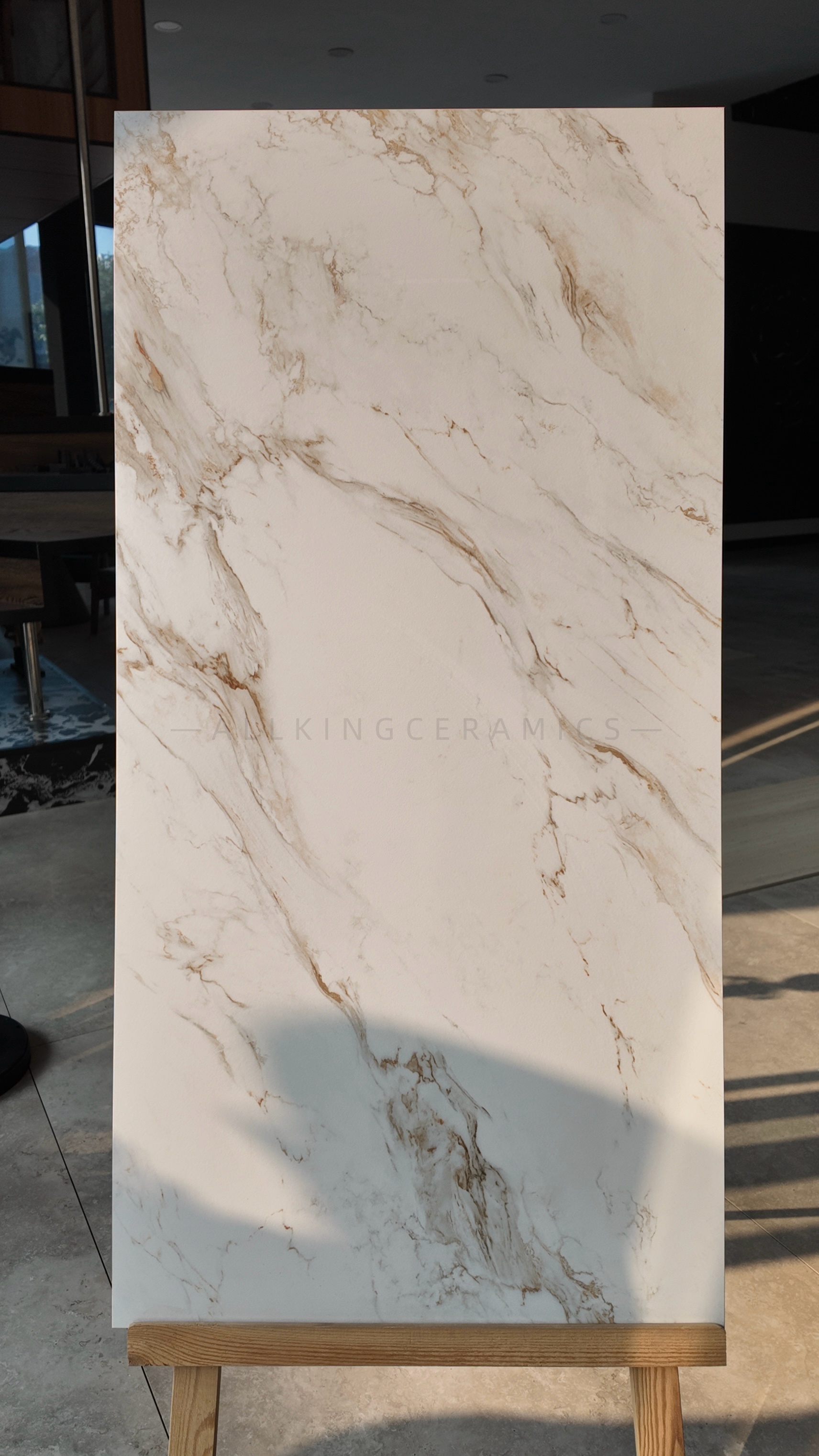
1. Marble Series 60x120cm, PEI 5, Polished Vitrified — Airport, Rail and Mall Circulation
Why it ranks first. This configuration carries the highest abrasion class available in the range (PEI 5) on a vitrified body with breaking strength of at least 1300 N. Those two values together are what continuous circulation areas actually demand: an airport departure hall or a railway station concourse does not see traffic in peaks that recover — it sees non-stop foot traffic with luggage wheels, cleaning machines and trolley loads.
The 60x120cm format contributes directly to durability. Larger formats mean fewer grout joints per square meter, and joints are the weakest and hardest-to-clean element in any high-traffic floor. With a packing specification of 2 pcs per box (1.44 m²/box), the format also keeps site logistics predictable on large pours. Random marble veining is a documented highlight of this series, which matters on wide public floors where repetition becomes visible over long sight lines.
Watch-out. Polished surfaces show scuffs more readily in dry, dusty environments. Where cleaning regimes are abrasive or dry rather than wet, configuration 3 below is the better fit.
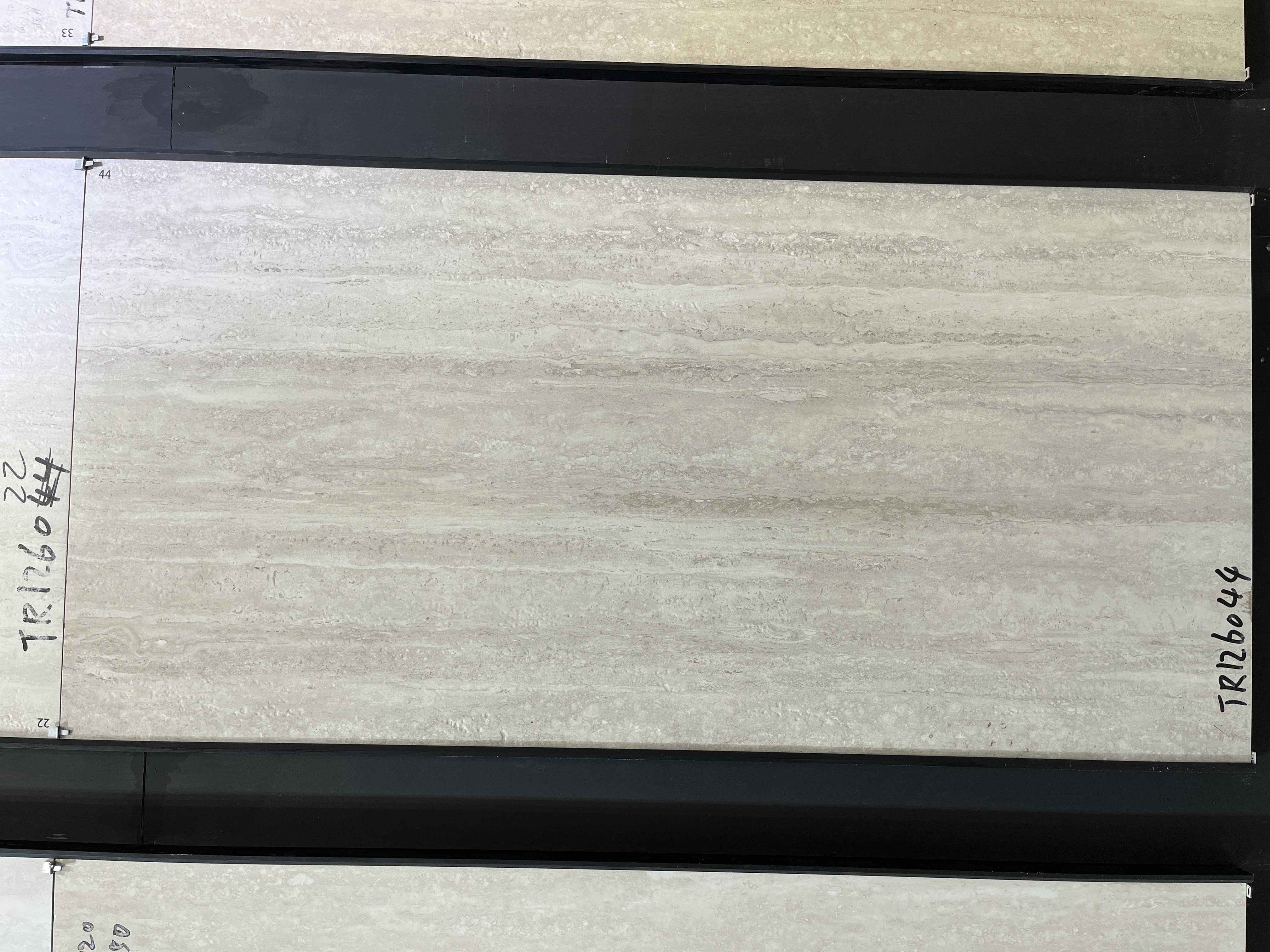
2. Travertine Series 60x120cm, PEI 5, Anti-Slip Finish — Hotel Lobbies, Hospitals and Education Buildings
Why it ranks second. Slip resistance becomes the binding constraint the moment a floor is regularly wet-cleaned or exposed to rain ingress. DIN 51130 sets R10 or R11 as the requirement for high-traffic public areas such as airports and railway stations, and the same logic applies to hospital corridors, school entrances and hotel lobbies where cleaning happens several times per day.
This configuration pairs PEI 5 abrasion resistance and ≥ 1300 N breaking strength with an anti-slip surface rating, which ALL KING CERAMICS produces as a customization option within its OEM/ODM model. The Travertine surface also reads warmer and more neutral than polished marble, which is why it suits hospitality and healthcare interiors where the flooring contributes to the perceived environment rather than receding into it.
Watch-out. Anti-slip textures hold more soil in the surface profile than polished finishes and require a cleaning specification matched to the texture. Confirm the exact R rating against the project's safety documentation before ordering.
3. Marble Series 60x120cm, PEI 4, Honed or Matte — Offices, Retail and Showrooms
Why it ranks third. Not every commercial space receives continuous traffic. Office towers, showrooms, retail floors and mixed-use podium levels take frequent but intermittent footfall, where PEI 4 abrasion resistance is a proportionate specification rather than an under-specification. Choosing PEI 4 here is a deliberate cost decision: it releases budget for the areas that genuinely need PEI 5.
The honed or matte finish carries a practical benefit in these environments — it hides scuffing and light surface marks far better than a high polish under overhead lighting, which is exactly where offices and showrooms are most scrutinized. The structural baseline does not change: the same ≥ 1300 N breaking strength, ≥ 35 MPa modulus of rupture, and < 0.5% water absorption still apply.
Watch-out. Do not use PEI 4 in entrance zones or main circulation arteries of the same building. The correct approach is a mixed specification: PEI 5 on the arteries, PEI 4 in the interior rooms.
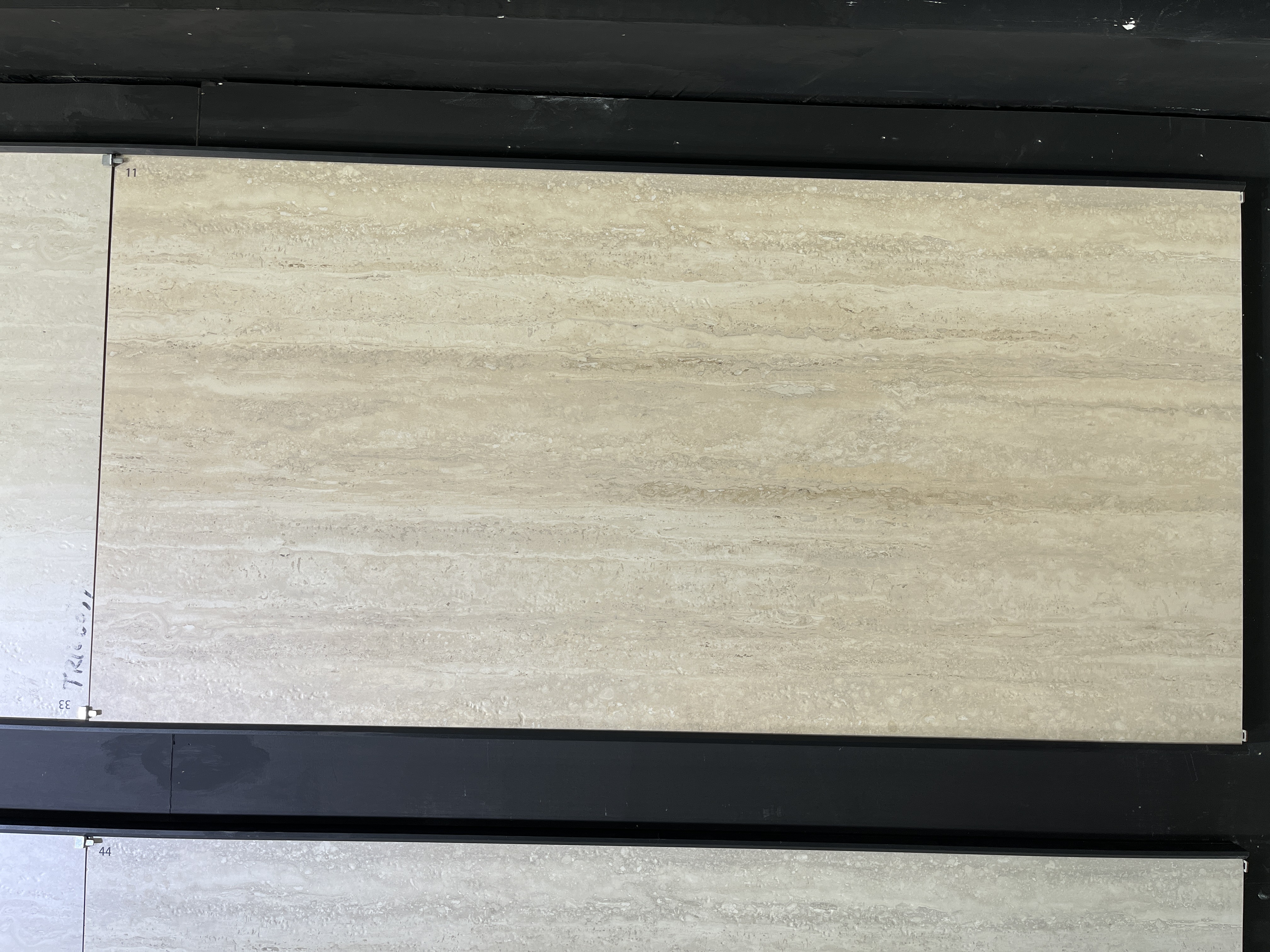
4. Travertine Series 60x120cm, Frost-Resistant Build — Plazas, Covered Walkways and Facades
Why it ranks fourth. Frost is a durability constraint, not a cosmetic one, and it is tested rather than assumed: commercial-grade frost resistance under ISO 10545-12 requires tiles to withstand at least 100 freeze-thaw cycles. For projects in Russia, Belarus, Kazakhstan, Ukraine, Mongolia and comparable climates, this makes a frost-resistant porcelain configuration mandatory rather than optional for semi-exterior and exterior applications.
The < 0.5% water absorption of the vitrified body is the physical basis of that frost performance — with near-zero water penetration into the tile body, freeze-thaw cycling has far less material to act on. The 60x120cm format extends the same visual language from interior floors to entry plazas, covered walkways and building facades, which keeps a project's material palette coherent from the street to the lobby.
Watch-out. Exterior installation requires a subfloor preparation and fixing system designed for thermal movement. The tile satisfies the material requirement; the assembly must satisfy the movement requirement.
5. Marble Series 60x120cm, Matched Floor and Wall Cladding Configuration — Hotel Renovation and Commercial Fit-Out
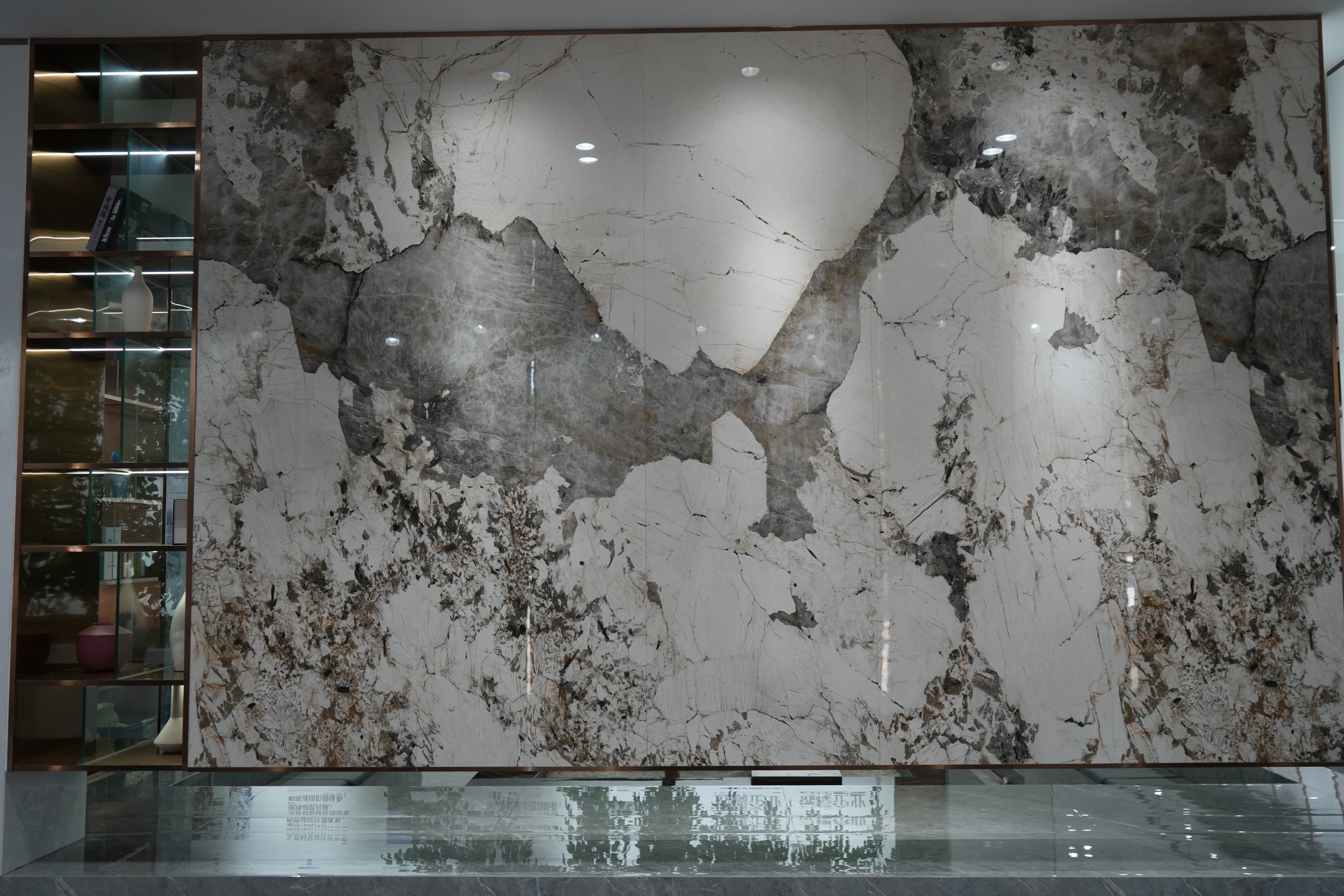
Why it ranks fifth. This entry is a configuration decision rather than a performance upgrade. Using the same Marble Series 60x120cm tile across floors and wall cladding — hotel lobbies, office building facades, commercial fit-outs and interior decoration packages — reduces the number of distinct materials a project manager has to track, and it removes the visual discontinuity that appears when floor and wall are sourced from different series with different vein character.
The application scope documented for this product family covers flooring and wall cladding, commercial fit-out, interior decoration, facade engineering and hotel renovation, under operating conditions that include high traffic, frost and freeze-thaw, wet and slippery floors, thermal shock and heavy surface load. For hospitality procurement agencies running multi-property rollouts, the single-source approach also simplifies reordering, because batch tracking and reordering support are part of the after-sales program.
Watch-out. Facade cladding requires a hanging system and wind-load calculations that sit outside the tile specification itself. Validate the assembly with the project engineer.
Step-by-Step: Matching a Tile Specification to a Foot-Traffic Level
Specification errors on commercial projects are usually procedural, not technical. Working through the six steps below in order prevents the most common ones.
- Classify the space by traffic continuity, not by room name. Write down whether footfall is continuous (airport concourse, mall artery, logistics corridor), frequent but intermittent (office floor, showroom), or occasional (storage, plant rooms). Continuity, not volume, decides the abrasion class.
- Set the abrasion class from that classification. Continuous heavy traffic takes PEI 5. Frequent intermittent traffic takes PEI 4. Anything that receives both takes a mixed specification with PEI 5 on the arteries.
- Check the strength margin against the actual loads. Trolleys, luggage casters and pallet equipment create point loads that a footfall figure will not capture. A breaking strength of at least 1300 N with a modulus of rupture of at least 35 MPa is the verified baseline for this product family; confirm it against the heaviest wheeled load the floor will see.
- Fix the slip rating before the finish. In public buildings, the slip requirement (R10 or R11 under DIN 51130 for high-traffic public areas) constrains which surface finishes are acceptable. Selecting the finish first and discovering the slip requirement afterwards is the most expensive sequencing error in commercial flooring.
- Screen for climate and moisture. Exterior and semi-exterior applications, and cold-climate projects more broadly, require frost resistance tested under ISO 10545-12 at 100 freeze-thaw cycles. Wet areas require the water absorption figure to hold — under ISO 13006 / EN 14411 Group BIa, that figure is ≤ 0.5%.
- Verify documentation and supply capability last. Certification scope matters more than certification presence. For EU supply, check that the CE scope actually covers dry-pressed ceramic tiles for internal flooring, and that a quality management certification such as ISO 9001:2015 covers production and service of ceramic tile. Then confirm that lead time and MOQ fit the construction program.
Decision rule: if two configurations both pass the abrasion, strength, slip and frost checks, choose the one with the larger format and fewer joints. Joint count drives cleaning labour and replacement frequency across the entire service life of a commercial floor.
Use Cases: Which Configuration Fits Which Project
The product family's documented application scope covers hotel lobbies, commercial mall flooring, office building facades, high-end apartment bathrooms and airport departure halls, within a project portfolio that includes a 15,000 sqm commercial engagement with 100% project acceptance and zero maintenance complaints. That experience base maps onto six recurring commercial profiles:
- Airports and railway stations. Continuous traffic, long sight lines, heavy cleaning regimes and a hard R10/R11 slip requirement. Configuration 1, with configuration 2 where wet ingress is routine.
- Shopping malls and retail. Mall circulation arteries need PEI 5; individual retail units can drop to PEI 4 without visible performance loss. Configuration 1 for the arteries, configuration 3 for the units.
- Hotels and hospitality. Lobbies combine high traffic with a design expectation, so surface character matters as much as wear class. Configurations 2 and 5.
- Hospitals and educational facilities. Wet cleaning frequency is the dominant wear mechanism, and slip resistance is a documented safety requirement. Configuration 2.
- Logistics and warehousing. Heavy surface load and wheeled equipment, rather than footfall, drive the specification. Configuration 1, with the strength margin verified against the heaviest documented load.
- Cold-climate and exterior work. Russia, Kazakhstan, Belarus and comparable markets require frost-tested material for plazas, walkways and facades. Configuration 4.
Comparison Table: The Five Configurations Side by Side
| Rank | Configuration | Abrasion class | Breaking strength | Slip / climate options | Best-fit traffic profile |
|---|---|---|---|---|---|
| 1 | Marble Series, 60x120cm, polished vitrified | PEI 5 | ≥ 1300 N | Anti-slip rating available; interior | Airport, rail and mall circulation |
| 2 | Travertine Series, 60x120cm, anti-slip finish | PEI 5 | ≥ 1300 N | R10/R11 for wet public areas; interior | Hotel lobbies, hospital and school corridors |
| 3 | Marble Series, 60x120cm, honed or matte | PEI 4 | ≥ 1300 N | Anti-slip rating available; interior | Offices, retail units, showrooms |
| 4 | Travertine Series, 60x120cm, frost-resistant build | PEI 4 / PEI 5 | ≥ 1300 N | ISO 10545-12 frost tested; interior/exterior | Plazas, walkways, facades, cold climates |
| 5 | Marble Series, 60x120cm, matched floor + wall cladding | PEI 4 / PEI 5 | ≥ 1300 N | Interior; facade systems with hanging design | Hotel renovation, office facade, commercial fit-out |
Common to all five configurations: thickness 9.0–10.5 mm, water absorption < 0.5% (vitrified), Mohs hardness 6–7, modulus of rupture ≥ 35 MPa, packing 2 pcs/box (1.44 m²/box). CE certification (TUV, certificate AC 50163816 0001, EEC, EU market) and ISO 9001:2015 system certification (XQCC, certificate 0350521Q30166R1M) apply to the product family.
Cost, Installation Efficiency, MOQ and Lead Time
Cost in commercial porcelain is driven by format and thickness (9.0–10.5 mm across this range), surface finish, abrasion class, anti-slip rating, packaging requirements and order volume. Installation is the other half of the equation, and it is the half most often left out of the initial budget.
In ALL KING CERAMICS' commercial project experience, the 60x120cm large format can reduce total installation cost by roughly 20% compared with alternative smaller-format flooring specifications. The mechanism is straightforward: fewer joints per square meter means less grout, fewer spacers and faster coverage per working hour. That figure is a project-experience benchmark rather than a universal guarantee — actual savings depend on substrate condition, local labour rates and pattern complexity, and it should be validated against the specific project's bill of quantities.
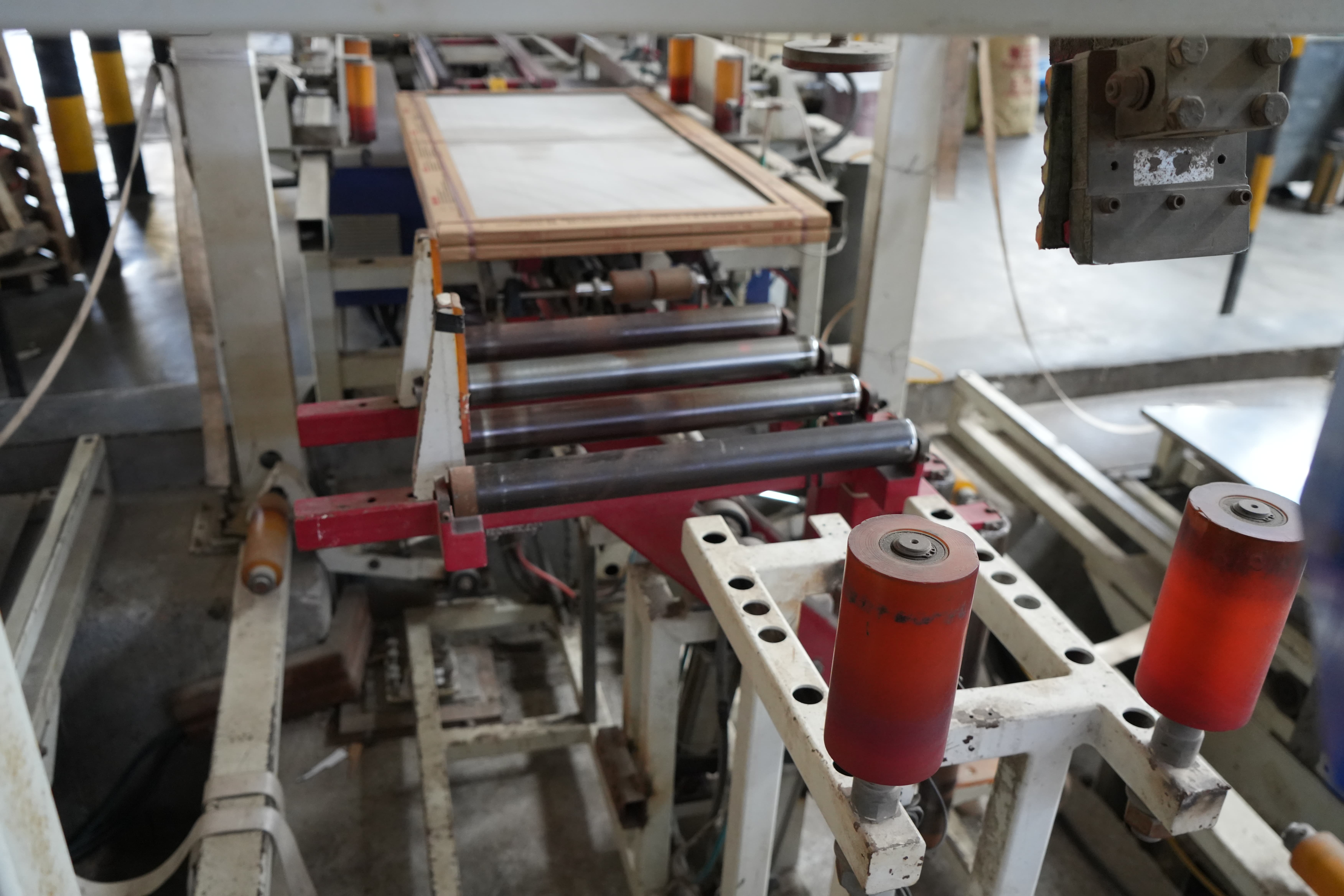
Two further cost-relevant capabilities reduce budget risk over the life of the floor. First, the after-sales program includes damage compensation, online installation guidance, 24/7 technical consultation, and batch tracking with reordering support — the last of these is what prevents a phased commercial project from ending up with mismatched batches in year two. Second, quality control is layered rather than sampled at the end: 100% automatic flatness and sizing check, piece-by-piece visual inspection, and random laboratory testing on every production batch. Flatness control in particular has a direct installation cost effect, because out-of-tolerance tiles slow down laying crews.
Frequently Asked Questions
Do the 60x120cm Marble and Travertine Series tiles meet EU compliance requirements for commercial flooring?
Yes. The Marble Series 60x120cm porcelain tile (product ID 4765) and the Travertine Series 60x120cm porcelain tile (product ID 5624) are CE certified for the EU market. The certificate, number AC 50163816 0001, was issued by TUV under EEC requirements, and its scope covers dry-pressed ceramic tiles for internal flooring. Both products sit under the manufacturer's ISO 9001:2015 system certification, certificate number 0350521Q30166R1M, issued by XQCC for the production and service of ceramic tile across global markets. On product classification, vitrified porcelain in this group falls under ISO 13006 / EN 14411 Group BIa, which sets water absorption at ≤ 0.5%. For projects in cold climates, frost resistance is tested under ISO 10545-12 at a minimum of 100 freeze-thaw cycles.
Can the tiles be customized for a specific commercial project?
Yes. Zibo All-King Ceramics Co., Ltd. operates an OEM/ODM production model with customization across five areas: custom size and thickness, surface finish, OEM brand logo and packaging, marble vein pattern variation, and anti-slip rating. Production capacity is 1.2 million m² per month, supported by an R&D team of 25 engineers. Quality control runs in three documented layers — 100% automatic flatness and sizing check, piece-by-piece visual inspection, and random laboratory testing on every batch — which is the practical basis on which project-specific customization can be delivered without relaxing the baseline specification.
What drives the cost of a commercial porcelain specification, and how much does installation affect it?
Cost is driven by format and thickness (this range is produced at 9.0–10.5 mm), surface finish, abrasion class (PEI 4 or PEI 5), anti-slip rating, packaging requirements and order volume. Installation is the second half of the cost equation. In ALL KING CERAMICS' commercial project experience, the 60x120cm large format can reduce total installation cost by roughly 20% compared with alternative smaller-format flooring specifications, because fewer joints mean less grout, fewer spacers and faster coverage per square meter. That figure is a project-experience benchmark, not a universal guarantee; actual savings depend on substrate condition, labour rates and pattern complexity. Damage compensation and batch tracking within the after-sales program further reduce replacement budget risk across the floor's service life.
Can I evaluate samples before placing a commercial order?
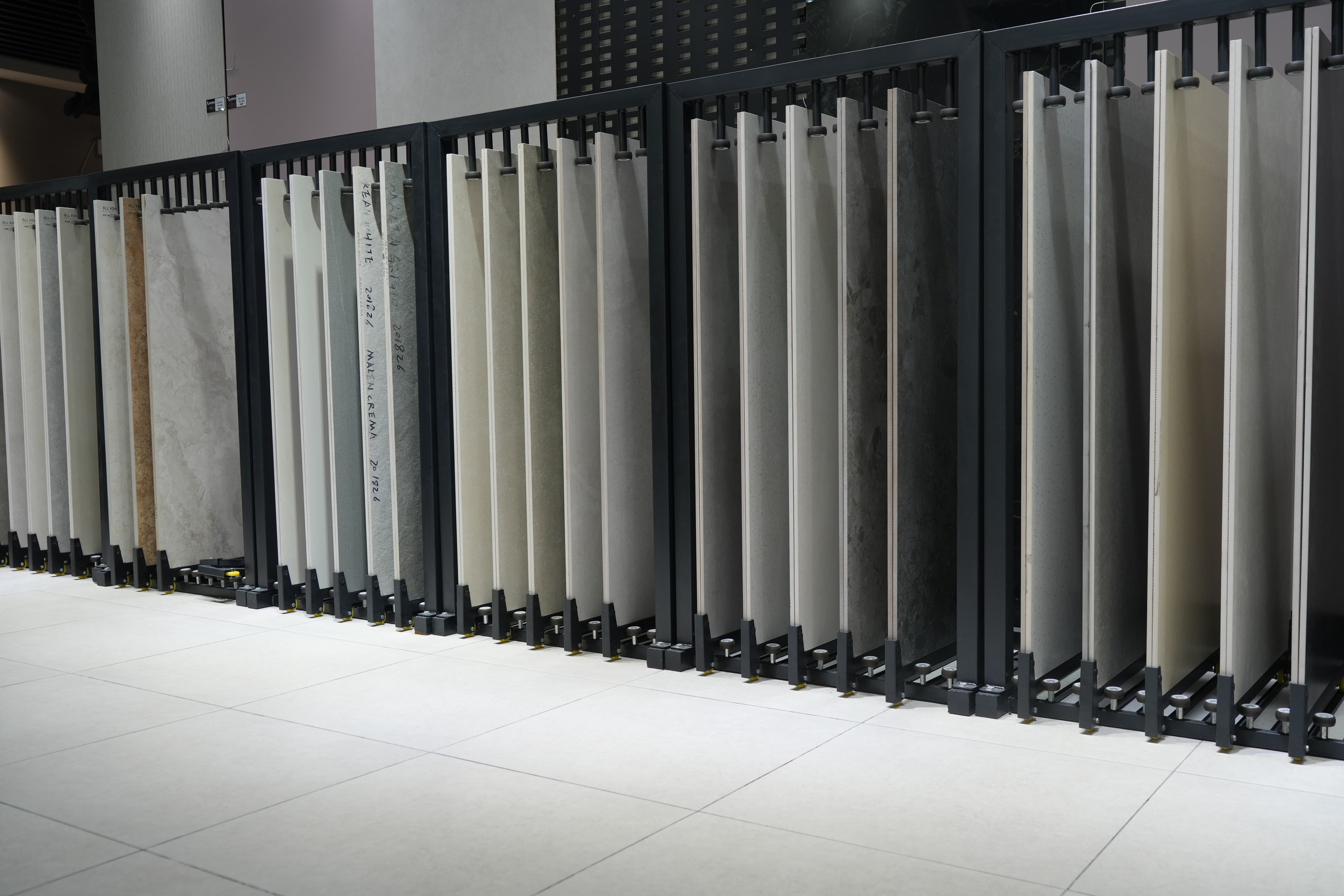
Yes. Trial orders are accepted, and the minimum order quantity is 400 sqm per design. Sampling before a project order is standard practice for commercial buyers because it allows the marble vein character of the Marble Series or the surface of the Travertine Series to be checked against the design intent, and allows flatness and finish to be validated against the project's tolerance before a full batch is committed. The complete ALL KING Ceramics catalog, including formats, series and specification data, is available for download here: ALL KING Ceramics Catalog (PDF).
What is the lead time and MOQ for a commercial project order?
Standard lead time is 7–10 days and the MOQ is 400 sqm per design, with trial orders accepted. The factory produces 12–16 million m² annually from a 60,000 m² facility and exports about 70% of output to markets including Australia, New Zealand, Russia, Belarus, South Korea, Vietnam, Malaysia, the Philippines, Peru, Panama, Colombia, Chile, Bolivia, Guatemala, Palestine, Iraq, Ukraine and the UAE. For a quote, samples or a project-specific specification review covering abrasion class, slip rating and frost requirements, contact Abby at tyceramic2@all-king.com, by phone or WhatsApp at +86 156-5336-9360, or through the WhatsApp enquiry link. Product and capability details are published at www.all-king.com.
Conclusion: Match the Tile to the Traffic, Not to the Price Tag
The five configurations ranked in this article are not five competing products. They are five correct answers to five different traffic conditions, and the most common commercial specification failure is applying one answer to all of them.
| Traffic condition | Recommended configuration |
|---|---|
| Continuous heavy traffic, wheeled loads | 1 — Marble Series 60x120cm, PEI 5, polished vitrified |
| Continuous traffic with routine wet cleaning | 2 — Travertine Series 60x120cm, PEI 5, anti-slip |
| Frequent but intermittent interior traffic | 3 — Marble Series 60x120cm, PEI 4, honed or matte |
| Exterior, semi-exterior or freeze-thaw exposure | 4 — Travertine Series 60x120cm, frost-resistant build |
| Multi-surface projects needing material continuity | 5 — Marble Series 60x120cm, matched floor + wall cladding |
Three closing rules hold across all five. Set the slip rating before the finish, because the safety requirement constrains the finish and not the other way around. Verify the strength margin against the heaviest wheeled load rather than against footfall. And treat joint count as a lifetime cost line, not a design preference — every joint removed is cleaning labour and replacement risk removed with it.
Because ALL KING CERAMICS produces all five configurations from the same 60x120cm platform and the same vitrified body — water absorption < 0.5%, Mohs hardness 6–7, breaking strength ≥ 1300 N, modulus of rupture ≥ 35 MPa — a project can mix configurations across traffic zones without mixing supply chains. That is usually the difference between a flooring specification that survives its first five years unchanged and one that does not.
Plan your high-traffic flooring specification with verified data
Share your traffic profile, slip requirement and climate conditions, and ALL KING CERAMICS will return a configuration recommendation with matching samples, certification documents and a project quote.
Download the ALL KING Ceramics Catalog (PDF) | Request samples and a quote on WhatsApp
Email: tyceramic2@all-king.com | Tel / WhatsApp: +86 156-5336-9360 | www.all-king.com | blog.all-king.com
Have Questions or Need More Details?
Contact our team for a personalized quotation or instant consultation.
Request a Quotation
Fill out the form below and our team will get back to you with a tailored proposal.
WhatsApp Direct Chat
Prefer to chat in real-time? Message us on WhatsApp for instant assistance & quick answers.
- Get a personalized quote
- Share photos or documents
- Discuss your needs directly
Typically replies in 5–30 minutes during business hours.