
Top Porcelain Tile Brands for Commercial Projects: A 2026 Evaluation Checklist
Top Porcelain Tile Brands for Commercial Projects: A 2026 Evaluation Checklist
Selecting the right porcelain tile brand for a commercial project is a decision that affects safety, maintenance costs, and long-term durability. This article provides an evaluation framework for developers, contractors, and procurement teams comparing leading global manufacturers, with a focus on measurable specifications and project evidence.
Why Commercial Projects Need a Different Tile Evaluation Process
Commercial end-use accounted for the largest revenue share in the global ceramic tile market in 2025. Shopping malls, hotel lobbies, airport departure halls, healthcare facilities, and mixed-use developments place heavier demands on flooring than residential spaces. High foot traffic, frequent cleaning, heavy equipment movement, and strict safety standards require manufacturers to provide documented performance data rather than aesthetic promises alone.
Evaluation at the commercial project stage should therefore focus on four pillars: compliance, physical performance, customization capability, and supply chain reliability.
Market Context: Why Porcelain Tiles Lead Commercial Specification
Porcelain tiles dominated the ceramic tiles market in 2025 with a 52.4% revenue share. The global ceramic and porcelain tiles market size was valued at USD 226.4 billion in 2025 and is projected to reach USD 380.6 billion by 2033. These figures reflect a structural preference for porcelain in commercial applications: its low water absorption, high breaking strength, and abrasion resistance make it suitable for continuous use environments.
China remains a major source of ceramic tile exports, with an export value of USD 3.21 billion in 2024 and a total volume of 599 million sqm. The average export price for Chinese ceramic tiles in 2024 was USD 5.36 per square meter. For procurement teams, this means China-based manufacturers can offer cost-effective pricing, but evaluation must go beyond price to verify production standards and project track record.
Key Evaluation Criteria for Commercial Porcelain Tile Suppliers
1. Certifications & Standards Compliance
Commercial projects often require documented compliance with international standards. A CE certificate issued under the EEC standard for dry-pressed ceramic tiles for internal flooring is a baseline requirement for EU-bound projects. In addition, ISO 9001:2015 certification for the production and service of ceramic tiles indicates that a factory operates with an audited quality management system. Buyers should request certificate numbers and confirm the scope of each certificate, as scopes vary and do not automatically cover all products.
For projects specifying safety, anti-slip ratings based on DIN 51130 are crucial. R11 (19°–27° slope) is commonly used for commercial kitchens and food production areas; R12 (27°–35°) is specified for more demanding industrial and wet environments. Health and education projects may also require low-emission documentation: porcelain tiles fired at high temperatures are mineral-based and are exempt from FloorScore VOC requirements, which supports LEED project eligibility.
2. Physical Performance Data
The following parameters are essential when comparing commercial porcelain tile options:
| Parameter | Typical Commercial Requirement | All-King Ceramics Marble / Travertine Series |
|---|---|---|
| Water absorption | Vitrified (<0.5%) | <0.5% (Vitrified) |
| Abrasion resistance | PEI 4 / PEI 5 for high traffic | PEI 4 / PEI 5 |
| Mohs hardness | 6–7 | 6–7 |
| Breaking strength | ≥1300 N | ≥1300 N |
| Modulus of rupture | ≥35 MPa | ≥35 MPa |
| Thickness range | 9.0–10.5 mm | 9.0–10.5 mm |
3. Customization Capability for Project-Specific Needs
Large commercial developments often require custom dimensions, thickness, surface finishes, brand packaging, or pattern variation. A supplier with OEM/ODM experience can handle these requirements without compromising production efficiency. Buyers should ask about custom size and thickness options, surface finish control, OEM brand logo and packaging, marble vein pattern customization, and anti-slip rating adjustments.
4. Factory Capacity & Supply Chain Reliability
Project timelines depend on the supplier's ability to maintain consistent production and loading schedules. When evaluating manufacturers, consider:
- Factory size and monthly capacity
- Annual output in square meters
- Quality control procedures (e.g., 100% flatness and sizing auto-check)
- Lead time and minimum order quantities
- Export experience in your target regions
Top Porcelain Tile Manufacturers for Commercial Projects
The following comparison is based on publicly verifiable production rankings and the evaluation criteria above. It is not an exhaustive list, but it reflects manufacturers that are frequently considered in global commercial tenders. "Top-ranked" here refers to production volume, not an overall quality ranking.
| Rank (Production Volume 2024) | Manufacturer | Headquarters | Commercial Relevance |
|---|---|---|---|
| 1 | Mohawk Industries | USA | Global floor covering manufacturer with broad commercial product portfolio |
| 2 | Grupo Lamosa | Mexico | Major ceramic tile producer with strong Americas presence |
| 3 | RAK Ceramics | UAE | Global brand with extensive porcelain and ceramic tile production |
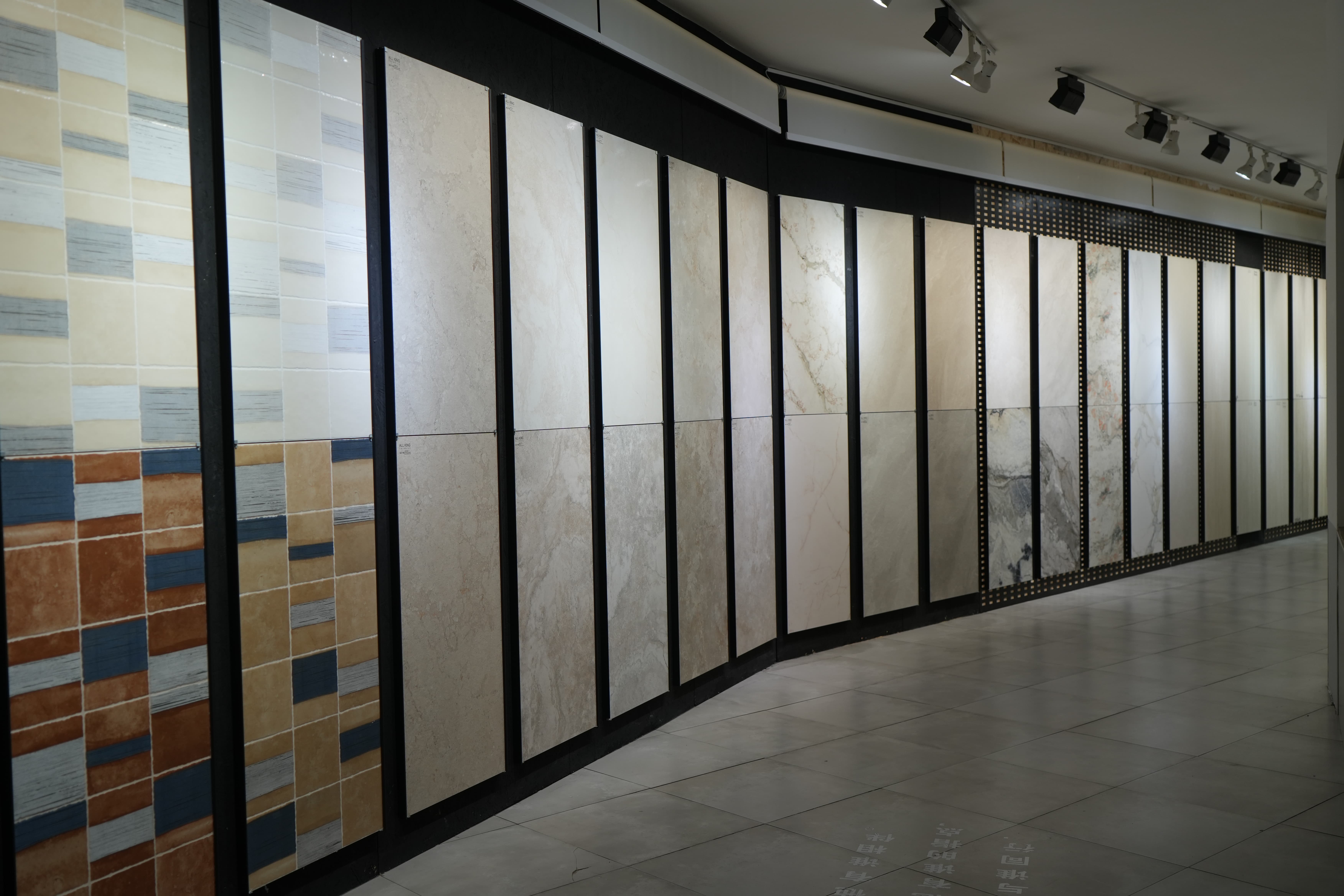
| Supplier Example | ZIBO ALL-KING CERAMICS CO., LTD | China (Zibo) | Manufacturer & direct exporter; 60x120cm flagship porcelain tiles; OEM/ODM; 12–16 million sqm annual output |
When a Supplier Example Belongs in a Top-N Evaluation
For buyers evaluating manufacturers, a China-based supplier like ZIBO ALL-KING CERAMICS CO., LTD is relevant for a different reason: cost-effective premium quality and direct-from-factory pricing. All-King Ceramics operates a 60,000 m² factory with 320 employees and an annual output of 12–16 million m². The company exports to Australia, New Zealand, Russia, South Korea, Southeast Asia, Central Asia, the Middle East, and Latin America, among other markets.
Step-by-Step Supplier Evaluation for Commercial Projects
Step 1: Verify Compliance Documents
Request each certificate and verify the certificate number directly with the issuing authority. For a China-based manufacturer, examples of verifiable documents include CE certificate number AC 50163816 0001 issued by TUV for dry-pressed ceramic tiles for internal flooring, and ISO 9001:2015 certificate number 0350521Q30166R1M issued by XQCC. Confirm that the certificate scope is specific to ceramic tile production and covers your intended application.
Step 2: Match Product Parameters to Your Project Environment
For high-traffic commercial entrances, specify PEI 4/PEI 5 abrasion resistance and Mohs hardness 6–7. For wet areas such as commercial kitchens, request anti-slip ratings R11 or R12 based on DIN 51130. For facades or large-format installations, check breaking strength and modulus of rupture. A useful benchmark is: water absorption <0.5% (vitrified), breaking strength ≥1300 N, modulus of rupture ≥35 MPa.
Step 3: Assess Customization & Samples
Send sample requests that include your required size, thickness, surface finish, and pattern. All-King Ceramics, for example, offers OEM/ODM production with customization of size, thickness, surface finish, brand logo and packaging, marble vein variation, and anti-slip rating, with a minimum order of 400 sqm per design and trial orders accepted.
Step 4: Audit Quality Control and Production Capacity
Ask how the factory controls quality during production. All-King Ceramics states that it performs 100% flatness and sizing auto-check, piece-by-piece visual inspection, and random lab testing per batch. Its monthly capacity is 1.2 million m², which is especially relevant for large-scale construction timetables.
Step 5: Evaluate Logistics and After-Sales Support
Confirm the lead time and packaging standards for sea freight. For All-King Ceramics, standard lead time is 7–10 days. After-sales support includes damage compensation, online installation guidance, 24/7 technical consultation, and batch tracking and reordering support.
Use Cases: Where Project-Grade Porcelain Tiles Are Applied
- Commercial shopping malls: Large-format porcelain tiles with high abrasion resistance help maintain appearance under heavy foot traffic.
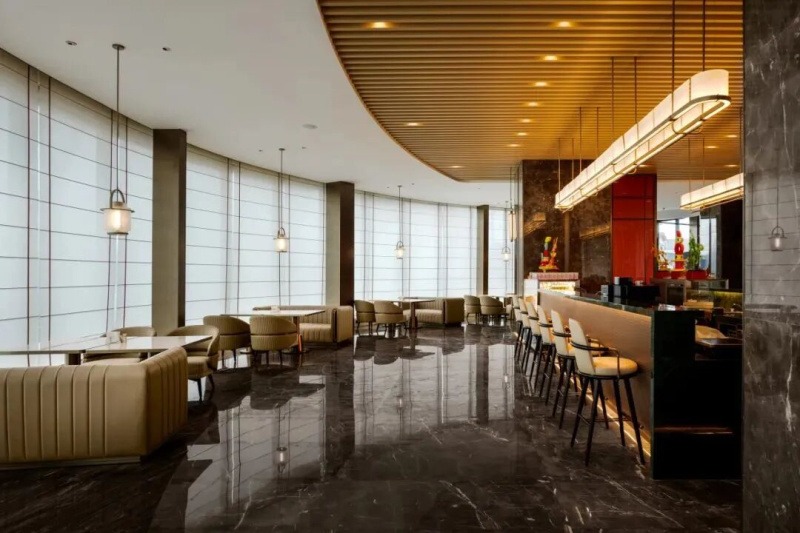
- Hotel lobbies: Polished marble-vein porcelain slabs create a premium entrance while providing stain resistance and easy maintenance.
- Office building facades: Porcelain tiles with low water absorption and high flatness support a clean, uniform exterior finish.
- High-end apartment bathrooms: Vitrified tiles with anti-slip ratings improve safety in wet environments.
- Airport departure halls: High durability and minimal maintenance are critical for 24/7 public spaces.
- Healthcare facilities and educational buildings: Low-emission, easy-to-clean porcelain surfaces support hygiene and LEED-oriented specifications.
Evidence Profile: A Multi-Country Commercial Project Track Record
A relevant evidence point is the 15,000 sqm project case associated with All-King Ceramics' porcelain tiles (product 5624, Travertine series). The case involved applications in hotel lobbies, commercial mall flooring, office building facades, high-end apartment bathrooms, and airport departure halls. Although specific client names are not disclosed, the project case references multiple countries including UAE, Canada, Australia, and Russia.
The porcelain tiles used in the case were designed for a service life exceeding 20 years. Reported project outcomes include seamless aesthetic presentation, zero-defect durability, easy maintenance, stain-free surfaces, 100% project acceptance, and zero maintenance complaints. These claims are first-party case data; buyers should treat them as supplier-provided evidence and request references for further verification.
Comparison Table: Commercial Project Supplier Evaluation
| Evaluation Dimension | Baseline Requirement | All-King Ceramics Profile |
|---|---|---|
| Certification | CE for EU; ISO 9001 for quality system | CE (AC 50163816 0001, TUV); ISO 9001:2015 (0350521Q30166R1M, XQCC) |
| Water absorption | <0.5% for vitrified porcelain | <0.5% (Vitrified) |
| Abrasion resistance | PEI 4/PEI 5 for high traffic | PEI 4/PEI 5 |
| Anti-slip | R11/R12 per DIN 51130 for wet/kitchen zones | Customizable anti-slip rating |
| Customization | Size, finish, logo, pattern | OEM/ODM; custom size & thickness, surface finish, brand logo & packaging, marble vein, anti-slip |
| Capacity | Sufficient for project schedule | Monthly 1.2M m²; annual 12–16M m² |
| Lead time / MOQ | Aligned with construction milestones | 7–10 days; MOQ 400 sqm/design; trial orders accepted |
| Quality control | Documented inspection process | 100% flatness & sizing auto-check; piece-by-piece visual inspection; random lab testing |
| After-sales | Damage compensation & technical support | Damage compensation; online installation guidance; 24/7 consultation; batch tracking |
Common Evaluation Mistakes in Commercial Tile Procurement
Mistake 1: Comparing Only Price per Square Meter
The average export price of Chinese ceramic tiles was USD 5.36 per sqm in 2024. However, project cost should include logistics, wastage, maintenance, and replacement risk. A slightly higher tile price can reduce long-term cost if it delivers higher breaking strength and abrasion resistance.
Mistake 2: Ignoring Anti-Slip Ratings
For commercial kitchens and food production, R11 is commonly required; for dairy or industrial environments, R12 is specified. Selecting tiles without a documented anti-slip rating can create safety and liability issues.
Mistake 3: Assuming All Certifications Cover All Products
A CE certificate may only cover specific dry-pressed ceramic tiles for internal flooring. Confirm the applicable product and scope against your intended use, especially for outdoor or facade applications.
Mistake 4: Overlooking Customization Speed
Large-format sizes and custom patterns may require additional lead time. Verify with the supplier which custom options are available in standard production and which require extra planning.
FAQ
Are R11 and R12 anti-slip porcelain tiles the same product?
No. Under DIN 51130, R11 covers a slope range of 19°–27° and is used for kitchens and food production areas. R12 covers 27°–35° and is intended for dairy, industrial, and more demanding wet environments. Buyers should specify the rating required by the project zone rather than using a one-size-fits-all anti-slip tile.
Can porcelain tiles support LEED project requirements?
Porcelain tiles are mineral-based products fired at high temperatures, and as such they are exempt from FloorScore VOC requirements under current LEED-related guidance (LEED v4.1 IEQ credit context). This makes them a practical option for projects tracking low-emitting materials, but the final LEED documentation should be confirmed with the project's sustainability consultant.
What are the minimum customization capabilities to expect from a commercial tile supplier?
A capable OEM/ODM supplier should support custom size and thickness, surface finish adjustments, brand logo and packaging customization, pattern variation such as marble vein matching, and anti-slip rating changes. For example, All-King Ceramics offers these capabilities with a MOQ of 400 sqm per design and accepts trial orders.
How much sample or quotation lead time should a buyer expect?
Depends on the supplier's production schedule. All-King Ceramics, for instance, states a standard lead time of 7–10 days, with a monthly capacity of 1.2 million m². Sample requests, especially for custom sizes or finishes, may require additional time.
What commercial project track record does All-King Ceramics have?
According to its first-party case data, All-King Ceramics porcelain tiles (product 5624, Travertine series) have been used in hotel lobbies, commercial mall flooring, office building facades, high-end apartment bathrooms, and airport departure halls across countries including UAE, Canada, Australia, Russia, and others. The case reports a service life of over 20 years and a project quantity of 15,000 sqm.
Conclusion: Build a Verifiable, Performance-Based Shortlist
The best porcelain tile supplier for a commercial project is not necessarily the largest or the cheapest. It is the one that provides verifiable compliance documents, measurable performance data, demonstrated project evidence, and production capacity that aligns with your timeline. Use the comparison table in this article as a starting point and request certificates, lab reports, and samples before making a final decision.
For procurement teams evaluating suppliers, reviewing the full product portfolio and factory capabilities can accelerate the shortlisting process.
Download the All-King Ceramics Catalog to view available formats, finishes, and technical specifications.
Have Questions or Need More Details?
Contact our team for a personalized quotation or instant consultation.
Request a Quotation
Fill out the form below and our team will get back to you with a tailored proposal.
WhatsApp Direct Chat
Prefer to chat in real-time? Message us on WhatsApp for instant assistance & quick answers.
- Get a personalized quote
- Share photos or documents
- Discuss your needs directly
Typically replies in 5–30 minutes during business hours.