
Why Hotel Lobby Floors Crack: Commercial Tile Solutions for Heavy Traffic
Why Hotel Lobby Floors Crack: Commercial Tile Solutions for Heavy Traffic
A hotel lobby floor rarely fails overnight. It fails slowly: hairline cracks near the entrance, chipped edges along the luggage route, dull wear paths where guests walk every day, and grout lines that darken and stain. By the time those cracks are visible, the cause is usually not cleaning, and it is not footfall volume. It is the tile specification.
Hotel lobbies, shopping malls, airport terminals and railway stations put a floor under what the industry calls continuous heavy-duty use - high-frequency commercial traffic with almost no downtime. When a tile is chosen mainly on colour and price rather than on breaking strength, surface hardness, abrasion class and water absorption, it will crack, chip and stain long before its service life should be over.
The fix is not a heavier polish or a surface coating. It is a tile engineered for the load. For most high-traffic commercial interiors, that tile is a 60x120cm vitrified porcelain tile with a breaking strength of at least 1300 N, a Mohs hardness of 6 to 7, and a PEI 4 or PEI 5 abrasion rating.
This guide explains why hotel lobby floors crack, how to diagnose the failure, and how ALL KING CERAMICS - a manufacturer and direct exporter of premium architectural ceramics based in Zibo, China - builds commercial tile solutions around the 60x120cm vitrified porcelain format.
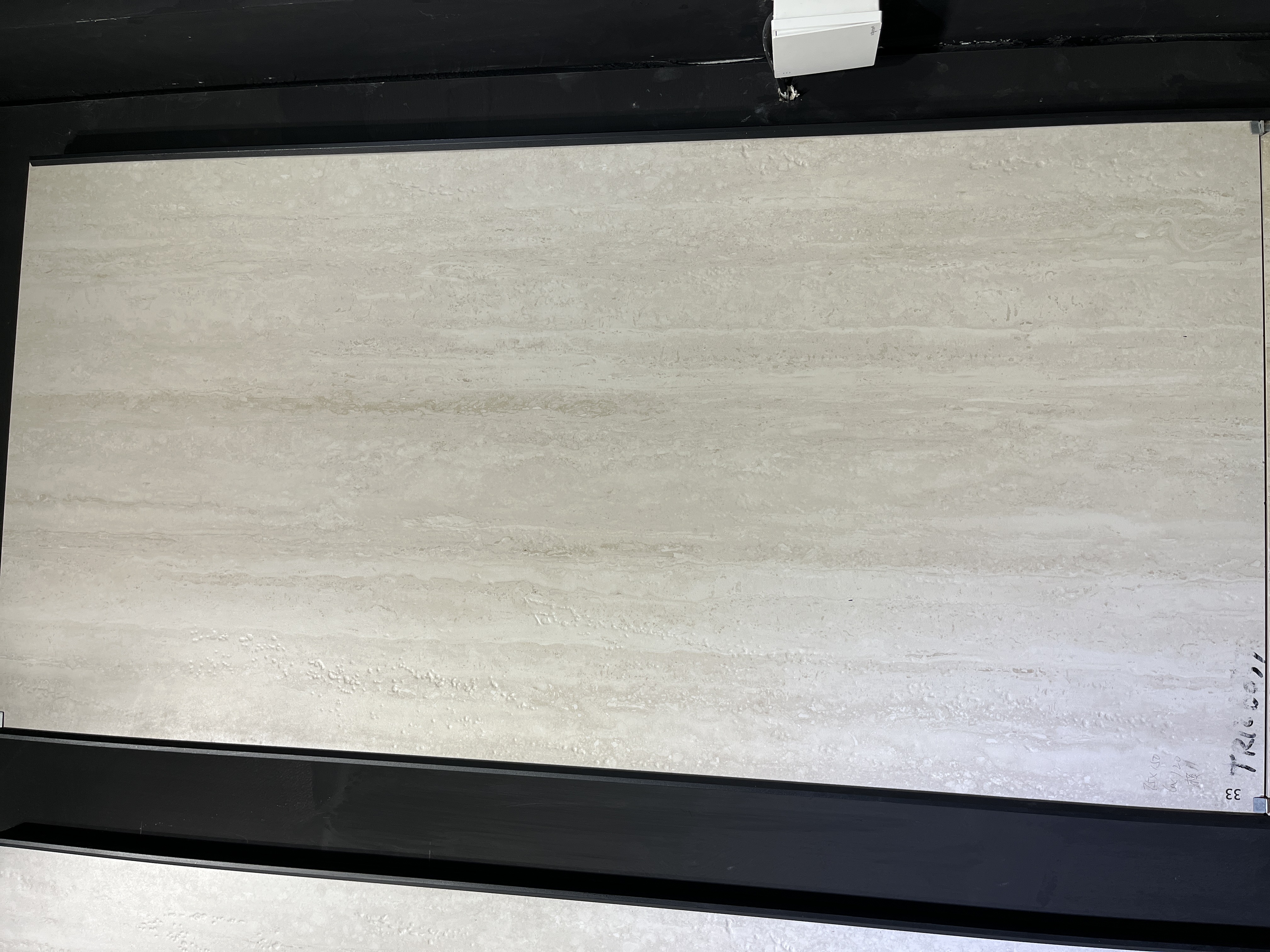
A 60x120cm vitrified porcelain tile in the Travertine finish - the format specified for hotel lobbies and other high-traffic commercial floors.
Why Do Hotel Lobby and Shopping Mall Floors Crack?
Cracking in a busy lobby almost always traces back to one of five causes. None of them is about how often the floor is mopped.
1. Point-load cracking
Luggage trolleys, cleaning machines, delivery carts and dropped objects concentrate weight onto a very small area. Breaking strength decides whether the tile absorbs that load or fractures. A tile rated at 1300 N or higher is engineered for this environment; a thinner, lower-density tile is not. This is one of the most common reasons a lobby floor develops cracks within the first few years.
2. Edge chipping
Chips appear along tile edges where surface hardness is low and the tile body is not dense enough. A Mohs hardness of 6 to 7 gives the surface the resistance needed to stay intact under daily abrasion and impact - the range that separates a commercial-grade porcelain from a decorative wall tile.
3. Wear paths and surface dulling
Abrasion resistance is expressed on the PEI scale. PEI 4 and PEI 5 are the ratings intended for commercial and heavy commercial traffic. When a lower-rated tile is installed in a mall corridor or a hotel entrance, the finish dulls along the exact path people walk, and polishing does not restore it.
4. Water absorption, staining and freeze-thaw damage
Water absorption below 0.5% is the line separating a vitrified porcelain tile from a more porous ceramic. Tiles above that line take water into the body, which carries stains inward and, in cold climates, expands and damages the surface. For outdoor approaches, parking structures and entrances exposed to frost, absorption and frost resistance are the specifications that matter most.
5. Subfloor deflection and joint failure
An otherwise correct tile will still crack if the substrate moves, if the adhesive is wrong, or if there is no leveling system to keep the bed uniform. Commercial installations depend on tile adhesive and grout, a leveling system, tile spacers, diamond cutting tools and a proper subfloor preparation system working as one coordinated set.
The pattern is consistent. What looks like a cleaning problem or a traffic problem is almost always a specification problem: the floor was never matched to the load it would carry.
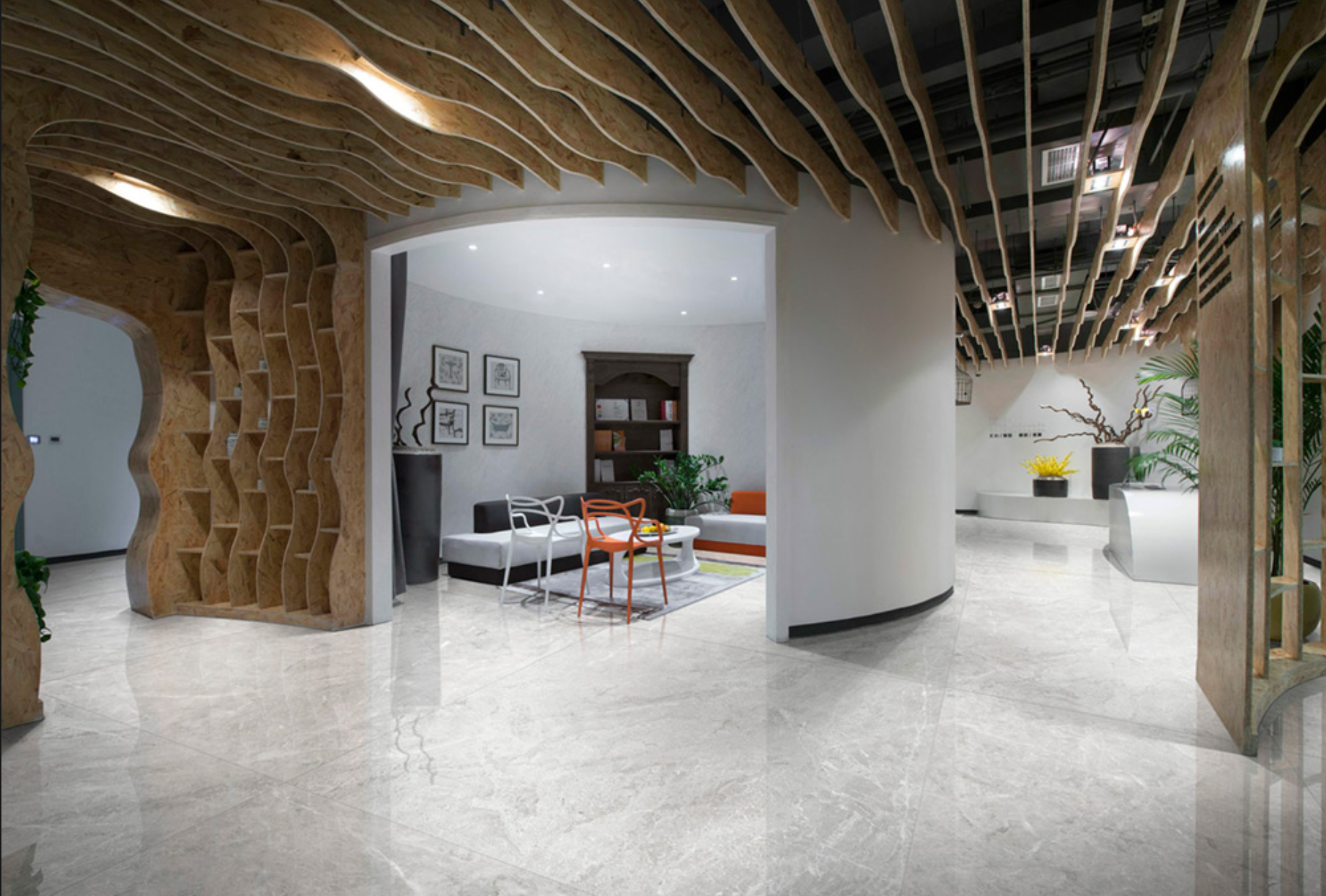
Lobby floors under continuous traffic need a tile specified for load, not only for appearance.
A Market Moving Toward Performance Specifications, Not Appearance
The commercial flooring market is growing, and growth is concentrated where construction and infrastructure are active. The global ceramic and porcelain tiles market was valued at USD 423.90 billion in 2024 and is projected to reach USD 845.80 billion by 2034, according to Custom Market Insights.
Regional data points in the same direction:
- Russia's ceramic tiles market was valued at USD 3.2 billion in 2024 and is projected to reach USD 5.10 billion by 2032 (Verified Market Research).
- Southeast Asia's ceramic tiles market was valued at approximately USD 11.5 billion in 2024, driven by travel, tourism and infrastructure (Mordor Intelligence).
- Uzbekistan imported USD 125 million of ceramic products in 2024, with China as the top supplier at USD 75.1 million (Observatory of Economic Complexity).
Behind those figures is a specification shift. Public buildings - airport terminals, railway stations, hospitals, shopping centres and hotel renovations - increasingly reference published standards rather than marketing claims. Three standards come up most often in commercial tiling specifications:
- ISO 13006 / EN 14411, Group BIa - the classification for porcelain tiles with water absorption of 0.5% or below.
- DIN 51130 - the slip resistance standard, which calls for R10 or R11 in high-traffic public areas such as airports and railway stations.
- ISO 10545-12 - the frost resistance test, which requires tiles to withstand at least 100 freeze-thaw cycles.
For a project buyer, this has a practical consequence. When a lobby floor fails, the useful question is not which brand was installed. It is whether the tile actually met the performance specification the space demanded.
The Fix: A 60x120cm Vitrified Porcelain Tile Built for Heavy Traffic
ALL KING CERAMICS is a manufacturer and direct exporter of premium architectural ceramics, established in 2011 and operating a 60,000 m² facility in Zibo, China, with approximately 320 staff and an annual production capacity of 12 to 16 million m². Its flagship format is the 60x120cm porcelain tile, produced in vitrified bodies and available in finishes such as the Marble Series and Travertine.
For high-traffic commercial floors, the specification that matters is the product data:
| Property | Specification |
|---|---|
| Format | 60 x 120 cm |
| Material | Porcelain clay, vitrified structure |
| Thickness | 9.0-10.5 mm |
| Water absorption | < 0.5% (vitrified) |
| Abrasion resistance | PEI 4 / PEI 5 |
| Mohs hardness | 6-7 |
| Breaking strength | ≥ 1300 N |
| Modulus of rupture | ≥ 35 MPa |
| Packing | 2 pcs/box (1.44 m²/box) |
| Available models | Marble Series, Travertine |
Each of those numbers answers one of the failure modes described above.
Breaking strength of 1300 N or higher is what allows the tile to absorb point loads from luggage trolleys and cleaning machines instead of fracturing. Mohs hardness of 6 to 7 keeps edges intact where carts and dropped objects strike the surface. PEI 4 and PEI 5 abrasion ratings mean the finish resists the grinding effect of continuous foot traffic rather than dulling into visible wear paths. Water absorption below 0.5% places the tile in the vitrified range and in ISO 13006 Group BIa, which limits staining and freeze-thaw damage. Modulus of rupture of at least 35 MPa is the structural figure behind the breaking strength, and it is the number engineers look for when a floor must carry heavy surface loads.
The 60x120cm format adds a practical benefit on top of the material performance: fewer grout lines per square metre means fewer joints to collect dirt, fewer joints to fail, and a faster, cleaner installation on large commercial floors.
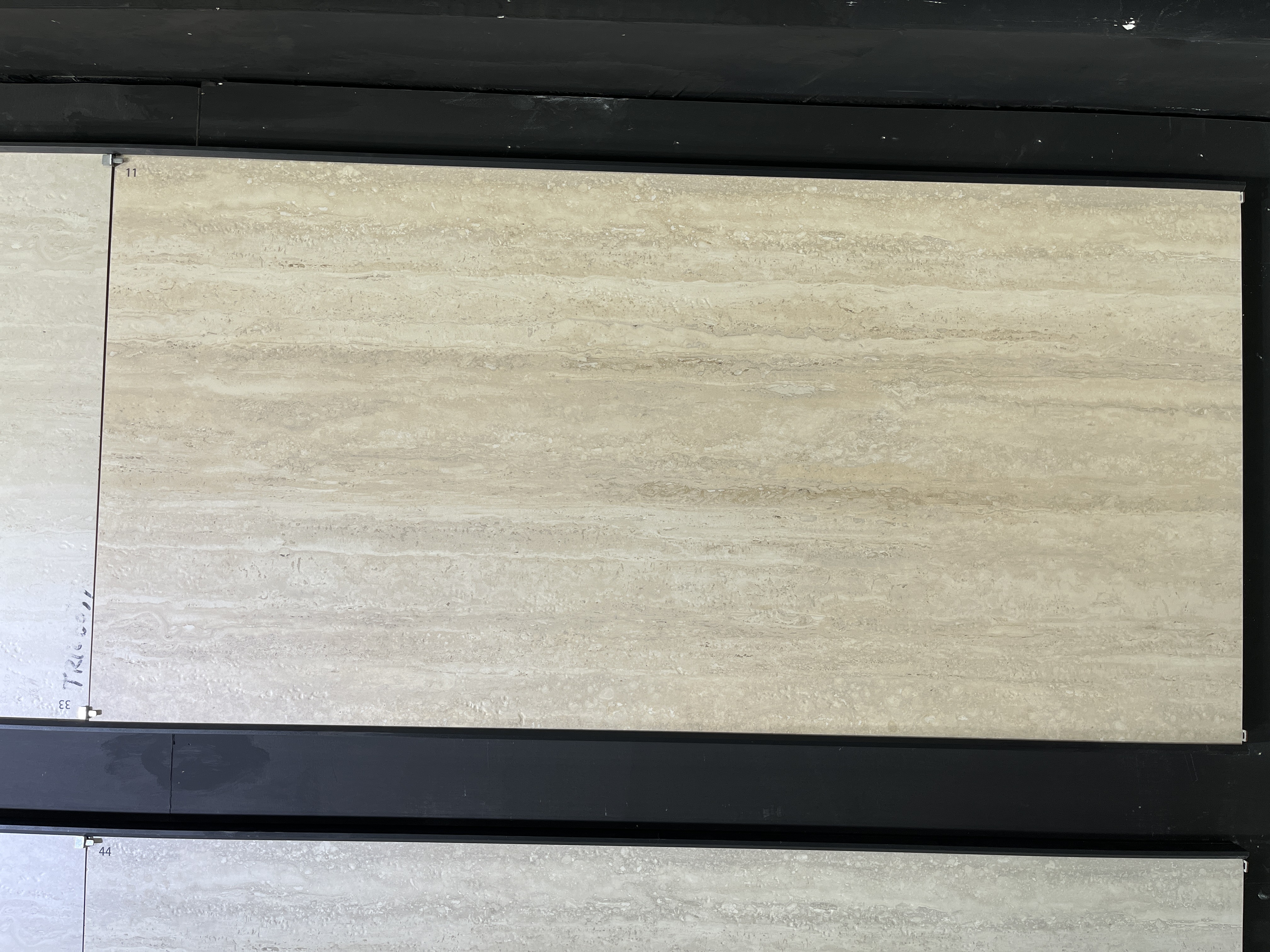
Vitrified porcelain in the Travertine finish: a 60x120cm format with water absorption below 0.5%.
What a 60x120cm Vitrified Tile Is Not: The Low-Grade Ceramic Trap
Low-grade ceramic tiles are generally less dense and less vitrified than porcelain. In a high-traffic commercial setting, that difference shows up as edge chipping, visible wear paths, water staining and cracking under trolley and cart traffic - exactly the failures described above. At handover the appearance can be almost identical; the difference emerges under load and over time.
This is why commercial tile solutions should be specified by performance class rather than by look alone. The relevant question is not only whether the tile matches the lobby design, but whether it carries the breaking strength, hardness, abrasion rating and water absorption the lobby will actually require.
The tile is only part of the system
Commercial real estate specifications for this kind of application typically include anti-slip R10/R11, frost resistance, low VOC emissions, acid and alkali resistance, zero water penetration and ISO 13006 compliance. Meeting those requirements also depends on the installation system:
- Tile adhesive and grout suited to large-format porcelain
- A leveling system to keep the bed uniform and prevent lippage
- Tile spacers for consistent joint width
- Diamond cutting tools for clean, chip-free cuts on dense porcelain
- A proper subfloor preparation system
- Facade hanging systems where the same tile is used for wall cladding
Step-by-Step: How to Fix a Cracking High-Traffic Floor
Replacing a failed lobby floor with the same specification simply restarts the clock. The following sequence is the one that ends the cycle.
Step 1 - Diagnose before you replace
Identify which failure mode is present: point-load cracking, edge chipping, wear paths, water staining or substrate movement. The visible damage points directly to the specification gap that allowed it.
Step 2 - Prepare the substrate
Check deflection, flatness and moisture. A subfloor preparation system combined with a leveling system removes the movement that cracks even correctly specified tiles.
Step 3 - Specify by performance numbers
Set the minimums before looking at finishes: breaking strength of at least 1300 N, Mohs hardness of 6 to 7, PEI 4 or PEI 5 abrasion resistance, and water absorption below 0.5%. Choose the Marble Series or Travertine finish afterwards.
Step 4 - Verify with test data
Ask for the evidence behind the claims: water absorption testing, tile flatness testing and slip resistance testing. Water absorption below 0.5% confirms the vitrified class; flatness testing protects against lippage on a large 60x120cm format.
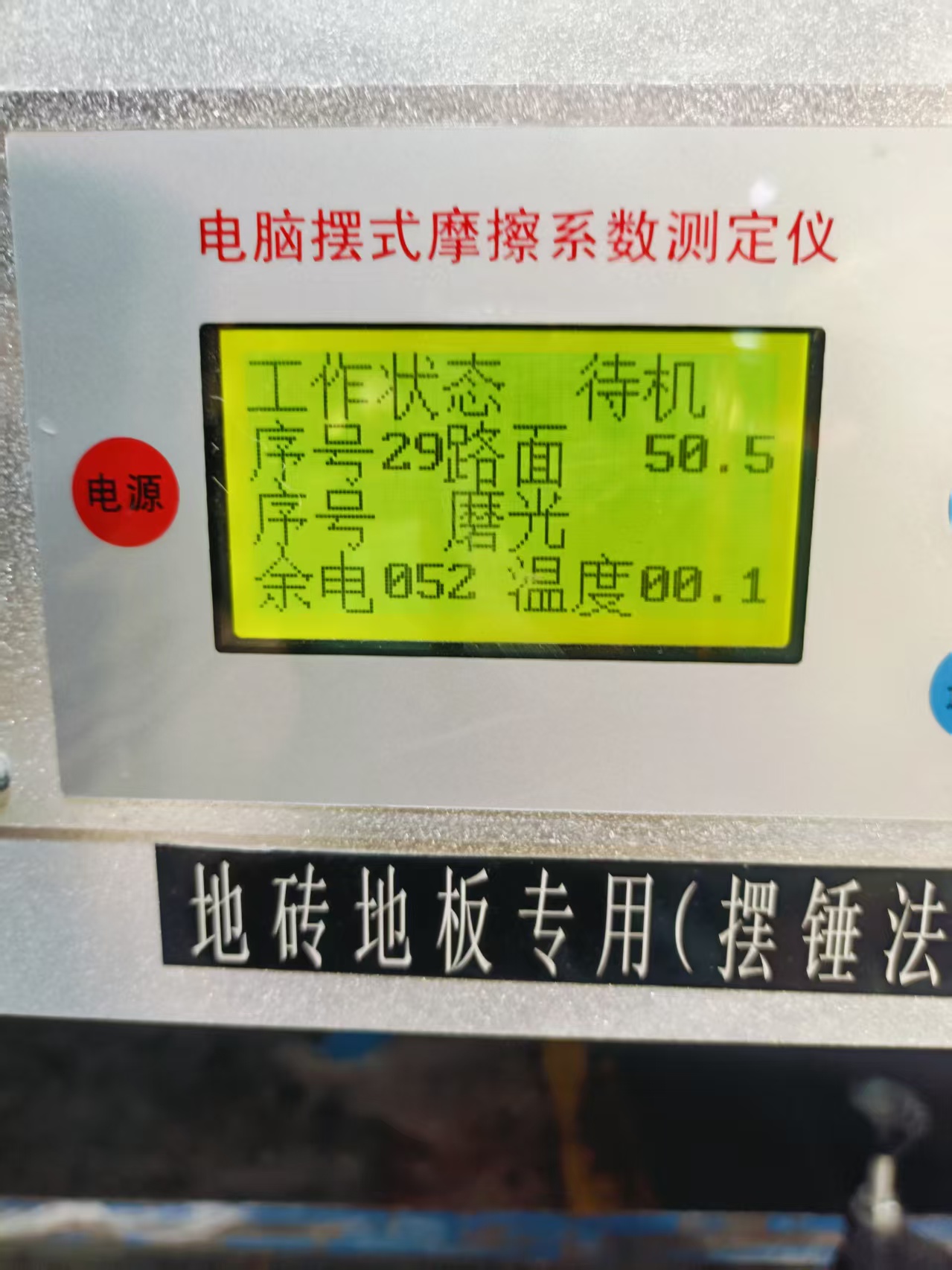
Slip resistance testing - the check behind R10/R11 requirements for public areas such as airports and railway stations.
Step 5 - Install with the correct system
Use adhesive and grout rated for large-format porcelain, a leveling system, spacers and diamond tooling. Where the tile is used for wall cladding, use a facade hanging system.
Step 6 - Set a maintenance plan
Match cleaning products to the acid and alkali resistance requirements of the specification. A floor built to the correct specification needs routine cleaning rather than periodic replacement - and that is where the real difference between a commercial porcelain tile and a low-grade ceramic tile appears over the life of the building.
Specification Comparison: What a High-Traffic Commercial Floor Should Meet
| Performance factor | Requirement for high-traffic commercial floors | 60x120cm vitrified porcelain tile (ALL KING CERAMICS) |
|---|---|---|
| Water absorption | ISO 13006 / EN 14411 Group BIa: 0.5% or below | < 0.5% (vitrified) |
| Abrasion resistance | PEI 4-5 for commercial and heavy commercial traffic | PEI 4 / PEI 5 |
| Surface hardness | Higher Mohs value for resistance to scratching and chipping | Mohs 6-7 |
| Breaking strength | Engineered for heavy surface loads and point loads | ≥ 1300 N |
| Modulus of rupture | Structural strength indicator for flooring | ≥ 35 MPa |
| Slip resistance | DIN 51130: R10/R11 for public areas such as airports and stations | Specified to meet the R10/R11 requirement for the application |
| Frost resistance | ISO 10545-12: at least 100 freeze-thaw cycles | Specified for frost and freeze-thaw environments |
| Chemical and stain resistance | Acid and alkali resistance; zero water penetration; low VOC emissions | Specified for commercial real estate requirements |
| Format | Large format reduces joints and simplifies maintenance | 60 x 120 cm |
| Thickness | Balances load performance and installation | 9.0-10.5 mm |
| Packing | Site-friendly packing for large project volumes | 2 pcs/box (1.44 m²/box) |
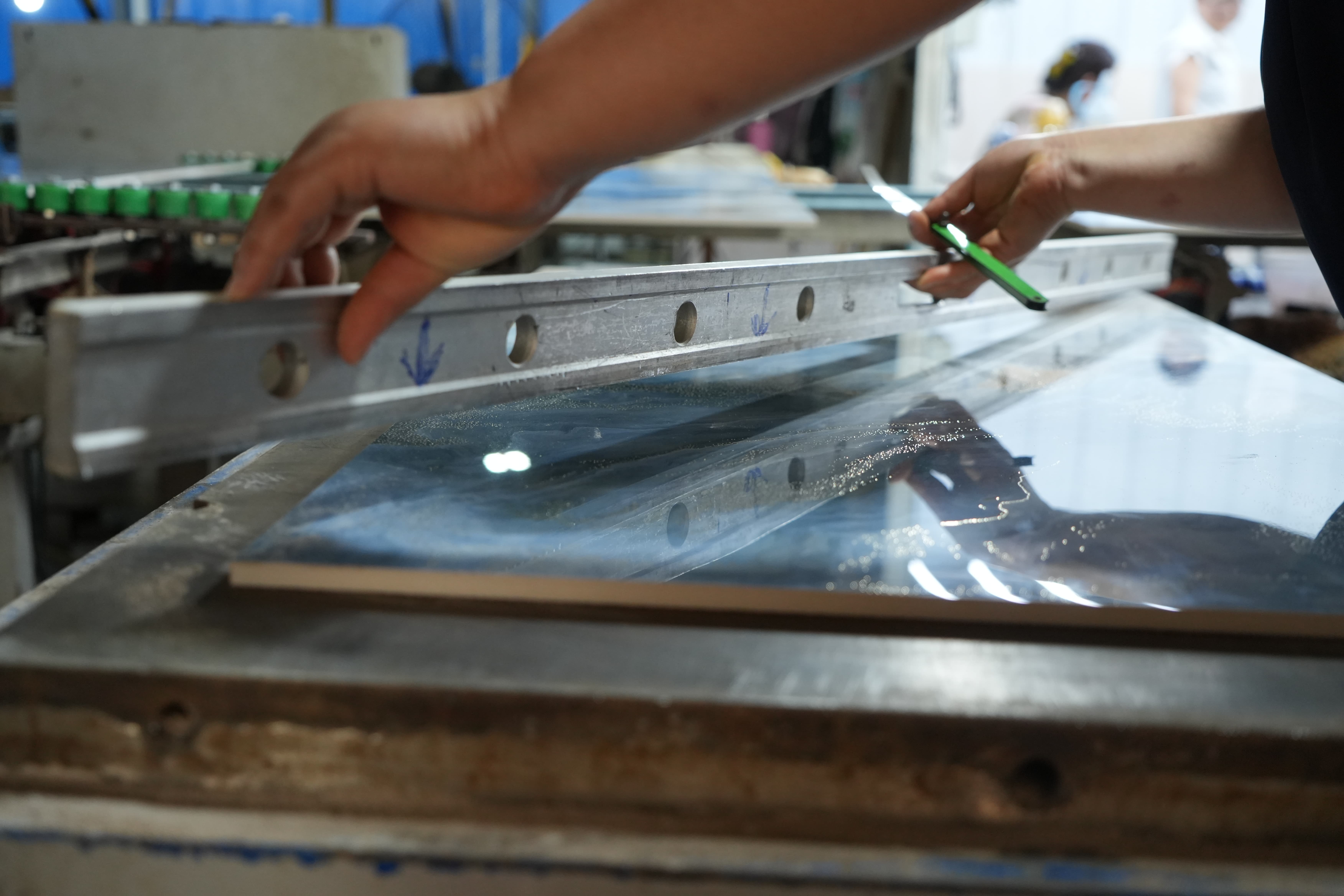
Flatness testing supports consistent, lippage-free installation of the 60x120cm format.
Where 60x120cm Vitrified Porcelain Delivers: Commercial Use Cases
The same specification logic applies across high-traffic public and commercial spaces:
- Hotel lobbies and hotel renovation - continuous foot traffic plus luggage trolleys; the scenario this guide opened with.
- Shopping mall flooring - long corridors with repeated wear paths and heavy cleaning-machine traffic.
- Airport terminal porcelain tiles and railway station flooring tiles - high-frequency traffic combined with R10/R11 slip resistance requirements.
- Logistics warehouse heavy-duty tiles - heavy surface loads and abrasion from equipment movement.
- Hospital flooring and antibacterial wall tiles - low VOC emissions, easy-clean surfaces and acid and alkali resistance.
- Educational facility flooring tiles - sustained daytime traffic and impact.
- Apartment project tiles and residential common areas - large-format floors with fewer joints to maintain.
- Outdoor approaches and frost-exposed areas - frost-resistant outdoor porcelain tiles engineered for freeze-thaw conditions.
- Wall cladding and facade engineering - the same tile body used with facade hanging systems.
Projects using this specification are common in Australia, Canada, Kazakhstan and the Philippines, among other markets. Export sales account for 70% of ALL KING CERAMICS output, with major markets including Australia, New Zealand, Russia, Belarus, South Korea, Vietnam, Malaysia, the Philippines, Peru, Panama, Colombia, Chile, Bolivia, Guatemala, Palestine, Iraq, Ukraine and the United Arab Emirates.
Frequently Asked Questions
What standards should a hotel lobby porcelain tile meet?
Commercial porcelain tiles should be classified under ISO 13006 / EN 14411 Group BIa, which means water absorption of 0.5% or below. Where the floor is a public area such as a hotel lobby, airport or railway station, DIN 51130 calls for a slip resistance rating of R10 or R11. If the tile is used outdoors or in frost-prone entrances, ISO 10545-12 frost resistance should also be required, tested to at least 100 freeze-thaw cycles. Commercial real estate specifications commonly add low VOC emissions, acid and alkali resistance and zero water penetration.
Can a 60x120cm porcelain tile handle continuous heavy traffic?
Yes - that is the specification it is designed for. The 60x120cm vitrified porcelain tile from ALL KING CERAMICS has a breaking strength of at least 1300 N, a modulus of rupture of at least 35 MPa, a Mohs hardness of 6 to 7 and a PEI 4 / PEI 5 abrasion rating. Those figures are intended for high-frequency commercial traffic, continuous heavy-duty use and heavy surface loads - the conditions found in hotel lobbies, shopping malls, airport terminals and railway stations.
How does tile specification affect the long-term cost of a commercial floor?
The largest cost in a commercial floor is usually not the tile itself but the cost of replacing or repeatedly restoring a floor that failed early. A tile that meets the required breaking strength, hardness, abrasion rating and water absorption needs routine cleaning rather than premature replacement. A low-grade ceramic tile that chips and dulls in a high-traffic lobby carries the cost of the original installation plus the cost of a second one, along with the disruption to a working hotel or shopping centre. Specifying by performance class is the practical way to control that lifecycle.
How can buyers validate the tile before a project order?
Buyers should request samples and the test evidence behind the specification. The relevant checks are water absorption testing, to confirm the vitrified below-0.5% class; tile flatness testing, which matters for the large 60x120cm format; and slip resistance testing, for R10/R11 public-area requirements. ALL KING CERAMICS supplies samples in the Marble Series and Travertine finishes, and the full product catalog is available to download for specification.
What production capacity and packing should a supplier show for a large commercial order?
Project buyers should confirm that the manufacturer can support the volume and the packing requirements of the order. ALL KING CERAMICS operates a 60,000 m² manufacturing facility, employs approximately 320 staff including a 25-engineer R&D team, and runs an annual production capacity of 12 to 16 million m². The 60x120cm format is packed 2 pieces per box at 1.44 m² per box, which simplifies container planning and site logistics. Because a large share of output is exported, buyers can request a project quote and shipping details with the specification already in hand.
The Bottom Line
Hotel lobby floors crack because the tile installed in them was never specified for the load. Once point-load cracking, edge chipping, wear paths or water staining appear, the answer is not a stronger cleaning routine - it is a commercial tile solution built on measurable performance: a 60x120cm vitrified porcelain tile with a breaking strength of at least 1300 N, a Mohs hardness of 6 to 7, a PEI 4 / PEI 5 abrasion rating and water absorption below 0.5%.
Those numbers, not the colour of the tile, are what keep a lobby floor intact through years of continuous traffic.
Specifying a high-traffic commercial floor?
ALL KING CERAMICS manufactures and directly exports 60x120cm vitrified porcelain tiles for hotel, retail, infrastructure and institutional projects worldwide. Request a sample, a project quote or the full product catalog - the specification data you need to avoid another cracked floor is already prepared.
Download the ALL KING Ceramics product catalog, email the export team at tyceramic2@all-king.com, or reach us on Tel / WhatsApp at +86-156-5336-9360. Website: www.all-king.com.
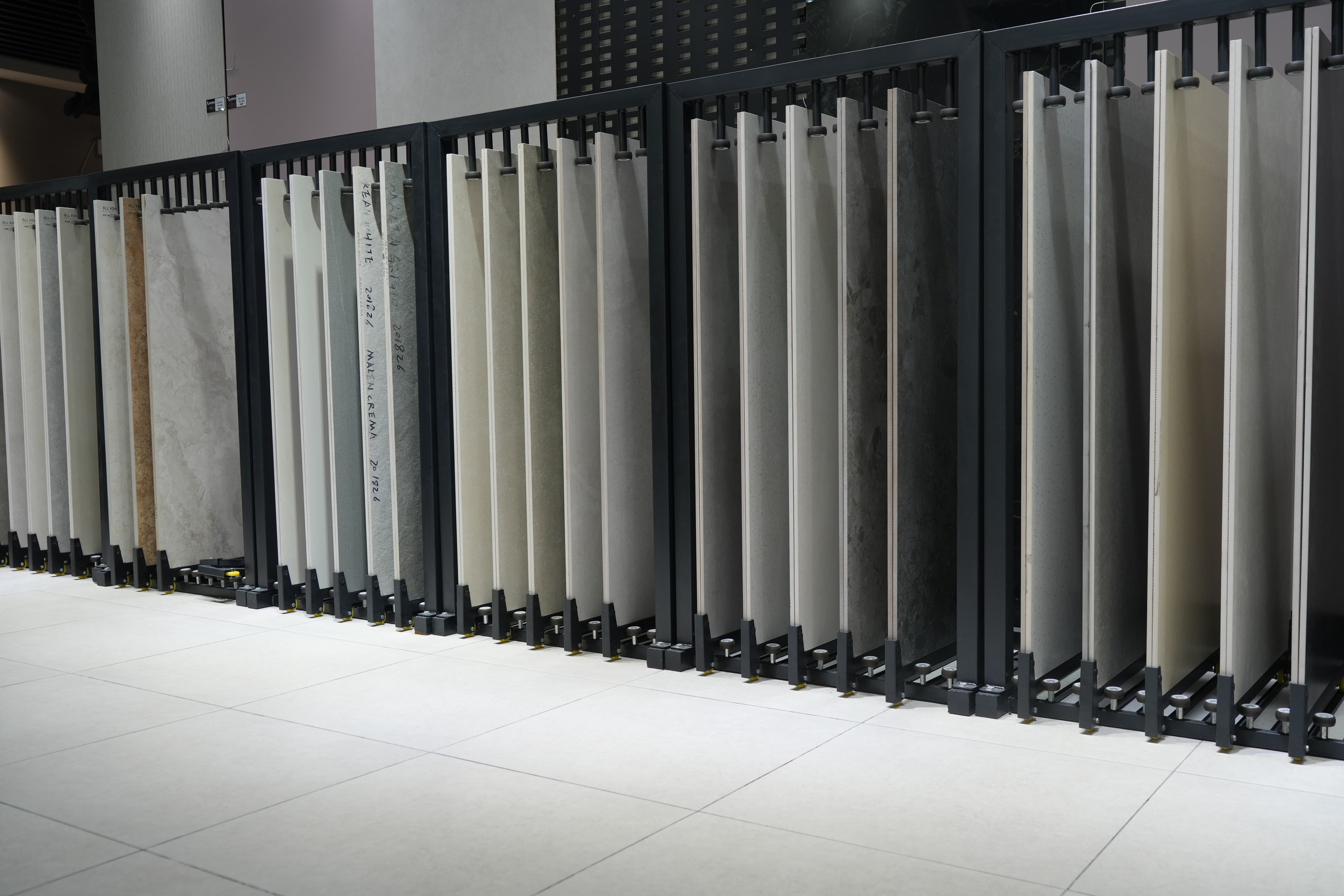
Samples in the Marble Series and Travertine finishes are available for project approval.
Have Questions or Need More Details?
Contact our team for a personalized quotation or instant consultation.
Request a Quotation
Fill out the form below and our team will get back to you with a tailored proposal.
WhatsApp Direct Chat
Prefer to chat in real-time? Message us on WhatsApp for instant assistance & quick answers.
- Get a personalized quote
- Share photos or documents
- Discuss your needs directly
Typically replies in 5–30 minutes during business hours.