
Commercial Tile Supplier Audit: Capacity, Certificate Scope, and Delivery Proof
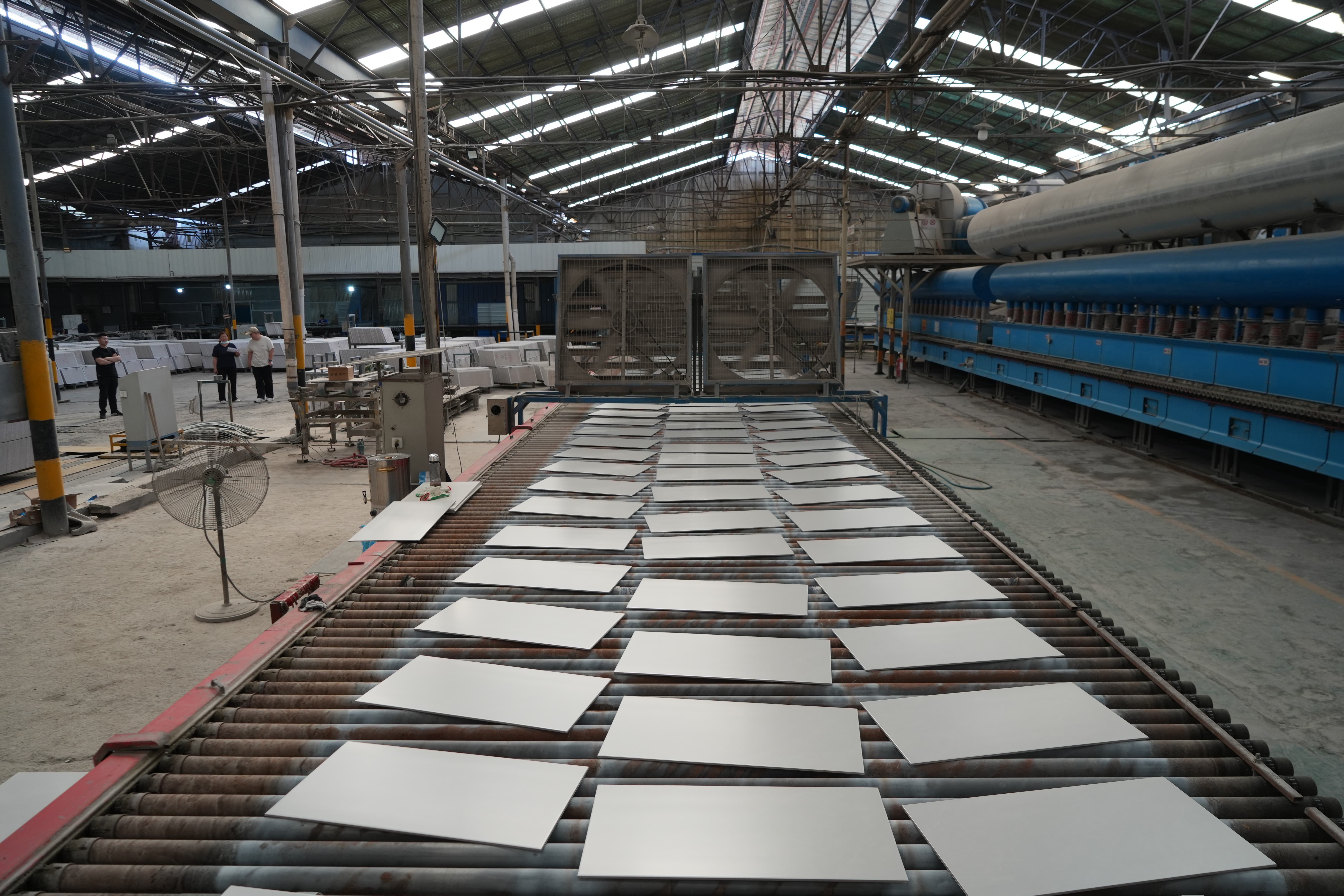
A pre-contract audit of a commercial tile supplier should prove three things before a deposit is released: the supplier can make the specified product at the required volume, the named certificates actually cover that product, and the delivery and after-sales records are strong enough to support the project schedule. For buyers evaluating ALL KING CERAMICS for commercial porcelain tile projects, the audit can be built around specific records: ISO 9001:2015 certificate 0350521Q30166R1M, CE certificate AC 50163816 0001, a 60,000 m² facility, stated annual output of 12–16 million m², a 25-engineer R and D team, and a packing specification of 2 pieces per box covering 1.44 m².
ALL KING CERAMICS (ZIBO ALL-KING CERAMICS CO., LTD) is a manufacturer and direct exporter founded in 2011, operating a 60,000 m² facility in Zibo, China, with 320 employees and stated annual output of 12–16 million m². Its supplied product matrix includes 60x120 cm porcelain tiles as the flagship format, plus 75x150 cm, 80x80 cm, 60x60 cm ceramic tiles and 100x100 cm floor tiles. The audit below uses the Marble Series and Travertine porcelain tile models as the reference products because the supplied certificate records connect both models to the ISO 9001 and CE documents.
Why a pre-contract audit is different from a catalog review
A catalog review answers what a supplier says it can do. An audit answers whether the evidence supports the purchase order. That difference matters in commercial tile procurement because the buyer is not only buying a surface finish. The buyer is committing to a quantity, a delivery window, a packing standard, a batch-matching requirement and an after-sales process. A weak audit usually shows up later as a certificate that does not cover the ordered model, a capacity figure that cannot be tied to a production line, or a packing count that does not match the purchase order.
Commercial tile procurement in Central Asia, Russia and Southeast Asia rarely fails because a showroom sample looks wrong. It fails when the paper trail is incomplete. The supplied verified data gives one demand signal: Kazakhstan construction output grew by 15.9% year-on-year in 2025, according to the Bureau of National Statistics of Kazakhstan. For buyers in that market and similar project markets, the audit should be built before the deposit, not after the first container arrives.
The audit file should connect product, factory and shipment
A useful supplier audit is not a folder of logos. It is a linked evidence file. The first link is product identity: the exact model, format, surface and technical specification. The second link is factory evidence: the site, lines, capacity, quality control and R and D support that would produce that model. The third link is shipment evidence: packing data, batch codes, loading records, inspection release and after-sales commitments. If any link is missing, the buyer should treat the remaining documents as unverified for that order.
The worked example is a commercial porcelain tile order for Marble Series or Travertine. The buyer should ask for the certificate numbers, product model names, facility size, annual and monthly capacity, R and D headcount, packing specification and after-sales terms in one audit pack. This makes it harder for a supplier to answer with generic marketing material that does not apply to the specified product.
Step 1: Match ISO 9001:2015 certificate 0350521Q30166R1M to the exact product
The ISO check is not a logo check. The buyer should confirm four points: the certificate holder is the contracting legal entity, the standard is ISO 9001:2015, the scope wording covers ceramic tile production and service, and the certificate is tied to the specified product model. The supplied record for ALL KING CERAMICS names certificate 0350521Q30166R1M, issued by XQCC, with the scope Production and service of Ceramic Tile (except as required by 3C). The related products listed are porcelain tiles in the Marble Series and Travertine models.
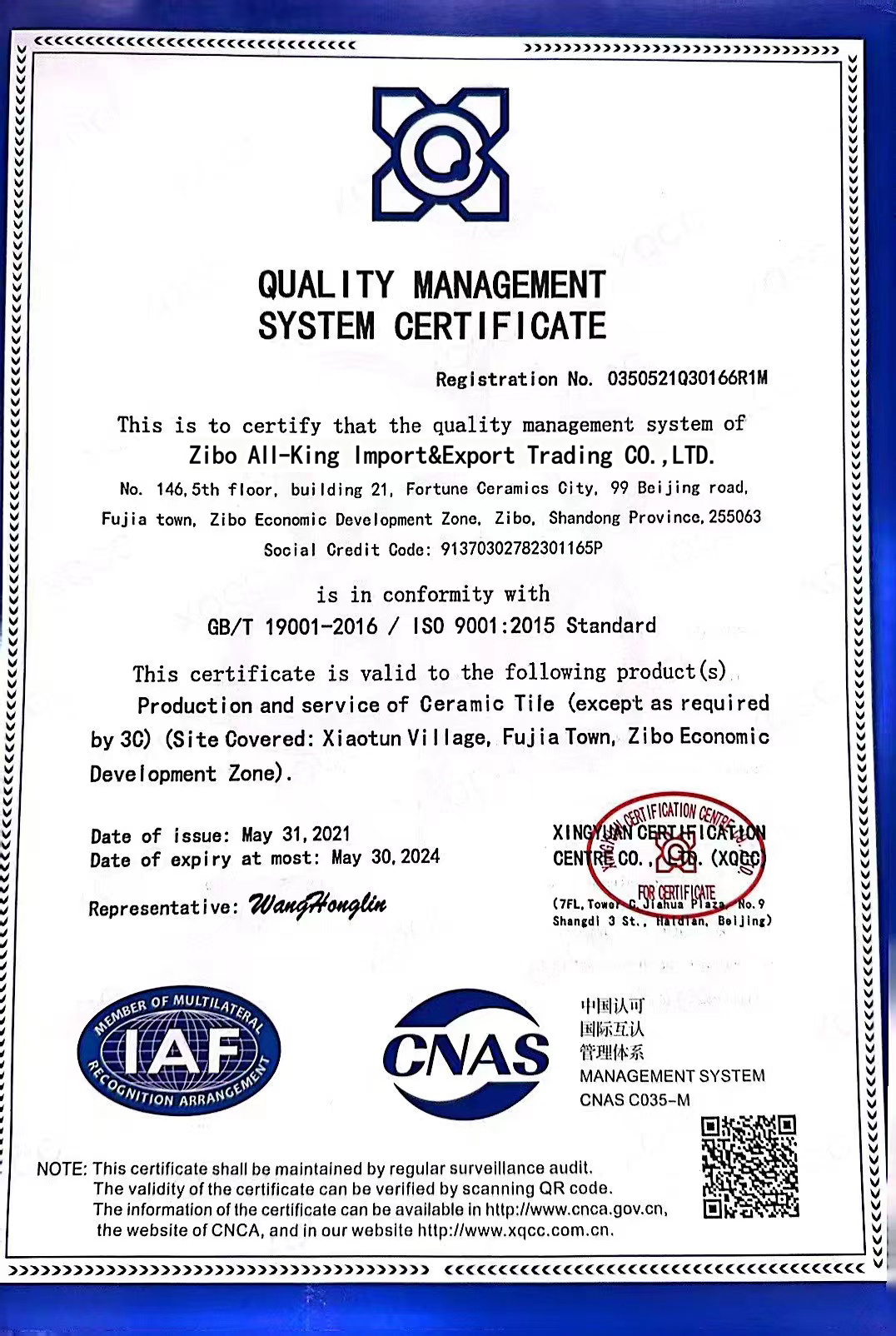
Two audit actions follow. First, ask for a current certificate copy and confirm its status with XQCC. The supplied record does not provide usable issue or expiry dates, so the buyer should not treat a scanned PDF as proof of current validity. Second, read the exclusion. The scope says except as required by 3C. If the project specification falls into a category regulated by 3C, the buyer should ask for the separate applicable evidence. A generic ISO 9001 certificate does not replace product testing, CE marking or project-specific compliance.
The buyer should also check that the certificate scope is not being used to imply more than it says. ISO 9001 is a quality management system certificate. It supports the supplier's process control claim, but it does not by itself prove water absorption, slip resistance, frost resistance, fire performance or antibacterial performance for a specific tile. Those claims require the relevant test reports and product data sheets for the ordered model.
Step 2: Check CE certificate AC 50163816 0001 for the same product and intended use
CE certificate AC 50163816 0001 is issued by TUV for the EU market, with the scope Ceramic tiles Dry-pressed ceramic tiles, for internal flooring, under EEC. The supplied record lists Marble Series and Travertine as related products. That is a useful starting point, but the buyer should still match the certificate to the order in three ways: the certificate number, the product family, and the intended use.
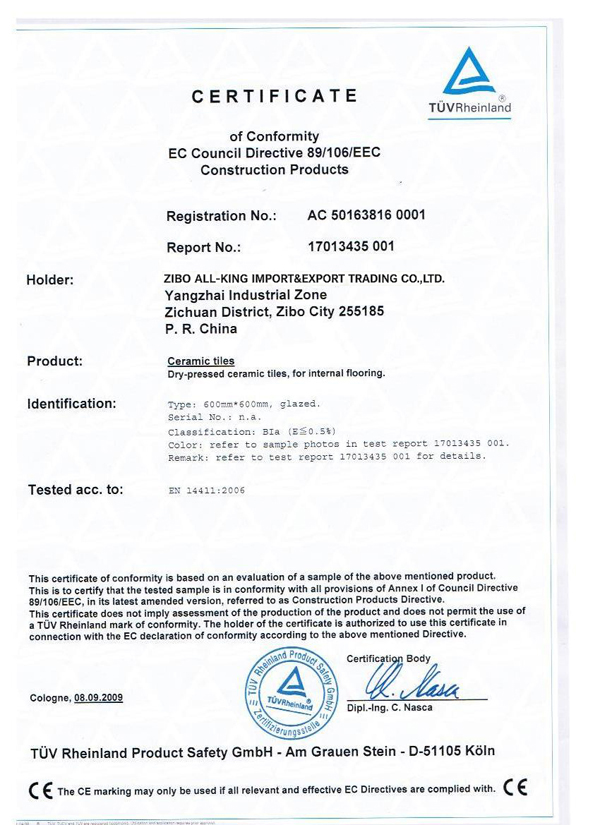
The intended-use check is important. The supplied CE scope is for internal flooring. If the project uses the tile on facades, external terraces, or other applications outside that scope, the buyer should not assume coverage. Ask for the declaration and test reports that support the CE marking for the exact product. If the project is in the EU, the buyer should also confirm that the certificate and declaration match the current regulatory requirements for the product and application.
A CE certificate is not a product warranty. It is one part of the compliance file. The buyer should keep the certificate, declaration, test reports and product data sheet together, and should check that the model name on the order matches the model name in the certificate record. A certificate for a related product family is not the same as a certificate for every format, thickness or surface finish in that family.
Step 3: Verify the 60,000 m² facility and 12–16 million m² annual capacity
Capacity claims should be reconciled, not accepted as a headline. The supplied company record states a 60,000 m² facility, 320 employees, 70% export ratio and annual output of 12–16 million m². The supplied capability record adds a monthly capacity of 1.2 million m². On a straight-line basis, 12–16 million m² per year is about 1.0–1.33 million m² per month, so the monthly figure sits inside the annual range. That is a useful consistency check, but it is not proof that capacity is available for a specific order at a specific time.
To audit capacity, request a capacity reconciliation that shows the production lines, press and kiln count, format mix, shift pattern, yield, downtime and current order book. A factory visit or live video walk-through should show the 60,000 m² site and the lines that would run the specified format. The buyer should also ask how the 12–16 million m² annual output is allocated across formats. A supplier may have high total capacity but limited capacity for a specific 60x120 cm porcelain tile, a particular surface finish or a custom packing requirement.
The 320 employees and 70% export ratio are supporting context, not capacity proof. The audit should focus on the line-level evidence. If the supplier cannot show how the annual figure is built from actual lines, shifts and yields, the buyer should treat the capacity claim as company-reported and plan the order with a buffer. This is especially important for commercial projects with fixed opening dates, where a delay in one format can hold up the whole installation.
Step 4: Assess the 25-engineer R and D team against your customization brief
A headcount is not a capability audit. The supplied record states a 25-engineer R and D team and lists customization options including custom size and thickness, surface finish, OEM brand logo and packaging, pattern variation such as marble vein customization, and anti-slip rating. The buyer should ask how those options are controlled from sample approval to mass production.
Useful audit evidence includes the team structure, test equipment, drawing control, sample approval records and examples of previous customization work that can be discussed within confidentiality limits. For a Marble Series or Travertine order, the buyer should ask how vein variation is controlled between batches, how the approved sample is stored, and how the production line checks the approved surface against the standard. For OEM packaging, the buyer should ask for artwork control, carton proofing and a pre-production sample of the printed carton.
The supplied profile also states that products are marketed for high-traffic, frost-prone and wet environments, with anti-slip R10/R11, frost resistance, low VOC, acid and alkali resistance and ISO 13006 compliance. Those are company-reported statements in the supplied record. The buyer should ask for the test reports that support the specific claims for the exact model and application. A 25-engineer team can support custom development, but the audit still depends on documented test methods and approved samples.
Step 5: Audit packing consistency at 2 pieces per box and 1.44 m²
Packing is a delivery control, not a warehouse detail. The stated packing specification is 2 pieces per box covering 1.44 m². For the 60x120 cm format, one piece covers 0.72 m², so two pieces cover 1.44 m². This is a calculated consistency check, not a label claim. The buyer should confirm the same calculation on the carton label, the packing list and the actual pre-shipment photos.
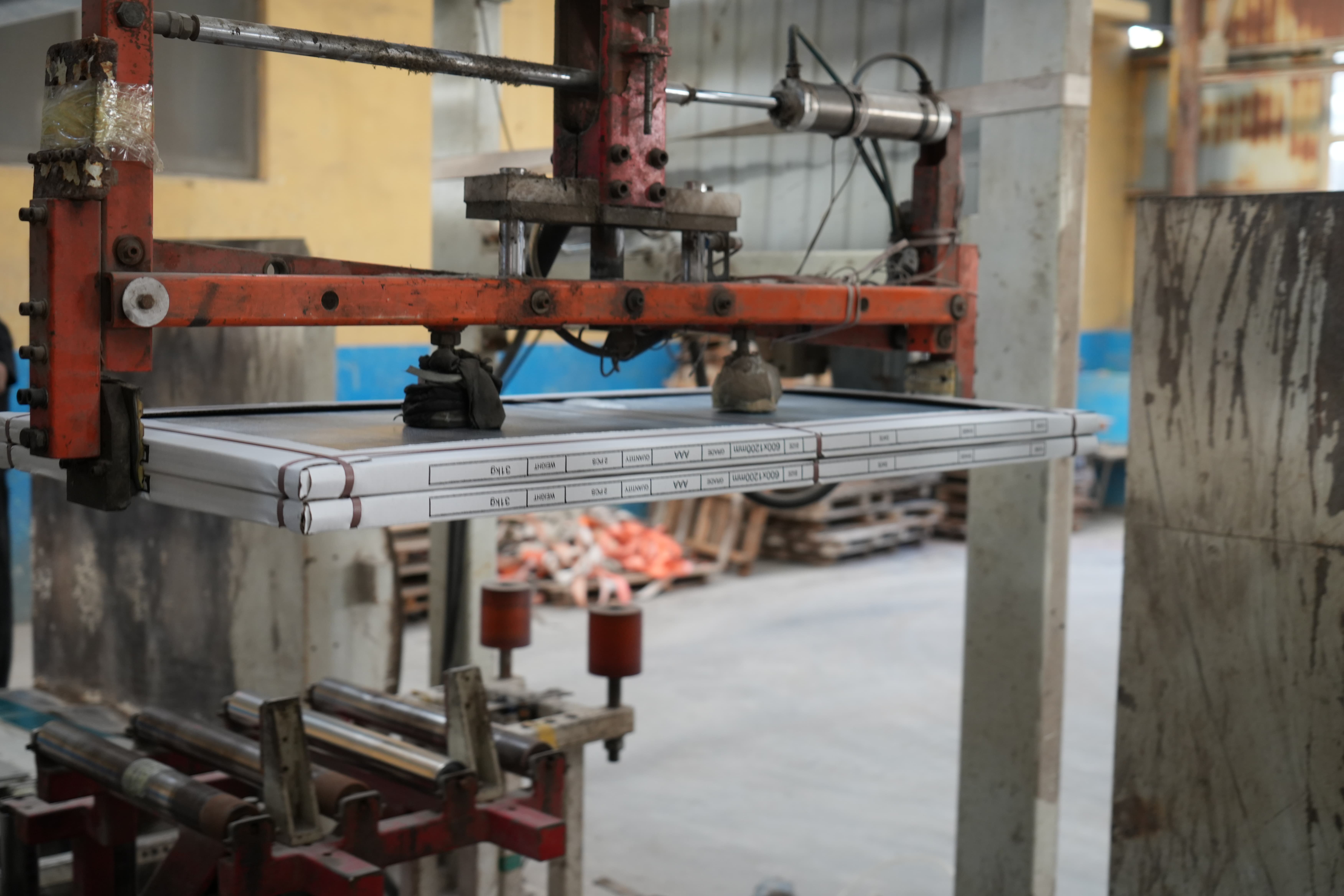
The audit should check piece count per box, square meters per box, pallet pattern, pallet weight, corner protection and carton print quality. If the order uses wooden pallets, the buyer should confirm the pallet treatment documents. The packing specification should be written into the purchase order with photos of the approved packing before shipment. This reduces the risk of a quantity dispute when the container arrives and the site count does not match the invoice.
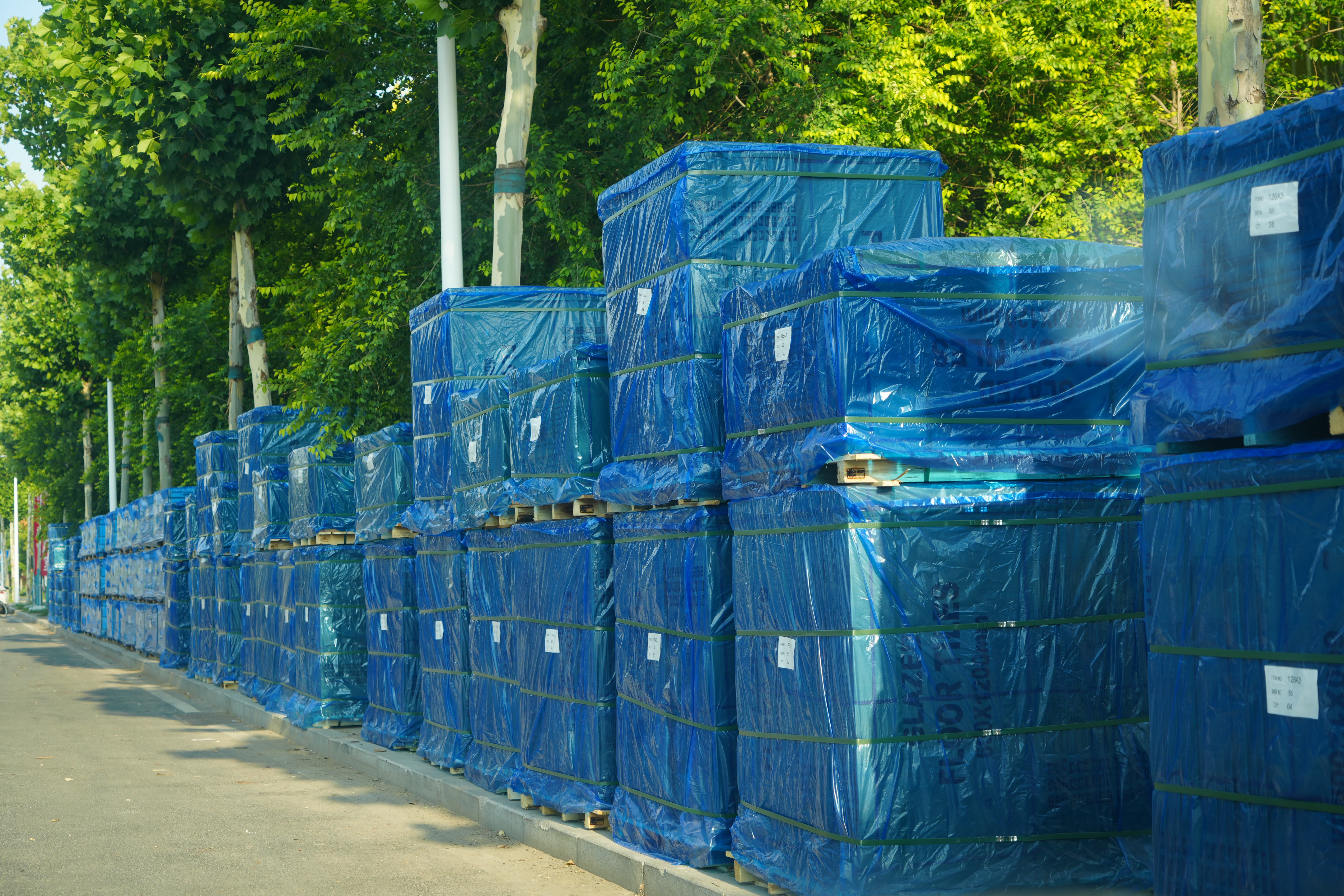
Packing consistency also affects installation planning. If the site team expects 1.44 m² per box and receives a different covered area, the order quantity, wastage allowance and storage plan may be wrong. For a commercial floor, that can create a shortage in the middle of installation. The buyer should require a packing approval step before mass production and a loading photo record that shows the carton label and pallet count.
Step 6: Require delivery proof and after-sales controls before deposit
Delivery proof should be a document set, not a promise. The buyer should ask for signed loading photos, container number, packing list, batch code, production date, inspection release and shipping documents. The supplied capability record lists after-sales controls including damage compensation, online installation guidance, 24/7 technical consultation, and batch tracking and reordering support. Each of these should be converted into a written service level before the deposit is paid.
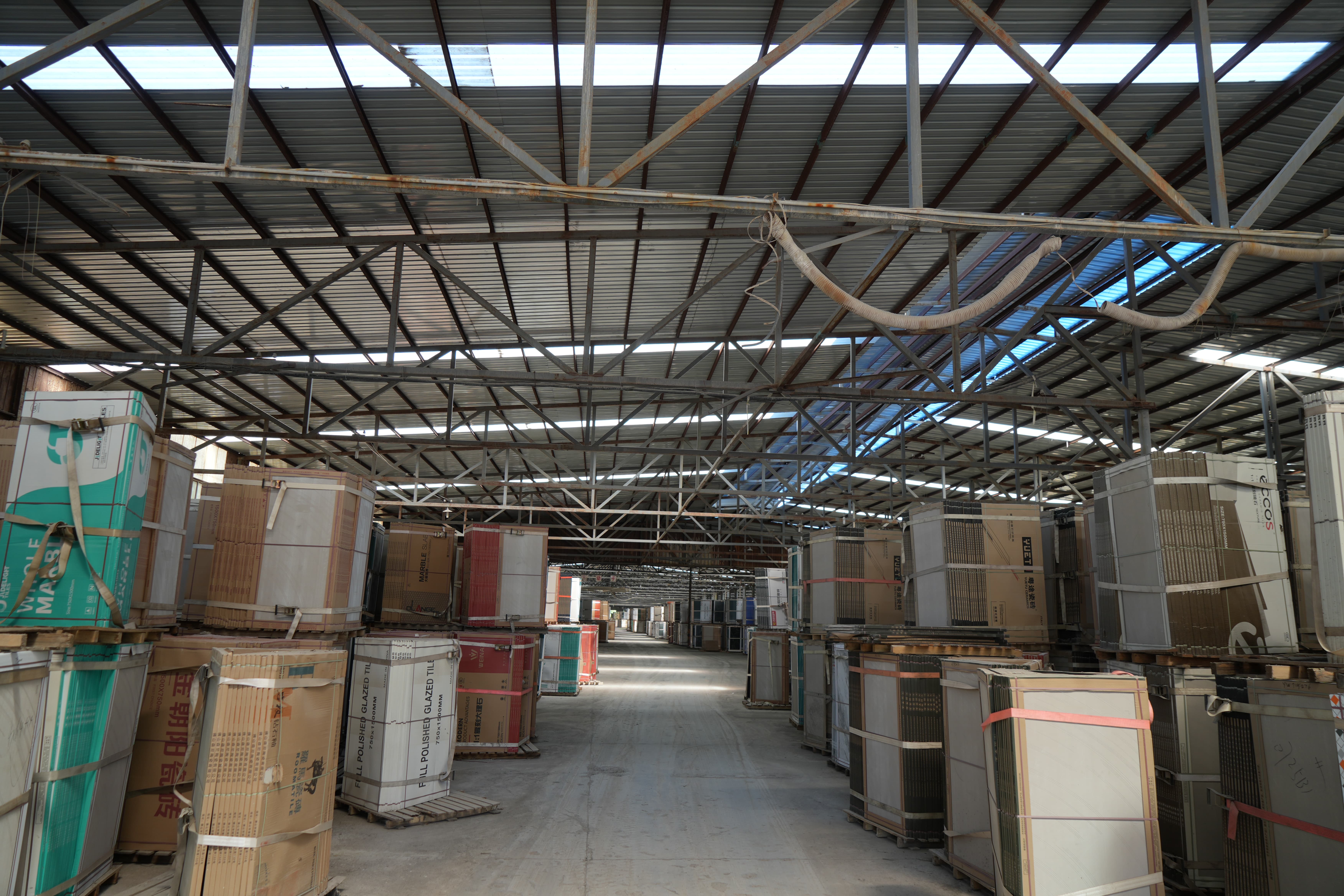
Damage compensation needs a claim window, an evidence standard and a remedy. Batch tracking needs a code on the carton that links to the production batch and the inspection record. Reordering support needs a stated process for matching shade and caliber so that a later phase of the project does not receive a visibly different batch. The 24/7 technical consultation should have a contact route and a response expectation, not only a phone number on a website.
The supplied procurement terms add useful audit points: MOQ 400 sqm per design with trial orders acceptable, delivery terms EXW, FOB, CNF or CIF, acceptance by third-party inspection, and payment terms of 30% TT / 70% against BL copy, L/C or cash. The capability record also states a 7–10 day lead time. The buyer should confirm whether that lead time applies to the specified format, quantity, surface finish and packing. A short lead time for a standard stock item is not the same as a short lead time for a custom Marble Series or Travertine order.
For landlocked Central Asian markets, the supplied logistics evidence points to 10–14 days rail freight transit from China to Kazakhstan and Uzbekistan for FCL shipments. That is a planning input, not a delivery guarantee, because it is a commercial-quality estimate. The buyer should add customs clearance, transshipment and site delivery to the total schedule and should require the supplier to provide the rail or road leg documents that match the chosen delivery term.
The supplied case profile lists a 15,000 m² commercial application across hotel lobby, commercial mall, office building and airport departure hall uses, and states 100% project acceptance. Treat that as a company-provided reference. Ask for the underlying acceptance documents, the delivery schedule and the batch records for a comparable project before using the reference as proof for your own order.
Audit evidence table: what to request and what it proves
| Audit area | Evidence to request | What it proves | Red flag |
|---|---|---|---|
| Legal identity and ISO scope | Business license, ISO 9001:2015 certificate 0350521Q30166R1M, product list | Certificate holder is the contracting entity and the scope covers ceramic tile production and service | Certificate holder name differs, scope excludes the product, or current status is not confirmed |
| CE scope and intended use | CE certificate AC 50163816 0001, declaration, test reports for the exact model | Product is covered for dry-pressed ceramic tiles for internal flooring in the EU | Certificate used for external application or a different model |
| Factory and capacity | Factory layout, line list, capacity reconciliation, order book | 60,000 m² facility and 12–16 million m² annual output can be tied to production lines | Annual and monthly figures cannot be reconciled, or no line-level data is available |
| R and D and customization | Team structure for 25 engineers, test equipment, sample approval records | Custom size, thickness, finish, OEM packaging, marble vein and anti-slip work is controlled | Headcount only, no sample records, or no test method for the claimed performance |
| Packing consistency | Carton label, piece count, 1.44 m² per box, pallet photos | Packing matches the purchase order and the site quantity plan | Box count or covered area mismatches, or no pre-shipment photos |
| Delivery and after-sales | Loading photos, container number, batch code, damage claim terms, 24/7 contact route | Shipment is traceable and claims have a process | No batch code, vague compensation terms, or no response commitment |
Use cases: where this audit changes the decision
The same audit logic applies across commercial project types, but the technical evidence changes. For shopping mall flooring tiles in Malaysia, hotel flooring solutions in Eastern Europe, apartment project tiles in the Philippines, railway station flooring tiles, airport terminal porcelain tiles, logistics warehouse heavy duty tiles, hospital antibacterial wall tiles, educational facility flooring tiles, fire rated porcelain flooring, frost resistant outdoor porcelain tiles, high traffic commercial floor tiles and large format porcelain slabs for public buildings, the supplier should provide the specific test report and installation data for the exact product. The certificate scope alone does not prove those application claims.
For a porcelain tile supplier in Uzbekistan, Kazakhstan or Russia, the delivery proof should include the transport leg that matches the project location. A tile supplier with rail freight solutions should be able to explain how the rail leg, customs clearance and final delivery are coordinated. An infrastructure project tile exporter should also show previous shipment records that match the destination and product format. These are practical questions, not marketing questions.
For a global commercial tile manufacturer evaluation, the buyer should compare suppliers on the same audit file: certificate scope, capacity reconciliation, R and D evidence, packing data, delivery proof and after-sales terms. A supplier with a larger headline capacity is not automatically a better fit if it cannot show the lines, the batch control and the packing consistency for the specified order.
FAQ
Does ISO 9001:2015 certificate 0350521Q30166R1M cover Marble Series and Travertine?
The supplied record links certificate 0350521Q30166R1M, issued by XQCC under ISO 9001:2015, to porcelain tiles in the Marble Series and Travertine models. The scope is Production and service of Ceramic Tile (except as required by 3C). The buyer should verify current status with XQCC and confirm that the specific ordered product is within the scope. If the product falls into the 3C-excluded category, ask for the separate applicable evidence.
What does CE certificate AC 50163816 0001 actually cover?
It is a TUV-issued CE certificate for the EU market with the scope Ceramic tiles Dry-pressed ceramic tiles, for internal flooring, under EEC. The supplied record lists Marble Series and Travertine as related products. Check that the project use is internal flooring and that the declaration and test reports match the ordered model. Do not use the certificate for an external application unless the scope and supporting documents cover it.
How can I verify the 60,000 m² facility and 12–16 million m² annual capacity?
Request a capacity reconciliation, line list, factory layout, shift pattern, yield and current order book, and verify the site during an audit. The supplied figures also include 1.2 million m² monthly capacity. A straight-line check of 12–16 million m² per year is about 1.0–1.33 million m² per month, so the monthly figure is consistent with the annual range. Consistency is not proof of free capacity for a specific order, so the buyer should still check the order book and the line allocation for the required format.
What should I check in the 25-engineer R and D team?
Ask for the team structure, test equipment, sample approval records, drawing control and examples of custom size, thickness, surface finish, OEM logo and packaging, marble vein variation and anti-slip rating. Headcount alone does not prove project capability. The buyer should see how the approved sample is controlled and how the production line checks the approved surface against the standard.
How do I audit 2 pieces per box covering 1.44 m²?
For 60x120 cm, one piece covers 0.72 m² and two pieces cover 1.44 m². Check the carton label, actual piece count, pallet pattern, weight and pre-shipment photos. Write the packing specification into the purchase order and require an approved packing sample before mass production.
What MOQ, lead time and after-sales terms should be in the contract?
The supplied terms include MOQ 400 sqm per design with trial orders acceptable, a stated 7–10 day lead time, EXW, FOB, CNF or CIF delivery terms, third-party inspection, and payment terms of 30% TT / 70% against BL copy, L/C or cash. After-sales includes damage compensation, online installation guidance, 24/7 technical consultation, batch tracking and reordering support. Convert each into a written service level: claim window, response time, batch code and reorder matching process. Confirm that the 7–10 day lead time applies to your format, quantity and finish. To request a sample or quote for Marble Series or Travertine, contact ALL KING CERAMICS with the project quantity and destination.

Conclusion
An audit is complete when the paper trail matches the product, the factory, the packing and the shipment. For ALL KING CERAMICS, the supplied evidence gives a concrete starting file: ISO 9001:2015 certificate 0350521Q30166R1M, CE certificate AC 50163816 0001, a 60,000 m² facility, 12–16 million m² annual output, a 25-engineer R and D team, 2 pieces per box at 1.44 m², and after-sales terms for damage compensation, batch tracking and reordering. The next step is to verify current certificate status, reconcile capacity, inspect packing and lock the delivery terms into the contract before the purchase order is released.
For project teams comparing commercial tile solutions, the strongest supplier is not the one with the longest catalog. It is the one that can connect the exact certificate to the exact model, the capacity claim to the production line, and the delivery promise to a traceable shipment record. The ALL KING CERAMICS catalog provides the product reference for the next review.
Have Questions or Need More Details?
Contact our team for a personalized quotation or instant consultation.
Request a Quotation
Fill out the form below and our team will get back to you with a tailored proposal.
WhatsApp Direct Chat
Prefer to chat in real-time? Message us on WhatsApp for instant assistance & quick answers.
- Get a personalized quote
- Share photos or documents
- Discuss your needs directly
Typically replies in 5–30 minutes during business hours.