
Verifying a Commercial Porcelain Tile Supplier: Capacity, Certification & Delivery Assurance
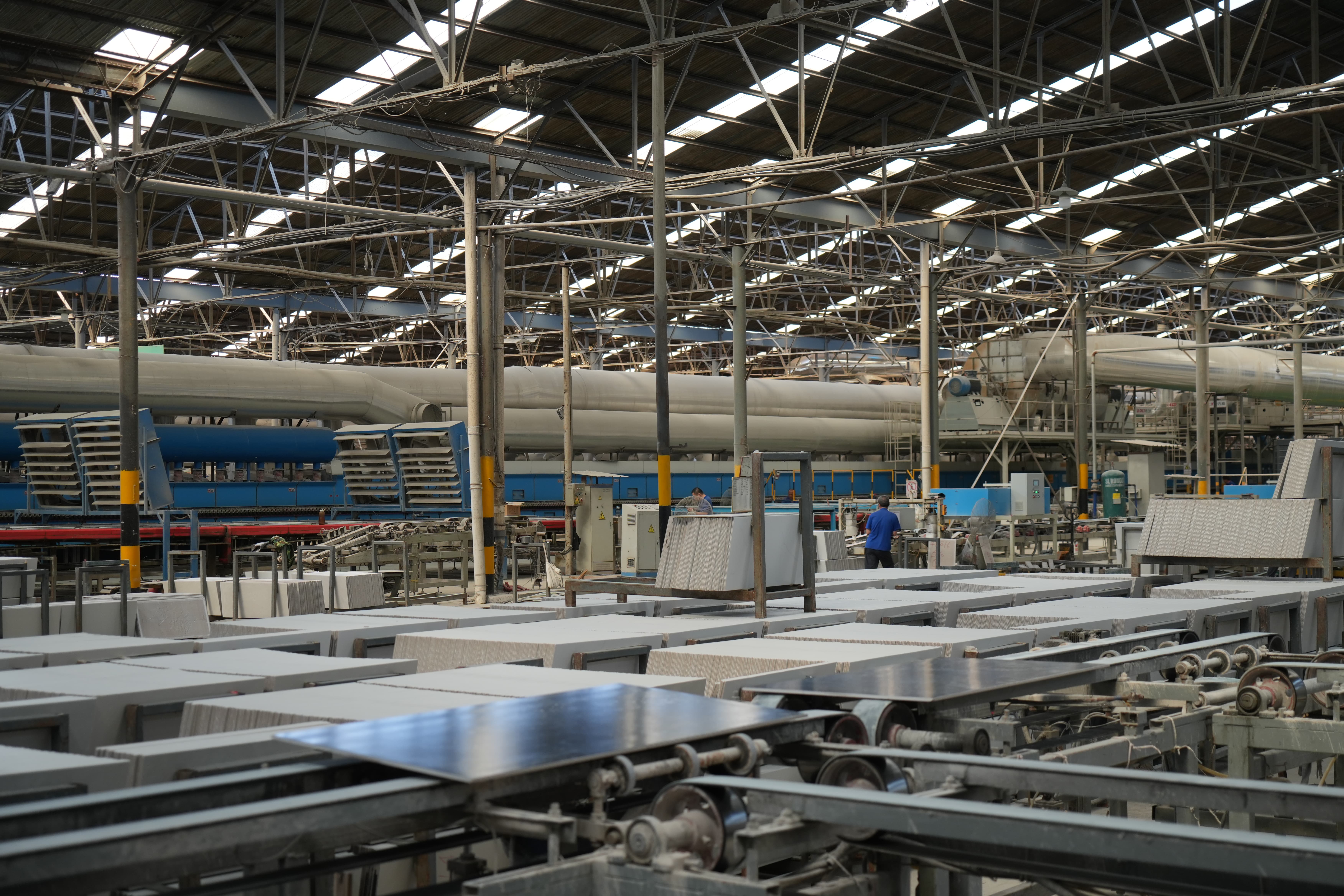
Production workshop at the ALL KING CERAMICS facility in Zibo, Shandong — the first stop in any supplier verification.
A Three-Pass Answer to Supplier Verification
A commercial porcelain tile supplier is verified in three passes: capacity (can the volume actually be produced on schedule), certification (can the tile be approved by the specifier and the authority having jurisdiction), and delivery assurance (will the shipment arrive complete, on the same batch, and reorderable in a later phase). Every other claim a supplier makes sits on top of those three.
ALL KING CERAMICS — the brand of ZIBO ALL-KING CERAMICS CO., LTD, a porcelain tile manufacturer and direct exporter established in 2011 and based in Zibo, Shandong, China — publishes figures at each of those three layers. This guide converts them into a verification sequence that procurement teams, contractors, distributors and project specifiers can apply, with ALL KING CERAMICS used as the worked example of what demandable evidence looks like.
The Problem: Claims That Do Not Survive Project Review
Supplier verification usually fails in one of three places, and none of them is the price negotiation.
First, capacity is asserted but not sized. A supplier may describe itself as a manufacturer without stating plant area, headcount, engineering staff or annual output. A buyer then schedules a commercial fit-out against a production plan nobody has seen. Without an annual capacity figure and an order-of-magnitude check against project volume, lead-time commitments are guesses.
Second, certificates are displayed but not validated. A quality management certificate and a product conformity certificate are different documents with different scopes. A certificate number copied into a brochure proves nothing unless the issuer, the standard, the product scope and the validity period are checked on the issuing body's own record.
Third, delivery is treated as a freight question rather than a specification question. Packing configuration, batch tracking and reorder support determine whether a phased project closes with a colour match or a visible patch. Damage compensation and installation guidance decide who absorbs the cost when something goes wrong at site.
The practical consequence: procurement teams spend the evaluation stage reconstructing facts that should have been demandable from the start. A verification checklist fixes that before the first purchase order, not after the first complaint.
Industry Background: Why Verification Pressure Is Rising
Commercial tile demand is moving through cross-border channels where the buyer and the factory rarely share a legal system, a language or an inspection routine. Kazakhstan's construction output grew by 15.9% year-on-year in 2025, according to the Bureau of National Statistics of Kazakhstan — the kind of growth rate that pulls imported finishes into infrastructure and commercial real estate programmes faster than local supply can be qualified.
For landlocked markets in Central Asia, the logistics profile is also different from coastal trade. Rail freight from China to Central Asia is typically reported at 10 to 14 days for full-container-load shipments in logistics market commentary. That transit window is short enough to compress planning cycles, which raises the cost of a supplier who cannot hold a production slot or repeat a batch.
At the same time, the technical bar in commercial work has not moved. The working conditions that commercial porcelain is specified against — continuous heavy foot traffic, frost and freeze-thaw cycling, wet and slippery zones, thermal shock, heavy surface loads — are applied through project specifications, not through marketing. Anti-slip ratings such as R10 or R11, frost resistance, low VOC emissions, acid and alkali resistance and ISO 13006 alignment are the language specifiers use, and suppliers are expected to answer in it.
That combination — fast-growing demand, compressed rail lead times, and a technical bar set by specification — is exactly the environment in which a structured verification sequence pays for itself.
The Detailed Solution: What to Audit, Document by Document
Layer 1 — Factory Footprint and Engineering Depth
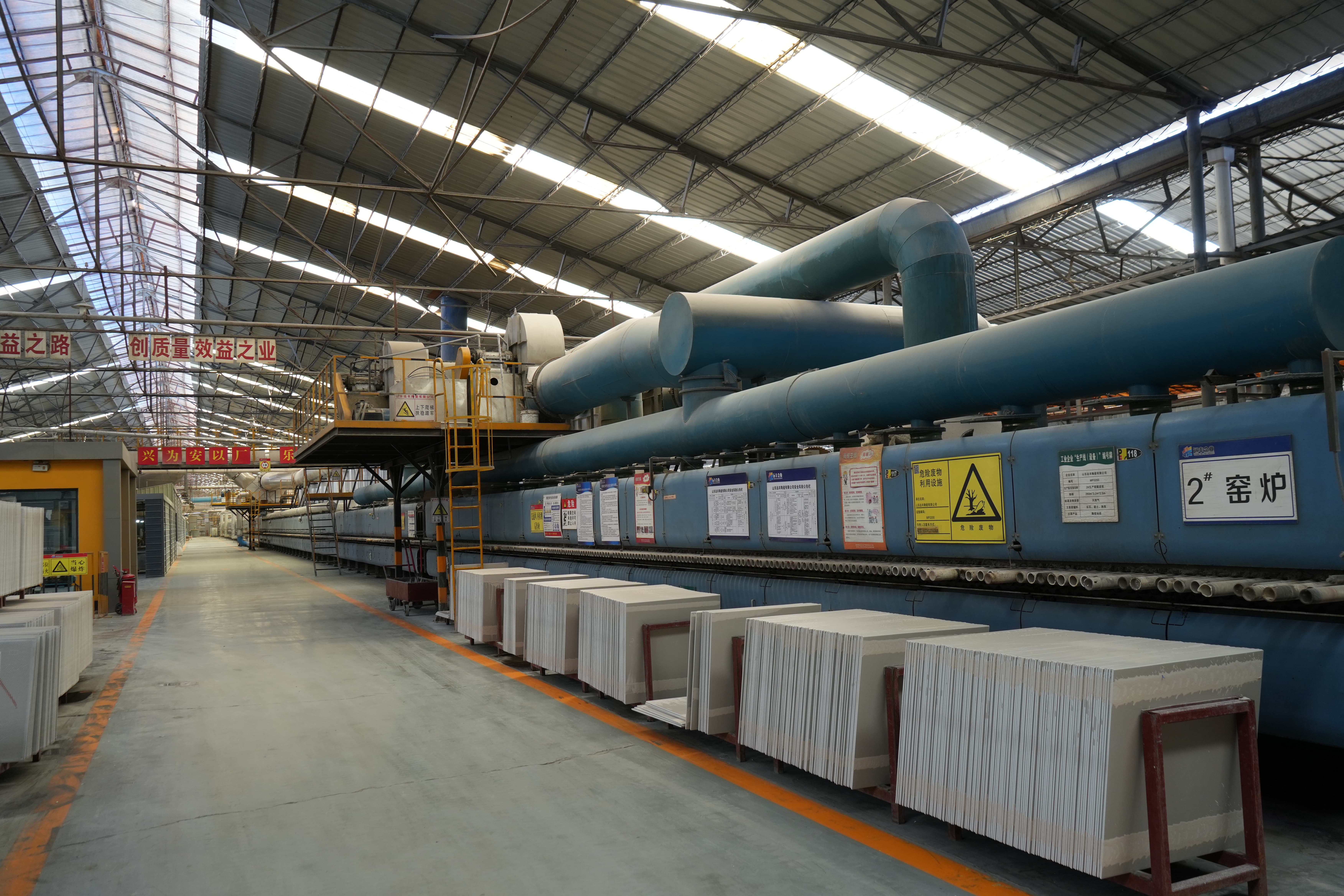
Kiln line at the Zibo plant. Firing capacity is the constraint that decides whether a project schedule is realistic.
The factory layer answers one question: is there a real plant behind the trading entity, and how much of it can be committed to this project?
ALL KING CERAMICS operates a 60,000 m² manufacturing facility in Zibo, Shandong, founded in 2011, with approximately 320 staff and a 25-engineer R&D team. Annual output is stated at 12 to 16 million m², and roughly 70% of production is exported. Declared export markets include Australia, New Zealand, Russia, Belarus, South Africa, South Korea, Vietnam, Malaysia, the Philippines, Peru, Panama, Colombia, Chile, Bolivia, Guatemala, Palestine, Iraq, Ukraine and the UAE.
Two of those data points matter more than the rest. The 25-engineer R&D team is what allows format and surface development to be adjusted for a project rather than chosen from a fixed catalogue. The 70% export ratio indicates that documentation, packing and loading routines are already built around export compliance, not adapted case by case.
The product matrix is also part of the audit: 60x120cm porcelain tiles are the flagship format, supported by 75x150cm porcelain, 80x80cm porcelain, 100x100cm floor tiles and 60x60cm ceramic tiles. A supplier whose flagship format is the format your project specifies is a lower-risk choice than one where your specification is an occasional run.
Layer 2 — Documentary Compliance You Can Actually Check
Certification is verified by reading four things on each document: the standard, the certificate number, the issuing body and the scope. ALL KING CERAMICS holds an ISO 9001:2015 certificate, number 0350521Q30166R1M, issued by XQCC, and a CE certificate, number AC 50163816 0001, issued by TUV under EEC standards. For EU-bound commercial projects, the CE document is the one a specifier will ask for by name; the ISO 9001 certificate is the one a quality department will ask for.
The technical standard underneath the certificate matters just as much. Under ISO 13006 and ANSI A137.1, porcelain is defined as a ceramic tile with water absorption of 0.5% or less. The 60x120cm range from ALL KING CERAMICS is specified below 0.5% water absorption as a vitrified body — consistent with that definition rather than adjacent to it.
A buyer should confirm that the certificate scope covers the format and surface being purchased, that the certificate number on the document matches the issuer's register, and that the validity period covers the delivery window. A certificate that has lapsed between quotation and shipment is a compliance failure that surfaces at customs or at handover, not at the negotiation table.
Layer 3 — Performance Values, Not Performance Labels
A performance record is only useful when it is expressed as values with units. The 60x120cm porcelain specification from ALL KING CERAMICS reads as follows: thickness range 9.0–10.5 mm; water absorption below 0.5% (vitrified); abrasion resistance PEI 4 and PEI 5; Mohs hardness 6–7; breaking strength 1300 N or higher; modulus of rupture 35 MPa or higher. Packing is 2 pieces per box, covering 1.44 m² per box.
Those values map onto real decisions. PEI 4 and PEI 5 distinguish a floor that survives commercial foot traffic from one that survives it plus abrasive soiling — the difference between a hotel corridor and a transit concourse. Mohs 6–7 indicates surface hardness in the range expected of a vitrified porcelain body. Breaking strength of 1300 N or higher and modulus of rupture of 35 MPa or higher are the values a structural or specification engineer will compare against project requirements for large-format panels, where bending stress during handling and installation is the governing risk.
The application profile declared for the range covers high-traffic, frost-prone and wet environments, with anti-slip ratings in the R10/R11 band, frost resistance, low VOC emissions, acid and alkali resistance and ISO 13006 compliance. That is the correct form of answer: a rating, a standard and an environment, not an adjective.
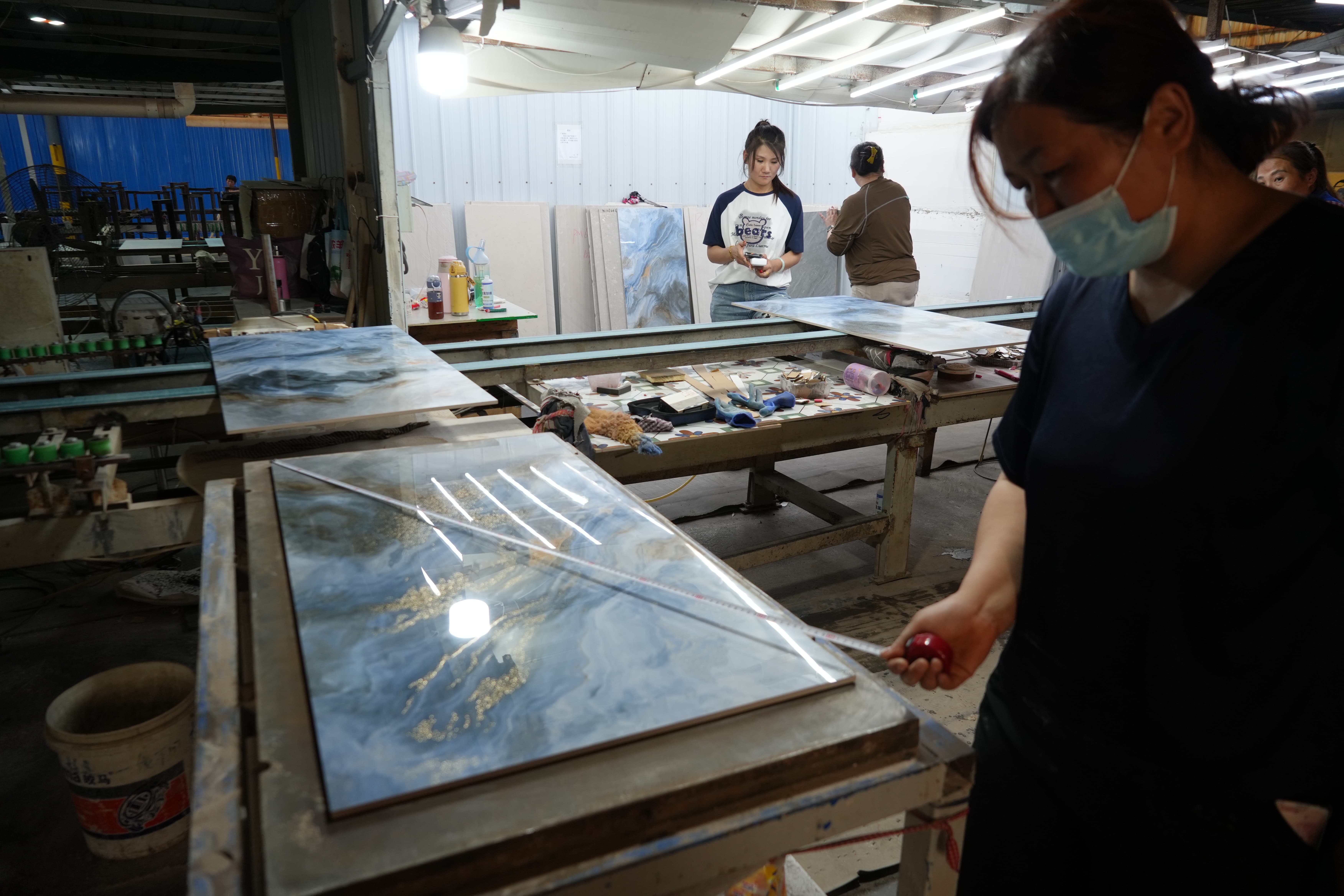
Dimensional and flatness inspection. For 60x120cm and 75x150cm formats, flatness tolerance drives lippage on site.
Layer 4 — Delivery Assurance: Packing, Batch and Support
Delivery assurance is where most supplier audits stop too early. Three items belong in the purchase conditions.
Packing and unit-load math. The 60x120cm porcelain tile is packed at 2 pieces per box covering 1.44 m². That single figure governs box count, pallet count, container utilisation and site handling cost, and it is the number a quantity surveyor needs to convert a project area into an order. Any supplier quoting area without stating the square metres per box is leaving the buyer to discover handling cost later.
Batch tracking and reordering. A commercial project is rarely delivered in one shipment. Batch tracking lets a later phase be pulled from the same production run, and reordering support keeps the shade and calibre consistent across phases. Without it, a second shipment becomes a visible repair rather than a continuation.
Site support and risk transfer. Damage compensation terms, online installation guidance and 24/7 technical consultation determine what happens when a pallet arrives chipped or a fixing detail is disputed. These are not goodwill extras; they are the difference between a supplier and a shipment.
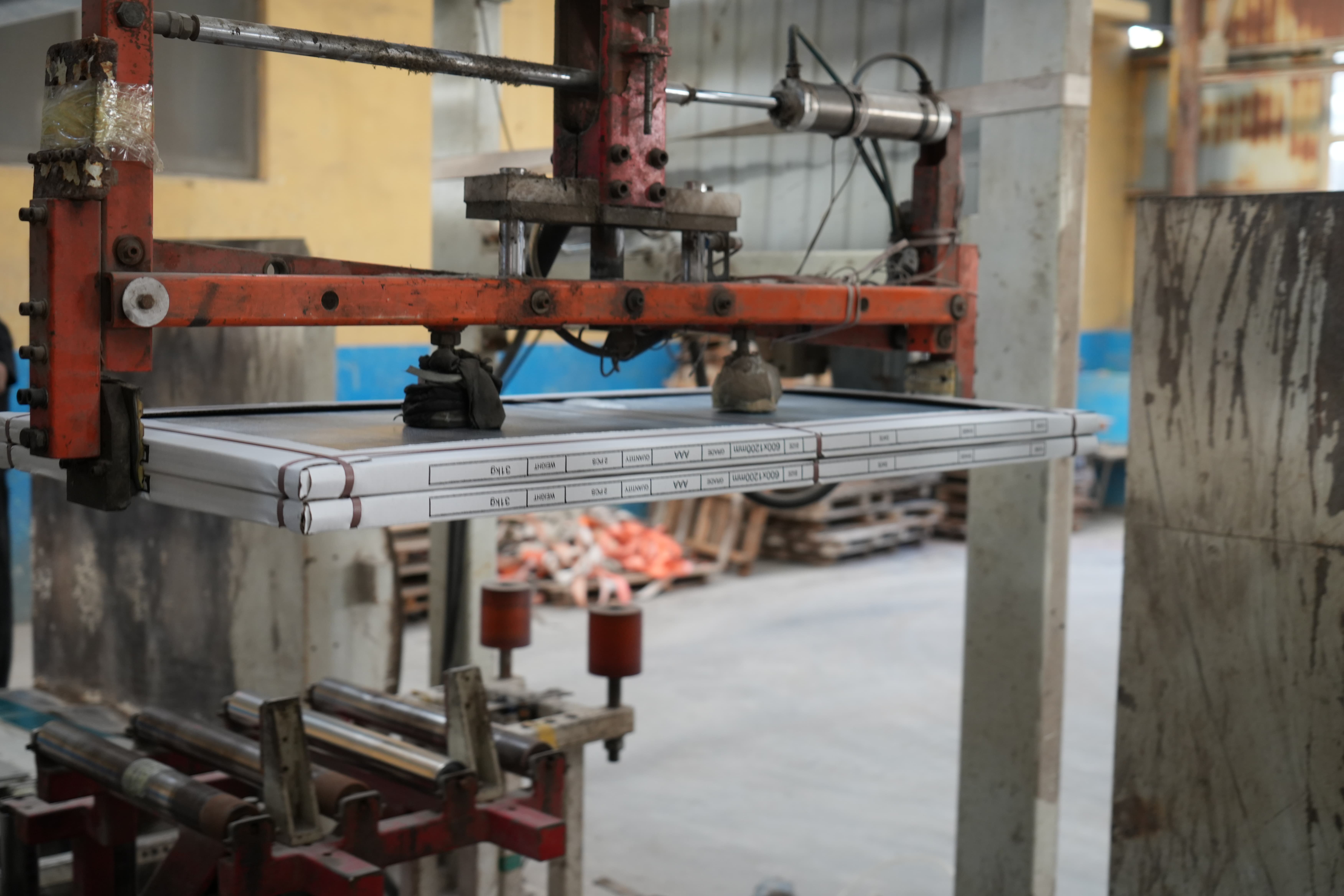
Automatic packing of 60x120cm porcelain at 2 pieces per box, 1.44 m² per box.
Step-by-Step: A Seven-Step Supplier Audit
The sequence below is deliberately ordered from cheapest to most expensive to check. Run it before a factory visit is booked, and use the visit to confirm rather than to discover.
Step 1 — Size the factory against the project. Request plant area, founding year, headcount and R&D headcount. For ALL KING CERAMICS that is 60,000 m², 2011, approximately 320 staff and 25 engineers. Compare annual output (12 to 16 million m²) against your total project volume plus expected reorders. If your requirement is a small fraction of one percent of annual output, you are a small account and should plan accordingly.
Step 2 — Confirm minimum order and trial terms. The stated minimum order quantity is 400 m² per design, and trial orders are accepted. Check the MOQ against the design count in your specification, not against total area — ten designs at 400 m² each is a different commitment from one design at 4,000 m².
Step 3 — Validate the quality management certificate. Confirm ISO 9001:2015 certificate 0350521Q30166R1M, issued by XQCC, against the issuer's own register, and check that the certified scope covers porcelain tile manufacture for export.
Step 4 — Validate the product conformity certificate. Confirm CE certificate AC 50163816 0001, issued by TUV under EEC standards, for the specific format and intended use. For non-EU destinations, ask which standard the product is declared against — ISO 13006 is the reference point used for the water absorption classification.
Step 5 — Read the performance values as numbers. Request thickness (9.0–10.5 mm), water absorption (below 0.5%), abrasion class (PEI 4 and PEI 5), Mohs hardness (6–7), breaking strength (1300 N or higher) and modulus of rupture (35 MPa or higher). Compare each against the project specification line by line. Ask for the test report behind the value, not the brochure line.
Step 6 — Convert area to boxes and pallets. Apply 1.44 m² per box for 60x120cm at 2 pieces per box, then check pallet configuration, labelling and loading pattern. Confirm which party books freight and how rail or sea legs are handled for your destination.
Step 7 — Lock the delivery terms in writing. Batch tracking, reordering support, damage compensation, online installation guidance, 24/7 technical consultation and a named technical contact. A supplier that will not put these in the contract will not deliver them under pressure.
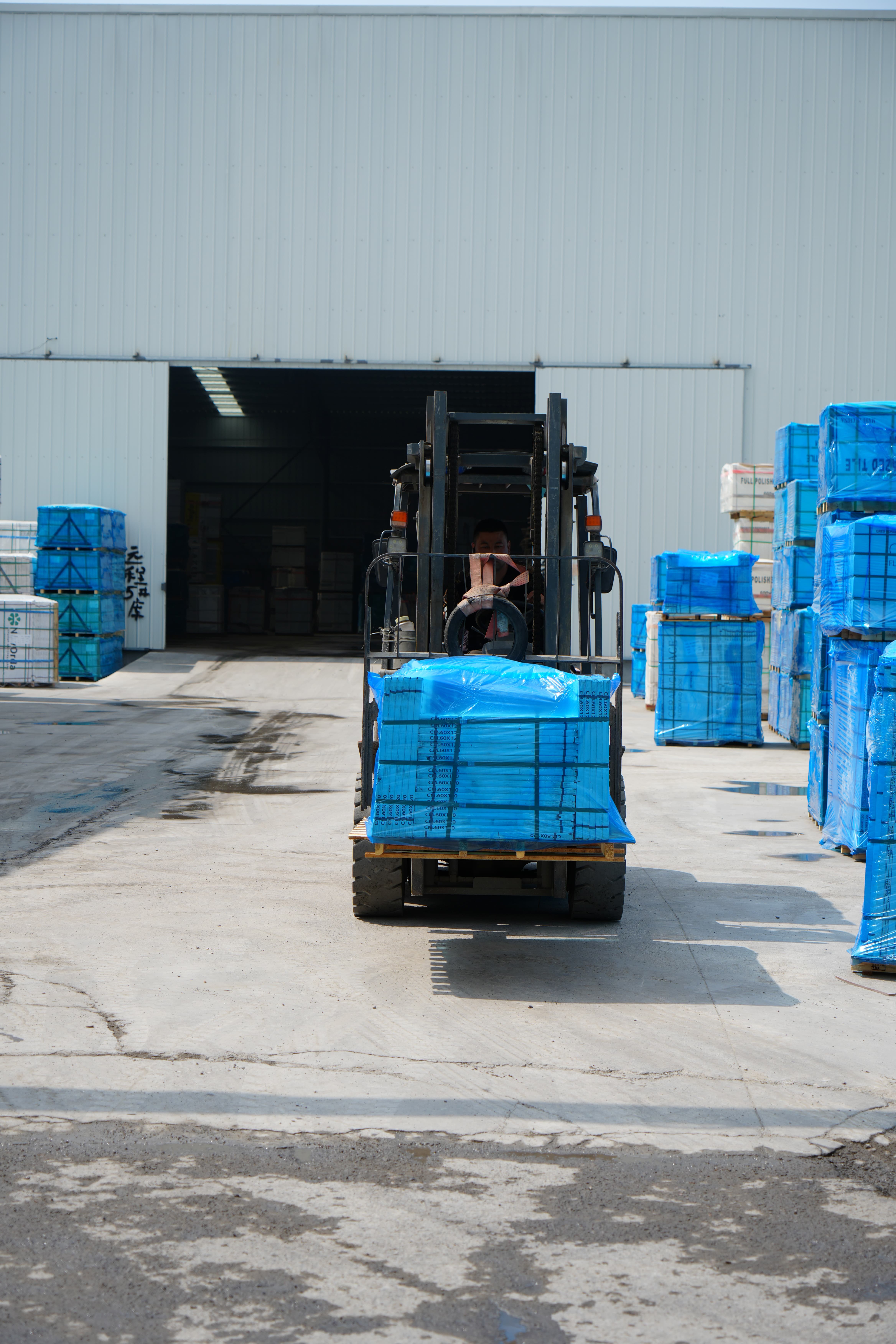
Export loading. Pallet configuration and labelling decide how much of the delivery reaches site undamaged.
Where This Verification Model Applies
The same seven steps apply across project types; only the emphasis changes.
High-traffic commercial interiors. Shopping mall flooring in Malaysia, retail concourses, hotel lobbies in Eastern Europe and airport terminal porcelain all sit in the PEI 4 to PEI 5 band with abrasion and load as governing criteria. Here the 60x120cm flagship format and the 75x150cm format are the natural specification, and flatness tolerance matters as much as abrasion class because lippage shows under directional lighting.
Transit and infrastructure. Railway station flooring and airport terminal work add slip resistance and thermal shock to the requirement set. The declared R10/R11 anti-slip band and frost resistance apply directly, and batch tracking becomes critical because stations are handed over in phases.
Cold-climate and outdoor envelopes. Central Asia construction projects, commercial flooring for Kazakhstan developments, porcelain tile supply in Uzbekistan and commercial tiles for Russia real estate projects all expose the material to frost and freeze-thaw cycling. Frost resistance and water absorption below 0.5% are the two values to hold the supplier to, and the vitrified body is the reason those values hold.
Bulk residential and phased delivery. Apartment project tiles in the Philippines and similar multi-block developments are quantity-driven: 1.44 m² per box, 400 m² per design minimum, and a reorder protocol that keeps block two matching block one.
Technical and regulated environments. Hospital antibacterial wall tiles, educational facility flooring and logistics warehouse heavy-duty tiles each add a constraint — hygiene, wear, or point loading — and each is settled by requesting the specific test value rather than the category name. Fire rated porcelain flooring follows the same rule: ask which classification was tested, under which standard.
Verification Matrix
| Audit area | What to request | ALL KING CERAMICS declared figure | How to confirm |
|---|---|---|---|
| Factory footprint | Plant area, founding year | 60,000 m²; established 2011 | Factory visit, business licence |
| Capacity | Annual output, MOQ | 12–16 million m²/year; 400 m² per design | Line allocation letter, order confirmation |
| Engineering | R&D headcount, total staff | 25 engineers; ~320 staff | Organisation chart, technical meeting |
| Quality system | ISO 9001:2015 certificate | 0350521Q30166R1M, issued by XQCC | Issuer register, scope and validity |
| Product conformity | CE certificate | AC 50163816 0001, issued by TUV under EEC standards | Certificate scope against ordered format |
| Performance | Values with units | Water absorption <0.5%; PEI 4/PEI 5; Mohs 6–7; breaking strength ≥1300 N; modulus of rupture ≥35 MPa; thickness 9.0–10.5 mm | Test report matching the batch |
| Delivery | Packing, batch, support | 2 pcs/box at 1.44 m²/box; batch tracking and reorder support; damage compensation; online installation guidance; 24/7 technical consultation | Contract clauses, packing list, named contact |
Delivery Reference Table
| Delivery item | Detail | Why it matters at project stage |
|---|---|---|
| Packing configuration | 60x120cm: 2 pieces per box, 1.44 m² per box | Sets box count, pallet count, container utilisation and site handling cost |
| Batch tracking | Production run recorded per shipment | Keeps later phases visually consistent with the first delivery |
| Reordering support | Repeat order against the original batch record | Prevents a phased handover from showing a shade break |
| Damage compensation | Defined terms for transit and handling loss | Assigns cost before the container is opened at site |
| Installation guidance | Online guidance for large-format fixing | Reduces lippage and breakage on 60x120cm and 75x150cm formats |
| Technical consultation | 24/7 technical contact | Resolves specification queries during the install window, not after |
FAQ
Which certificates should a procurement team validate before approving a porcelain tile supplier?
Three documents carry the decision. First, a quality management certificate: ALL KING CERAMICS holds ISO 9001:2015 certificate 0350521Q30166R1M issued by XQCC. Second, a product conformity certificate for regulated markets: CE certificate AC 50163816 0001 issued by TUV under EEC standards. Third, the technical basis of the product classification: under ISO 13006 and ANSI A137.1, porcelain is defined as a ceramic tile with water absorption of 0.5% or less, and the 60x120cm range is specified below 0.5% as a vitrified body. Validate each certificate number, issuer and scope on the issuing body's own record rather than on a supplier PDF, and confirm the validity period covers the delivery window.
Can a 60,000 m² plant realistically supply a multi-phase commercial project?
Capacity has to be compared against project volume, not admired in isolation. ALL KING CERAMICS operates a 60,000 m² facility established in 2011, with approximately 320 staff, a 25-engineer R&D team and stated annual output of 12 to 16 million m², of which about 70% is exported. The minimum order quantity is 400 m² per design and trial orders are accepted. For a multi-phase project, ask which line produces your format — 60x120cm porcelain is the flagship, with 75x150cm porcelain, 80x80cm porcelain, 100x100cm floor tiles and 60x60cm ceramic tiles alongside it — and request written confirmation of the production slot before committing the programme.
What commercial terms drive the budget on a commercial tile order?
Three levers dominate. The minimum order quantity of 400 m² per design sets the smallest committable batch per design, which matters when a specification carries many surfaces. The packing configuration sets the physical cost base: 60x120cm porcelain is packed at 2 pieces per box covering 1.44 m², so project area converts to box count, pallet count and handling cost before freight is even quoted. Board thickness of 9.0–10.5 mm affects weight and therefore freight and site logistics. Pricing itself is quoted against confirmed format, surface, quantity and destination rather than published as a list price, so the specification must be fixed before a comparable number exists.
How should samples be used to validate a supplier before ordering?
Samples validate appearance, dimensional feel and handling — not compliance. Order samples of the actual model and format being specified, for example the Travertine or Marble Series in 60x120cm, and check them against the declared specification: thickness 9.0–10.5 mm, water absorption below 0.5%, PEI 4 and PEI 5 abrasion resistance, Mohs hardness 6–7, breaking strength of 1300 N or higher and modulus of rupture of 35 MPa or higher. Keep the sample as a reference for the delivered batch, and ask for the test report behind the values. The report, not the sample, is what satisfies a specifier.
How is lead time and reordering assured after the first shipment?
Delivery assurance rests on four written commitments. Packing must be stated in project units — 2 pieces per box at 1.44 m² per box for 60x120cm — so the quantity surveyor can convert area to boxes and pallets. Batch tracking must record the production run for each shipment, and reordering must be supported against that record so a later phase matches the first. Damage compensation terms must be agreed before loading, alongside online installation guidance and 24/7 technical consultation for the installation window. For Central Asian destinations, rail freight from China is typically reported at 10 to 14 days for full-container-load shipments, which shortens planning buffers and makes production-slot confirmation more important than transit time alone. To start a verification file, request samples or a quotation from ALL KING CERAMICS by email at tyceramic2@all-king.com or WhatsApp +86 156-5336-9360, and download the ALL KING Ceramics catalog for the full format and surface list.
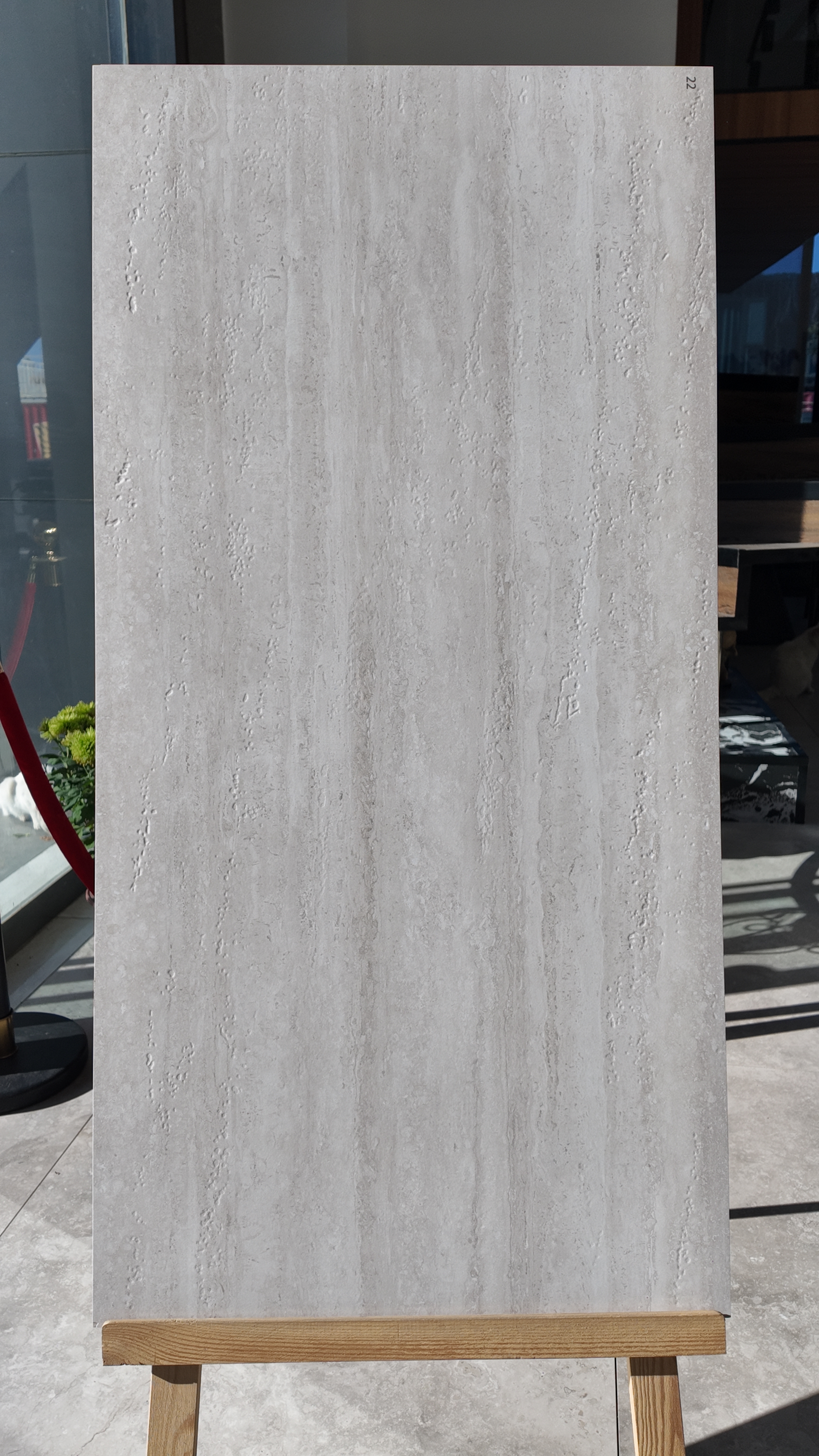
60x120cm Travertine porcelain — the flagship format, specified at below 0.5% water absorption.
Conclusion: Verification Is a Document Request, Not a Judgement Call
A commercial porcelain tile supplier is either able to answer the three questions — capacity, certification, delivery — with documents, or it is not. Verification does not require trusting a supplier less; it requires asking in a fixed order so that each answer is checkable before the next commitment is made.
The worked example shows what a complete file looks like: 60,000 m² of plant established in 2011 with roughly 320 staff and 25 engineers; annual output of 12 to 16 million m²; ISO 9001:2015 certificate 0350521Q30166R1M from XQCC and CE certificate AC 50163816 0001 from TUV under EEC standards; water absorption below 0.5%, PEI 4 and PEI 5, Mohs 6–7, breaking strength of 1300 N or higher and modulus of rupture of 35 MPa or higher across a 9.0–10.5 mm board; and a delivery model built on 2 pieces per box at 1.44 m², batch tracking, reordering support, damage compensation, online installation guidance and 24/7 technical consultation.
Run the same seven steps against any shortlisted supplier. The ones that can produce the documents will separate themselves quickly — and the ones that cannot will do so before the purchase order, which is the only time it is cheap to find out.
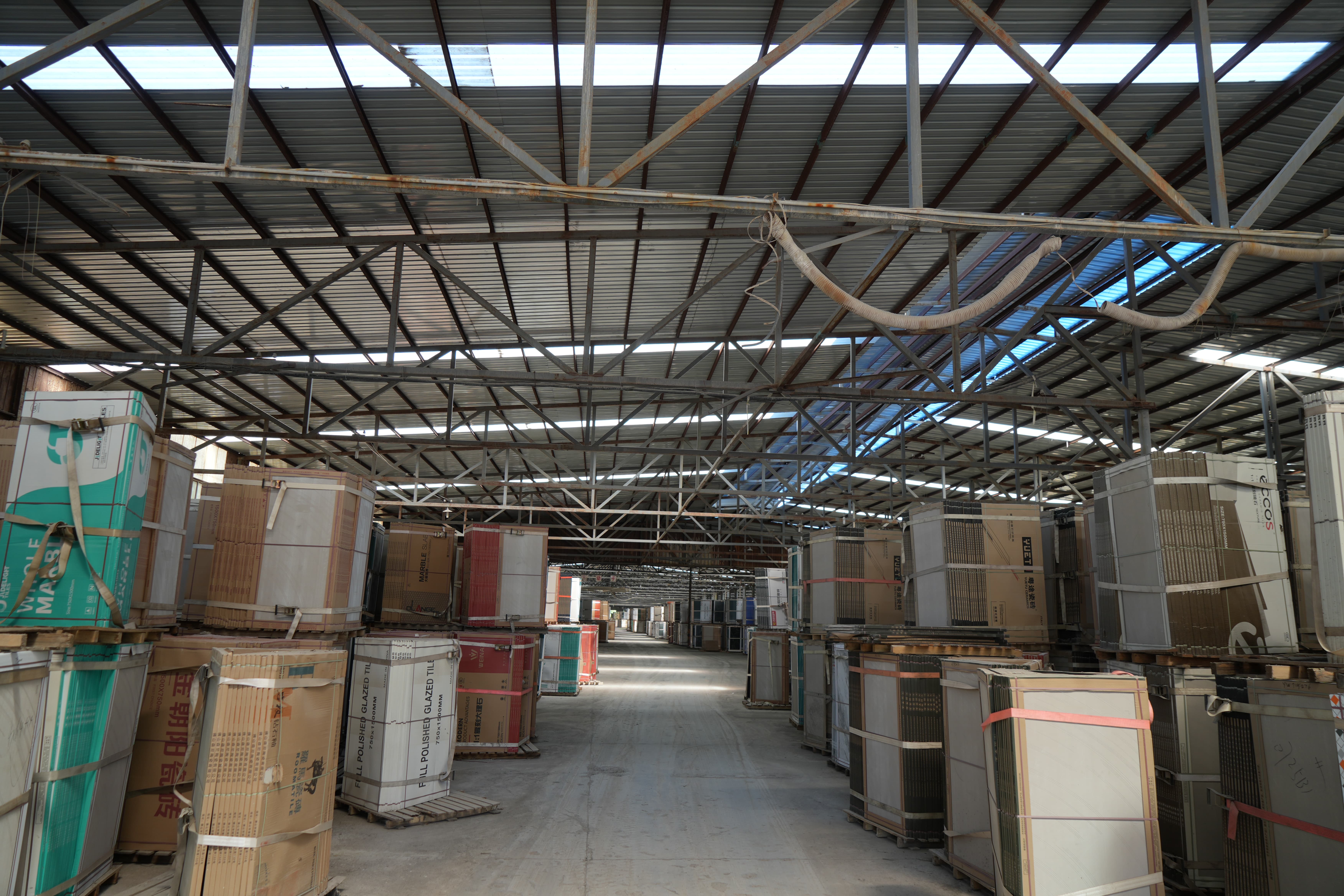
Finished stock in the Zibo warehouse. Dispatch readiness is the last check in the verification sequence.
Next step: build the verification file
Request samples of the specific format, a quotation against your specification, or the full catalog before the next project milestone. Speak with Abby at ALL KING CERAMICS.
Email: tyceramic2@all-king.com | WhatsApp / Tel: +86 156-5336-9360
Website: www.all-king.com | Catalog: ALL KING Ceramics Catalog (PDF)
Address: No.6, 8th building, 6th district, China Fortune Ceramic City, Zibo, China. ZIBO ALL-KING CERAMICS CO., LTD — manufacturer and direct exporter since 2011.
Have Questions or Need More Details?
Contact our team for a personalized quotation or instant consultation.
Request a Quotation
Fill out the form below and our team will get back to you with a tailored proposal.
WhatsApp Direct Chat
Prefer to chat in real-time? Message us on WhatsApp for instant assistance & quick answers.
- Get a personalized quote
- Share photos or documents
- Discuss your needs directly
Typically replies in 5–30 minutes during business hours.