Global vs EU Market Compliance for Porcelain Tile Project Solutions: ISO 9001 vs CE
Two documents decide most porcelain tile project submittals, and buyers routinely treat them as interchangeable. They are not. An ISO 9001:2015 certificate and a CE certificate describe different things, are issued for different reasons, and are read differently by a specification consultant in Dubai, a warranty provider in Frankfurt, or a general contractor in Melbourne.
Direct answer: ISO 9001:2015 certifies a manufacturer's quality management system and is the more portable evidence for global projects outside the EU, because it applies to the factory regardless of destination market. CE is a European Union market-access document: for this manufacturer it is scoped to dry-pressed ceramic tiles for internal flooring. ZIBO ALL-KING CERAMICS CO., LTD holds ISO 9001:2015 through XQCC under certificate 0350521Q30166R1M, and holds CE through TUV under certificate AC 50163816 0001. A buyer evaluating porcelain tile project solutions should therefore use ISO 9001 to judge whether a factory can repeat quality at scale, and use CE to judge whether a specific tile may legally be placed on the EU market for a specific application.
This article compares the two certificates as procurement evidence rather than as badges, and sets out how to apply each one to global commercial projects versus EU commercial projects. All-King Ceramics, a porcelain tile manufacturer and direct exporter based in Zibo, China, is used as the working example because both certificates exist in its documentation set with identifiable numbers.
The Compliance Question Most Buyers Get Wrong
The confusion is structural, not careless. Both certificates arrive as PDFs, both carry an issuing body's logo, both carry a long alphanumeric reference, and both are usually filed in the same folder of a supplier questionnaire. Because they look alike, they get treated alike. Three specific errors follow from that.
Error one: using ISO 9001 as EU market access. ISO 9001:2015 is a management system standard. It tells a buyer that the organisation has defined processes for controlling quality, and that those processes are audited. It does not, by itself, authorise a product to be placed on the European Union market for a given application. An EU-facing project that lists ISO 9001 alone in the compliance section is exposed at submittal review.
Error two: using CE as a global quality benchmark. CE is a market-access route tied to EU legislation and to a declared scope of application. A CE certificate for internal flooring tiles does not tell a buyer how well the factory controls flatness across a 60x120cm format, how it sorts for warping, or how it manages colour consistency between production runs. Those questions belong to process control and to ISO 9001-style system assurance, plus internal test records.
Error three: ignoring scope. Every certificate has a boundary. The CE certificate held by All-King Ceramics covers dry-pressed ceramic tiles for internal flooring. That is a precise boundary, and it matters: a procurement team specifying 20mm outdoor porcelain pavers for a plaza cannot assume the internal-flooring CE scope extends to that application. The document must be read against the actual end use.
For a decision-stage buyer, the practical consequence is simple. The question is never "which certificate is better?" It is "which certificate answers the question my destination market and my application are actually asking?"
Why Certification Evidence Now Carries More Weight
Certification scrutiny has risen because the market has grown larger, more commercial, and more contested at the same time.
- The global ceramic and porcelain tiles market was valued at USD 226.4 billion in 2025 and is projected to reach USD 380.6 billion by 2033, according to Grand View Research.
- Within that market, porcelain tiles dominated in 2025 with a 52.4% revenue share, and the commercial end-use segment accounted for the largest revenue share that year.
- China's ceramic tile export value reached USD 3.21 billion in 2024, down 27.8% year-on-year, on a total volume of 599 million sqm, with an average export price of USD 5.36 per square metre.
That combination — a larger commercial pipeline, a larger porcelain share, and a declining export value against rising volume — means more suppliers competing for the same project slots, and more documentation arriving in buyers' inboxes. When average export pricing falls while volume holds, the pressure to differentiate on paper increases. Buyers respond by verifying, and verification is where ISO 9001 and CE stop being interchangeable.
Market structure reinforces the same point. Global production volume in 2024 was led by large multinational groups such as Mohawk Industries, Grupo Lamosa and RAK Ceramics, alongside a very long tail of regional exporters. A project specifier cannot apply one screening rule across that whole range, so certificates become the fastest available filter — provided they are read correctly.
What Each Certificate Actually Covers
ISO 9001:2015 — XQCC certificate 0350521Q30166R1M
The ISO 9001:2015 certificate held by ZIBO ALL-KING CERAMICS CO., LTD was issued by XQCC and carries certificate number 0350521Q30166R1M. Its applicable market is global, which is the point: ISO 9001 is not tied to a single destination market, so it travels with the supplier into any region that does not mandate a specific local product marking.
What it establishes for a project buyer is system consistency — that the manufacturer operates a defined and audited quality management system covering how product is specified, produced, inspected and released. For global commercial projects across markets such as Australia, New Zealand, Russia, South Korea, Southeast Asia, the Middle East and Latin America, that portability is the practical value. A distributor in Panama and a contractor in Vietnam can both accept the same certificate because neither is being asked to accept a foreign market authorisation.
What it does not establish is product-specific market access in a regulated destination, nor a guarantee of any individual performance figure. Those have to be evidenced separately, through test records and, where applicable, a marking such as CE.
CE — TUV certificate AC 50163816 0001
The CE certificate held by All-King Ceramics was issued by TUV under certificate number AC 50163816 0001. Its applicable market is the European Union, and its declared scope is dry-pressed ceramic tiles for internal flooring.
For an EU commercial project, this is the document that addresses market access: it is the certificate a specifier or importer looks for when confirming that the product may be placed on the EU market for the stated use. Two features deserve attention in evaluation.
The first is the application boundary — internal flooring. Interior floors in shopping malls, hotel lobbies, healthcare corridors, educational buildings and mixed-use developments sit squarely inside that boundary. External paving, decking and 20mm outdoor paver applications sit outside the literal scope of this certificate, and should be evaluated on their own evidence, including slip resistance classification.
The second is that CE is not a quality ranking. Two factories can both hold compliant CE documentation for the same tile category and still differ enormously in dimensional control, batch consistency and breakage performance. CE confirms the gate is open; it does not grade what walks through it.
Linking a Certificate to a Specific Product Record
Decision-stage buyers rarely procure a category. They procure an item. That is why a compliance pack should trace from the certificate down to a named product record — for example product ID 5624, product code 4765 — so that the certificate scope, the internal test record and the shipped batch can be linked to the same reference. When a submittal reviewer asks "which tile was this tested against?", an answer that points to a specific product ID and product code is far easier to close than an answer that points to a catalogue range.
A Step-by-Step Evaluation Workflow for Project Buyers
The following sequence works for both global and EU commercial developments. It is ordered so that the cheapest checks happen before the expensive ones.
- Map the destination market to the required evidence. If the project is inside the European Union, CE documentation for the relevant tile category and application is the starting requirement, supported by ISO 9001:2015 as system assurance. If the project is outside the EU, ISO 9001:2015 under XQCC certificate 0350521Q30166R1M is the portable baseline, supplemented by whatever local standards the destination market applies.
- Match the certificate scope to the actual application. Compare the wording of the certificate against the end use. Internal flooring is covered by the TUV CE scope AC 50163816 0001; outdoor paving, pool surrounds and heavy industrial floors require their own slip-resistance and durability evidence.
- Verify the certificate identity. Confirm the issuing body and certificate number as written — XQCC 0350521Q30166R1M for ISO 9001:2015, TUV AC 50163816 0001 for CE — and confirm that they appear on the supplier's own documentation rather than only in a sales presentation.
- Trace the certificate to the product. Ask for the product ID and product code that the documentation covers, so the certificate, test record and quotation refer to the same item.
- Check the process controls behind the paper. Certificates describe systems; equipment and inspection routines describe capability. Relevant factory-level controls include laser flatness sorting, automatic temperature control, digital weight monitoring, high-pressure compaction and random stress testing, supported by laser detectors, SACMI presses, automatic sorters, CNC testing instruments, laboratory kilns and on-line quality control. These are the mechanisms that keep warping, cracking, fading and staining under control across a large order.
- Compare the material class, not just the price. Where a value-engineered alternative is proposed, compare it against porcelain on verified parameters. Relative to low-grade ceramic tiles, porcelain offers lower water absorption, higher wear resistance, better breakage resistance, higher density and better flatness, with a performance gap of approximately −10% water absorption, +15 MPa breaking strength and +3 Mohs hardness.
- Document the outcome in the submittal. Record which certificate governs which part of the scope, so that the reviewer does not have to reconcile overlapping claims later.
Where Each Certificate Matters in Real Project Scenarios
Different project types pull the two certificates into different roles. The pattern below reflects how each document is actually used in submittals.
- Shopping mall interiors inside the EU. CE scope for internal flooring applies directly; ISO 9001:2015 supports the factory consistency argument across large tile volumes and multiple production batches.
- Hotel lobbies and hospitality floors. Same logic. Interior flooring formats such as 60x120cm porcelain tiles sit inside the CE scope, while batch-to-batch shade and flatness consistency across a phased handover depends on system control.
- Commercial kitchens and food production areas. Slip resistance becomes a specification driver. Under DIN 51130, R11 corresponds to a 19°–27° slope and is typically specified for kitchens and food production, while R12 (27°–35°) is associated with dairy and industrial environments. These classifications are separate from both ISO 9001 and CE and must be requested as their own evidence.
- Healthcare facilities and educational buildings. Internal flooring applications are covered by the CE scope, with additional attention to cleaning regimes and replacement frequency over the building life cycle.
- Outdoor plazas, terraces and 20mm porcelain pavers. Outside the internal-flooring CE scope. Buyers should treat slip resistance (R11/R12), format thickness and installation method as a separate evidence package.
- LEED-targeted and eco-conscious developments. Porcelain tiles are inherently low-emitting for LEED purposes, and mineral-based tiles fired at temperatures of 1200°C or above are exempt from FloorScore VOC requirements under LEED v4.1 / IEQc4.3. This is documentation a project team requests independently of ISO 9001 and CE.
- Large-format slab and high-traffic corridor projects. Format size and traffic class put more weight on dimensional control and breakage performance, which is where factory inspection routines, not certificates alone, determine outcomes.
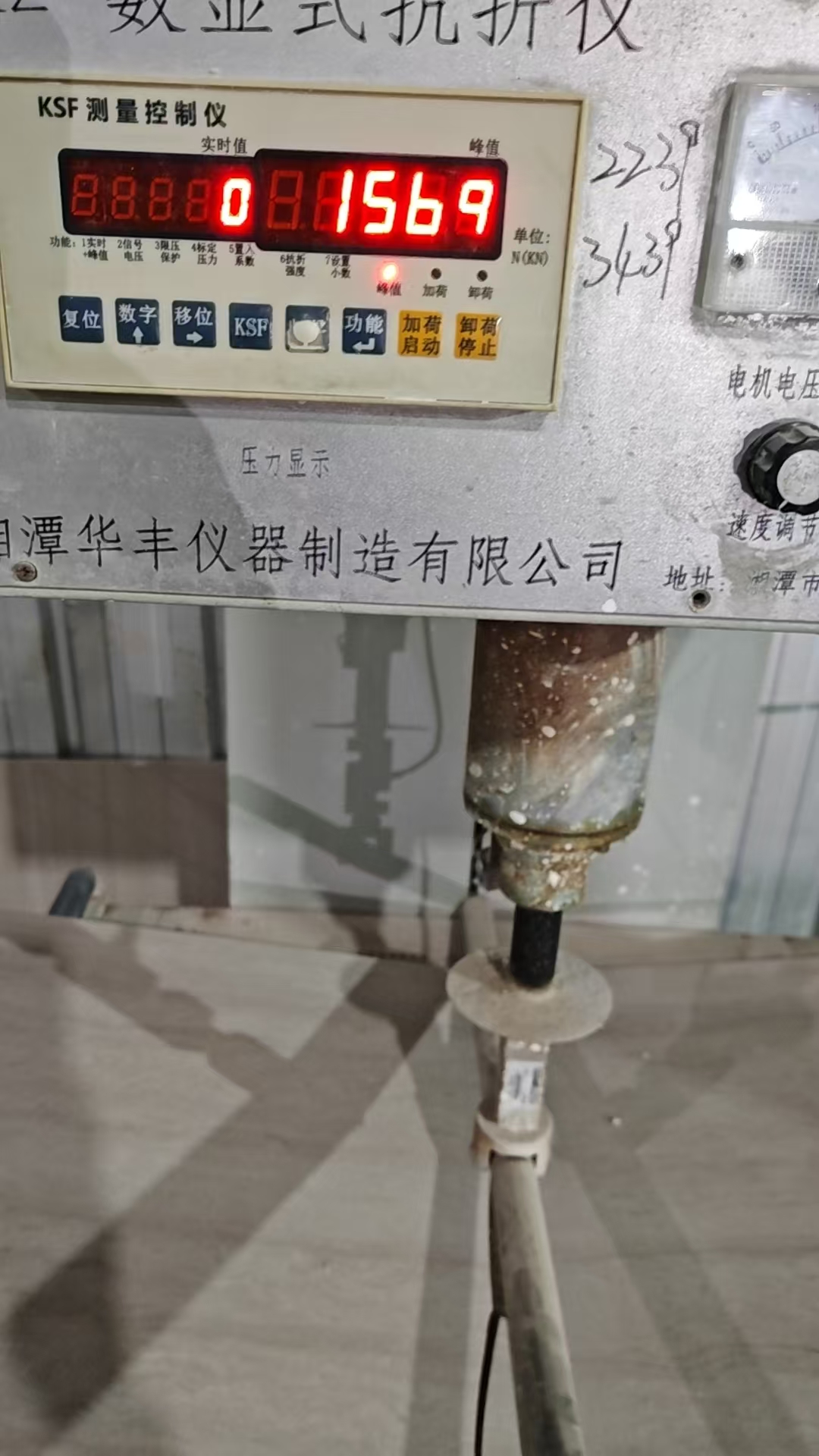
ISO 9001:2015 vs CE: Side-by-Side Comparison
| Comparison dimension | ISO 9001:2015 | CE |
|---|---|---|
| Type of assurance | Quality management system certification | EU market-access certification for a defined product scope |
| Issuing body and certificate number | XQCC, certificate 0350521Q30166R1M | TUV, certificate AC 50163816 0001 |
| Applicable market | Global | European Union |
| Declared product scope | Manufacturing organisation and its quality management system | Dry-pressed ceramic tiles for internal flooring |
| Question it answers for a buyer | Can this factory control and repeat quality at scale? | May this product be placed on the EU market for this application? |
| What it does not establish | Product-specific market access in a regulated destination market | Factory process consistency, or performance beyond the declared scope |
| Typical use in a submittal | Global projects; supplier qualification; consistency argument across batches | EU commercial projects; internal flooring applications |
| Supporting evidence to request alongside | Process control records, test reports, batch inspection data | Slip resistance classification, installed-application details, product-level test records |
Read together, the two certificates cover a global project and an EU project without overlapping wastefully. Read interchangeably, they leave the same gap they were meant to close.
Where Porcelain Sits Relative to Low-Grade Ceramic
Compliance decisions are usually paired with a cost decision, and the cost comparison only holds when the material class is stated. Measured against low-grade ceramic tiles, porcelain delivers 20% lower installation cost, 30% lower maintenance cost and a 10% lower direct factory price, with maintenance benefits that include easier cleaning, less tile replacement, no sealing requirement and minimal grout upkeep. Used in commercial centres, luxury hotels, transit hubs, corporate offices and high-end residences, the material also offers better thermal efficiency, higher energy saving, better insulation performance and higher heating conduction. These figures apply to the comparison stated — porcelain against low-grade ceramic — and are not a general claim about every tile category.
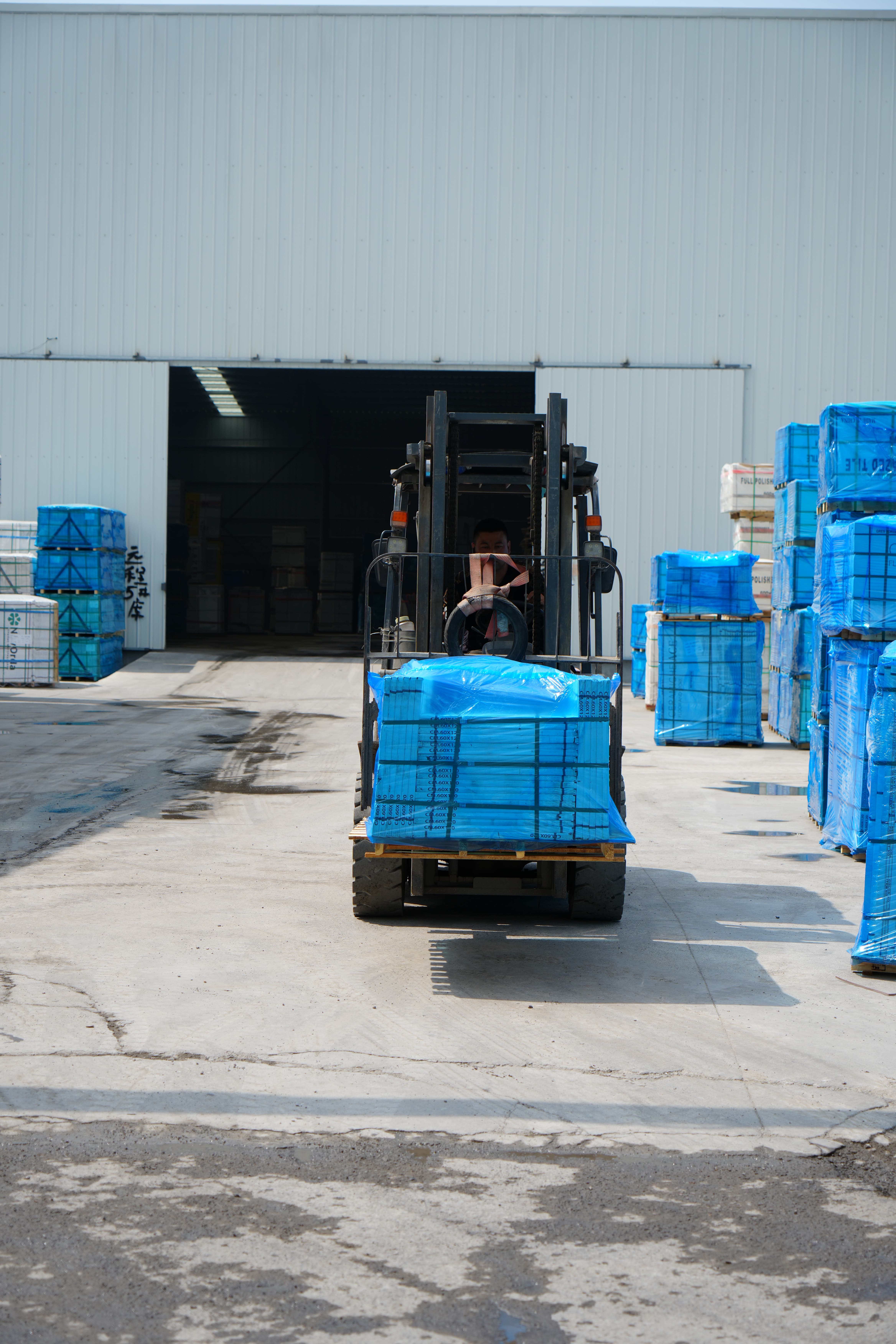
FAQ: ISO 9001 and CE for Porcelain Tile Projects
1. Does ISO 9001:2015 certification allow porcelain tiles to be placed on the EU market?
No. ISO 9001:2015 is a quality management system certification, not a market-access authorisation. For the European Union, market access is addressed by CE documentation covering the relevant product category and application. In the case of All-King Ceramics, the ISO 9001:2015 certificate is XQCC 0350521Q30166R1M with global applicability, while the EU-facing document is the TUV CE certificate AC 50163816 0001. For an EU commercial project, both are relevant but they are not substitutes for one another.
2. What applications does the CE certificate cover?
The TUV CE certificate AC 50163816 0001 held by ZIBO ALL-KING CERAMICS CO., LTD is scoped to dry-pressed ceramic tiles for internal flooring in the EU market. Interior floors in malls, hotels, healthcare facilities, educational buildings and mixed-use developments fall inside that scope. External applications such as 20mm outdoor porcelain pavers fall outside it and should be assessed against their own slip-resistance and durability evidence, including DIN 51130 classifications where specified.
3. What manufacturing capability sits behind these certifications?
All-King Ceramics operates a 60,000 m² factory with 320 employees, an annual output of 12–16 million m², and an R&D team of 25 engineers, established in 2011. Production controls include laser flatness sorting, automatic temperature control, digital weight monitoring, high-pressure compaction and random stress testing, using laser detectors, SACMI presses, automatic sorters, CNC testing instruments, laboratory kilns and on-line quality control. These routines are what convert a management-system certificate into repeatable product consistency across large project volumes.
4. How does porcelain compare with low-grade ceramic tiles on cost?
Against low-grade ceramic tiles, porcelain tiles offer 20% lower installation cost, 30% lower maintenance cost and a 10% lower direct factory price, alongside lower water absorption, higher wear resistance, better breakage resistance, higher density and better flatness. The measured performance gap is approximately −10% water absorption, +15 MPa breaking strength and +3 Mohs hardness. Buyers should apply these figures only to the stated comparison, since results vary with format, thickness and installation method.
5. Can I validate the tile before committing to a project order?
Yes. Because a decision-stage purchase turns on verifying that the certificate scope, the product record and the delivered batch all point to the same item, the practical next step is to request a physical sample and the matching documentation for the specific product ID and product code under consideration. All-King Ceramics supplies porcelain tile project solutions in formats including 60x120cm, 75x150cm, 80x80cm, 100x100cm and 60x60cm ceramic tiles, with a 70% export ratio across Australia, New Zealand, Russia, South Korea, Southeast Asia, the Middle East and Latin America. Sample requests and compliance documentation can be raised directly with the export team.
Conclusion: Use Each Certificate for the Question It Answers
ISO 9001:2015 and CE are not competing credentials; they cover different halves of a procurement decision. ISO 9001:2015, held under XQCC certificate 0350521Q30166R1M, is the global instrument — it tells a buyer that the manufacturer has an audited system for controlling quality, which is why it travels across markets that do not impose a single product marking. CE, held under TUV certificate AC 50163816 0001, is the EU instrument — it confirms that dry-pressed ceramic tiles for internal flooring may be placed on the European market for that application.
For a buyer at the decision stage, the sequence is straightforward: identify the destination market, match the certificate scope to the actual application, trace the certificate to a specific product ID and product code, and then test the claim against the factory's process controls and performance records. Certificates open the gate. Process control and product data decide whether the project performs once the gate is open.
Next Step for Your Project
If you are preparing a submittal for a global or EU commercial development, All-King Ceramics can provide the ISO 9001:2015 and CE documentation together with product-level information for the item you are specifying.
Email: tyceramic2@all-king.com | Tel / WhatsApp: +86 156-5336-9360
Website: www.all-king.com | Blog: blog.all-king.com
Download the full product catalogue: ALL KING Ceramics Catalog (PDF)
ZIBO ALL-KING CERAMICS CO., LTD — No.6, 8th building, 6th district, China Fortune Ceramic City, Zibo, China.
Have Questions or Need More Details?
Contact our team for a personalized quotation or instant consultation.
Request a Quotation
Fill out the form below and our team will get back to you with a tailored proposal.
WhatsApp Direct Chat
Prefer to chat in real-time? Message us on WhatsApp for instant assistance & quick answers.
- Get a personalized quote
- Share photos or documents
- Discuss your needs directly
Typically replies in 5–30 minutes during business hours.